In This Story
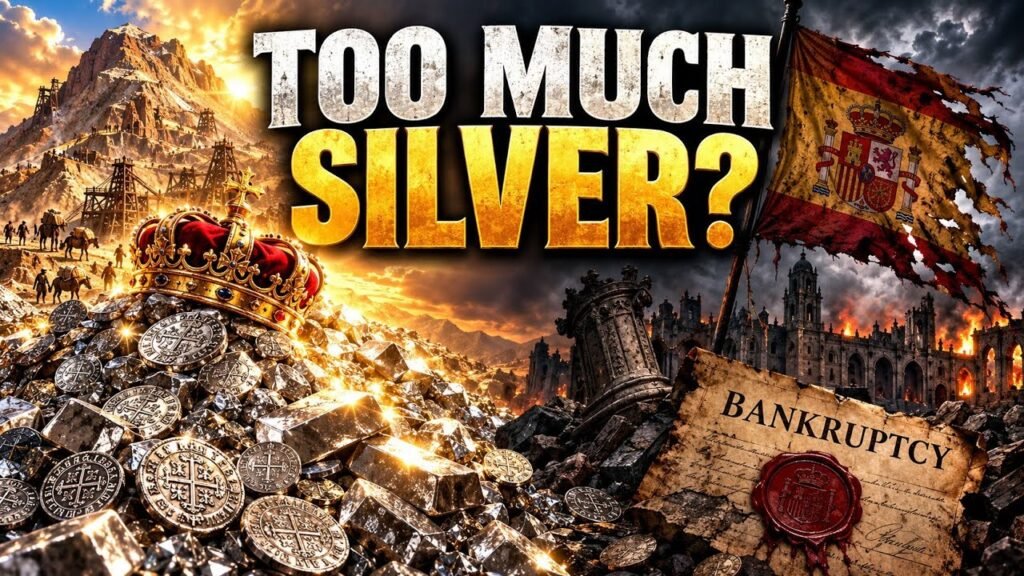
On 31 January 1627, King Philip IV of Spain suspended payments on important contracts with his financiers. The decision struck at a banking network that had helped sustain Spanish imperial power for generations.
For decades, Genoese bankers had supplied credit, arranged international payments, and connected Spanish revenues to armies fighting across Europe. Their influence reached far beyond the small Mediterranean republic from which they came.
Yet the relationship contained a dangerous contradiction. Spain ruled enormous territories and received precious metals from the Americas, but its government repeatedly depended on foreign financiers to meet immediate expenses.
The crisis of 1627 exposed that weakness. It damaged the position of Genoese lenders and helped accelerate changes in European finance.
But the familiar story of Genoa’s sudden financial collapse misses something important: the Genoese did not simply disappear. They changed the way they made money.
How Genoese Bankers Became Financiers of an Empire
During the sixteenth century, the Spanish Habsburg monarchy controlled territories stretching across Europe and the Americas. Its rulers governed a collection of kingdoms and possessions, each with different institutions, taxes, and political obligations.
Maintaining this empire required extraordinary financial resources.
Armies had to be paid in the Netherlands and Italy. Fleets needed equipment and supplies. Fortifications required maintenance, while diplomats, administrators, and military commanders expected funds to arrive reliably.
The problem was not merely finding money. It was delivering money to the correct place at the correct time.
Genoese merchant-bankers became particularly valuable because they possessed the international connections needed to solve that problem.
Genoa had long been a major Mediterranean commercial center. Its merchants maintained relationships across Italy, the Iberian Peninsula, and other European markets. Over time, commercial experience developed into sophisticated financial expertise.
The political relationship with Spain strengthened after the rise of Andrea Doria, the Genoese admiral who helped reorganize the republic’s political order in 1528 and aligned it closely with Emperor Charles V.
The arrangement served both sides.
Spain benefited from Genoese capital, ships, commercial knowledge, and financial connections. Genoese elites benefited from Spanish protection, political opportunities, and access to one of Europe’s largest borrowers.
Following the financial difficulties of the 1550s, Genoese bankers became increasingly prominent in royal lending under Philip II.
Historians often describe this broad period of financial influence as the Siglo de los Genoveses, or Age of the Genoese.
It was not a formal Genoese takeover of European banking. Other financiers, including German, Flemish, Castilian, and later Portuguese operators, remained important.
Nevertheless, Genoese networks occupied an exceptional position in the financing of Spanish power.
Their greatest advantage was not simply wealth. It was their ability to organize credit across political borders.
How Genoese Bankers Financed the Spanish Empire
The financial machinery behind Spanish imperial expansion depended on several connected instruments.
Two were especially important: asientos, which provided relatively short-term credit, and juros, which represented longer-term claims on government revenues.
Understanding their relationship helps explain both Genoese success and Spain’s recurring debt crises.
Asientos: Providing Money Before Revenue Arrived
An asiento was a financial contract between the Crown and a banker or group of financiers.
Its exact terms could vary, but the essential arrangement was straightforward.
The banker agreed to provide money, often at a specified location and date. In exchange, the Crown promised repayment through designated revenues or other financial arrangements, together with compensation for providing the service and bearing the risk.
Consider a simplified example.
Suppose Spanish troops in Flanders needed funds immediately, but the government expected much of its available revenue to be collected later in Castile.
Sending shipments of coins across Europe was expensive, slow, and dangerous.
A Genoese banker with commercial partners in the Low Countries could arrange for funds to become available near the army.
The Crown would then repay the financier according to the agreed contract, potentially using Castilian tax receipts or proceeds associated with American precious metals.
The banker had effectively connected money available in one location with revenue expected in another.
This was more than ordinary lending.
It combined credit, currency exchange, payment services, and an international network of correspondents.
Such contracts allowed Spain to spend resources before those resources had reached the royal treasury.
They also created financial obligations that could become difficult to meet when tax collections, military costs, or expected revenues changed.
Juros: Turning Immediate Loans into Longer-Term Debt
The Crown also relied on juros, instruments that entitled their holders to payments supported by specified public revenues.
They were an important foundation of Castilian public finance.
When short-term obligations accumulated, the monarchy could negotiate arrangements converting outstanding debts into longer-term juros.
For the Crown, this reduced immediate payment pressure.
For creditors, it replaced a short-term claim with a different investment whose value depended on future revenue, interest terms, and market conditions.
The distinction mattered.
A temporary shortage of cash did not necessarily mean Spain had no resources. But resources available over several years could not automatically settle obligations coming due tomorrow.
Spain’s financial system therefore depended on continually coordinating short-term borrowing with longer-term taxation.
When that coordination failed, payment suspensions became a recurring part of royal finance.
The Financial Network Behind the Loans
Genoese bankers did not operate solely through private fortunes locked inside individual family vaults.
They gathered funds from investors, commercial partners, deposits, and other financial arrangements.
This allowed them to provide substantially larger loans than their personal capital alone could support.
It also spread the risks of lending to a monarchy that periodically interrupted repayment.
Research by economic historians Mauricio Drelichman and Hans-Joachim Voth, using royal financial records and Genoese account books, demonstrates how investments in Spanish government loans could be divided among multiple participants.
The leading banker might negotiate directly with the Crown while other investors ultimately supplied part of the capital and carried part of the risk.
This structure resembled important features of modern financial intermediation.
The banker was not necessarily the final owner of every claim. Instead, the banker organized financing, connected investors, and earned compensation for performing those services.
The Exchange Fairs That Connected Europe
Another crucial institution was the network of Genoese-dominated exchange fairs, especially those commonly associated with Bisenzone.
These were not simply markets where merchants gathered to buy cloth, grain, or precious metals.
They increasingly functioned as organized financial meetings where bankers settled accounts, exchanged currencies, and arranged payments.
Bills of exchange played an important role.
A bill of exchange allowed a payment initiated in one commercial center to be completed in another, usually through corresponding financial relationships and in the relevant local currency.
Rather than physically transporting every payment in silver or gold, bankers could offset obligations and settle balances through their networks.
Financial historians Luciano Pezzolo and Giuseppe Tattara characterize the Bisenzone exchange fairs as an international capital market operating under Genoese influence.
These institutions helped mobilize funds from multiple locations and made large-scale royal borrowing possible.
Genoese banking power rested on connections as much as on capital.
American Silver: Great Wealth, Persistent Debt
The expansion of silver production in Spanish America transformed European monetary and commercial history.
Mining centers such as Potosí in present-day Bolivia and the mining districts of New Spain supplied enormous quantities of precious metal over time.
Silver entered European commerce through Atlantic routes, with Seville serving as a major center of colonial trade and administration during much of the period.
At first glance, the financial problems of the Spanish monarchy appear contradictory.
How could a government receiving substantial flows of precious metals repeatedly struggle to repay its creditors?
The answer begins with an important distinction.
American silver arriving in Spanish-controlled ports was not automatically money available for the king to spend.
Much of the metal belonged to private merchants and other owners. The Crown received revenues through taxation, royal mining rights, and other claims, but did not possess every shipment.
Furthermore, revenue arriving from the Americas was neither perfectly predictable nor immediately available in the places where expenditure was required.
Mining output, maritime transport, wartime disruption, and commercial obligations all affected the flow of funds.
Military expenditure could not always wait for the next fleet.
A commander in Flanders still needed money even if the royal treasury expected silver months later.
That mismatch increased the value of bankers capable of advancing credit and arranging international transfers.
Silver strengthened Spain’s purchasing power and financial capacity, but it did not eliminate the problem of timing.
Nor could colonial wealth automatically compensate for unlimited expenditure.
As military commitments increased, the monarchy accumulated obligations against future income.
Genoese financiers helped manage the resulting system, but they could not remove its underlying constraints.
Why Spain Repeatedly Suspended Payments
Spain’s financial problems did not begin in 1627.
Under Philip II, the Crown experienced major payment crises beginning in 1557, 1575, and 1596, with the difficulties of 1557 extending into a further suspension in 1560.
Another suspension followed under Philip III in 1607.
These events are often described as royal bankruptcies.
That description is understandable, but it can be misleading if interpreted as the complete destruction of the government’s finances or the permanent refusal to repay every creditor.
The Crown commonly suspended payments on particular short-term financial contracts while negotiating new arrangements with lenders.
Some outstanding obligations were restructured, and some were converted into longer-term debt.
Credit relationships could then resume.
The crises therefore involved bargaining as well as financial distress.
During the 1575 suspension, for example, the effects reached deep into Castile’s commercial economy.
Research by Carlos Álvarez-Nogal and Christophe Chamley documents how the interruption of payments to Genoese bankers contributed to a wider credit freeze.
Commercial fairs were disrupted, local banks failed, and trade suffered.
The eventual agreement in 1577 followed difficult negotiations involving the Crown, financiers, and the Castilian representative institutions known as the Cortes.
Historians disagree about the relative importance of liquidity pressures, creditor coordination, and political negotiations over taxation.
What is clear is that the relationship between royal borrowing and government revenue was highly complicated.
Bankers were exposed to the Crown, but the Crown also depended on bankers.
If financiers collectively refused to arrange international payments, the monarchy could encounter serious difficulties supplying its armies.
Both sides therefore had incentives to negotiate after a suspension.
This helps explain why lending could continue despite Spain’s record of interrupted payments.
The arrangement remained profitable enough for many participants to stay involved.
The 1627 Spanish Debt Crisis
By the 1620s, the financial and political environment had become increasingly difficult.
Philip IV had inherited an extensive system of military obligations when he became king in 1621.
The struggle against the Dutch Republic resumed after the Twelve Years’ Truce ended that year. Spain also faced expensive commitments connected to the wider Thirty Years’ War and the defense of its European possessions.
Military operations required reliable international payments at precisely the moment when existing obligations were placing growing pressure on royal finances.
The king’s chief minister, Gaspar de Guzmán, Count-Duke of Olivares, sought to reorganize the monarchy’s financial arrangements.
One important objective was to reduce dependence on the established Genoese financiers and broaden the Crown’s access to credit.
The Suspension of 31 January 1627
On 31 January 1627, Philip IV ordered a suspension of payments affecting major royal financial contracts.
The decree disrupted the existing relationship between the Crown and its creditors.
For Genoese bankers with substantial exposure to Spanish royal finance, the decision introduced immediate uncertainty over the timing, value, and form of repayment.
However, it is important not to describe the measure as the automatic cancellation of every royal debt or the simultaneous ruin of every Genoese banking family.
The affected contracts and creditors were not all identical, and the consequences depended on their particular financial positions.
As in previous crises, debt restructuring and negotiations were central to the outcome.
What made 1627 particularly significant was its place within a broader political and financial reorganization.
The Crown was increasingly willing to work with alternative financial networks.
The Arrival of Portuguese Financiers
Portuguese bankers had already begun entering the financial world surrounding the Spanish court.
Their importance increased during the 1620s, particularly under Olivares.
Among these financiers were Portuguese New Christians, descendants of Jewish families who had converted to Christianity, often within a wider history of religious coercion and persecution.
Some possessed extensive commercial connections extending through Iberian, Atlantic, and northern European markets.
These networks offered services useful to a monarchy attempting to finance military operations in several regions simultaneously.
Claudio Marsilio’s research identifies the crisis of 1627 as an important turning point in the shifting balance between Genoese and Portuguese financial operators.
Portuguese financiers gained opportunities to supply credit and participate in transactions that had previously been strongly associated with established Genoese lenders.
But the change was neither instantaneous nor complete.
Genoese operators continued to participate in international financial and precious-metal markets.
The crisis weakened an established structure of financial influence without destroying every institution or commercial relationship supporting it.
What Happened to Genoa After 1627?
A conventional interpretation treats 1627 as the end of Genoese dominance in Spanish royal lending.
There is substantial historical justification for considering the crisis a turning point.
Yet treating it as the disappearance of Genoa from European financial history would be inaccurate.
Genoese financiers continued to possess valuable assets, professional expertise, and international relationships.
Their response included shifting capital and attention toward other financial activities.
From Lending to Trading Silver
One particularly important development was a greater emphasis on the international bullion market.
Bullion refers to precious metals, typically gold or silver, valued primarily for their metal content.
Spain’s obligations to Genoese creditors had created financial claims that could sometimes be settled through precious-metal transfers.
Rather than continually renewing exposure to Spanish government loans, some Genoese financiers increasingly sought repayment in silver and redirected their activities toward trading and distributing that metal.
This did not require abandoning their existing expertise.
They already understood currency markets, international transfers, regional price differences, and the commercial networks connecting European financial centers.
They could apply that knowledge to bullion transactions.
Marsilio’s research on the Mediterranean silver trade provides an important correction to narratives of sudden Genoese disappearance.
It shows that Genoese operators continued to play a significant role in the movement and redistribution of Spanish silver during the seventeenth century.
Their financial influence was changing form.
Genoa was no longer as securely positioned as the leading source of credit for the Spanish monarchy, but its merchants and bankers could still profit from serving other parts of the international monetary system.
The Mediterranean Remained Important
The Genoese connection to European finance was also sustained by maritime trade and established commercial institutions.
Silver arriving from Spain could enter Mediterranean markets through Genoese channels.
Financial operators could then direct precious metals toward locations where they were demanded for commerce, coin production, or settlement of obligations.
The process depended on ships, commercial agents, exchange relationships, and information about monetary conditions.
In this respect, Genoese networks remained relevant even as northern European financial centers gained importance.
The expansion of Amsterdam’s role in European trade and finance did not instantly eliminate established Mediterranean commercial systems.
Different centers could specialize in different activities while maintaining relationships with one another.
Financial power was becoming more widely distributed.
Why the Genoese-Spanish Partnership Weakened
The crisis of 1627 cannot explain the entire transformation on its own.
Several developments placed pressure on the old relationship.
First, Spain’s military commitments repeatedly demanded resources that its fiscal system struggled to mobilize smoothly.
Second, its financial institutions depended on negotiations among the Crown, territorial governments, taxpayers, and creditors.
Third, financiers faced growing incentives to diversify their investments rather than remain heavily dependent on one sovereign borrower.
Fourth, alternative banking networks offered the Spanish government additional financial options.
Political conflict also mattered.
Historian Manuel Herrero Sánchez examines the deterioration of the wider Hispano-Genoese relationship during the seventeenth century, including tensions following the Franco-Savoyard invasion of Genoese territory in 1625.
The republic’s security had long been closely connected to Spanish power, creating a relationship that was financially useful but politically unequal.
As Spanish influence faced mounting challenges, Genoese political and commercial interests did not always align with those of the monarchy.
Later disputes, including the Spanish embargo on Genoese property in Italian territories in 1654, demonstrated the continuing instability of the alliance.
These developments occurred alongside broader changes in European trade, warfare, and state finance.
The weakening of Genoese influence was therefore a prolonged transformation rather than the mechanical result of one missed payment.
Did the Genoese Bankers Really Lose Their Fortunes?
The image of an entire banking elite destroyed overnight is dramatic, but it does not adequately describe the available evidence.
Sovereign lending exposed investors to genuine risks. Payment suspensions could delay repayment, reduce the market value of claims, and force creditors into unfavorable negotiations.
Individual financiers could experience serious losses.
However, losses were not necessarily uniform across the network.
Some bankers had diversified investments, while others held more concentrated positions.
Financial contracts also differed in their repayment terms, collateral arrangements, and ultimate settlements.
Research by Drelichman and Voth on loans made during Philip II’s reign demonstrates that the risk of royal lending could be distributed across multiple investors.
Their examination of Genoese investment partnerships shows why the financial consequences of a sovereign payment crisis cannot always be measured simply by looking at the banker’s original loan to the king.
A royal borrowing contract might represent only one part of a larger investment portfolio.
That finding concerns an earlier period, not a comprehensive measurement of losses suffered in 1627.
Nevertheless, it highlights an important limitation in any claim that a royal bankruptcy automatically destroyed all the lenders involved.
The better-supported conclusion is that the 1627 crisis substantially altered the position of Genoese financiers in Spanish royal credit.
It did not bring all Genoese banking activity to an end.
The End of an Era, Not the End of a Financial Network
The history of the Genoese bankers reveals something fundamental about the relationship between political power and financial power.
Spain possessed armies, territories, tax revenues, and access to American precious metals.
Genoese financiers possessed the connections and financial techniques needed to transform resources scattered across an empire into usable payments.
Neither side could easily perform the other’s function.
That dependence helped sustain one of the most important financial partnerships of early modern Europe.
It also created recurring conflicts when royal spending exceeded the resources immediately available for repayment.
The suspension of 1627 marked a major turning point because it weakened the position of established Genoese lenders while opening opportunities for competing financial networks.
But the broader transformation was more complicated than the fall of one banking dynasty or the bankruptcy of a single government.
Genoa lost part of its privileged position in financing Spain, yet Genoese financial expertise survived.
Some capital moved away from royal loans toward bullion trading and other investments. Commercial networks continued to connect the Mediterranean to wider European markets.
The story is therefore not simply about bankers ruined by an empire that could not pay its bills.
It is about a financial system built to serve imperial power, the political risks created by that dependence, and the ability of experienced financiers to adapt when the system changed.
The Genoese bankers helped make Spanish imperial finance possible.
The crisis of 1627 demonstrated why even the most sophisticated financial networks could not escape the risks of lending to powerful governments.
Sources & Further Reading
1. Thomas Kirk
The Apogee of the Hispano-Genoese Bond, 1576–1627.
Hispania, Vol. 65, No. 219, pp. 45–65, 2005. Spanish National Research Council (CSIC).
https://doi.org/10.3989/hispania.2005.v65.i219.154
2. Manuel Herrero Sánchez
La quiebra del sistema hispano-genovés (1627–1700).
Hispania, Vol. 65, No. 219, pp. 115–151, 2005. Spanish National Research Council (CSIC).
https://doi.org/10.3989/hispania.2005.v65.i219.157
3. Claudio Marsilio
The Genoese and Portuguese Financial Operators’ Control of the Spanish Silver Market (1627–1657).
The Journal of European Economic History, Vol. 41, No. 3, pp. 67–89, 2012.
4. Claudio Marsilio
Genoese Financiers and the Redistribution of Spanish Bullion: The “Mediterranean Road” (1630–1700).
The Journal of European Economic History, Vol. 50, No. 2, pp. 57–87, 2021.
https://iris.univr.it/bitstream/11562/1063736/2/%282021%29%20MARSILIO_JEEH.pdf
5. Luciano Pezzolo and Giuseppe Tattara
“Una fiera senza luogo”: Was Bisenzone an International Capital Market in Sixteenth-Century Italy?
The Journal of Economic History, Vol. 68, No. 4, pp. 1098–1122, 2008. Cambridge University Press.
https://doi.org/10.1017/S002205070800082X
6. Carlos Álvarez-Nogal and Christophe Chamley
Debt Policy Under Constraints: Philip II, the Cortes, and Genoese Bankers.
The Economic History Review, Vol. 67, No. 1, pp. 192–213, 2014. Wiley / Economic History Society.
https://people.bu.edu/chamley/history/castilla/EHR12013.pdf
7. Carlos Álvarez-Nogal and Christophe Chamley
Philip II Against the Cortes and the Credit Freeze of 1575–1577.
Revista de Historia Económica / Journal of Iberian and Latin American Economic History, 2016. Cambridge University Press.
https://doi.org/10.1017/S0212610915000373
8. Mauricio Drelichman and Hans-Joachim Voth
Lending to the Borrower from Hell: Debt and Default in the Age of Philip II.
The Economic Journal, Vol. 121, No. 557, pp. 1205–1227, 2011. Oxford University Press / Royal Economic Society.
https://doi.org/10.1111/j.1468-0297.2011.02442.x
9. Mauricio Drelichman and Hans-Joachim Voth
Funding Empire: Risk, Diversification and the Underwriting of Early Modern Sovereign Loans.
Research working paper. Centre de Recerca en Economia Internacional (CREI).
https://crei.cat/wp-content/uploads/users/working-papers/voth_funding_empire.pdf
10. Italian Ministry of Culture / UNESCO
Genoa: Le Strade Nuove and the System of the Palazzi dei Rolli.
Official cultural heritage documentation concerning Genoa’s financial and architectural prominence during the sixteenth and seventeenth centuries.
https://unesco.cultura.gov.it/en/projects/genova-le-strade-nuove-e-il-sistema-dei-palazzi-dei-rolli