In This Article
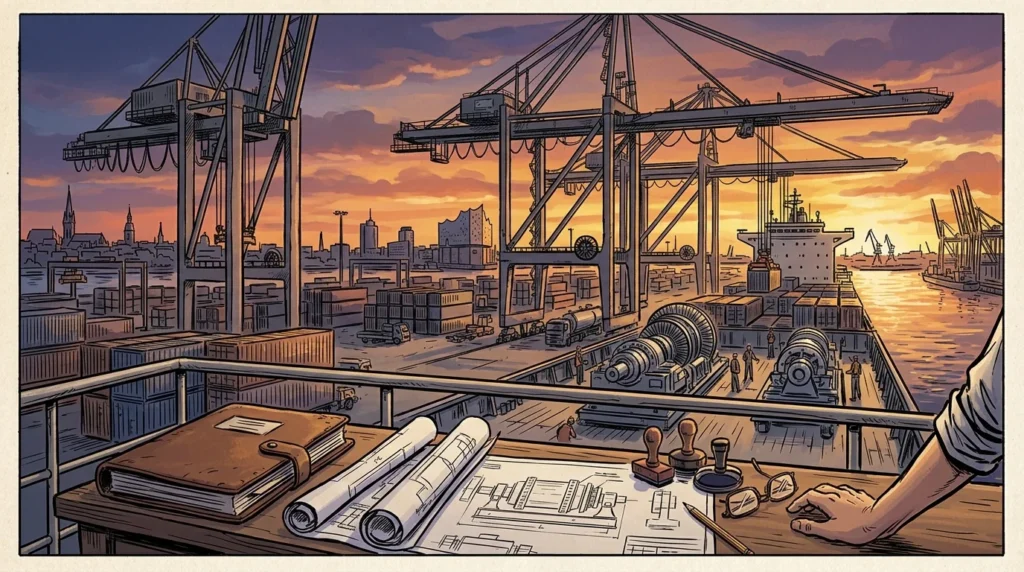
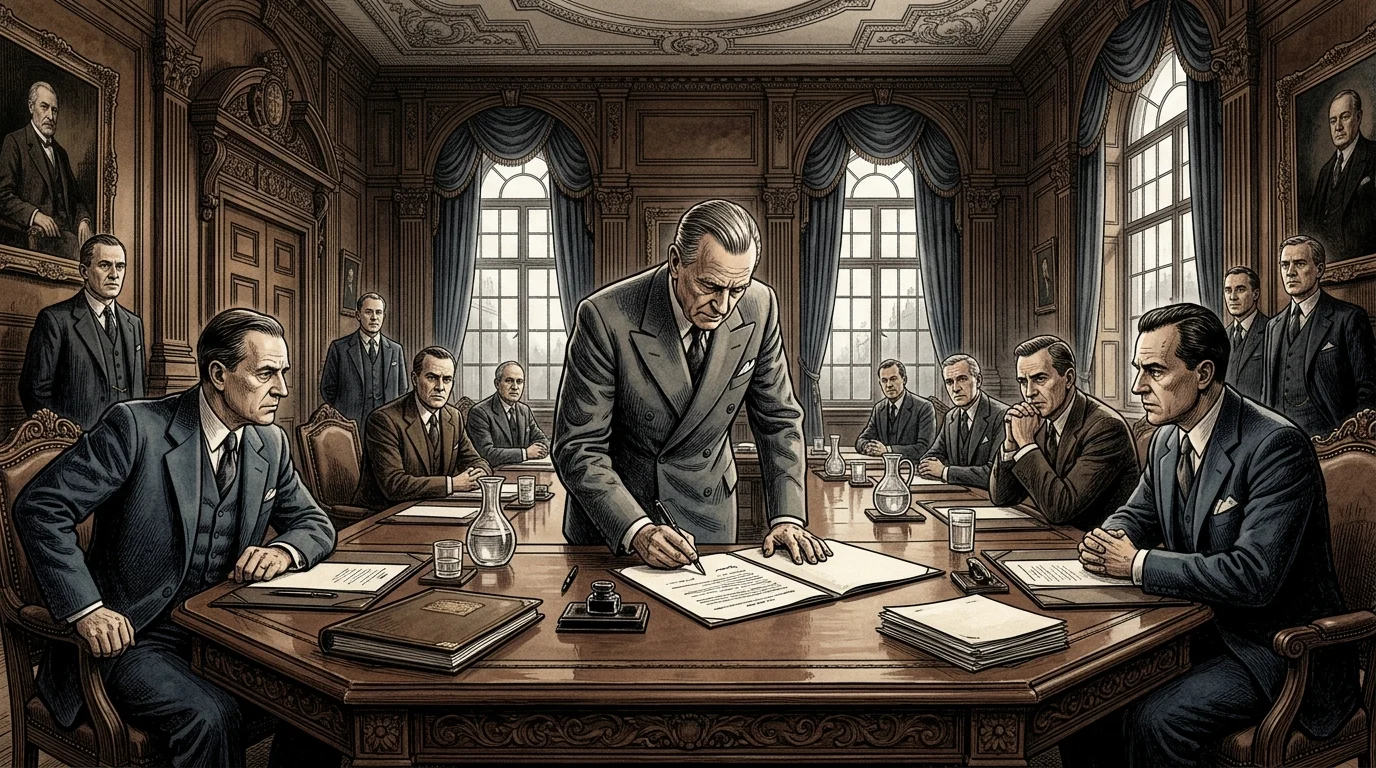
On February 27, 1953, representatives of the Federal Republic of Germany joined the United States, the United Kingdom, France, and seventeen other creditor nations in London to sign the Agreement on German External Debts—universally known as the London Debt Agreement (Londoner Schuldenabkommen) [1][2][3]. Eight years after the collapse of the Nazi regime in May 1945, the newly established West German state remained shut out of international capital markets by two towering layers of external liabilities: roughly DM 16.1 billion in defaulted interwar bonds and commercial credits dating back to the Weimar Republic, and DM 16.2 billion in post-1945 reconstruction assistance advanced by the Western Allies [2][3].

Negotiated over two years by a West German delegation led by banker Hermann Josef Abs alongside the Allied Tripartite Commission on German Debts, the treaty entered into force on September 16, 1953, and accomplished one of the most comprehensive sovereign debt restructurings in modern history [1][2][4]. Creditors cut West Germany’s total external obligations by roughly 50 percent—reducing the combined repayable principal to approximately DM 14.5 billion—abolished punitive gold clauses, granted a five-year grace period on principal repayments until 1958, and tied ongoing debt service strictly to West Germany’s ability to earn foreign exchange through trade surpluses [1][2][3]. By deferring politically explosive claims and keeping annual debt service below 3 percent of export revenues, the accord underpinned the postwar Wirtschaftswunder (economic miracle), restored German creditworthiness as the Federal Republic joined the International Monetary Fund and World Bank, and established a contingent reunification clause whose final funding bonds were redeemed on October 3, 2010 [3][4][5][6].
Interwar Defaults and the Postwar Debt Overhang (1924–1950)
The pre-war debts addressed in London originated in the financial architecture of the Weimar Republic [2]. Although the intergovernmental reparations imposed by the 1919 Treaty of Versailles were suspended under the 1931 Hoover Moratorium and effectively terminated at the Lausanne Conference in July 1932, the German Reich had partially financed its 1924–1930 reparations transfers by floating sovereign bonds to private investors and commercial banks across the United States and Europe [2][6]. The three marquee Reich bond issues were the 7 percent External Loan of 1924 (the Dawes Loan, issued for 800 million Goldmarks across nine foreign tranches), the 5.5 percent International Loan of 1930 (the Young Loan, issued for $300 million), and the 6 percent External Match Monopoly Loan of 1930 (the Kreuger Loan, issued for $125 million through Swedish industrialist Ivar Kreuger’s match trust) [2][4].
Alongside these Reich bonds, German states (Länder), municipalities, utilities, and industrial corporations borrowed heavily abroad during the late 1920s, while short-term foreign bank credits were frozen under the 1931 German Standstill Agreements [2][3]. After taking power in 1933, Adolf Hitler’s National Socialist government unilaterally halted foreign-exchange interest transfers on virtually all tranches of the Dawes and Young loans in 1934, leaving foreign bondholders with defaulted paper and uncollected coupons throughout the late 1930s and World War II [2][6]. By the early 1950s, pre-war public and private claims presented for settlement totaled approximately DM 13.5 billion in principal plus DM 2.6 billion in unpaid interest—roughly DM 16.1 billion in all [2][3].
Compounding the pre-war defaults was a second mountain of external debt accumulated after May 8, 1945 [1][3]. Between 1945 and 1951, the United States, the United Kingdom, and France provided emergency food, fuel, and industrial reconstruction aid to occupied western Germany through the Government and Relief in Occupied Areas (GARIOA) program and the European Recovery Program (Marshall Plan) [2][3]. Those postwar advances totaled roughly DM 16.2 billion (approximately $3.8 billion), bringing total external claims against West Germany to more than DM 32 billion [3].
| Documented Figure / Metric | Historical Significance & Archival Context |
|---|---|
| 100 percent | Because the Federal Republic controlled only the territory of the three Western occupation zones—having lost the eastern territories and East Germany—negotiators argued that a divided nation could not shoulder 100 percent of the Reich's historical obligations. |
| 3 percent | Aided by booming Western European trade and Korean War industrial demand, West German exports surged so rapidly during the 1950s that debt service under the London accord averaged less than 3 percent of export earnings—compared with more than 13 percent during the late Weimar crisis. |
| DM 239.4 million | Upon reunification, the remaining deferred 1945–1952 interest arrears and shadow-quota claims falling due totaled DM 239.4 million across the three major Weimar Reich loans (the Dawes, Young, and Kreuger loans). |
The Bonn and London Conferences and the Abs–Tripartite Bargain (1951–1952)
For Chancellor Konrad Adenauer, repudiating the debts of the Weimar and Nazi eras was out of the question: West Germany could neither regain sovereignty under the Occupation Statute nor borrow abroad for industrial reconstruction without settling its pre-war defaults [2][3]. In March 1951, Adenauer formally confirmed in an exchange of letters with the Allied High Commission that the Federal Republic accepted responsibility for the pre-war external obligations of the German Reich as well as postwar economic assistance [2][4].
In May 1951, the United States, the United Kingdom, and France established the Tripartite Commission on German Debts to coordinate the settlement [2][4]. Remarkably, the Western Allies made their willingness to write down their own senior governmental claims for postwar GARIOA and Marshall Plan aid strictly conditional on private pre-war creditors also accepting substantial concessions within a single unified treaty [2][3]. Preliminary consultations opened in Bonn in June 1951 and moved to London in July 1951, where Hermann Josef Abs—head of the Kreditanstalt für Wiederaufbau and later speaker of the board of Deutsche Bank—led the West German delegation as an equal negotiating partner [2][3].
During the decisive London Conference on German External Debts, which convened at Lancaster House in February 1952 and concluded its framework report in August 1952, Abs argued that repeating the errors of the 1920s—when Germany borrowed short-term foreign currency to pay fixed external obligations—would trigger an immediate balance-of-payments collapse [2][4]. Instead, debt service had to be anchored to West Germany’s actual capacity to pay out of genuine export surpluses [2][3].
Financial Mechanisms of the 1953 Restructuring
Signed in London on February 27, 1953, and entering into force generally on September 16, 1953, the Agreement on German External Debts encompassed obligations owed to creditors across roughly 65 nations [1][2][3]. The treaty achieved its roughly 50 percent overall debt reduction—cutting total covered debt to approximately DM 14.5 billion (DM 7.5 billion in pre-war debt and DM 7.0 billion in postwar aid)—through five interlocking financial mechanisms [2][3][4]:
- Deep Cuts to Postwar Allied Claims: The United States agreed to slash its postwar economic aid claim by 62.5 percent, from $3.2 billion to $1.2 billion (repayable over 35 years at 2.5 percent interest), while the United Kingdom reduced its £201 million claim to £150 million and France reduced its $15.7 million claim to $11.84 million, both repayable interest-free over 20 years [2][3].
- Abolition of Gold Clauses in Favor of a Dollar Clause: Many interwar bonds, including the Young Loan, contained gold clauses requiring payment at 1920s gold parity [1][2]. Because the US dollar had been devalued against gold in 1933–1934 (from $20.67 to $35 per troy ounce), enforcing the gold clause would have valued each pre-1933 gold dollar at 7.11 DM rather than the post-1949 exchange rate of 4.20 DM [2]. Under Article 12 of the treaty, gold clauses on US dollar and Swiss franc debts were disregarded and replaced with a standard dollar clause, reducing those principal and interest liabilities by roughly 40 percent [1][2][3].
- Coupon Reductions, Arrears Haircuts, and Maturity Extensions: Pre-war bondholders accepted zero write-down on nominal principal (after removing gold clauses) in exchange for lower interest rates, forgiveness of one-third of accrued 1933–1944 interest arrears, and extended maturities [2][4]. The Dawes Loan coupon was cut from 7 percent to 5.5 percent with maturity extended to 1969; the Young Loan coupon was reduced from 5.5 percent to 4.5 percent with maturity extended to 1980 [2][4].
- Five-Year Principal Grace Period (1953–1958): During the first five years (1953–1957), West Germany was exempted from principal amortization, paying only interest of roughly DM 567 million per year [2][3]. From 1958 onward, combined annual principal and interest payments rose to a fixed schedule of approximately DM 765 million per year [2][3].
- Trade-Surplus Capacity-to-Pay Linkage: The treaty stipulated that West Germany was expected to service its external debts out of current foreign-exchange earnings from visible and invisible exports rather than by depleting central bank gold reserves or taking on new foreign debt, with explicit consultation triggers if export capacity faltered [1][2][3].
Deferral Clauses, the Wirtschaftswunder, and Bretton Woods Integration
Equally important to West Germany’s fiscal stability were the liabilities that the 1953 agreement explicitly excluded or postponed [1][2]. Because the Federal Republic controlled only the territory of the three Western occupation zones—having lost the eastern territories and East Germany—negotiators argued that a divided nation could not shoulder 100 percent of the Reich’s historical obligations [2][6].
Under Article 5 of the treaty, consideration of intergovernmental claims arising out of World War I and claims for damage or forced credit from World War II were deferred until a final general peace settlement [1][2]. Similarly, debts owed by the divided City of Berlin and its municipal utilities were postponed until negotiations became practicable [1]. For the Dawes, Young, and Kreuger loans—as well as 1926–1927 Prussian state bonds—all interest arrears accrued between January 1, 1945, and December 31, 1952 (alongside “shadow quota” or Schattenquote adjustments reflecting territorial division) were detached into talent warrants and legally suspended until the reunification of Germany [1][2][5].
In macroeconomic terms, the London Debt Agreement exceeded even the most optimistic projections of its architects [2][3]. Aided by booming Western European trade and Korean War industrial demand, West German exports surged so rapidly during the 1950s that debt service under the London accord averaged less than 3 percent of export earnings—compared with more than 13 percent during the late Weimar crisis [3]. Equipped with restored international creditworthiness, West Germany consolidated its entry into the International Monetary Fund and the World Bank and prepaid large portions of its postwar Allied loans ahead of schedule during the late 1950s and 1960s, while clearing the active pre-war bond tranches by the early 1980s [2][3][4].
Reunification in 1990 and the Final 2010 Bond Redemption
For nearly four decades, the London Debt Agreement’s reunification contingency under Article 25 and Annex I remained dormant, leading many observers to regard the suspended 1945–1952 interest coupons as practically worthless [1][2][6]. On October 3, 1990, however, the accession of the German Democratic Republic to the Federal Republic of Germany formally triggered the treaty’s reunification clause [2][5][6].
Upon reunification, the remaining deferred 1945–1952 interest arrears and shadow-quota claims falling due totaled DM 239.4 million across the three major Weimar Reich loans (the Dawes, Young, and Kreuger loans) [2][5]. In compliance with the 1953 treaty, the federal government settled these claims on October 3, 1990, by issuing 20-year funding debt securities (Fundierungsschuldverschreibungen) carrying a 3 percent annual coupon [2][5]. On October 3, 2010—the twentieth anniversary of German reunification and ninety-one years after the Treaty of Versailles—Germany made the final principal and interest payment on these funding bonds, legally extinguishing the last financial obligations of the interwar debt era [5][6].
In subsequent economic scholarship, the 1953 accord has been recognized as a benchmark for growth-enhancing sovereign debt workouts [2][3]. Using synthetic control modeling in a study for the National Bureau of Economic Research and the European Review of Economic History, economists Gregori Galofré-Vilà, Martin McKee, Christopher M. Meissner, and David Stuckler demonstrated that the London Debt Agreement accelerated West German economic growth through three measurable channels: creating fiscal space for public investment and social spending in health, education, and housing; sharply lowering sovereign bond yields and private borrowing costs; and stabilizing the Deutsche Mark against inflationary pressures [3].
Theoretical & Balance-Sheet Transmission Mechanism
In the Kindleberger–Minsky taxonomy of financial instability (Kindleberger, 1978; Minsky, 1986) and Irving Fisher’s (1933) debt-deflation framework, speculative asset booms become systemic crises when credit expansion shifts balance sheets from hedge finance (cash flows covering principal and interest) to speculative and Ponzi finance (relying on rising asset prices and short-term margin roll-overs).
Once monetary tightening or an exogenous shock halts price appreciation, forced margin liquidations trigger Fisherian debt-deflation: fire-sale asset discounts erode bank collateral values, contracting credit supply across the real economy.
Sources and Further Reading
- Tripartite Commission on German Debts and Federal Republic of Germany, “ Agreement on German External Debts (London, 27 February 1953), Australian Treaty Series 1954 No. 17,” Australian Government Publishing Service (via AustLII / Internet Archive), 1953-02-27. Historical & Financial Reference
- Timothy W. Guinnane, “ Financial Vergangenheitsbewältigung: The 1953 London Debt Agreement (Economic Growth Center Discussion Paper No. 880),” Yale University, Economic Growth Center, 2015-07. Peer-Reviewed / Academic Research
- Gregori Galofré-Vilà, Martin McKee, Christopher M. Meissner, and David Stuckler, “ The Economic Consequences of the 1953 London Debt Agreement (NBER Working Paper No. 22557),” National Bureau of Economic Research, 2016-08. Peer-Reviewed / Academic Research
- International Bank for Reconstruction and Development (World Bank), “ Report on the Proposal for a Settlement of Germany’s External Debts (London Conference on German External Debts),” World Bank Documents & Reports Archive, 1952-09-18. International Financial Institution
- Gabler Banklexikon Redaktion, “ Fundierungsschuldverschreibung – Definition,” Gabler Banklexikon (Springer Gabler), 2018. Historical & Financial Reference
- “ Germany Set to Make Final World War I Reparation Payment,” BBC News, 2010-10-02. Historical & Financial Reference
- Irving Fisher — "The Debt-Deflation Theory of Great Depressions," Econometrica 1, no. 4 (FRASER Federal Reserve Archive, 1933): 337–357 Central Bank / Monetary Authority
- Charles P. Kindleberger & Robert Z. Aliber — Manias, Panics, and Crashes: A History of Financial Crises (Palgrave Macmillan) Peer-Reviewed / Academic Research
Cite This Historical Dossier (APA / Chicago)
APA (7th ed.): Ç., S. (Ed.). (2026). How the 1953 London Debt Agreement Reshaped West Germany's Finances. In Forgotten Fortunes Historical Monograph Series (Forgotten Fortunes Editorial Desk). https://forgottenfortunes.net/1953-london-debt-agreement-west-germany-financial-history/
MLA (9th ed.): Ç., Soner, ed. "How the 1953 London Debt Agreement Reshaped West Germany's Finances." Forgotten Fortunes: Financial & Monetary History Archive, 2026, https://forgottenfortunes.net/1953-london-debt-agreement-west-germany-financial-history/.
Chicago (17th ed.): Ç., Soner, ed. "How the 1953 London Debt Agreement Reshaped West Germany's Finances." Forgotten Fortunes Historical Monograph Series (Forgotten Fortunes Editorial Desk), August 26, 2026. https://forgottenfortunes.net/1953-london-debt-agreement-west-germany-financial-history/.
Have an idea for another financial history documentary or article? Request a story →