In This Article
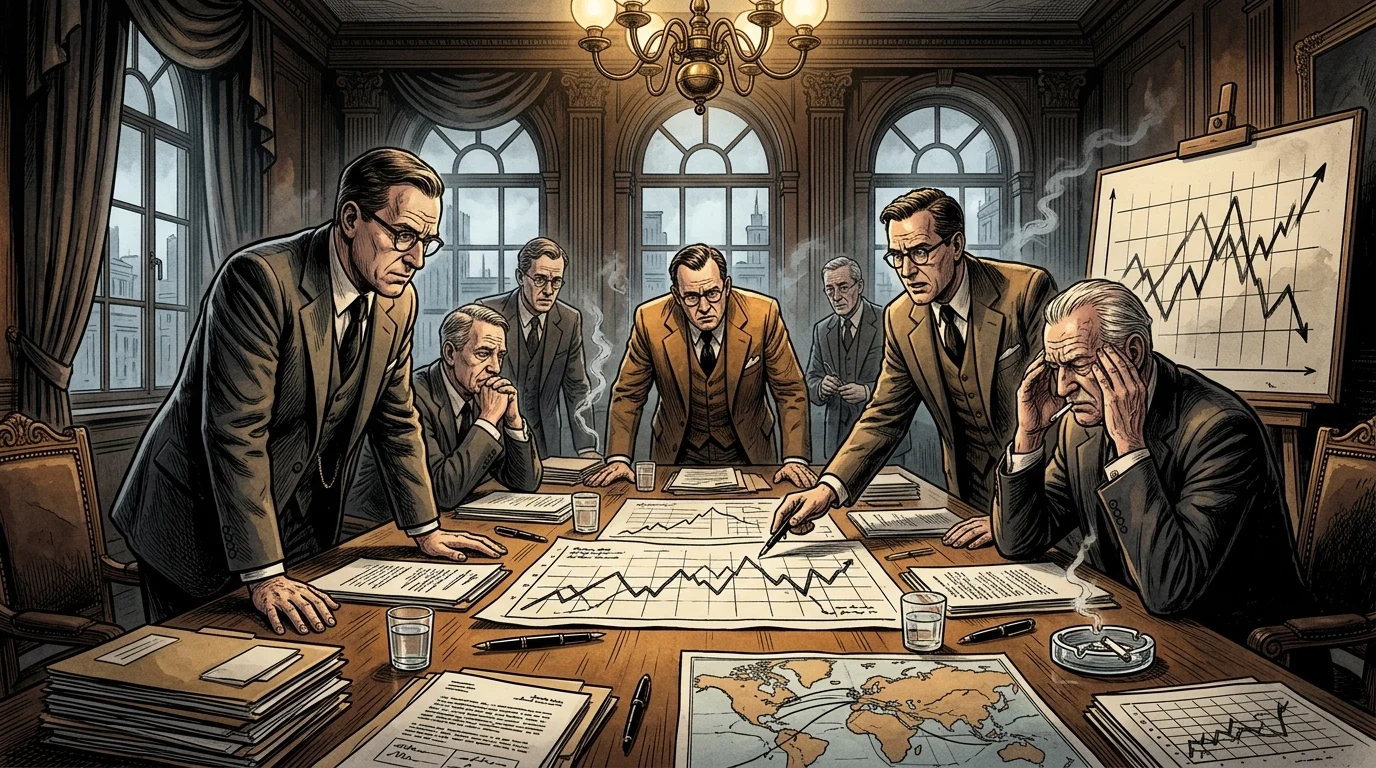
On the morning of October 24, 1985, Pieter de Koning, the Buffer Stock Manager of the International Tin Council (ITC), telephoned the leadership of the London Metal Exchange (LME) to deliver a message that stunned the global commodities market: the intergovernmental organization had run out of money and could no longer honor its purchase commitments [3][4][6]. Created under the First International Tin Agreement of 1954–1956 to stabilize world tin prices through export quotas and an intervention buffer stock, the London-based Council had spent three decades acting as the sovereign guarantor of the longest-standing regulated commodity market in the postwar world [1][3].
By the autumn of 1985, however, the Council was trapped between an artificially high price floor and a structural collapse in industrial demand driven by aluminum can substitution, polymer packaging coatings, and surging production from non-member states such as Brazil and China [3][4]. To defend its floor price, the Buffer Stock Manager had borrowed hundreds of millions of pounds from commercial banks and accumulated an unsustainable position exceeding 100,000 metric tons of physical tin and forward contracts on the LME [3]. When its credit lines snapped on October 24, 1985, the LME suspended tin trading for nearly four years, world tin prices plunged by more than 50 percent—from $5.60 per pound to $2.55 per pound by July 1986—and decades of intergovernmental commodity price control came to a permanent end [3][4].
From the 1931 Tin Cartel to the 1956 Treaty Architecture
Intergovernmental efforts to regulate the global tin market originated during the Great Depression, when collapsing industrial demand prompted the principal tin-producing colonies and states—led by Malaya, Bolivia, the Netherlands East Indies, and Nigeria—to form the International Tin Committee in 1931 to restrict output through compulsory export quotas [1][3]. After World War II, the newly created United Nations framework sought to replace producer-only cartels with multilateral treaties in which producing and consuming nations shared equal voting power. In 1947, governments established the International Tin Study Group to monitor global production and industrial consumption [1][3].
Those deliberations culminated at the United Nations Tin Conference in Geneva and London, which opened the First International Tin Agreement for signature in London on March 1, 1954 [1]. Entering into force on July 1, 1956, the treaty formally inaugurated the International Tin Council (ITC) with headquarters in London [1]. Under the 1956 treaty architecture, the Council’s core mandate was to prevent excessive price fluctuations, avoid widespread unemployment in mining regions, and maintain long-term equilibrium between primary mine supply and industrial consumption [1].
To balance sovereign interests, the 1956 treaty created a symmetrical bicameral voting structure within the Council [1]. Producing countries together held 1,000 votes—allocated via a baseline of five initial votes per member state plus additional votes proportional to each country’s percentage of global production listed in Annex A—while consuming countries likewise shared 1,000 votes proportional to their net tin imports and consumption [1]. A formal quorum at any Council meeting required the presence of delegates holding at least two-thirds of the producing votes and two-thirds of the consuming votes [1]. To enforce financial discipline, the treaty empowered the Council to strip voting rights from any participating state that failed to pay its assessed administrative or buffer-stock contributions within six months of assessment [1].
| Documented Figure / Metric | Historical Significance & Archival Context |
|---|---|
| £8,140 | When sterling appreciated against the dollar and ringgit in the autumn of 1985, the sterling value of the ITC's tin collateral fell, triggering margin calls from lending banks while LME prices hovered near £8,140 to £8,500 per metric ton. |
| $5.60 | In the gray market that emerged after attempts to refinance the ITC collapsed in March 1986, the world price of tin fell by more than half, plunging from $5.60 per pound on the eve of the default to $2.55 per pound in July 1986. |
Price Bands, Export Quotas, and the Buffer Stock Mechanism
To keep market prices within an agreed corridor, the First International Tin Agreement established an initial floor price of £640 and a ceiling price of £880 per long ton of tin metal on the London Metal Exchange, dividing the band between them into lower, middle, and upper sectors [1]. The Council defended this price band through two complementary instruments [1][4]:
- Quarterly Export Controls: Whenever market supply outstripped industrial demand, the Council determined the total permissible export tonnage for each quarter and allocated legally binding export quotas among producing members according to their treaty percentages [1].
- The Buffer Stock Manager (BSM): Producing members contributed physical tin metal and cash to a centralized buffer stock (initially set at the equivalent of 25,000 long tons of tin metal, supplemented under later agreements by voluntary consumer contributions and bank borrowing authority) [1][4]. When the LME cash price fell into the lower sector or touched the floor price, the Buffer Stock Manager intervened on the open market to buy tin until prices recovered; when prices climbed toward or above the ceiling, the Manager sold metal from the stockpile [1][4].
Beginning with the Second International Tin Agreement (negotiated in 1960 and entering into force in 1961), the treaty framework was renewed at roughly five-year intervals across six successive agreements—the Third (1965/1966), Fourth (1970/1971), Fifth (1975/1976), and Sixth International Tin Agreement (negotiated at the 1980–1981 UN Tin Conference and entering into force provisionally in July 1982) [3][4]. Over the 1960s and 1970s, the Council’s price corridor was repeatedly adjusted upward, and after 1972 the official intervention band was denominated in Malaysian ringgit per kilogram on the Kuala Lumpur market alongside sterling operations on the LME [3][4].
Structural Cracks and the 1983 Association of Tin Producing Countries
Beneath its appearance of stability, the ITC’s market-control architecture suffered from three growing structural flaws during the late 1970s and early 1980s [3][4]. First, the commodity boom of the 1970s—combined with lobbying by high-cost underground producers led by Bolivia—pushed the ITC’s floor and ceiling prices to historically high levels [4]. Second, the treaty never captured the entire global market: the United States, which held a massive strategic tin stockpile administered by the General Services Administration (GSA), declined to join the Sixth Agreement, as did Bolivia itself, leaving the Sixth ITA covering a shrinking share of world trade [4].
Third, the high price floor guaranteed by the ITC acted as an umbrella for non-member producers [3][4]. Attracted by elevated prices and unconstrained by ITC export quotas, low-cost alluvial mines in Brazil and expanding producers in China flooded the international market during the early 1980s, while smugglers bypassed member export controls in Southeast Asia [3][4].
Recognizing that consumer members in the ITC were increasingly reluctant to raise price floors or fund larger stockpiles, ministers from the major tin-exporting nations met in London on March 28–29, 1983, and concluded the Agreement establishing the Association of Tin Producing Countries (ATPC), which entered into force in 1984 with seven founding members: Australia, Bolivia, Indonesia, Malaysia, Nigeria, Thailand, and Zaire (later joined by China in April 1994) [2][3]. Using voting shares weighted by 1981 national output, the ATPC sought to coordinate supply discipline and sponsor research into new tin uses [2][3]. Characteristically, Australia attached a formal treaty reservation stipulating that its participation in the ATPC would not derogate from its obligations under the International Tin Agreement, while the ATPC charter barred its Executive Secretary from taking national instructions and required a two-thirds majority vote to dissolve the association and wind up its debts [2].
Aluminum Substitution, Leveraged Forward Buying, and the October 1985 Default
Even as non-member supply surged, structural technological changes permanently eroded global demand for primary tin [3][4]. For decades, tinplate for food and beverage cans had been the single largest end-use for tin, accounting for roughly 40 percent of global consumption in the 1960s [3]. During the 1970s and early 1980s, however, can manufacturers rapidly switched to lightweight aluminum sheet, introduced electrolytic tinning and internal polymer lacquers that drastically reduced the weight of tin required per steel can, and expanded secondary tin recycling [3][4]. Across developed market economies, apparent consumption of tinplate fell from 10.27 million tons in 1970 to 8.02 million tons by 1992 (and in the United States from 5.05 million tons to 1.86 million tons), leaving total world tin consumption stagnant at 200,000 to 220,000 metric tons per year [3].
Confronted with stagnant demand and rising non-ITC supply, the Council’s price floor—pegged in Malaysian ringgit, which appreciated sharply against the British pound alongside the early-1980s US dollar surge—became impossible to defend through ordinary buffer-stock cash contributions [4][5]. Rather than lowering the floor price, the ITC’s Buffer Stock Manager engaged in increasingly desperate financial engineering on the London Metal Exchange [3][4].
Pledging physical tin warrants as collateral to borrow from commercial banks, the Buffer Stock Manager executed massive spot purchases, forward buying, and “borrowing” (backwardation) operations on the LME to keep unabsorbed metal off the market [3][4]. By early October 1985, as UK Trade and Industry Secretary Leon Brittan warned Prime Minister Margaret Thatcher in a confidential minute on October 11, 1985, the Council’s buffer stock finances were on the verge of exhaustion and member governments were refusing to provide the additional £60 million in emergency equity promised by producers [5].
When sterling appreciated against the dollar and ringgit in the autumn of 1985, the sterling value of the ITC’s tin collateral fell, triggering margin calls from lending banks while LME prices hovered near £8,140 to £8,500 per metric ton [3][5]. On October 24, 1985, after member states failed to inject fresh capital, Buffer Stock Manager Pieter de Koning notified the LME that the ITC had exhausted its financial resources and suspended all market operations [3][4][6]. At the moment of default, the ITC held an overhang of more than 100,000 metric tons in physical tin and forward purchase obligations—including 58,000 metric tons in LME warehouses, equivalent to roughly half a year of Western world consumption—backed by gross liabilities approaching £900 million owed to sixteen creditor banks and fourteen LME ring-dealing brokers [3].
Aftermath, Sovereign Immunity Litigation, and the End of Tin Controls
The immediate consequence of the October 24, 1985 default was market paralysis [3][4]. To prevent a chain of broker insolvencies across the City of London, the LME immediately suspended all tin trading—a freeze that lasted nearly four years, until June 1989 [3]. In the gray market that emerged after attempts to refinance the ITC collapsed in March 1986, the world price of tin fell by more than half, plunging from $5.60 per pound on the eve of the default to $2.55 per pound in July 1986 [4]. High-cost underground tin mines from Bolivia to Cornwall in the United Kingdom were forced to shut down, eliminating tens of thousands of mining jobs [3][4][6].
In London, creditor banks and LME brokers launched historic legal actions seeking to hold the ITC’s twenty-two sovereign member states (including the United Kingdom) and the European Economic Community directly liable for the Council’s unpaid debts. In the landmark decision J. H. Rayner (Mincing Lane) Ltd. v. Department of Trade and Industry (1989/1990), the UK House of Lords ruled that because the ITC possessed independent legal personality created by an unincorporated international treaty, its member governments bore no secondary legal liability under English law for the organization’s commercial contracts. Ultimately, in March 1990—nine months after the Sixth International Tin Agreement formally expired in June 1989—the ITC’s member governments agreed to an out-of-court settlement paying creditors £182.5 million to extinguish all remaining claims [3], closing the chapter on thirty-four years of intergovernmental tin price management [3][4].
Theoretical & Balance-Sheet Transmission Mechanism
In the Kindleberger–Minsky taxonomy of financial instability (Kindleberger, 1978; Minsky, 1986) and Irving Fisher’s (1933) debt-deflation framework, speculative asset booms become systemic crises when credit expansion shifts balance sheets from hedge finance (cash flows covering principal and interest) to speculative and Ponzi finance (relying on rising asset prices and short-term margin roll-overs).
Once monetary tightening or an exogenous shock halts price appreciation, forced margin liquidations trigger Fisherian debt-deflation: fire-sale asset discounts erode bank collateral values, contracting credit supply across the real economy.
Sources and Further Reading
- United Nations Tin Conference, “ International Tin Agreement (London, 1 March 1954; Entry into force 1 July 1956), Australian Treaty Series 1956 No. 15,” Australian Government Publishing Service (via AustLII / Internet Archive), 1956-07-01. Historical & Financial Reference
- Special Meeting of Ministers of Tin Producing Countries, “ Agreement Establishing the Association of Tin Producing Countries (London, 29 March 1983), Australian Treaty Series 1984 No. 10,” Australian Government Publishing Service (via AustLII / Internet Archive), 1984-01-22. Historical & Financial Reference
- United Nations Conference on Trade and Development (UNCTAD), “ Market Situation and Outlook for Tin, 1994 (Report by the UNCTAD Secretariat, UNCTAD/COM/54),” United Nations, 1994-10-31. Historical & Financial Reference
- Juan Antonio Morales and Jeffrey D. Sachs, “ Bolivia’s Economic Crisis (in Developing Country Debt and the World Economy),” National Bureau of Economic Research / University of Chicago Press, 1989. Peer-Reviewed / Academic Research
- Leon Brittan, “ International Tin Council: Minute from Leon Brittan (Secretary of State for Trade and Industry) to Prime Minister Margaret Thatcher (PREM 19/1984),” The National Archives (UK) (via Margaret Thatcher Foundation), 1985-10-11. Historical & Financial Reference
- Alan M. Kent, “ One & All! The Cornish Tin Crisis and the 1985 Collapse of the International Tin Council,” Open Book Publishers, 2023. Historical & Financial Reference
- Irving Fisher — "The Debt-Deflation Theory of Great Depressions," Econometrica 1, no. 4 (FRASER Federal Reserve Archive, 1933): 337–357 Central Bank / Monetary Authority
- Charles P. Kindleberger & Robert Z. Aliber — Manias, Panics, and Crashes: A History of Financial Crises (Palgrave Macmillan) Peer-Reviewed / Academic Research
Cite This Historical Dossier (APA / Chicago)
APA (7th ed.): Ç., S. (Ed.). (2026). The International Tin Council: From 1956 Treaty Architecture to 1985 Collapse. In Forgotten Fortunes Historical Monograph Series (Forgotten Fortunes Editorial Desk). https://forgottenfortunes.net/international-tin-council-collapse-treaty-architecture-1956/
MLA (9th ed.): Ç., Soner, ed. "The International Tin Council: From 1956 Treaty Architecture to 1985 Collapse." Forgotten Fortunes: Financial & Monetary History Archive, 2026, https://forgottenfortunes.net/international-tin-council-collapse-treaty-architecture-1956/.
Chicago (17th ed.): Ç., Soner, ed. "The International Tin Council: From 1956 Treaty Architecture to 1985 Collapse." Forgotten Fortunes Historical Monograph Series (Forgotten Fortunes Editorial Desk), August 27, 2026. https://forgottenfortunes.net/international-tin-council-collapse-treaty-architecture-1956/.
Have an idea for another financial history documentary or article? Request a story →