
Topics / Forgotten Fortunes
Currencies & Inflation
Coinage debasements, hyperinflations, currency pegs, and the monetary regimes that determine what money is worth.
Browse the archive
-
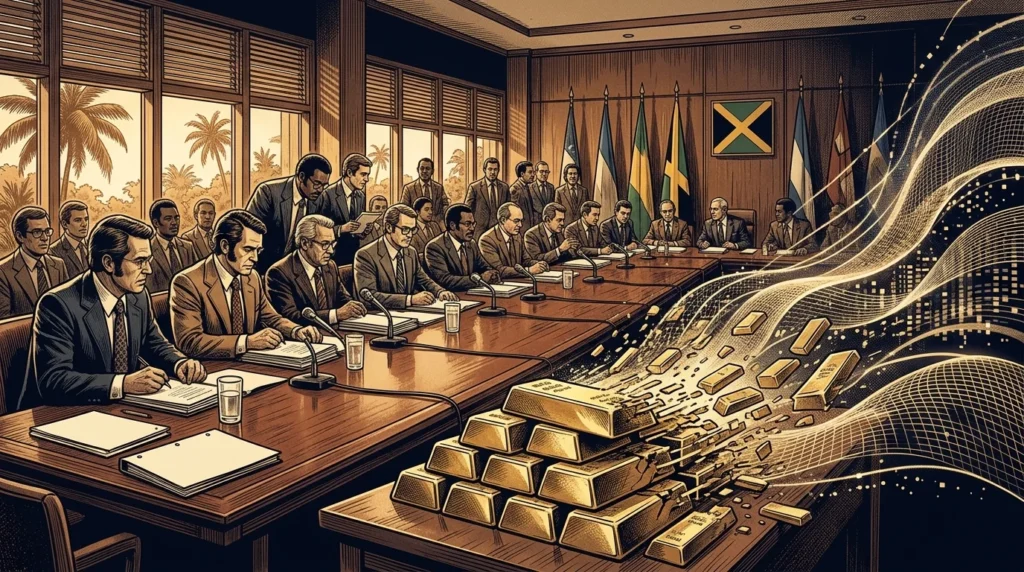
The 1976 Jamaica Agreement and the Post-Bretton Woods IMF System
In January 1976, the IMF Interim Committee met in Kingston, Jamaica, to formally end the Bretton Woods par-value system, legalize floating exchange rates under…
-
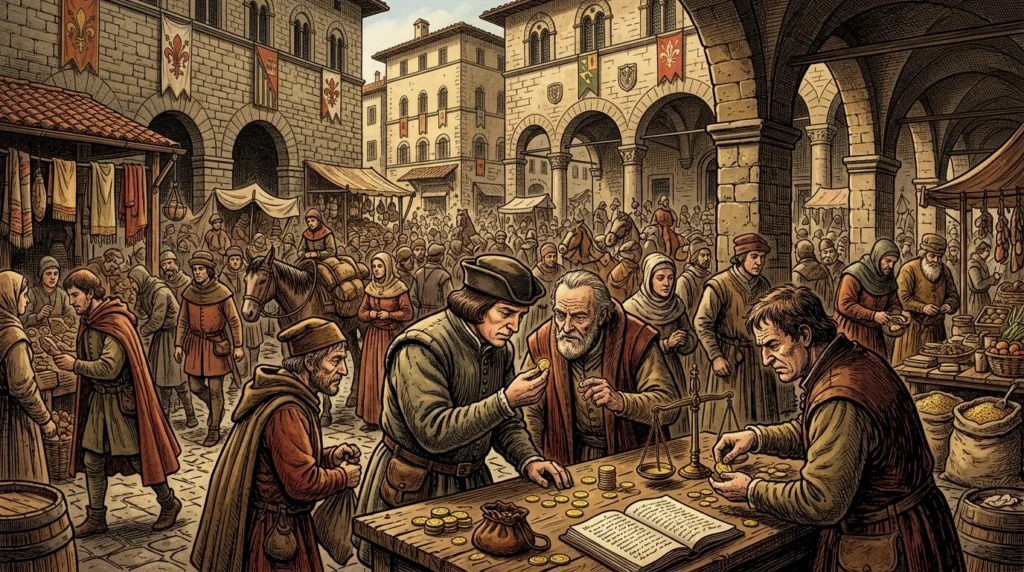
The Gold Florin, Guild Republicanism, and the 1340s Banking Crash in Medieval Florence
How Florence minted the 24-karat gold florin in 1252, barred feudal nobles from power under the 1293 Ordinances of Justice, and weathered the 1343–1347…
-
The Collapse of the London Gold Pool and the Fall of Bretton Woods
Formed in November 1961 by eight central banks to defend the $35-per-ounce Bretton Woods gold price in London, the Gold Pool bled $3 billion…
-
The Bank of Japan’s Zero-Interest-Rate Policy and Post-Bubble Deflation
On February 12, 1999, the Bank of Japan pioneered the modern Zero Interest Rate Policy (ZIRP), guiding the overnight call rate to virtually zero…
-
The Crawling Peg, Tesobonos, and the 1994 Mexican Peso Crisis
In 1994, Mexican authorities defended an overvalued crawling peg exchange rate band by swapping maturing peso Cetes into dollar-indexed Tesobonos. When reserves ran dry…
-
Bolivian Hyperinflation and the 1985 Stabilization Shock
Between 1984 and 1985, Bolivia suffered one of history’s worst peacetime hyperinflations, with trailing twelve-month inflation hitting 23,500 percent as tax revenues vanished and…
-
The Volcker Disinflation and the High Cost of Breaking Stagflation
In October 1979, Federal Reserve Chairman Paul Volcker shifted monetary policy to restrict bank reserves, driving the federal funds rate to 20 percent and…
-
The 1985 Plaza Accord: Macroeconomic Divergence and G5 Currency Alignment
On September 22, 1985, finance ministers and central bank governors from the G5 industrial powers met at New York’s Plaza Hotel to reverse a…
-
From Plaza to Paris: The 1987 Louvre Accord and Currency Realignment
In February 1987, finance ministers and central bankers from six industrial powers met at the Louvre Palace in Paris to halt the U.S. dollar’s…
-
French Revolutionary Assignats and the Collapse of Land-Backed Money
Created on December 19, 1789, as 400 million livres in 5% land-backed bonds administered by the Caisse de l’Extraordinaire, France’s revolutionary assignats were converted…