In This Article
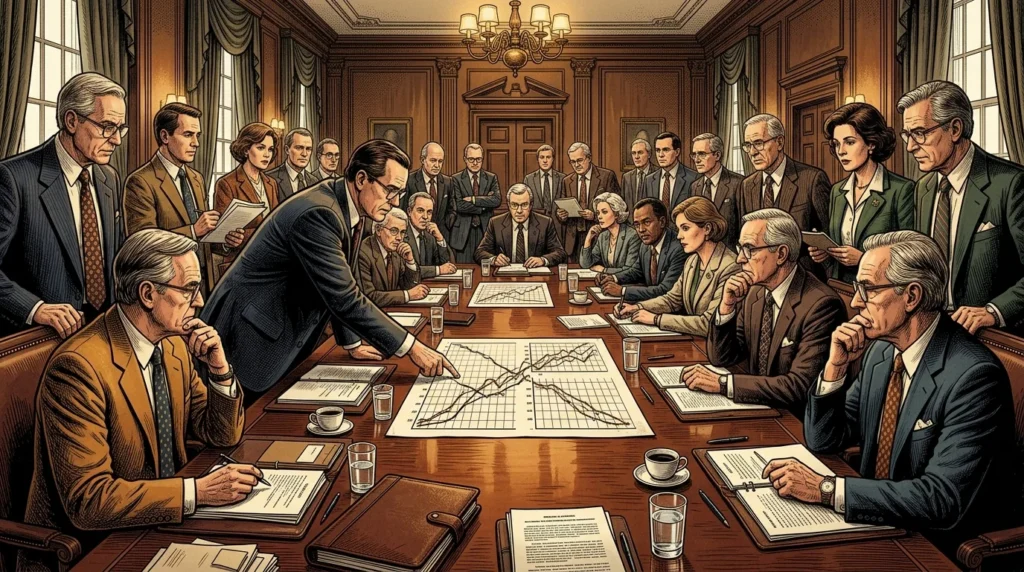
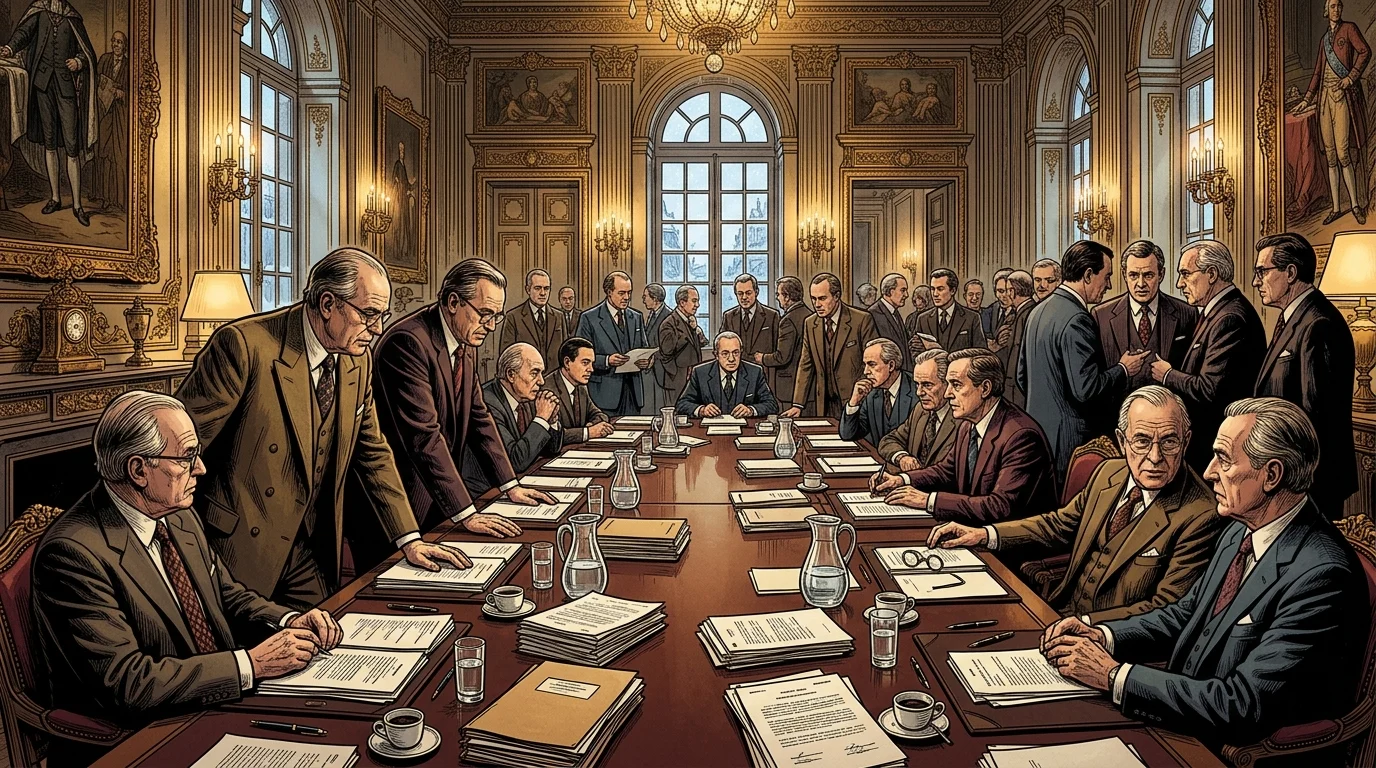
On Sunday, February 22, 1987, finance ministers and central bank governors from six of the world’s largest industrial democracies—the United States, Japan, West Germany, France, the United Kingdom, and Canada—gathered inside the French Ministry of Finance at the Louvre Palace in Paris to sign the Louvre Accord [1][3]. Formally titled the Statement of the G6 Finance Ministers and Central Bank Governors, the agreement sought to call a halt to one of the steepest deliberate currency depreciations in modern monetary history [1][6]. Seventeen months earlier, at New York’s Plaza Hotel, the Group of Five (G5) powers had launched a coordinated campaign to drive down an overvalued U.S. dollar [2][6]. By early 1987, however, the greenback’s slide had gathered a momentum that threatened to destabilize global capital markets, reignite American inflation, and choke off export-led growth in Japan and Western Europe [3][4].

Rather than relying on foreign-exchange trading desks alone, the Louvre Accord attempted an ambitious experiment in multilateral macroeconomic management [1][3]. Surplus nations pledged to stimulate domestic demand through tax cuts, public spending, and lower interest rates, while deficit nations promised fiscal consolidation [1][4]. Behind the bland diplomatic language of the public communiqué lay a confidential pact to defend unannounced exchange-rate “reference ranges” around prevailing market levels [3]. Yet within months of the Paris meeting, diverging national priorities, rising interest rates, the October 1987 global stock market crash, and relentless currency speculation tested the limits of central bank coordination—leaving an enduring mark on both Group of Seven (G7) monetary diplomacy and Japan’s late-1980s asset price bubble [3][4].
From the Plaza Hotel to Paris: The Dollar’s Steep Descent
The roots of the Louvre meeting lay in the macroeconomic imbalances of the early 1980s. Tight U.S. monetary policy instituted to break inflation, paired with widening federal budget deficits under the Reagan administration, pushed U.S. real interest rates sharply higher and attracted massive foreign capital inflows [3]. Between 1980 and February 1985, the trade-weighted value of the U.S. dollar rose by 59 percent according to the Federal Reserve’s index [3]. American manufacturers lost competitiveness at home and abroad, the U.S. current account deficit swelled to record levels, and protectionist bills proliferated in the U.S. Congress [2][3].
Seeking to head off trade restrictions, U.S. Treasury Secretary James A. Baker III and Federal Reserve Chairman Paul Volcker joined their counterparts from France, West Germany, Japan, and the United Kingdom at the Plaza Hotel on September 22, 1985 [2][3]. The resulting Plaza Accord declared that “some further orderly appreciation of the main non-dollar currencies against the dollar is desirable” and backed that signal with coordinated dollar sales across major foreign exchange desks [2][6].
The market reaction exceeded official expectations. Having peaked near 260 Japanese yen per dollar in early 1985, the greenback tumbled to roughly 154 yen by September 1986 [3]. Across Western Europe and East Asia, industrial exporters complained that the rapid appreciation of the yen and the Deutsche Mark was eroding corporate profits and depressing domestic investment [3][4]. Throughout 1986, Baker repeatedly “talked the dollar down” in public remarks, warning European and Japanese officials that unless they expanded their domestic economies to absorb more imports, Washington would happily allow the currency to fall further [3].
A bilateral dress rehearsal for broader stabilization took place in September 1986, when Japanese Finance Minister Kiichi Miyazawa met quietly with Baker in San Francisco [3][4]. Under the Baker-Miyazawa understanding—announced at the end of October 1986—Japan promised fiscal stimulus and monetary accommodation in exchange for U.S. cooperation in stabilizing the yen-dollar rate [3][4]. Yet without European participation or active U.S. intervention to buy dollars, downward pressure quickly resumed in January 1987, pushing the exchange rate toward 150 yen per dollar and prompting calls for a full summit of the industrial powers [3][4].
| Documented Figure / Metric | Historical Significance & Archival Context |
|---|---|
| 7 percent | Treasury bonds by foreign investors pushed the yen-dollar rate down roughly 7 percent from its Louvre baseline. |
| 1.5 percent | In the United States, rebounding oil prices and the lagged effects of dollar depreciation pushed year-on-year consumer price inflation from 1.5 percent in January to 4.3 percent in August. |
| 121 yen | Unimpressed by the absence of concrete new policy measures, currency traders sold dollars heavily through year-end, driving the greenback to postwar lows near 120 to 121 yen per dollar and 1.57 Deutsche Marks per dollar at the turn of 1988. |
| $2.3 billion | According to Federal Open Market Committee (FOMC) records, the New York Federal Reserve's Open Market Desk purchased roughly $2.3 billion during the December–January intermeeting period—nearly $1 billion against the yen and the remainder against the Deutsche Mark. |
Diplomatic Friction and the February 1987 Louvre Pact
When delegations arrived in Paris on the weekend of February 21–22, 1987, the gathering immediately ran into a diplomatic dispute over institutional prestige [3][4]. At the Tokyo Summit in May 1986, Italy and Canada had won formal inclusion in a newly expanded Group of Seven finance ministers’ forum to conduct multilateral economic surveillance alongside the Managing Director of the International Monetary Fund [1][3]. On Saturday, February 21, however, the original G5 ministers (the United States, Japan, West Germany, France, and the United Kingdom) met caucus-style without Italy and Canada to hammer out the core exchange-rate terms [3][4]. Incensed by their exclusion from the preliminary negotiations, the Italian delegation walked out of the Paris sessions in protest and refused to sign the Sunday communiqué, turning a planned G7 milestone into a G6 agreement [1][3][4].
In Paragraph 10 of the final statement issued on February 22, the six signatory nations declared that the substantial exchange-rate shifts since the Plaza Accord had “now brought their currencies within ranges broadly consistent with underlying economic fundamentals” [1][6]. Warned that further sharp currency movements “could damage growth and adjustment prospects in their countries,” the ministers and central bank governors agreed “to cooperate closely to foster stability of exchange rates around current levels” [1][6].
The Financial Mechanism: Fiscal Pledges and Secret Reference Ranges
Because sterilized foreign-exchange intervention—buying or selling currencies without altering the domestic money supply—could not indefinitely hold back market forces if underlying macroeconomic policies clashed, the Louvre Accord paired currency defense with explicit domestic policy commitments from each signatory [1][3]:
- United States: Washington pledged to reduce its federal budget deficit from an estimated 3.9 percent of gross national product (GNP) in fiscal year 1987 to 2.3 percent of GNP in fiscal year 1988, primarily by holding the growth of federal government expenditures to less than 1 percent in fiscal 1988 [1].
- Japan: Tokyo committed to a comprehensive economic program to expand domestic demand after passage of its 1987 budget, overhaul its tax code, and cut the Bank of Japan’s official discount rate by half a percentage point [1][4]. Having formally voted on February 20 to lower the rate from 3.0 percent to a postwar low of 2.5 percent, the Bank of Japan made the cut effective on Monday, February 23 [1][4].
- West Germany: Positioned as Europe’s anchor economy, Bonn agreed to reduce the share of public spending in the economy and enlarge the size of individual and corporate tax cuts already scheduled for 1988, while the Bundesbank maintained low short-term interest rates [1].
- France: Paris promised to cut its central government budget deficit by 1 percent of GNP between 1986 and 1988, enact corporate and individual tax cuts of an equal 1 percent of GNP over the same period, and move forward with a projected $6 billion to $7 billion privatization of state-owned enterprises in 1987 [1].
- United Kingdom and Canada: Britain committed to maintaining prudent monetary policy, privatization, and broad medium-term balance on its external current account, while Canada pledged a third consecutive annual reduction in its federal fiscal deficit alongside tax reform and bilateral trade liberalization with the United States [1].
Although the ministers publicly denied setting numerical targets, journalist Yoichi Funabashi later documented that the negotiators had privately agreed on unannounced “reference ranges” anchored around the prevailing Paris market rates of roughly 153.50 yen and 1.825 Deutsche Marks per dollar [3]. The informal pact featured a two-tier band: if a currency drifted more than 2.5 percent from its central rate, central banks would begin voluntary intervention; if the deviation reached 5 percent, governments were obligated to consult on coordinated policy adjustments [3].
Keeping the bands secret gave officials tactical deniability when market pressures mounted [3]. Less than two months after the Paris meeting, heavy selling of U.S. Treasury bonds by foreign investors pushed the yen-dollar rate down roughly 7 percent from its Louvre baseline [3]. At the April 1987 G7 meeting in Washington, Japanese Finance Minister Miyazawa reluctantly accepted Baker’s proposal to “rebase” the yen’s central reference rate to 146 yen per dollar while keeping the ±2.5 percent and ±5 percent margins intact [3]. Even Japan’s Ministry of Finance resorted to informal administrative guidance and reporting rules in May 1987 to discourage Japanese banks and institutional investors from dumping dollar-denominated securities [3].
Black Monday and the Collapse of the Louvre Bands
By the summer of 1987, the fragile consensus forged in Paris began to fracture under domestic inflationary anxieties [3][4]. In the United States, rebounding oil prices and the lagged effects of dollar depreciation pushed year-on-year consumer price inflation from 1.5 percent in January to 4.3 percent in August [4]. Newly appointed Federal Reserve Chairman Alan Greenspan, who succeeded Volcker in August 1987, raised the Fed’s discount rate in September for the first time in more than three years [3][4].
Simultaneously, officials at the Deutsche Bundesbank and the Bank of Japan worried that prolonged monetary ease and unsterilized currency purchases were inflating domestic money supplies [3][4]. Beginning in July 1987, the Bundesbank nudged short-term repurchase rates upward to preempt inflationary expectations [4]. When the U.S. Commerce Department reported an unexpectedly wide August trade deficit on October 14–15, 1987, U.S. bond yields spiked and equities tumbled [3]. Over the weekend of October 17–18, Treasury Secretary Baker publicly rebuked West German Finance Minister Gerhard Stoltenberg over the Bundesbank’s rate hikes, threatening to abandon the Louvre floor and let the dollar slide if Bonn refused to stimulate its economy [3][4].
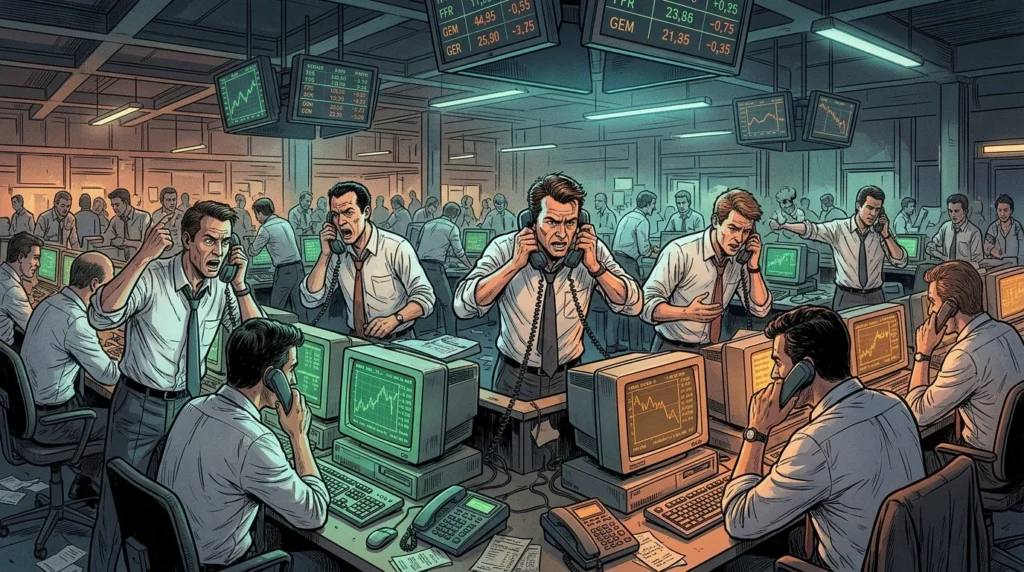
On Monday, October 19, 1987—remembered as Black Monday—global equity markets suffered a historic collapse, with the Dow Jones Industrial Average plunging 508 points [3]. Confronted with a systemic liquidity crisis, central banks immediately prioritized financial stability over currency targets [3][4]. The Federal Reserve flooded the banking system with liquidity, driving the federal funds rate down by a full percentage point within two weeks, while the Bundesbank eased its Lombard and repo rates [4].
With U.S. interest rates falling and traders convinced that G7 coordination had broken down, the dollar resumed its drop in late 1987 [3][5]. On December 22, 1987, the G7 finance ministers issued a “Telephone Accord” communiqué reaffirming the Louvre objectives and declaring that a further decline of the dollar “could be counterproductive” [3][5][6]. Unimpressed by the absence of concrete new policy measures, currency traders sold dollars heavily through year-end, driving the greenback to postwar lows near 120 to 121 yen per dollar and 1.57 Deutsche Marks per dollar at the turn of 1988 [3][5].
The 1988 “Bear Trap” and Federal Reserve Tightening
In the first week of January 1988, G7 monetary authorities mounted a forceful counterattack that analysts later dubbed the “G7 bear trap” [3][5]. Central banks executed visible, round-the-clock dollar purchases across Tokyo, European, and New York trading hours to catch short-sellers off guard [3][5]. According to Federal Open Market Committee (FOMC) records, the New York Federal Reserve’s Open Market Desk purchased roughly $2.3 billion during the December–January intermeeting period—nearly $1 billion against the yen and the remainder against the Deutsche Mark [5]. Because heavy intervention depleted the U.S. Treasury’s yen balances, Washington arranged in mid-January 1988 to swap a portion of its International Monetary Fund Special Drawing Rights (SDRs) with Tokyo and other IMF members in exchange for fresh yen reserves [5].
The coordinated intervention bought crucial time until improved U.S. trade data released on January 15, 1988, shifted market sentiment [3][5]. Over the subsequent year, the Federal Reserve pivoted back toward fighting domestic inflation. From a post-crash trough of 6.50 percent in February 1988, the FOMC raised its intended federal funds rate in a series of steps to 9.75–9.875 percent by February 24, 1989 [7]. Higher yields on dollar-denominated assets drew foreign capital back into the United States, propelling a sustained dollar rally throughout 1988 and 1989 that lifted the currency back above 1.90 to 2.00 Deutsche Marks and toward 150–160 yen—prompting the G7 in September 1989 to reverse course once again and warn that the dollar’s rise had become “inconsistent with longer run fundamentals” [3].
Consequences: Japan’s Bubble Economy and the Twilight of Target Zones
The legacy of the Louvre Accord proved deeply asymmetrical across the participating economies. For the United States and Western Europe, the agreement helped bridge the transition from the dollar roller coaster of the mid-1980s to a more stable exchange-rate range as U.S. export volumes gradually recovered [3]. After mid-1990, active G7 foreign-exchange intervention became increasingly rare, reserved for isolated episodes of acute market disorder rather than the defense of secret target zones [6].
In Japan, however, the monetary commitments undertaken between the Plaza and Louvre agreements left lasting scars [4]. As Bank of Japan archival studies later documented, keeping the official discount rate at a historic low of 2.5 percent from February 1987 until May 1989—primarily to honor international pledges to expand domestic demand and restrain the yen—fueled double-digit growth in commercial bank lending and corporate financial speculation known as zaitech [4]. Even as Japanese central bankers privately warned as early as 1986 of “dry tinder under the chair” and urged commercial banks to exercise “prudent lending attitudes” in 1987, stable consumer price indices and fear of triggering a renewed yen surge delayed monetary tightening for more than two years [4]. The resulting surge in Tokyo commercial land values and equity prices culminated in the late-1980s Japanese asset price bubble, whose eventual collapse in the early 1990s convinced a generation of central bankers that subordinating domestic monetary stability to international exchange-rate targets carried profound hidden costs [3][4].
Theoretical & Balance-Sheet Transmission Mechanism
In the Kindleberger–Minsky taxonomy of financial instability (Kindleberger, 1978; Minsky, 1986) and Irving Fisher’s (1933) debt-deflation framework, speculative asset booms become systemic crises when credit expansion shifts balance sheets from hedge finance (cash flows covering principal and interest) to speculative and Ponzi finance (relying on rising asset prices and short-term margin roll-overs).
Once monetary tightening or an exogenous shock halts price appreciation, forced margin liquidations trigger Fisherian debt-deflation: fire-sale asset discounts erode bank collateral values, contracting credit supply across the real economy.
Sources and Further Reading
- G6 Finance Ministers and Central Bank Governors, “ Statement of the G6 Finance Ministers and Central Bank Governors (Louvre Accord),” G7 Information Centre, University of Toronto, 1987-02-22. Central Bank / Monetary Authority
- G5 Finance Ministers and Central Bank Governors, “ Announcement of the Ministers of Finance and Central Bank Governors of France, Germany, Japan, the United Kingdom, and the United States (Plaza Accord),” G7 Information Centre, University of Toronto, 1985-09-22. Central Bank / Monetary Authority
- Jeffrey A. Frankel, “ The Making of Exchange Rate Policy in the 1980s,” National Bureau of Economic Research / University of Chicago Press, 1994. Peer-Reviewed / Academic Research
- Masanao Itoh, Ryoji Koike, and Masato Shizume, “ Bank of Japan’s Monetary Policy in the 1980s: A View Perceived from Archived and Other Materials,” Institute for Monetary and Economic Studies, Bank of Japan, 2015-11. Central Bank / Monetary Authority
- Board of Governors of the Federal Reserve System, “ Current Economic and Financial Conditions: Recent Developments (FOMC Greenbook Part 2),” Federal Open Market Committee, 1988-02-03. Central Bank / Monetary Authority
- U.S. Department of the Treasury, “ Exchange Stabilization Fund History,” U.S. Department of the Treasury, 2023. Official / State Archive
- Federal Open Market Committee Secretariat, “ FOIA Response: Internal Memos Showing the Expected Federal Funds Rate (1971–1992),” Board of Governors of the Federal Reserve System, 2019-08-29. Central Bank / Monetary Authority
- Irving Fisher — "The Debt-Deflation Theory of Great Depressions," Econometrica 1, no. 4 (FRASER Federal Reserve Archive, 1933): 337–357 Central Bank / Monetary Authority
- Charles P. Kindleberger & Robert Z. Aliber — Manias, Panics, and Crashes: A History of Financial Crises (Palgrave Macmillan) Peer-Reviewed / Academic Research
Cite This Historical Dossier (APA / Chicago)
APA (7th ed.): Ç., S. (Ed.). (2026). From Plaza to Paris: The 1987 Louvre Accord and Currency Realignment. In Forgotten Fortunes Historical Monograph Series (Forgotten Fortunes Editorial Desk). https://forgottenfortunes.net/louvre-accord-1987-currency-realignment/
MLA (9th ed.): Ç., Soner, ed. "From Plaza to Paris: The 1987 Louvre Accord and Currency Realignment." Forgotten Fortunes: Financial & Monetary History Archive, 2026, https://forgottenfortunes.net/louvre-accord-1987-currency-realignment/.
Chicago (17th ed.): Ç., Soner, ed. "From Plaza to Paris: The 1987 Louvre Accord and Currency Realignment." Forgotten Fortunes Historical Monograph Series (Forgotten Fortunes Editorial Desk), August 27, 2026. https://forgottenfortunes.net/louvre-accord-1987-currency-realignment/.
Have an idea for another financial history documentary or article? Request a story →