In This Article
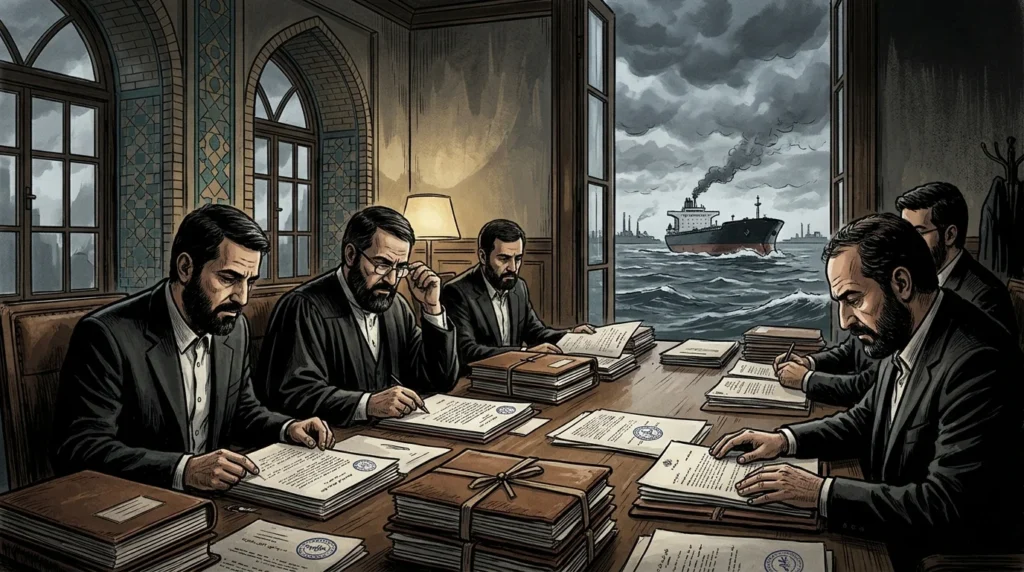
Between the reprivatization of Mexico’s commercial banks in the early 1990s and the energy-sector credit scandals of the 2010s, three landmark corporate collapses exposed persistent vulnerabilities in Mexican corporate governance, bank supervision, and off-balance-sheet risk management. In September 1994, regulators seized Grupo Financiero Unión-Cremi after discovering that chairman Carlos Cabal Peniche had siphoned at least US$700 million in illegal self-loans through shell companies to finance his leveraged acquisition of Fresh Del Monte Produce. Fourteen years later, in October 2008, supermarket giant Controladora Comercial Mexicana defaulted after suffering more than US$1 billion in unhedged losses on speculative foreign-exchange target-redemption forwards when the Mexican peso depreciated during the global financial crisis. Then in February 2014, Citigroup announced that oil-services contractor Oceanografía S.A. de C.V. had defrauded its Mexican banking subsidiary Banamex of roughly US$400 million out of a US$585 million factoring facility by pledging forged accounts receivable from state oil monopoly Petróleos Mexicanos (Pemex). [1]
Privatization Cronyism and the 1994 Banca Unión–Cremi Collapse
Between 1991 and 1992, the administration of President Carlos Salinas de Gortari reprivatized 18 commercial banks that had been nationalized during the 1982 Latin American debt crisis. Eager to maximize auction proceeds, the Ministry of Finance and Public Credit (SHCP) sold the banks at multiples exceeding three times book value to newly formed financial groups led by industrialists and regional entrepreneurs with limited commercial banking experience. Weak prudential oversight by the National Banking Commission (CNB), combined with the absence of consolidated accounting rules and Deposit Insurance Fund (Fobaproa) guarantees that implicitly insured all bank liabilities, created severe moral hazard across the newly privatized sector. [2]
No financier exploited this regulatory vacuum more aggressively than Carlos Cabal Peniche, a Tabasco agribusiness and real estate entrepreneur who acquired Banco BCH (renamed Banco Unión) in November 1991 for roughly US$286 million and subsequently bought a controlling stake in Banca Cremi in 1993 to form Grupo Financiero Unión-Cremi. Celebrated by government officials as a model modernizer, Cabal Peniche used his two commercial banks as captive funding vehicles. Through a network of dozens of paper shell corporations and straw borrowers (*prestanombres*), Banco Unión and Banca Cremi issued hundreds of millions of dollars in uncollateralized loans to entities secretly controlled by Cabal Peniche himself—a practice known in Mexican banking as *autopréstamos* (self-lending). [3]
Using depositor funds diverted from Banco Unión and Banca Cremi, Cabal Peniche orchestrated the 1992 acquisition of Coral Gables-based Fresh Del Monte Produce for more than US$500 million and launched a bid in 1994 to acquire Del Monte Foods Corp. in San Francisco. When bank examiners finally audited the interlocking loan books in mid-1994, they uncovered an initial US$700 million in fraudulent insider loans and fictitious capital injections. On September 5, 1994—three months before the December peso devaluation ignited the Tequila Crisis—Mexico’s Finance Ministry seized Grupo Financiero Unión-Cremi and the Attorney General’s Office issued arrest warrants for Cabal Peniche, who fled the country and lived under a Dominican alias in Australia until his arrest near Melbourne in November 1998. Cleaning up the insolvent Unión-Cremi conglomerate ultimately cost Mexican taxpayers and Fobaproa roughly US$1.4 billion in absorbed losses. [4]
| Documented Figure / Metric | Historical Significance & Archival Context |
|---|---|
| 25 percent | Following the bankruptcy of Lehman Brothers on September 15, 2008, a global flight to safety drove the Mexican peso down by more than 25 percent within weeks, breaching 13.0 pesos per dollar in early October 2008. |
| 21 months | The scheme unraveled on February 11, 2014, when Mexico's Ministry of the Public Function (SFP) barred Oceanografía from bidding on new federal government contracts for 21 months after auditing irregularities in its performance bonds. |
| US$360 million | On February 28, 2014, Citigroup publicly disclosed the Banamex fraud and restated its full-year 2013 financial statements downward by US$360 million pre-tax (US$235 million after tax). |
The 2008 Comercial Mexicana Derivatives Blowup
Whereas the 1994 banking scandals centered on insider lending, the corporate crisis of October 2008 revealed how non-financial Mexican conglomerates used opaque over-the-counter (OTC) currency derivatives to speculate for treasury profits. Founded in 1930 and operating hypermarkets, supermarkets, and Costco Mexico joint-venture stores across the country, Controladora Comercial Mexicana S.A.B. de C.V. (“La Comer”) was an overwhelmingly domestic retailer whose revenues and operating expenses were denominated in Mexican pesos, with minimal US dollar debt exposure requiring currency hedging. [5]
During the benign exchange-rate environment of 2006 to mid-2008, when the Mexican peso traded steadily between 10.0 and 11.0 pesos per US dollar, Comercial Mexicana’s treasury entered into dozens of complex bilateral foreign-exchange derivative contracts—primarily Target Redemption Forwards (TARFs) and leveraged knock-in/knock-out currency options—with international investment banks including JPMorgan Chase, Merrill Lynch, Goldman Sachs, Barclays, and Citigroup. These asymmetric structures paid Comercial Mexicana small, capped gains as long as the peso remained strong above a strike threshold near 10.5 to 11.0 pesos per dollar. However, if the peso depreciated past the knock-in barrier, the contracts forced the retailer to buy double the notional amount of US dollars (or sell pesos) at punitive off-market rates, with no cap on downside losses. [6]
Following the bankruptcy of Lehman Brothers on September 15, 2008, a global flight to safety drove the Mexican peso down by more than 25 percent within weeks, breaching 13.0 pesos per dollar in early October 2008. As the knock-in barriers triggered across multiple bank counterparties simultaneously, Comercial Mexicana’s mark-to-market derivative liabilities exploded to between US$1.08 billion and US$2.2 billion in counter-claims—dwarfing the company’s cash reserves and roughly matching its entire funded debt. Unable to meet hundreds of millions of dollars in emergency margin calls, Comercial Mexicana suspended payments on October 8, 2008, and filed for court-supervised insolvency (*concurso mercantil*). Only after a protracted two-year restructuring completed in late 2010—which converted derivative claims into restructured senior debt and eventual asset divestitures to rival Soriana—did the retailer survive in truncated form, prompting Mexico’s National Banking and Securities Commission (CNBV) to overhaul mandatory disclosure rules for corporate derivative positions. [7]
The 2014 Oceanografía–Banamex Factoring Scandal
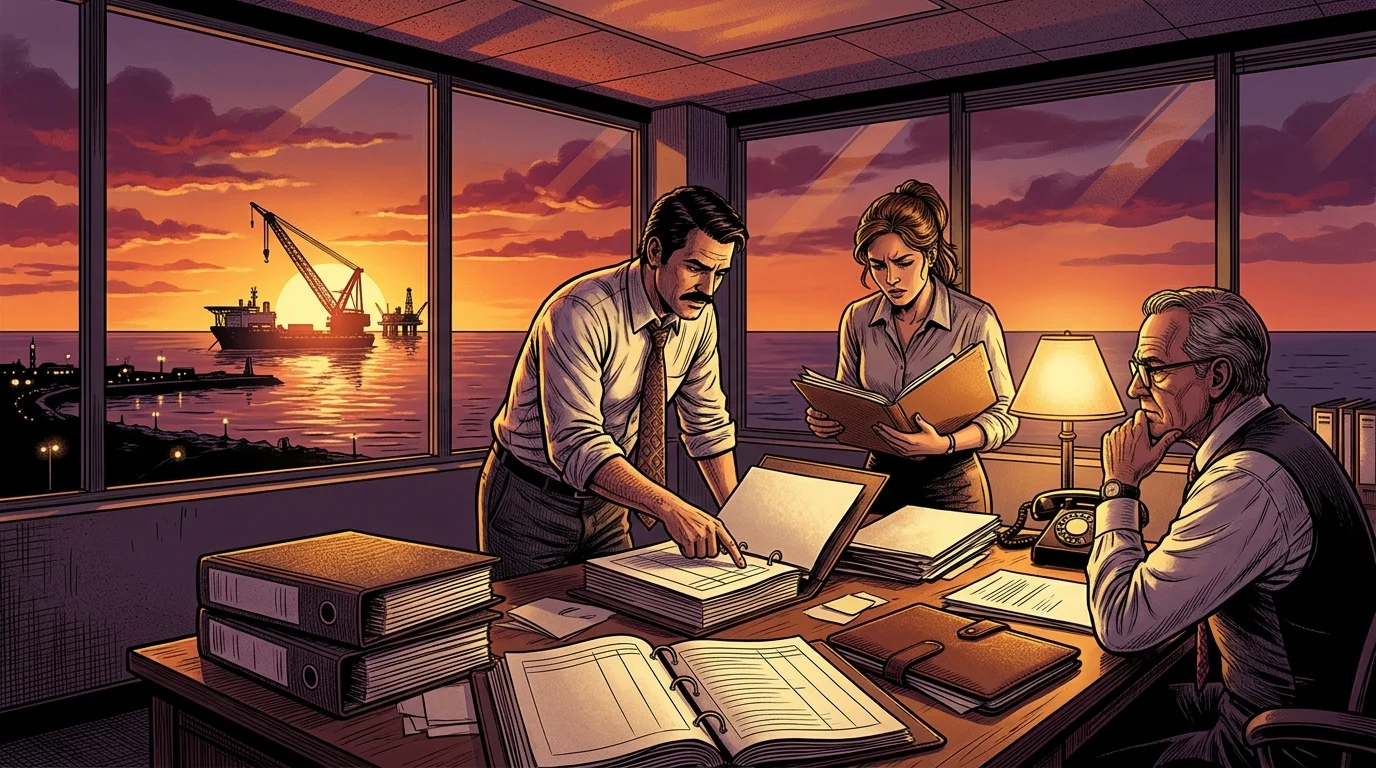
Six years after the Comercial Mexicana shock, a third major scandal struck at the intersection of state energy contracting and international trade finance. Oceanografía S.A. de C.V. (OSA), controlled by businessman Amado Yáñez Osuna and headquartered in Ciudad del Carmen, Campeche, had grown during the 2000s into one of the largest offshore marine engineering and vessel-chartering contractors for Pemex Exploración y Producción, the exploration and production subsidiary of state oil giant Pemex.
To finance its working capital while awaiting payment on multi-year offshore service contracts, Oceanografía relied on an accounts-receivable factoring and short-term credit line provided by Banco Nacional de México (Banamex), the historic Mexican commercial bank acquired by Citigroup in 2001. Under the structure of the facility, Oceanografía submitted work-completion estimates (*estimaciones*) and invoices purportedly signed and approved by Pemex officials; Banamex then advanced cash to Oceanografía and collected payment directly from Pemex upon invoice maturity. Because Pemex was a sovereign-backed oil monopoly, Banamex treated the receivables facility as low-risk sovereign credit exposure. [8]
The scheme unraveled on February 11, 2014, when Mexico’s Ministry of the Public Function (SFP) barred Oceanografía from bidding on new federal government contracts for 21 months after auditing irregularities in its performance bonds. Alarmed by the debarment, Citigroup and Banamex initiated a joint reconciliation with Pemex of the US$585 million then outstanding in Oceanografía’s short-term receivables facility. On February 20, 2014, Pemex notified Banamex that a vast portion of the work estimates and signatures presented by Oceanografía had been forged. Internal investigators found that Banamex could validate only US$185 million in legitimate Pemex receivables and work-in-progress, leaving approximately US$400 million in advances backed by fabricated documents. [9]
Regulatory Reckoning and Institutional Fallout
On February 28, 2014, Citigroup publicly disclosed the Banamex fraud and restated its full-year 2013 financial statements downward by US$360 million pre-tax (US$235 million after tax). Mexican federal prosecutors seized Oceanografía later that day, placed the contractor into insolvency administration under SAE, and arrested Amado Yáñez Osuna on bank-fraud charges, while Banamex dismissed a dozen executives and employees across its institutional factoring and risk-control units. Parallel investigations by Mexico’s CNBV and the U.S. Securities and Exchange Commission revealed that Banamex employees had accepted paper receivables with glaring discrepancies and bypassed direct electronic verification with Pemex, resulting in CNBV administrative fines and a US$4.75 million SEC civil penalty against Citigroup in 2018 for internal accounting-control failures, while creditor litigation over Oceanografía’s collapse persisted in Mexican and U.S. courts for over a decade.
Across three decades, the collapses of Grupo Financiero Unión-Cremi in 1994, Comercial Mexicana’s treasury in 2008, and the Oceanografía–Banamex factoring line in 2014 traced an unmistakable pattern in Mexican corporate finance: whenever rapid credit expansion outpaced independent verification—whether in privatized bank insider lending, unhedged OTC currency derivatives, or state-contractor invoice factoring—hidden leverage rapidly turned into systemic balance-sheet losses.
Theoretical & Balance-Sheet Transmission Mechanism
In the Kindleberger–Minsky taxonomy of financial instability (Kindleberger, 1978; Minsky, 1986) and Irving Fisher’s (1933) debt-deflation framework, speculative asset booms become systemic crises when credit expansion shifts balance sheets from hedge finance (cash flows covering principal and interest) to speculative and Ponzi finance (relying on rising asset prices and short-term margin roll-overs).
Once monetary tightening or an exogenous shock halts price appreciation, forced margin liquidations trigger Fisherian debt-deflation: fire-sale asset discounts erode bank collateral values, contracting credit supply across the real economy.
Sources and Further Reading
- “ Fugitive Mexican Banker Sues to Retrieve Company: Finance: Carlos Cabal Peniche's Union-Cremi was seized after he was implicated in loan fraud“, Los Angeles Times, 1995-03-30. Historical & Financial Reference
- “ Mexico Collars Ex-Banker, Its No. 1 Fugitive“, Los Angeles Times, 1998-11-12. Historical & Financial Reference
- “ Cabal Peniche, el oscuro empresario que se alía con la familia Alemán“, El País México, 2020-08-26. Historical & Financial Reference
- María Luisa Saavedra García, “ Los derivados financieros y el colapso de Comercial Mexicana“, Universidad Nacional Autónoma de México (UNAM) / ALAFEC, 2016. Historical & Financial Reference
- Comisión Nacional Bancaria y de Valores, “ Comunicado Conjunto SHCP-CNBV Caso Banamex“, Gobierno de México (SHCP / CNBV), 2014. Historical & Financial Reference
- “ Banamex acusa fraude de Oceanografía“, Expansión, 2014-02-28. Historical & Financial Reference
- “ Un nuevo juicio millonario por el 'caso Oceanografía' entorpece (aún más) la venta de Banamex“, El País México, 2025-06-22. Historical & Financial Reference
- Irving Fisher — "The Debt-Deflation Theory of Great Depressions," Econometrica 1, no. 4 (FRASER Federal Reserve Archive, 1933): 337–357 Central Bank / Monetary Authority
- Charles P. Kindleberger & Robert Z. Aliber — Manias, Panics, and Crashes: A History of Financial Crises (Palgrave Macmillan) Peer-Reviewed / Academic Research
Cite This Historical Dossier (APA / Chicago)
APA (7th ed.): Ç., S. (Ed.). (2026). Banca Unión, Comercial Mexicana, and Mexico's Oceanografía Fraud. In Forgotten Fortunes Historical Monograph Series (Forgotten Fortunes Editorial Desk). https://forgottenfortunes.net/mexico-banca-union-comercial-mexicana-oceanografia-frauds/
MLA (9th ed.): Ç., Soner, ed. "Banca Unión, Comercial Mexicana, and Mexico's Oceanografía Fraud." Forgotten Fortunes: Financial & Monetary History Archive, 2026, https://forgottenfortunes.net/mexico-banca-union-comercial-mexicana-oceanografia-frauds/.
Chicago (17th ed.): Ç., Soner, ed. "Banca Unión, Comercial Mexicana, and Mexico's Oceanografía Fraud." Forgotten Fortunes Historical Monograph Series (Forgotten Fortunes Editorial Desk), September 5, 2026. https://forgottenfortunes.net/mexico-banca-union-comercial-mexicana-oceanografia-frauds/.
Have an idea for another financial history documentary or article? Request a story →