
In This Article
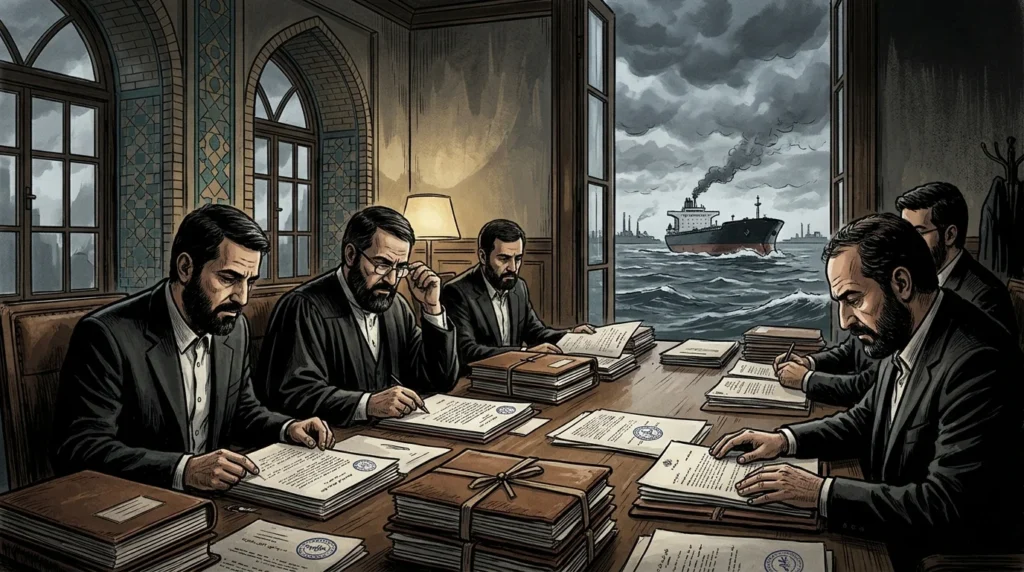
Over the decade beginning in 2014, Brazilian capital markets suffered two of the largest corporate governance and accounting shocks in Latin American history—one centered on Brazil’s flagship state-controlled enterprise, and the other on a blue-chip private retail champion backed by the country’s wealthiest financiers. In March 2014, federal investigators in Curitiba launched Operation Car Wash (*Operação Lava Jato*), uncovering a cartel of engineering conglomerates that systematically overcharged state oil company Petróleo Brasileiro S.A. (Petrobras) by 1 to 5 percent per contract, forcing Petrobras in April 2015 to recognize a R$ 6.2 billion (US$2.06 billion) corruption write-down and R$ 44.6 billion in asset impairments. Almost nine years later, in January 2023, retail conglomerate Americanas S.A.—controlled for decades by the billionaire founders of 3G Capital—plunged into bankruptcy protection after disclosing more than R$ 20 billion in concealed supply-chain reverse-factoring liabilities (*risco sacado*), a hole later quantified at R$ 25.3 billion in fictitious profits and omitted interest expenses. [1]

The Contractor “Club” and Operation Car Wash at Petrobras
During the 2000s and early 2010s, Petrobras embarked on one of the largest corporate capital-expenditure programs in the world, investing hundreds of billions of reais to develop deep-water “pre-salt” oil reserves in the Santos and Campos basins and to build massive domestic refining complexes such as the Abreu e Lima Refinery in Pernambuco and the Complexo Petroquímico do Rio de Janeiro (Comperj). Because Petrobras remained majority-owned by the Brazilian federal government while trading its shares and American Depositary Receipts (ADRs) on the São Paulo B3 exchange and the New York Stock Exchange, appointments to its executive directorates became vital prizes in coalition politics.
Beginning in March 2014 with the arrest of black-market money dealer (*doleiro*) Alberto Youssef and former Petrobras Refining and Supply Director Paulo Roberto Costa, federal prosecutors and Federal Judge Sérgio Moro uncovered an institutionalized bid-rigging and kickback cartel spanning at least 2004 to 2012. Sixteen of Brazil’s largest construction and engineering groups—led by Odebrecht S.A., OAS, Andrade Gutierrez, Camargo Corrêa, Queiroz Galvão, and UTC Engenharia—formed a clandestine cartel known internally as “the Club” (*O Clube*). Before Petrobras tendered major refinery, pipeline, or drillship contracts, the cartel members met privately to allocate the winning bidder and suppress price competition, inflating contract awards by 1 percent to 5 percent above legitimate engineering estimates. [2]
Inside Petrobras, politically appointed heads of the Supply, Services, and International divisions approved the inflated bids and contract addenda in exchange for systematic kickbacks. Within Odebrecht, management operated an entire stand-alone department—the Division of Structured Operations (*Setor de Operações Estruturadas*)—complete with custom encrypted accounting software (*MyWebDay* and *Drousys*) and offshore shell banks to route hundreds of millions of dollars in bribes to Petrobras executives, political party treasurers, and lawmakers across Brazil and Latin America.
| Documented Figure / Metric | Historical Significance & Archival Context |
|---|---|
| R$ 20 billion | On January 11, 2023—just nine days after former Santander Brasil chief Sergio Rial took office as Americanas's new CEO—Rial abruptly resigned and the company issued a bombshell market filing disclosing "accounting inconsistencies" initially estimated at R$ 20 billion. |
| R$ 25.3 billion | On June 13 and June 14, 2023, Americanas formally admitted to deliberate management fraud and released a forensic breakdown showing that the total manipulation had inflated historical profits by R$ 25.3 billion as of September 30, 2022. |
The April 2015 Petrobras Write-Down and Global Settlements
For Petrobras and its external auditor, PricewaterhouseCoopers (PwC), the plea-bargain testimonies of Paulo Roberto Costa and Services Director Renato Duque created an unprecedented valuation crisis. Under Brazilian and International Financial Reporting Standards (IFRS), bribery overpayments that had been capitalized into the book value of refineries, platforms, and pipelines could not legally remain on the balance sheet as productive property, plant, and equipment. In late 2014, PwC refused to sign off on Petrobras’s third-quarter financial statements until the company conducted an independent internal investigation and quantified the capitalized graft. [3]
Locked out of international bond markets and facing technical default covenants from bondholders if audited 2014 statements were not published by the end of April 2015, newly appointed Petrobras CEO Aldemir Bendine and his board released the delayed audited financials on April 22, 2015. To estimate the illicit overpayments built into contracts signed with the 27 cartelized construction firms between 2004 and early 2012, Petrobras applied a flat 3 percent corruption discount—matching the testimony of cooperating executives—and recorded a direct corruption write-off of R$ 6.194 billion (approximately US$2.06 billion). In the same filing, Petrobras booked an additional R$ 44.6 billion (roughly US$14.8 billion) in asset-impairment charges, overwhelmingly concentrated in the unfinished Abreu e Lima and Comperj refineries, pushing the company to a full-year 2014 net loss of R$ 21.6 billion. [4]
The financial and legal reckoning extended across both hemispheres. In December 2016, Odebrecht and its petrochemical subsidiary Braskem pleaded guilty in U.S. federal court and signed coordinated leniency agreements with Brazilian, U.S., and Swiss authorities totaling at least US$3.5 billion. In January 2018, Petrobras agreed to pay US$2.95 billion to settle a consolidated securities class-action lawsuit brought by institutional ADR investors in the Southern District of New York, followed on September 27, 2018 by a coordinated US$853.2 million settlement with the U.S. Department of Justice and the U.S. Securities and Exchange Commission to resolve Foreign Corrupt Practices Act (FCPA) books-and-records violations, with 80 percent of the penalty remitted to Brazilian authorities. [5]
Reverse Factoring (*Risco Sacado*) and the 2023 Americanas Collapse
While the Petrobras scandal exposed state-enterprise procurement graft, the January 2023 collapse of Americanas S.A. demonstrated how a premier private corporation listed on B3’s elite *Novo Mercado* governance tier could conceal massive financial leverage in plain sight. Founded in 1929 and controlled for more than four decades by the billionaire investment trio behind 3G Capital—Jorge Paulo Lemann, Marcel Herrmann Telles, and Carlos Alberto Sicupira, who held roughly 30 percent of the equity as reference shareholders—Americanas operated more than 1,700 brick-and-mortar retail stores across Brazil alongside major e-commerce platforms (Submarino and Shoptime). [6]
On January 11, 2023—just nine days after former Santander Brasil chief Sergio Rial took office as Americanas’s new CEO—Rial abruptly resigned and the company issued a bombshell market filing disclosing “accounting inconsistencies” initially estimated at R$ 20 billion. Within days, Americanas shares plunged by more than 75 percent, creditor banks led by BTG Pactual moved to freeze the retailer’s cash accounts, and on January 19, 2023, Americanas filed for emergency bankruptcy protection (*recuperação judicial*) in Rio de Janeiro with more than R$ 43 billion in total liabilities. [7]
The core balance-sheet deception revolved around supply-chain reverse factoring, known in Brazilian banking as *risco sacado* (drawn risk), *forfait*, or *confirming*. In a standard *risco sacado* transaction, a retailer arranges for a commercial bank to pay its merchandise suppliers early at a discount, and the retailer subsequently pays the bank with interest on a deferred maturity date. Proper accounting requires the retailer to reclassify those extended obligations as interest-bearing financial bank debt—or transparently disclose the bank liability and accrue the interest expense in the income statement. Instead, for years under long-serving CEO Miguel Gutierrez and his executive team, Americanas instructed its accounting staff to keep tens of billions of reais in bank-financed supplier debt buried inside routine trade accounts payable while systematically deleting the associated bank interest charges from its income statement.
Fictitious Rebates (*VPC*) and the R$ 25.3 Billion Restatement
To cover the hole created by the unrecorded bank interest and to present surging operating margins to equity analysts and credit rating agencies, Americanas’s management paired the hidden *risco sacado* debt with a second accounting fabrication: fictitious Cooperative Advertising Funds, known in Brazilian retail as *Verbas de Propaganda Contratada* (VPC). Legitimate VPC agreements represent promotional rebates or discounts granted by suppliers to help fund store displays and marketing campaigns, which reduce a retailer’s reported cost of goods sold. Internal forensic audits and Federal Police wiretaps later revealed that Americanas executives had manually entered billions of reais in nonexistent or artificially inflated VPC rebate contracts at the end of each quarter to manufacture paper operating profits.
On June 13 and June 14, 2023, Americanas formally admitted to deliberate management fraud and released a forensic breakdown showing that the total manipulation had inflated historical profits by R$ 25.3 billion as of September 30, 2022. Of that R$ 25.3 billion in fictitious earnings, R$ 21.7 billion stemmed from artificial VPC supplier rebate entries and R$ 3.6 billion came from unrecorded interest on financial operations. Simultaneously, the company revealed that it had improperly omitted R$ 18.4 billion in *risco sacado* purchase-financing operations and R$ 2.2 billion in working-capital loans from its balance sheet, artificially suppressing its gross financial debt by R$ 20.6 billion. [8]
Following a court-approved restructuring plan in late 2023 and 2024—under which reference shareholders Lemann, Telles, and Sicupira injected R$ 12 billion in fresh capital alongside a massive debt-for-equity swap by creditor banks—Brazilian Federal Police and prosecutors launched *Operação Disclosure* in June 2024, investigating former executives in connection with alleged accounting fraud; criminal accusations and administrative proceedings must be distinguished from final court convictions. Together, the April 2015 Petrobras write-downs and the 2023 Americanas collapse forced Brazilian regulators, auditors, and the Securities and Exchange Commission of Brazil (CVM) to confront the twin hazards of state-contracting cartels and off-balance-sheet supply-chain debt. [9]
Theoretical & Balance-Sheet Transmission Mechanism
In the Kindleberger–Minsky taxonomy of financial instability (Kindleberger, 1978; Minsky, 1986) and Irving Fisher’s (1933) debt-deflation framework, speculative asset booms become systemic crises when credit expansion shifts balance sheets from hedge finance (cash flows covering principal and interest) to speculative and Ponzi finance (relying on rising asset prices and short-term margin roll-overs). [10]
Once monetary tightening or an exogenous shock halts price appreciation, forced margin liquidations trigger Fisherian debt-deflation: fire-sale asset discounts erode bank collateral values, contracting credit supply across the real economy.
Sources and Further Reading
- Mario Osava, 'Megaprojects' Can Destroy Reputations in Brazil, Inter Press Service / Global Issues, 2015-05-18. Historical & Financial Reference
- Senado Federal, Cronologia da Lava Jato e investigações sobre empreiteiras, Biblioteca Digital do Senado Federal, 2016. Historical & Financial Reference
- Odebrecht: Cronologia da Operação Lava Jato, El País Brasil, 2017-04-12. Historical & Financial Reference
- U.S. Department of Justice, Petróleo Brasileiro S.A. – Petrobras Agrees to Pay More Than $850 Million for FCPA Violations, U.S. Department of Justice Office of Public Affairs, 2018-09-27. Official / State Archive
- Americanas case starts battle among Brazil's wealthiest men, but may harm the poorest people, Brasil de Fato, 2023-01-18. Historical & Financial Reference
- Opinião: Fraude da Americanas mostra o choque entre governança e cultura, Brazil Journal, 2023-01-23. Historical & Financial Reference
- Rafael Cardoso, Fraude na Americanas: lucro fictício foi de R$ 25,3 bilhões, Agência Brasil (EBC), 2023-06-14. Historical & Financial Reference
- CVM Opens Two New Inquiries Related to Americanas Accounting Fraud, Brazilian Securities and Exchange Commission (CVM), 2026-01-30. Official / State Archive
- Federal Police Launches Operation Disclosure in the Americanas Accounting Case, Brazilian Federal Police / Agência Gov, 2024-06-27. Historical & Financial Reference
- Irving Fisher — "The Debt-Deflation Theory of Great Depressions," Econometrica 1, no. 4 (FRASER Federal Reserve Archive, 1933): 337–357 Central Bank / Monetary Authority
- Charles P. Kindleberger & Robert Z. Aliber — Manias, Panics, and Crashes: A History of Financial Crises (Palgrave Macmillan) Peer-Reviewed / Academic Research
Cite This Historical Dossier (APA / Chicago)
APA (7th ed.): Ç., S. (Ed.). (2026). Operation Car Wash, Petrobras, and the Americanas R$ 25B Fraud. In Forgotten Fortunes Historical Monograph Series (Forgotten Fortunes Editorial Desk). https://forgottenfortunes.net/brazil-petrobras-lava-jato-americanas-accounting-fraud/
MLA (9th ed.): Ç., Soner, ed. "Operation Car Wash, Petrobras, and the Americanas R$ 25B Fraud." Forgotten Fortunes: Financial & Monetary History Archive, 2026, https://forgottenfortunes.net/brazil-petrobras-lava-jato-americanas-accounting-fraud/.
Chicago (17th ed.): Ç., Soner, ed. "Operation Car Wash, Petrobras, and the Americanas R$ 25B Fraud." Forgotten Fortunes Historical Monograph Series (Forgotten Fortunes Editorial Desk), September 6, 2026. https://forgottenfortunes.net/brazil-petrobras-lava-jato-americanas-accounting-fraud/.
Have an idea for another financial history documentary or article? Request a story →