In This Article
On the morning of January 7, 2009, Byrraju Ramalinga Raju, the 54-year-old founder and chairman of Hyderabad-based information technology outsourcing giant Satyam Computer Services Limited, transmitted a five-page letter to his board of directors and the Securities and Exchange Board of India (SEBI). In one of the most stunning corporate confessions in modern financial history, Raju admitted that Satyam’s balance sheet as of September 30, 2008 carried ₹5,040 crore ($1.04 billion) in wholly non-existent cash and bank balances, alongside bogus accrued interest and overstated receivables that Subsequent forensic investigations ultimately traced to more than ₹7,136 crore ($1.47 billion) in cumulative balance-sheet falsifications. Comparing his multi-year accounting deception to “riding a tiger, not knowing how to get off without being eaten,” Raju resigned as shares of India’s fourth-largest software exporter—listed on the Bombay Stock Exchange (BSE), the National Stock Exchange (NSE), and the New York Stock Exchange (NYSE)—plunged by nearly 80 percent in a single session. [1]

Rise of a Hyderabad IT Outsourcing Champion (1987–2008)
Founded on June 24, 1987, by B. Ramalinga Raju and his brother B. Rama Raju in Secunderabad with just twenty employees, Satyam Computer Services (derived from the Sanskrit word for “truth”) rode the wave of India’s post-1991 economic liberalization and the global Y2K software remediation boom. Going public on the Bombay Stock Exchange in 1992 and listing American Depositary Shares (ADS) on the New York Stock Exchange in May 2001 under the ticker SAY, Satyam grew alongside Tata Consultancy Services, Infosys, and Wipro as a pillar of India’s information-technology export miracle. By 2008, the company reported annual revenues surpassing $2 billion, operated development centers across 66 countries, employed roughly 53,000 engineers and consultants, and served more than 690 enterprise clients, including roughly one-third of the Fortune 500. [2]
To the outside world, Satyam was a paragon of Indian corporate governance. In September 2008—just four months before the collapse—the World Council for Corporate Governance awarded Satyam its coveted Golden Peacock Award for Global Excellence in Corporate Governance. Its board of directors featured respected independent academics and executives, including Harvard Business School professor Krishna Palepu, Indian School of Business dean Mendu Rammohan Rao, and former Cabinet Secretary T. R. Prasad, while its financial statements were audited by Lovelock & Lewes, an Indian network affiliate of Price Waterhouse (PwC). [3]
| Documented Figure / Metric | Historical Significance & Archival Context |
|---|---|
| 55 percent | Satyam's NYSE-listed ADRs plunged 55 percent in hours, forcing Raju to abort the Maytas deal within twelve hours on December 17, 2008. |
| $125 million | Rebranded initially as Mahindra Satyam in June 2009, the company restated its historical financial accounts, paid $125 million in February 2011 to settle U.S. shareholder class-action lawsuits and $10 million in April 2011 to settle U.S. |
| ₹1,849 crore | Ramalinga Raju, his brother, former executives, and family promoter entities from Indian capital markets for fourteen years and ordered them to disgorge more than ₹1,849 crore in unlawful insider-trading gains alongside 12 percent annual interest since January 2009. |
The Mechanics of the Fraud: 7,561 Forged Invoices and Fictitious Fixed Deposits
Behind the glittering accolades, Raju, his brother and managing director B. Rama Raju, and Chief Financial Officer Vadlamani Srinivas had been systematically falsifying Satyam’s financial statements since at least 2001. As Raju explained in his confession letter and subsequent regulatory depositions, what began as a modest quarterly gap between actual operating profit and the earnings expectations of equity analysts snowballed year after year as the company reported inflated operating margins to sustain its stock price. [4]
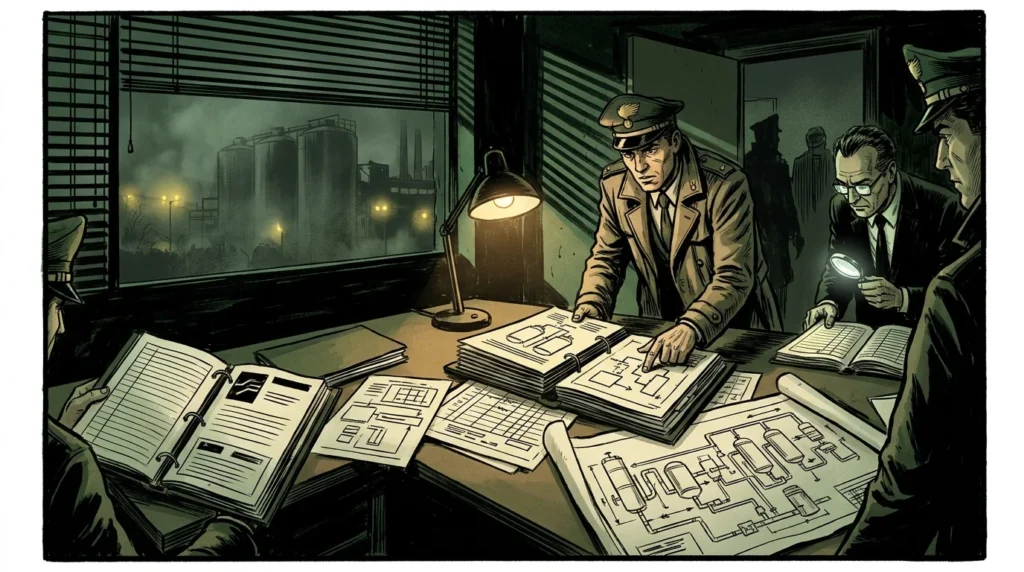
Investigations by India’s Central Bureau of Investigation (CBI), the Serious Fraud Investigation Office (SFIO), SEBI, and the U.S. Securities and Exchange Commission (SEC) uncovered the exact technical architecture of the deception. Using a specialized internal software billing application dubbed “ONTime” and super-user administrative credentials wrapped with a custom hiding functionality designated by the letter “H,” a secret cell within Satyam’s finance department generated 7,561 counterfeit customer invoices across seven fiscal years. These phantom invoices remained invisible to operational business units and division heads who reviewed client revenues, yet flowed seamlessly into the general ledger to inflate quarterly sales and operating profits. In the second quarter of fiscal year 2009 alone (ended September 30, 2008), Raju admitted that reported quarterly revenue of ₹2,700 crore was overstated by ₹588 crore, while actual operating profit was just ₹61 crore (2.9 percent of revenue) rather than the reported ₹649 crore (24 percent margin). [5]
Because every rupee of fictitious profit recorded on the income statement required a corresponding asset entry on the balance sheet, the conspirators parked the phantom earnings in purported current-account balances and fixed-deposit receipts across multiple international and domestic banks, including Bank of Baroda, HSBC, Citibank, BNP Paribas, and HDFC Bank. By September 30, 2008, ₹5,040 crore of the ₹5,361 crore in cash and bank balances reported on Satyam’s balance sheet did not exist, alongside ₹376 crore in non-existent accrued interest, ₹490 crore in overstated debtors, and ₹1,230 crore in unrecorded liabilities resulting from funds Raju raised privately by pledging family shares. Subsequent CBI forensic audits determined that the total balance-sheet misstatement, including off-book promoter share pledges and fabricated assets, exceeded ₹7,136 crore. [6]
Audit Breakdown and the Aborted $1.6 Billion Maytas Acquisition (December 2008)
For nearly eight years, engagement partners S. Gopalakrishnan and Talluri Srinivas at Price Waterhouse’s Hyderabad affiliate signed off on Satyam’s quarterly and annual accounts without detecting the missing billion dollars. According to enforcement findings issued by SEBI and the U.S. SEC and Public Company Accounting Oversight Board (PCAOB), the auditors failed to follow basic confirmation standards: instead of mailing balance confirmation requests directly to Satyam’s banks and verifying responses independently, the audit team handed confirmation letters to Satyam’s own management and accepted forged, desktop-printed bank deposit receipts and fabricated bank confirmation letters returned by Raju’s staff, even when direct replies from banks contradicted management’s schedules by thousands of crores.
By late 2008, the global financial crisis triggered by the collapse of Lehman Brothers squeezed Indian credit markets, while continuous insider selling and share pledging reduced the Raju family’s equity stake in Satyam from over 25 percent in 2001 to roughly 8.6 percent—and then below 4 percent as lenders liquidated pledged shares. Desperate to replace the ₹5,040 crore in fictional cash on Satyam’s balance sheet with real tangible assets before the hole was exposed, Raju engineered an audacious related-party bailout. On December 16, 2008, Satyam’s board—without seeking prior shareholder approval—approved a $1.6 billion (₹7,925 crore) acquisition of two real estate and infrastructure firms controlled by Raju’s sons, Teja Raju and Rama Raju Jr.: a 51 percent stake in listed Maytas Infra Limited for $300 million and 100 percent of unlisted Maytas Properties Limited for $1.3 billion (“Maytas” being “Satyam” spelled backward). [7]
Had the transaction closed, Satyam could have written off its non-existent cash balances as purchase payments to Raju’s family companies while putting real land and construction contracts onto its books. Instead, institutional shareholders in Mumbai, London, and New York revolted immediately against using an IT company’s purported cash hoard to bail out the founder’s leveraged real estate ventures. Satyam’s NYSE-listed ADRs plunged 55 percent in hours, forcing Raju to abort the Maytas deal within twelve hours on December 17, 2008. Days later, the World Bank revealed that it had barred Satyam from contracts for eight years over improper benefits and data breaches, and four independent directors resigned from Satyam’s board, leaving Raju with no remaining avenue to conceal the chasm in the company’s accounts. [8]
Emergency State Intervention and the Tech Mahindra Rescue (January–April 2009)
Raju’s January 7, 2009 confession threatened not only the livelihoods of Satyam’s 53,000 employees, but also the international reputation of India’s entire IT outsourcing sector—prompting financial commentators to dub the affair “India’s Enron.” Moving with extraordinary speed, the Indian government and the Ministry of Corporate Affairs petitioned the Company Law Board on January 9, 2009, to supersede Satyam’s compromised board of directors. Within days, New Delhi appointed a six-member crisis board led by Deepak Parekh (chairman of HDFC), Kiran Karnik (former president of NASSCOM), and C. Achuthan (former presiding officer of the Securities Appellate Tribunal).
While Andhra Pradesh police and the CBI arrested B. Ramalinga Raju, B. Rama Raju, CFO Vadlamani Srinivas, and the two Price Waterhouse audit partners in January 2009, the government-appointed board secured ₹600 crore in emergency working-capital credit lines from state-owned banks, reassured Western enterprise clients to prevent mass contract cancellations, and obtained SEBI and Company Law Board approval for a transparent global auction of a controlling 31 percent to 51 percent equity stake.
On April 13, 2009—just ninety-six days after Raju’s confession—Venturbay Consultants, a subsidiary of telecommunications software firm Tech Mahindra (part of the Mahindra Group), won the sealed-bid auction with an offer of ₹58 per share, investing roughly ₹2,889 crore ($580 million) for a 51 percent controlling stake (31 percent via preferential allotment and 20 percent via open offer). Rebranded initially as Mahindra Satyam in June 2009, the company restated its historical financial accounts, paid $125 million in February 2011 to settle U.S. shareholder class-action lawsuits and $10 million in April 2011 to settle U.S. SEC fraud charges (alongside $7.5 million in SEC and PCAOB fines against PwC India affiliates), and formally merged into Tech Mahindra in June 2013.
Criminal Convictions, SEBI Disgorgement, and the Companies Act 2013
The legal and regulatory reckoning spanned more than six years. In July 2014 and September 2015, SEBI barred B. Ramalinga Raju, his brother, former executives, and family promoter entities from Indian capital markets for fourteen years and ordered them to disgorge more than ₹1,849 crore in unlawful insider-trading gains alongside 12 percent annual interest since January 2009. In January 2018, SEBI further banned the Price Waterhouse network from auditing listed companies in India for two years and ordered the disgorgement of ₹13.09 crore in wrongful audit fees. On April 9, 2015, a Special CBI Court in Hyderabad convicted B. Ramalinga Raju and nine co-defendants of criminal conspiracy, cheating, and forgery of accounts, sentencing Raju to seven years of rigorous imprisonment and imposing a personal fine of ₹5.5 crore.
Above all, the Satyam collapse catalyzed a sweeping overhaul of Indian corporate law. In August 2013, Parliament enacted the landmark Companies Act 2013, replacing the 1956 statute. Directly addressing the governance failures exposed at Hyderabad, the Act mandated compulsory rotation of audit firms every ten years (and audit partners every five years), codified the fiduciary duties and liabilities of independent directors, authorized statutory shareholder class-action suits, granted statutory status to the Serious Fraud Investigation Office, and created the National Financial Reporting Authority (NFRA) to police auditing standards independently of the accounting profession’s self-regulatory body.
Theoretical & Balance-Sheet Transmission Mechanism
In the Kindleberger–Minsky taxonomy of financial instability (Kindleberger, 1978; Minsky, 1986) and Irving Fisher’s (1933) debt-deflation framework, speculative asset booms become systemic crises when credit expansion shifts balance sheets from hedge finance (cash flows covering principal and interest) to speculative and Ponzi finance (relying on rising asset prices and short-term margin roll-overs).
Once monetary tightening or an exogenous shock halts price appreciation, forced margin liquidations trigger Fisherian debt-deflation: fire-sale asset discounts erode bank collateral values, contracting credit supply across the real economy.
Sources and Further Reading
- Securities and Exchange Board of India (SEBI), “ Order in the Matter of Satyam Computer Services Ltd.,” Securities and Exchange Board of India Order WTM/RKA/SRO/108-117/2015, 2015-09-10. Official / State Archive
- Ria Jain, “ Corporate Governance Failure and Creative Accounting: A Case Study of the Satyam Computer Services Scandal,” International Journal of Social Science Research and Review, 2026. Peer-Reviewed / Academic Research
- Mohsin Kamal, Jahangir Chauhan, and Md. Qaiser Alam, “ Anatomy of Financial Misconduct: A Critical Insight into Key Banking and Corporate Frauds in India,” International Journal of Research in Finance and Management, 2025. Peer-Reviewed / Academic Research
- Madan Lal Bhasin, “ Fraudulent Financial Reporting Practices: Case Study of Satyam Computer Limited,” European Journal of Accounting, Finance & Business, 2017. Peer-Reviewed / Academic Research
- Sankar Paul, “ Role of Corporate Governance on Corporate Fraud in India: A Case Study of Satyam Computer Services Ltd.,” The Management Accountant Journal, 2019. Peer-Reviewed / Academic Research
- Rinita Das, “ A Comparative Analysis of Corporate Frauds in the United States, Europe and India: Examining the Roles of Management and Auditors,” Alliance Journal of Corporate and Commercial Law, 2025. Peer-Reviewed / Academic Research
- Irving Fisher — "The Debt-Deflation Theory of Great Depressions," Econometrica 1, no. 4 (FRASER Federal Reserve Archive, 1933): 337–357 Central Bank / Monetary Authority
- Charles P. Kindleberger & Robert Z. Aliber — Manias, Panics, and Crashes: A History of Financial Crises (Palgrave Macmillan) Peer-Reviewed / Academic Research
Cite This Historical Dossier (APA / Chicago)
APA (7th ed.): Ç., S. (Ed.). (2026). Riding the Tiger: The 2009 Satyam Computer Services ₹7,136 Crore Accounting Fraud. In Forgotten Fortunes Historical Monograph Series (Forgotten Fortunes Editorial Desk). https://forgottenfortunes.net/india-2009-satyam-accounting-fraud/
MLA (9th ed.): Ç., Soner, ed. "Riding the Tiger: The 2009 Satyam Computer Services ₹7,136 Crore Accounting Fraud." Forgotten Fortunes: Financial & Monetary History Archive, 2026, https://forgottenfortunes.net/india-2009-satyam-accounting-fraud/.
Chicago (17th ed.): Ç., Soner, ed. "Riding the Tiger: The 2009 Satyam Computer Services ₹7,136 Crore Accounting Fraud." Forgotten Fortunes Historical Monograph Series (Forgotten Fortunes Editorial Desk), September 12, 2026. https://forgottenfortunes.net/india-2009-satyam-accounting-fraud/.
Have an idea for another financial history documentary or article? Request a story →