
In This Article
On October 14, 2011, the board of directors of Olympus Corporation—the 92-year-old Tokyo manufacturer of cameras and medical endoscopes—summarily dismissed its newly appointed British president and chief executive officer, Michael Woodford, citing vague ”differences in management style” and a failure to understand Japanese corporate culture. In reality, Woodford had spent the preceding two weeks demanding the immediate resignation of Chairman Tsuyoshi Kikukawa and Executive Vice President Hisashi Mori after commissioning an independent forensic review by PricewaterhouseCoopers into $687 million in inexplicable advisory fees paid to obscure Cayman Islands intermediaries during Olympus’s 2008 takeover of British medical-device maker Gyrus Group. Refusing to be silenced, Woodford fled Tokyo with a dossier of internal audit reports and alerted international media and law-enforcement agencies in the United Kingdom, the United States, and Japan. Less than four weeks later, on November 8, 2011, Olympus confessed that for two decades its senior finance executives had operated an elaborate off-balance-sheet tobashi scheme to conceal ¥117.7 billion ($1.5 billion to $1.7 billion) in speculative investment losses dating back to the collapse of Japan’s 1980s asset bubble. [1]

Bubble-Era Zaitech Speculation and Secret Losses
The origins of the Olympus fraud traced back to the second half of the 1980s, when a soaring yen eroded the export margins of Japanese camera and electronics manufacturers while domestic land and equity prices surged. Like many major Japanese corporations of the era, Olympus’s treasury department—acting under then-President Toshiro Shimoyama and overseen directly by finance managers Hideo Yamada and Hisashi Mori—engaged heavily in zaitech (”financial engineering”), borrowing cheaply and investing corporate reserves into high-risk derivatives, foreign-currency bonds, warrants, and stock portfolios to boost reported net income.
When the Nikkei 225 stock index and Japanese asset prices crashed beginning in January 1990, Olympus instead doubled down on riskier structured financial products in a desperate bid to recoup its paper losses. Because Japanese accounting rules in the early 1990s permitted companies to carry marketable securities on their balance sheets at historical book cost rather than mark-to-market fair value, Olympus was able to hide the growing chasm between the original purchase price and the collapsed market value of its financial portfolio throughout the early 1990s. By the end of the decade, however, unrealized investment losses had snowballed toward ¥100 billion ($1 billion)—an amount capable of wiping out years of operating profits from Olympus’s world-leading medical endoscope division. [2]
| Documented Figure / Metric | Historical Significance & Archival Context |
|---|---|
| $2.2 billion | The largest single vehicle was Olympus's legitimate strategic acquisition of British surgical-equipment manufacturer Gyrus Group PLC in 2008 for $2.2 billion (£935 million). |
| $687 million | Unsatisfied with their evasions, Woodford independently commissioned PricewaterhouseCoopers (PwC) to investigate the $687 million Axam payment. |
| $5 billion | As Olympus's share price lost more than half its value—erasing over $5 billion in market capitalization—Kikukawa resigned on October 26, 2011, and Olympus admitted the two-decade cover-up on November 8. |
| ¥3.61 billion | In January 2012, Olympus filed civil lawsuits seeking ¥3.61 billion ($47 million) from Kikukawa and a combined $215 million in damages from 19 current and former executives and statutory auditors. |
The Cayman Islands Tobashi Architecture (1998–2005)
The cover-up entered a criminal phase in the late 1990s when Japan announced its ”Big Bang” accounting reforms, requiring listed corporations to adopt mark-to-market valuation for financial assets and consolidate affiliated entities starting in fiscal year 2000–2001. Determined not to disclose the massive treasury hole to shareholders, Yamada and Mori partnered with external financial ”fixers”—including former Nomura Securities bankers Nobumasa Yokoo and Akio Nakagawa—to construct a classic tobashi (literally ”making it fly away”) loss-separation scheme. [3]
Through two primary offshore channels— dubbed the ”European route” (via Liechtenstein’s LGT Bank) and the ”Singapore/Cayman route” (involving British Virgin Islands and Cayman Islands shell funds)—Olympus pledged its own cash and Japanese government bonds as secret collateral at foreign banks. Those banks then lent equivalent sums to non-consolidated offshore investment funds controlled by the outside fixers, and the offshore funds used the borrowed cash to purchase Olympus’s underwater zaitech securities at their full original book value. On Olympus’s consolidated balance sheet, the toxic securities vanished and were replaced by apparently pristine cash deposits and bond holdings, while ¥117.7 billion in accumulated trading losses and brokerage fees sat parked invisibly inside the offshore shell vehicles. [4]
Inflated M&A Goodwill: Gyrus and Three Domestic Startups
By 2006, tightening audit scrutiny and expiring offshore fund structures forced Yamada, Mori, and President Tsuyoshi Kikukawa to devise a way to move genuine cash out of Olympus to pay off the offshore funds and close the secret bank loans without booking a loss on the income statement. Their solution was to disguise the loss repayments as inflated acquisition prices and advisory fees in corporate mergers and acquisitions (M&A), booking the overpayments on Olympus’s balance sheet as ”goodwill” that could be quietly amortized or written down as routine ”impairment losses”. [5]
Between 2006 and 2008, Olympus spent ¥73.4 billion (roughly $700 million to $900 million) acquiring three tiny, unprofitable Japanese domestic startups outside its core business: Altis, a medical-waste recycler; News Chef, a maker of microwaveable food containers; and Humalabo, a mail-order cosmetics and dietary-supplement firm. Shortly after buying these companies at wildly inflated valuations from offshore investment funds controlled by the same tobashi intermediaries, Olympus wrote down more than 75 percent of their value—totaling ¥55.7 billion—while the cash flowed through the sellers to retire a large portion of the hidden 1990s losses. [6]
The largest single vehicle was Olympus’s legitimate strategic acquisition of British surgical-equipment manufacturer Gyrus Group PLC in 2008 for $2.2 billion (£935 million). To guide the transaction, Yamada and Mori hired two tiny offshore advisory firms led by Akio Nakagawa—Axes America LLC and Cayman Islands-registered Axam Investments Ltd.—and paid them $687 million in cash and preference shares, representing more than 31 percent of the entire $2.2 billion takeover price as compared to standard investment-banking M&A fees of 1 to 2 percent. In March 2010, Olympus repurchased the preference shares from Axam in the Cayman Islands for $620 million, completing the transfer of cash needed to extinguish the remaining offshore tobashi liabilities. When auditor KPMG AZSA challenged the accounting for the domestic startup write-downs and offshore payments in 2009, Kikukawa summarily replaced KPMG with Ernst & Young ShinNihon. [7]
Michael Woodford’s Whistleblowing and the Kainaka Report
In July 2011, Facta, a little-known Japanese investigative monthly magazine, published an exposé detailing the suspiciously high prices Olympus had paid for Altis, News Chef, and Humalabo alongside the huge unknown M&A fees on the Gyrus deal. Although the Japanese mainstream financial press ignored the story, Michael Woodford—a 30-year veteran of Olympus’s UK medical subsidiary who had been promoted to president in April 2011 and also named chief executive on October 1, 2011—demanded full explanations from Kikukawa and Mori. [8]
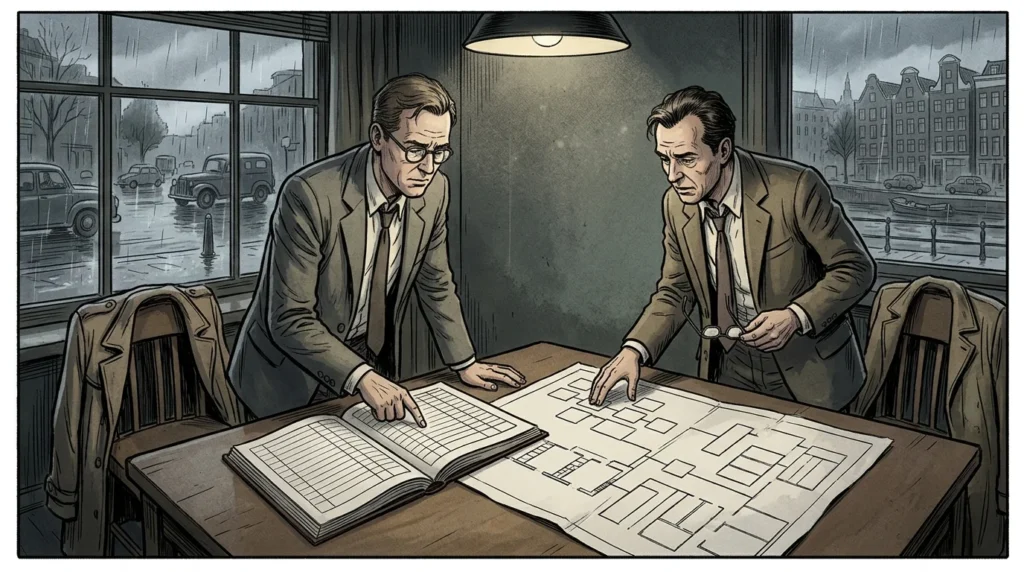
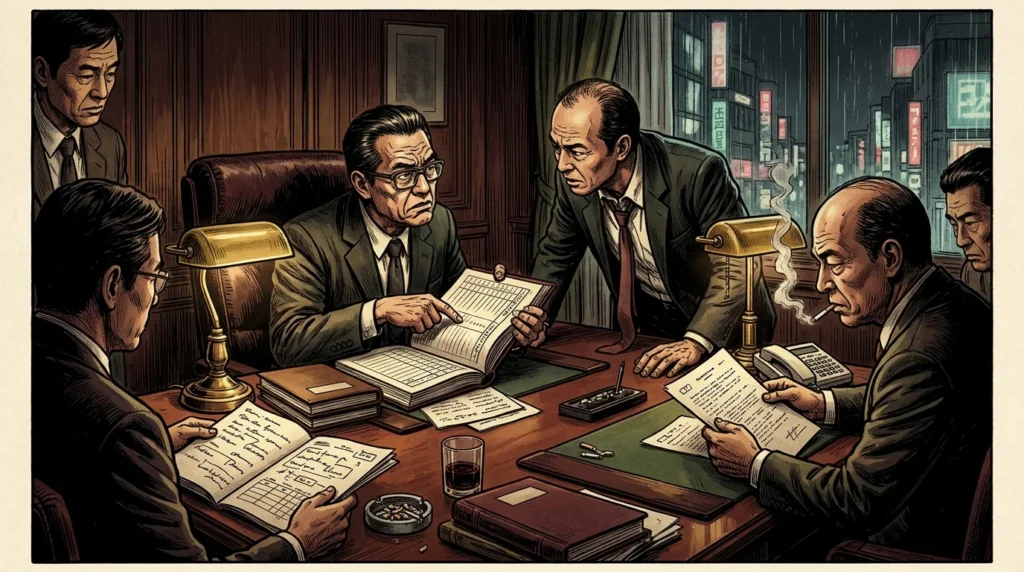
Unsatisfied with their evasions, Woodford independently commissioned PricewaterhouseCoopers (PwC) to investigate the $687 million Axam payment. On October 11, 2011, PwC delivered a report confirming that $687 million had gone to an unverified Cayman Islands entity that had shortly thereafter been struck off the corporate register for non-payment of license fees, and warning that the payments could involve improper outflows and legal violations. When Woodford wrote to Kikukawa demanding that he and Mori resign, Kikukawa instead convened an emergency board meeting on the morning of October 14, 2011, at which the compliant Japanese directors voted unanimously in minutes to strip Woodford of the presidency and oust him from management. [9]
Woodford immediately handed the PwC dossier to the Financial Times, the UK Serious Fraud Office (SFO), the U.S. Federal Bureau of Investigation (FBI), and Japanese regulators. As Olympus’s share price lost more than half its value—erasing over $5 billion in market capitalization—Kikukawa resigned on October 26, 2011, and Olympus admitted the two-decade cover-up on November 8. On December 6, 2011, an independent third-party panel chaired by former Japanese Supreme Court Justice Tatsuo Kainaka published a landmark 243-page investigation report concluding that Olympus’s core management was ”rotten” and documenting that ¥117.7 billion in net investment losses had been concealed through ¥134.8 billion in fraudulent M&A outflows.
Arrests, Criminal Convictions, and Governance Legacy
In January 2012, Olympus filed civil lawsuits seeking ¥3.61 billion ($47 million) from Kikukawa and a combined $215 million in damages from 19 current and former executives and statutory auditors. On February 16, 2012, Tokyo prosecutors and police arrested former President Tsuyoshi Kikukawa, former Executive Vice President Hisashi Mori, former chief internal auditor Hideo Yamada, and four external financial advisers on charges of falsifying financial statements under Japan’s Financial Instruments and Exchange Act. In March 2012, Olympus Corporation itself was formally indicted alongside the executives.
In July 2013, the Tokyo District Court fined Olympus ¥700 million and handed suspended prison sentences to Kikukawa, Mori, and Yamada after they pleaded guilty to falsifying fiscal 2006 and 2007 balance sheets, while Woodford received a £10 million ($15.4 million) wrongful dismissal settlement from Olympus in a London employment tribunal in June 2012. Narrowly escaping delisting from the Tokyo Stock Exchange and rescued via a ¥50 billion strategic equity injection from Sony Corporation in 2012, the Olympus scandal exposed the dangers of insular, insider-dominated Japanese corporate boards and became a primary catalyst for Prime Minister Shinzo Abe’s 2014 Stewardship Code and 2015 Corporate Governance Code mandating independent outside directors across Corporate Japan.
Theoretical & Balance-Sheet Transmission Mechanism
In the Kindleberger–Minsky taxonomy of financial instability (Kindleberger, 1978; Minsky, 1986) and Irving Fisher’s (1933) debt-deflation framework, speculative asset booms become systemic crises when credit expansion shifts balance sheets from hedge finance (cash flows covering principal and interest) to speculative and Ponzi finance (relying on rising asset prices and short-term margin roll-overs).
Once monetary tightening or an exogenous shock halts price appreciation, forced margin liquidations trigger Fisherian debt-deflation: fire-sale asset discounts erode bank collateral values, contracting credit supply across the real economy.
Sources and Further Reading
- Justin McCurry, “ Olympus chairman quits amid takeover scandal,” The Guardian, 2011-10-26. Historical & Financial Reference
- Al Jazeera, “ Olympus probed over scandal,” Al Jazeera, 2011-11-16. Historical & Financial Reference
- Global News, “ Probe finds elaborate coverup at Japan’s Olympus, investment losses of at least $1.5 billion,” Global News, 2011-12-05. Historical & Financial Reference
- Al Jazeera, “ Olympus sues executives over cover-up,” Al Jazeera, 2012-01-10. Historical & Financial Reference
- Al Jazeera, “ Ex-Olympus executives held in fraud probe,” Al Jazeera, 2012-02-16. Historical & Financial Reference
- Al Jazeera, “ Olympus charged over accounts scandal,” Al Jazeera, 2012-03-07. Historical & Financial Reference
- Rupert Neate, “ Former Olympus chief gets £10m payoff,” The Guardian, 2012-06-08. Historical & Financial Reference
- Irving Fisher — "The Debt-Deflation Theory of Great Depressions," Econometrica 1, no. 4 (FRASER Federal Reserve Archive, 1933): 337–357 Central Bank / Monetary Authority
- Charles P. Kindleberger & Robert Z. Aliber — Manias, Panics, and Crashes: A History of Financial Crises (Palgrave Macmillan) Peer-Reviewed / Academic Research
Cite This Historical Dossier (APA / Chicago)
APA (7th ed.): Ç., S. (Ed.). (2026). The 2011 Olympus Accounting Scandal and Multi-Decade Tobashi Cover-Up. In Forgotten Fortunes Historical Monograph Series (Forgotten Fortunes Editorial Desk). https://forgottenfortunes.net/olympus-tobashi-accounting-scandal/
MLA (9th ed.): Ç., Soner, ed. "The 2011 Olympus Accounting Scandal and Multi-Decade Tobashi Cover-Up." Forgotten Fortunes: Financial & Monetary History Archive, 2026, https://forgottenfortunes.net/olympus-tobashi-accounting-scandal/.
Chicago (17th ed.): Ç., Soner, ed. "The 2011 Olympus Accounting Scandal and Multi-Decade Tobashi Cover-Up." Forgotten Fortunes Historical Monograph Series (Forgotten Fortunes Editorial Desk), September 12, 2026. https://forgottenfortunes.net/olympus-tobashi-accounting-scandal/.
Have an idea for another financial history documentary or article? Request a story →