In This Article
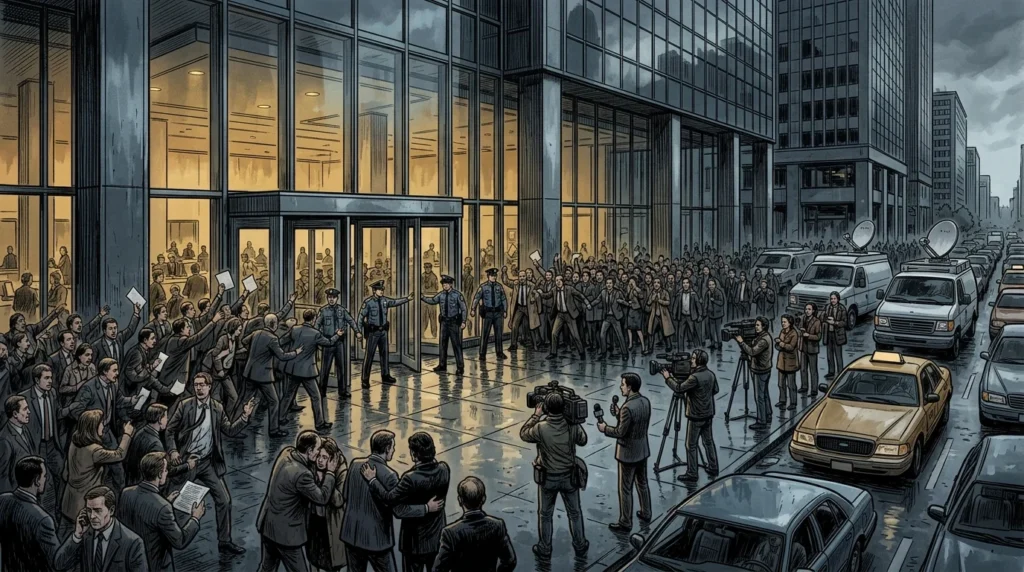
In the early morning hours of Monday, September 15, 2008, Lehman Brothers Holdings Inc.—then the fourth-largest investment bank in the United States, with a corporate lineage stretching back 164 years—filed for Chapter 11 bankruptcy protection in the largest corporate insolvency in American history [3][5]. Over the preceding decade under long-serving Chief Executive Officer Richard Fuld, the Wall Street firm had pursued a high-leverage business strategy that required raising billions of dollars in short-term wholesale funding every day to finance vast inventories of real estate and mortgage-backed assets [3]. When emergency weekend talks at the Federal Reserve Bank of New York failed to secure a private buyer or a public guarantee, the parent holding company collapsed, sending an immediate shockwave through global money markets [1][2][5].
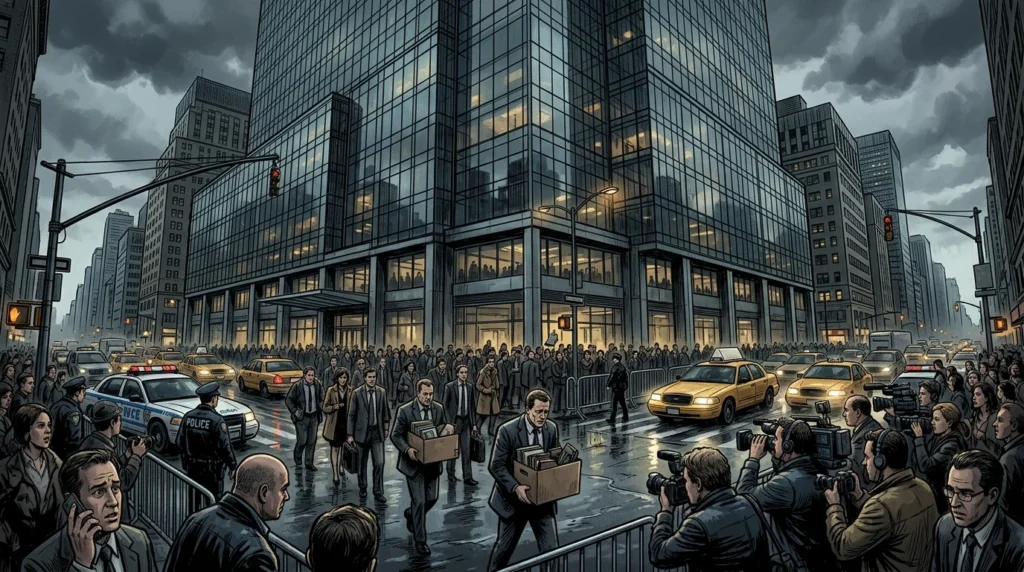
At the heart of Lehman’s failure lay two interconnected structural vulnerabilities: a fragmented “non-bank” regulatory architecture and an aggressive vertical integration into nonprime mortgage origination [1][8]. Because Lehman did not own a commercial bank charter, its parent holding company fell outside mandatory Federal Reserve supervision, operating instead under a voluntary Securities and Exchange Commission (SEC) program that lacked statutory enforcement powers over group-wide liquidity and capital [1]. Simultaneously, its broker-dealer subsidiary, Lehman Brothers Inc. (LBI), was deeply integrated into the parent’s treasury and funding operations—an arrangement that left LBI with zero liquid assets against $23 billion in liabilities when it entered liquidation days after the parent’s bankruptcy [7].
Non-Bank Regulatory Architecture and Mortgage Integration
Unlike commercial bank holding companies, which were subject to consolidated statutory supervision by the Federal Reserve, major standalone Wall Street investment banks operated under a lighter regulatory regime prior to 2008 [1]. Under federal law at the time, Lehman Brothers was permitted to own a federally insured savings association without becoming subject to Federal Reserve oversight [1]. Regulatory jurisdiction over Lehman’s core U.S. securities broker-dealer subsidiaries belonged to the SEC, which beginning in the mid-2000s also monitored the parent holding company under its Consolidated Supervised Entity (CSE) program [1]. Crucially, the CSE framework was entirely voluntary, established by agreement between the SEC and the participating investment banks without explicit statutory authorization or binding consolidated liquidity mandates [1].
Operating within this permissive framework, Lehman moved beyond traditional securities underwriting and advisory services to construct a vertically integrated residential mortgage pipeline [3][8]. Beginning in 2006, even as the U.S. housing boom showed early signs of strain, the firm expanded aggressively into real-estate-related assets and nonprime mortgage lending [3]. Lehman controlled both ends of the securitization chain through two specialized lending subsidiaries: Aurora Loan Services, based in Littleton, Colorado, which focused on “Alt-A” mortgages for borrowers who provided limited income documentation, and BNC Mortgage, based in Irvine, California, which originated subprime loans for borrowers with impaired credit histories [8].
By originating nonprime loans directly through Aurora and BNC, packaging those loans into residential mortgage-backed securities (RMBS) and collateralized debt obligations, and holding substantial tranches on its own books, Lehman accumulated enormous exposure to the American housing market [3][8]. When subprime delinquencies and defaults surged across the United States in mid-2007, dozens of nonbank mortgage originators imploded [8]. On August 22, 2007, after combining the management of Aurora and BNC earlier that summer, Lehman announced the complete shutdown of BNC Mortgage, eliminating 1,200 jobs across 23 U.S. locations and recording a $25 million after-tax charge alongside a $27 million goodwill writedown [8].
| Documented Figure / Metric | Historical Significance & Archival Context |
|---|---|
| $6 billion | Following a heavy second-quarter loss in June 2008, Lehman succeeded in raising approximately $6 billion in fresh equity capital and took steps to trim its exposures in July, yet it proved unable to secure a strategic buyer or sufficient long-term capital to offset continuing real estate writedowns. |
| $18.5 billion | On Friday, September 12, LBI had $18.5 billion in borrowing outstanding at the Fed's Term Securities Lending Facility and $87 billion in secured overnight repo obligations that its clearing bank, JPMorgan Chase, needed to unwind on Monday morning. |
| $106 billion | Most customer accounts were transferred or satisfied within weeks, and the estate ultimately returned $106 billion to fully satisfy all 111,000 customer claims. |
Illiquid Balance-Sheet Exposure, Repo 105, and Supervisory Stress Tests
Shutting down its subprime origination arm did not insulate Lehman from the illiquid real estate and mortgage inventories already sitting on its balance sheet [3][8]. Because the firm funded these long-term, hard-to-value assets primarily through overnight repurchase agreements (repos) and short-term commercial paper, its survival depended on maintaining the confidence of repo counterparties, clearing banks, and credit rating agencies [3][5]. As mortgage valuations deteriorated during late 2007 and 2008, a court-appointed bankruptcy examiner later documented in a 2,200-page report that Lehman relied heavily on an off-balance-sheet accounting maneuver known as “Repo 105” [1][4]. By classifying short-term repo borrowings as outright sales just before quarterly reporting dates, Lehman temporarily removed up to $50 billion in assets from its balance sheet at quarter-end to report artificially lower net leverage ratios to investors and regulators [4].
After the near-collapse and Federal Reserve-assisted sale of rival investment bank Bear Stearns to JPMorgan Chase in March 2008, the Federal Reserve invoked its emergency lending powers under Section 13(3) of the Federal Reserve Act to create the Primary Dealer Credit Facility (PDCF) and the Term Securities Lending Facility (TSLF) [1][2]. Because these facilities provided backstop liquidity to non-bank primary dealers, the Federal Reserve placed two staff members onsite at Lehman to monitor its liquidity and ability to repay [1]. Even so, as Chairman Ben S. Bernanke later testified before Congress, those onsite monitors acted strictly in the Fed’s capacity as a potential creditor and had no statutory authority to regulate Lehman’s capital, disclosures, or business operations—nor was the Fed aware at the time of Lehman’s Repo 105 transactions, which staff had not even reported to Lehman’s own board of directors [1].
Throughout the spring and summer of 2008, the Federal Reserve and the SEC jointly conducted liquidity stress tests across the major primary dealers and formally shared the procedures under a July 2008 information-sharing agreement [1]. The stress tests revealed severe deficiencies in Lehman’s available liquidity, and regulators strongly urged management to bolster its capital and funding profile [1]. Following a heavy second-quarter loss in June 2008, Lehman succeeded in raising approximately $6 billion in fresh equity capital and took steps to trim its exposures in July, yet it proved unable to secure a strategic buyer or sufficient long-term capital to offset continuing real estate writedowns [1][3].
The September 2008 Crisis Weekend and the Section 13(3) Debate
As market confidence in Lehman evaporated in early September 2008, short-term creditors and clearing counterparties demanded larger collateral haircuts or refused to roll over funding altogether [3][5]. Over the weekend of September 13–14, 2008, officials from the Federal Reserve, the U.S. Treasury Department, and the SEC convened the chief executives of major Wall Street institutions at the Federal Reserve Bank of New York in an urgent effort to arrange a private-sector rescue of Lehman while simultaneously confronting mounting distress at Merrill Lynch and insurer American International Group (AIG) [1][2].
The rescue talks centered on a proposed acquisition of Lehman Brothers Holdings Inc. by the British bank Barclays [5]. That transaction required a temporary guarantee of Lehman’s trading obligations until the deal closed, which under UK corporate governance rules necessitated shareholder approval or a regulatory waiver from the UK Financial Services Authority. On Sunday, September 14, the Barclays acquisition fell apart after British regulators declined to waive the requirement for a shareholder vote and U.S. authorities informed the parties that no public funds were available to backstop the takeover [5]. With no viable buyer left, U.S. officials advised Lehman’s board that the holding company would need to file for Chapter 11 bankruptcy before markets opened on Monday morning, September 15 [2][5].
Why the Federal Reserve did not extend an institution-specific rescue loan to save Lehman—as it did for Bear Stearns in March 2008 and for AIG on September 16, 2008—became one of the most fiercely debated questions of the financial crisis [2][6]. In congressional testimony, Chairman Bernanke maintained that Lehman required both substantial equity capital and an open-ended unsecured guarantee of its obligations to open for business on September 15, neither of which the Federal Reserve had legal authority to provide [1]. Bernanke further stated that under Section 13(3) of the Federal Reserve Act, the central bank could lend only against “adequate collateral,” and that Lehman lacked collateral of sufficient quality and quantity to assure repayment of a rescue loan [1][2]. In a 2016 National Bureau of Economic Research study, however, economist Laurence Ball disputed that official explanation, arguing from internal records and balance-sheet data that Lehman did possess sufficient collateral to support a liquidity rescue under Section 13(3) and that policy considerations rather than strict legal incapacity drove the decision [6].
Emergency Broker-Dealer Financing and the 14-Year SIPA Liquidation
Although the parent holding company (LBHI) filed for Chapter 11 bankruptcy early on September 15, its regulated U.S. broker-dealer subsidiary, Lehman Brothers Inc. (LBI), was initially kept out of bankruptcy so that it could unwind its trades in an orderly manner and complete a scaled-back sale of its core brokerage operations to Barclays [5][7]. On Friday, September 12, LBI had $18.5 billion in borrowing outstanding at the Fed’s Term Securities Lending Facility and $87 billion in secured overnight repo obligations that its clearing bank, JPMorgan Chase, needed to unwind on Monday morning [2][5]. To prevent a chaotic firesale of collateral on Monday, the Federal Reserve expanded eligible collateral at the Primary Dealer Credit Facility on Sunday evening, allowing LBI to borrow $28 billion through the PDCF on September 15 before Barclays stepped in on September 18 to assume the financing ahead of its purchase of most of LBI’s operating business [2][5].
The parent company’s collapse nevertheless fatally undermined the broker-dealer’s balance sheet. Because Lehman’s global corporate structure commingled cash and liquidity management across entities, pre-liquidation asset transfers and subsidiary sales to the holding company stripped LBI of liquid reserves, leaving the broker-dealer with zero liquid assets against $23 billion in liabilities [7]. On Friday, September 19, 2008, LBI was placed into formal liquidation in the U.S. District Court for the Southern District of New York under the Securities Investor Protection Act (SIPA)—the largest securities brokerage liquidation in U.S. history [5][7]. Meanwhile, across the broader financial system, losses on Lehman commercial paper caused the Reserve Primary Fund to “break the buck” on September 16, triggering a systemic run on prime money market mutual funds that forced the Treasury and Federal Reserve to establish emergency money-market guarantee and liquidity facilities [2].
Over the next 14 years, court-appointed SIPA trustee James W. Giddens untangled LBI’s omnibus accounts, cross-border counterparty disputes, and complex asset claims without drawing on taxpayer bailout funds or advances from the Securities Investor Protection Corporation (SIPC) [7]. Most customer accounts were transferred or satisfied within weeks, and the estate ultimately returned $106 billion to fully satisfy all 111,000 customer claims [7]. Secured, priority, and administrative creditors also received 100 percent distributions, while general unsecured creditors received more than $9.372 billion—a 41.2841 percent recovery rate—before U.S. Bankruptcy Judge Shelley C. Chapman officially closed the SIPA proceeding on September 28, 2022, with total recoveries exceeding $115 billion [7].
Theoretical & Balance-Sheet Transmission Mechanism
In the Kindleberger–Minsky taxonomy of financial instability (Kindleberger, 1978; Minsky, 1986) and Irving Fisher’s (1933) debt-deflation framework, speculative asset booms become systemic crises when credit expansion shifts balance sheets from hedge finance (cash flows covering principal and interest) to speculative and Ponzi finance (relying on rising asset prices and short-term margin roll-overs).
Once monetary tightening or an exogenous shock halts price appreciation, forced margin liquidations trigger Fisherian debt-deflation: fire-sale asset discounts erode bank collateral values, contracting credit supply across the real economy.
Sources and Further Reading
- Ben S. Bernanke, “ Lessons from the failure of Lehman Brothers,” Board of Governors of the Federal Reserve System, 2010-04-20. Central Bank / Monetary Authority
- Federal Reserve History, “ Support for Specific Institutions, 2008-2009,” Federal Reserve History. Central Bank / Monetary Authority
- Rosalind Z. Wiggins, Thomas Piontek, and Andrew Metrick, “ The Lehman Brothers Bankruptcy A: Overview,” Yale Program on Financial Stability (Journal of Financial Crises), 2019. Peer-Reviewed / Academic Research
- Rosalind Z. Wiggins and Andrew Metrick, “ The Lehman Brothers Bankruptcy C: Managing the Balance Sheet Through the Use of Repo 105,” Yale Program on Financial Stability (Journal of Financial Crises), 2019. Peer-Reviewed / Academic Research
- Ayodeji George and Steven Kelly, “ United States: Lehman Brothers Broker-Dealer Emergency Liquidity Program, 2008,” Yale Program on Financial Stability (Journal of Financial Crises), 2025. Peer-Reviewed / Academic Research
- Laurence M. Ball, “ The Fed and Lehman Brothers: Introduction and Summary,” National Bureau of Economic Research, 2016-07. Peer-Reviewed / Academic Research
- Securities Investor Protection Corporation, “ Lehman Brothers Inc.’s 14-Year Liquidation Successfully Concludes,” Securities Investor Protection Corporation, 2022-09-28. Historical & Financial Reference
- TheStreet.com, “ Lehman Brothers Amputates Mortgage Arm,” TheStreet.com (Internet Archive), 2007-08-22. Historical & Financial Reference
- Irving Fisher — "The Debt-Deflation Theory of Great Depressions," Econometrica 1, no. 4 (FRASER Federal Reserve Archive, 1933): 337–357 Central Bank / Monetary Authority
- Charles P. Kindleberger & Robert Z. Aliber — Manias, Panics, and Crashes: A History of Financial Crises (Palgrave Macmillan) Peer-Reviewed / Academic Research
Cite This Historical Dossier (APA / Chicago)
APA (7th ed.): Ç., S. (Ed.). (2026). The Collapse of Lehman Brothers: Non-Bank Architecture and Mortgage Risk. In Forgotten Fortunes Historical Monograph Series (Forgotten Fortunes Editorial Desk). https://forgottenfortunes.net/collapse-of-lehman-brothers-non-bank-architecture/
MLA (9th ed.): Ç., Soner, ed. "The Collapse of Lehman Brothers: Non-Bank Architecture and Mortgage Risk." Forgotten Fortunes: Financial & Monetary History Archive, 2026, https://forgottenfortunes.net/collapse-of-lehman-brothers-non-bank-architecture/.
Chicago (17th ed.): Ç., Soner, ed. "The Collapse of Lehman Brothers: Non-Bank Architecture and Mortgage Risk." Forgotten Fortunes Historical Monograph Series (Forgotten Fortunes Editorial Desk), August 28, 2026. https://forgottenfortunes.net/collapse-of-lehman-brothers-non-bank-architecture/.
Have an idea for another financial history documentary or article? Request a story →