In This Article
When Chile’s private banking system imploded between 1982 and 1983 amid a currency crash and rampant conglomerate self-lending, the Central Bank of Chile executed one of the largest relative financial rescues in modern history, absorbing bad loans at a cumulative fiscal and quasi-fiscal cost estimated at 42 percent of gross domestic product. To prevent a collapse of the payments system without forgiving the rescued lenders, the state converted the toxic portfolios of flagship institutions such as Banco de Chile and Banco de Santiago into a perpetual liability owed to the monetary authority: the “subordinated debt” (deuda subordinada). For more than a decade after Chile’s return to democracy in 1990, this multi-billion-dollar overhang distorted bank balance sheets and saddled the Central Bank with quasi-fiscal deficits—until Finance Minister Eduardo Aninat enacted Law No. 19.396 in July 1995, establishing a forty-year repayment architecture that Banco de Chile finally extinguished seventeen years ahead of schedule in April 2019. Paired with the strict post-1986 General Banking Law and the 1996–2002 wave of mega-mergers led by Spain’s Banco Santander and the Chilean Luksic group, the subordinated-debt resolution transformed Chile into Latin America’s most stable banking system. [1]
The 42%-of-GDP 1982–1983 Bailout and the Birth of Perpetual Subordinated Debt
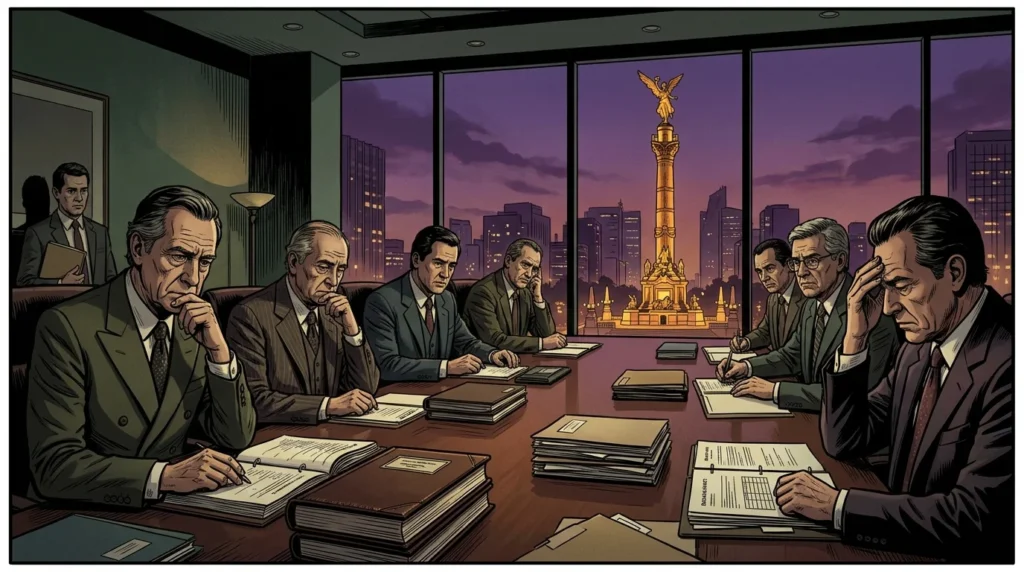
The origins of Chile’s 1990s subordinated-debt drama lay in the catastrophic collapse of the country’s first radical financial liberalization (1975–1981). During the late 1970s, privatized commercial banks controlled by highly leveraged industrial conglomerates (grupos económicos such as the Vial and Cruzat-Larraín groups) borrowed heavily in U.S. dollars overseas and funneled loans to their own affiliated companies (créditos relacionados). When international interest rates spiked, copper prices fell, and the military government abandoned its fixed exchange rate of 39 pesos per dollar in June 1982, corporate borrowers defaulted en masse, compromising roughly 60 percent of the national credit market. On January 13, 1983, the government intervened five major banks—including Chile’s two largest private lenders, Banco de Chile and Banco de Santiago—and liquidated three others. [2]
To keep the intervened banks operating and avoid wiping out foreign creditors and domestic depositors, the Central Bank of Chile (Banco Central de Chile, BCCh) purchased the commercial banks’ non-performing loan portfolios (cartera vencida) at par in exchange for Central Bank promissory notes, while recapitalizing the lenders in 1985 under Law No. 18.401 through tax-subsidized “popular capitalism” (capitalismo popular) share offerings to tens of thousands of small taxpayers. Across the 1982–1987 rescue programs, the cumulative quasi-fiscal cost reached approximately 42 percent of Chilean GDP. [3]
Initially, the rescued banks were required to repurchase their bad loan portfolios from the Central Bank over fixed horizons. When it became clear that their earnings could not meet fixed maturities without triggering a second insolvency, Law No. 18.840 and modifications to Article 15 of Law No. 18.401 in 1989 converted the repurchase agreements into a perpetual “subordinated obligation” (obligación subordinada). Under this mechanism, the debt had no fixed maturity date, ranked junior to all depositors and general creditors, and accrued interest at the inflation-indexed Unidad de Fomento (UF) plus 5 percent real interest per year, payable solely out of a fixed share (roughly 70 percent) of the debtor banks’ annual net surpluses. [4]
| Documented Figure / Metric | Historical Significance & Archival Context |
|---|---|
| 35.4 percent | In January 1997, OHCH merged its healthy lender Banco O'Higgins with Banco de Santiago and extinguished Banco de Santiago's entire subordinated debt overnight by handing the Central Bank of Chile a 35.4 percent equity stake in the newly unified Banco Santiago. |
| 63 percent | SM-Chile pledged the dividend streams of a massive block of underlying shares—representing roughly 63 percent of the original capital and approximately 42 percent of Banco de Chile's shares following its later merger with Banco de A. |
| 85 percent | The equilibrium shattered in January 1999 when Banco Santander and BCH announced their mega-merger in Madrid to form Banco Santander Central Hispano (BSCH)—placing BSCH in the position of simultaneously holding 85 percent of No. |
| US$600 million | In March–May 1999, BSCH and the Luksic group dissolved their OHCH partnership, with BSCH paying Luksic US$600 million for its half of the joint venture. |
The Quasi-Fiscal Trap and Eduardo Aninat’s Law No. 19.396 (July 1995)
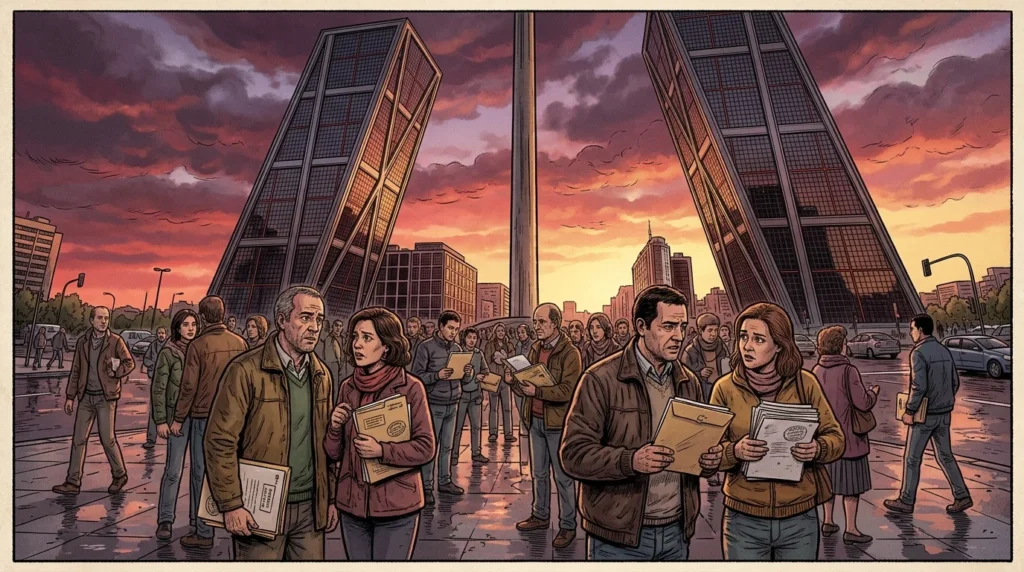
By the early 1990s, following Chile’s transition to democratic governance, the perpetual subordinated debt had become both a political flashpoint and a structural drag on the Central Bank. Although smaller rescued institutions gradually paid off their obligations, the combined subordinated debt of Chile’s two largest private banks—Banco de Chile and Banco de Santiago—exceeded US$4.3 billion (more than UF 120 million). Because the 5 percent real interest surcharge compounded faster than the annual profit-sharing transfers made by the two banks, the principal balance owed to the Central Bank actually grew larger every year, inflicting chronic quasi-fiscal losses on the monetary authority while restricting the debtor banks from expanding into new financial services under normal market incentives. [5]
Determined to close the chapter on the 1982 bailout, President Eduardo Frei Ruiz-Tagle’s Finance Minister, Eduardo Aninat, and Central Bank President Roberto Zahler negotiated a comprehensive statutory settlement with the banks’ private shareholders. Promulgated in the Diario Oficial on July 29, 1995, Law No. 19.396 (supplemented for tax treatment by Law No. 19.459 in May 1996 and Circular No. 54 of the Internal Revenue Service, SII) replaced the open-ended perpetual obligation with a binding forty-year maximum amortization regime. [6]
Under Law No. 19.396, debtor banks were given two primary paths to restructure or extinguish their liability. First, a bank could modify its payment schedule into forty fixed minimum annual installments equal to its pledged profit-sharing surplus; if annual profits fell short of the minimum installment, the bank was legally required to issue and deliver new shares (or auction shares to the market) to cover the deficit. Second, Law No. 19.396 authorized banks to extinguish the subordinated debt immediately—including within the framework of bank mergers—through the direct transfer of equity shares in payment (dación en pago de acciones) to the Central Bank of Chile. [7]
Two Paths: Banco de Santiago’s Equity Swap vs. Banco de Chile’s SM-Chile / SAOS Structure
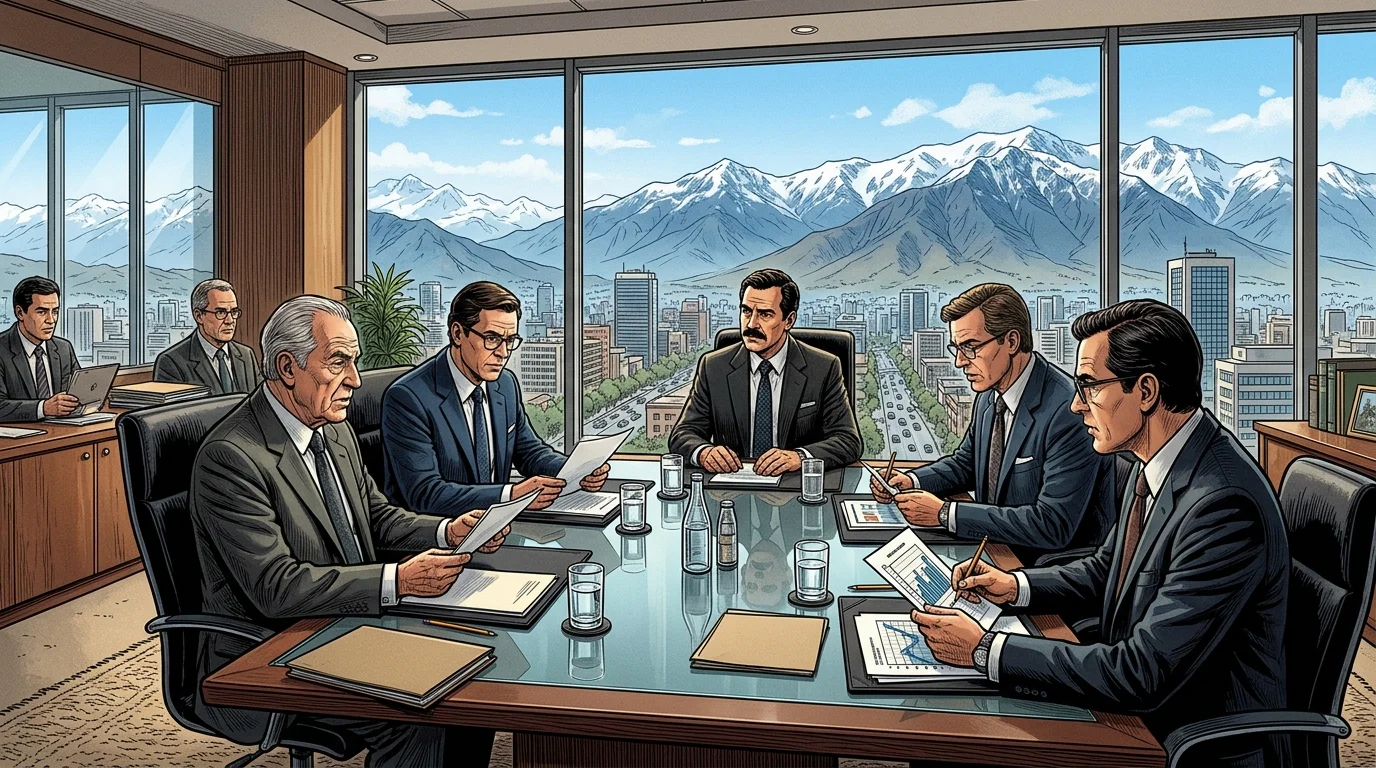
Chile’s two banking giants chose opposite mechanisms under Law No. 19.396, setting the stage for two decades of corporate financial history. At Banco de Santiago—where the powerful Chilean Luksic family (operating through its holding company Quiñenco) had partnered 50–50 with Spain’s Banco Central Hispano (BCH) inside the O’Higgins Central Hispano (OHCH) consortium—management used Law No. 19.396 to engineer a landmark merger. In January 1997, OHCH merged its healthy lender Banco O’Higgins with Banco de Santiago and extinguished Banco de Santiago’s entire subordinated debt overnight by handing the Central Bank of Chile a 35.4 percent equity stake in the newly unified Banco Santiago. [8]
At Banco de Chile, by contrast, the dispersed “popular capitalism” shareholders elected the forty-year installment plan in November 1996. Pursuant to Law No. 19.396, the bank reorganized under a parent holding company, Sociedad Matriz del Banco de Chile S.A. (SM-Chile), and a specialized debt-servicing subsidiary, Sociedad Administradora de la Obligación Subordinada S.A. (SAOS). SM-Chile pledged the dividend streams of a massive block of underlying shares—representing roughly 63 percent of the original capital and approximately 42 percent of Banco de Chile‘s shares following its later merger with Banco de A. Edwards—inside SAOS exclusively to pay the annual UF-indexed installments to the Central Bank until 2036. [9]
The 1996–2002 Santander–Santiago Mega-Mergers and the April 2019 Final Payoff
The cleanup of the subordinated debt under Law No. 19.396 unleashed an intense battle for supremacy in Chilean banking between Spain’s Banco Santander, led by Emilio Botín, and Andrónico Luksic’s Quiñenco group. In 1996, Santander acquired Banco Osorno y La Unión to form Banco Santander-Chile, the country’s second-largest bank behind Luksic and BCH’s merged Banco Santiago. The equilibrium shattered in January 1999 when Banco Santander and BCH announced their mega-merger in Madrid to form Banco Santander Central Hispano (BSCH)—placing BSCH in the position of simultaneously holding 85 percent of No. 2 Banco Santander-Chile and sharing control with Luksic over 43.5 percent of No. 1 Banco Santiago (amounting to roughly 30 percent of the entire Chilean banking system).
In March–May 1999, BSCH and the Luksic group dissolved their OHCH partnership, with BSCH paying Luksic US$600 million for its half of the joint venture. Less than twenty-four hours after stepping down as chairman of Banco Santiago on May 3, 1999, Andrónico Luksic stunned Madrid by launching a surprise US$900 million public tender offer (OPA) for 45 percent of Banco Santiago—with the sympathetic backing of Central Bank President Carlos Massad (who still held the state’s 35.4 percent share block) and HSBC—before ultimately pivoting to acquire a controlling stake in rival Banco de Chile between 1999 and 2001. In 2002, BSCH bought out the Central Bank of Chile’s 35.4 percent stake in Banco Santiago and merged Banco Santiago into Banco Santander-Chile in August 2002, creating the country’s largest bank by assets.
Meanwhile, under Luksic control, Banco de Chile merged with Banco de A. Edwards in January 2002 and with Citibank’s Chilean operations in 2008. Supported by decades of high return on equity—with annual SAOS transfers reaching figures such as 142,003 million pesos (roughly US$215 million) from 2016 profits alone—SM-Chile and SAOS paid off the last remaining installment of Banco de Chile‘s subordinated debt at the end of April 2019, seventeen years ahead of the 2036 statutory deadline. That payment triggered the automatic dissolution of SM-Chile and SAOS, formally closing the thirty-seven-year ledger of the 1982 bank bailout.
The Post-1986 General Banking Law and Basel III Resilience
Crucially, Chile never suffered a repeat of the 1982 collapse because the debt workout was paired with one of the developing world’s strictest prudential frameworks: the November 1986 overhaul of the General Banking Law (Ley General de Bancos, DFL No. 252). Enacted in the wake of the crisis, the 1986 law severely restricted connected-party lending to conglomerate insiders, mandated forward-looking loan-loss provisioning based on expected debtor cash flows rather than past-due arrears alone, prohibited state deposit insurance on risk-bearing time deposits to enforce market discipline, and required the Superintendency of Banks and Financial Institutions (SBIF) to publish independent solvency ratings at least twice a year.
Further modernized by the December 1997 General Banking Law reform (Law No. 19.528)—which adopted Basel I risk-weighted capital adequacy standards and authorized Chilean banks to internationalize—and the January 2019 Law No. 21.130—which merged the banking regulator into the Comisión para el Mercado Financiero (CMF) and implemented full Basel III capital conservation and systemic-bank buffers—Chile’s regulatory architecture insulated its financial system from the 1998 Asian-Russian crisis, the 2001–2002 Argentine default next door, and the 2008 global financial crisis without a single systemic bank failure.
Theoretical & Balance-Sheet Transmission Mechanism
In the Kindleberger–Minsky taxonomy of financial instability (Kindleberger, 1978; Minsky, 1986) and Irving Fisher’s (1933) debt-deflation framework, speculative asset booms become systemic crises when credit expansion shifts balance sheets from hedge finance (cash flows covering principal and interest) to speculative and Ponzi finance (relying on rising asset prices and short-term margin roll-overs).
Once monetary tightening or an exogenous shock halts price appreciation, forced margin liquidations trigger Fisherian debt-deflation: fire-sale asset discounts erode bank collateral values, contracting credit supply across the real economy.
Sources and Further Reading
- Biblioteca del Congreso Nacional de Chile (BCN), “Ley N° 19.396: Dispone un nuevo tratamiento de la obligación subordinada de determinados bancos comerciales con el Banco Central de Chile,” Diario Oficial / Ley Chile, 1995-07-29. Historical & Financial Reference
- Servicio de Impuestos Internos de Chile (SII), “Circular N° 54 del 23 de Septiembre de 1996: Tratamiento tributario de las situaciones previstas en las Leyes N°s 19.396 de 1995 y 19.459 de 1996 sobre obligación subordinada,” Servicio de Impuestos Internos (SII), 1996-09-23. Historical & Financial Reference
- World Bank, “The Chilean Banking Crisis of the 1980s, Prudential Regulation under the 1986 General Banking Law, and Subordinated Debt Restructuring,” World Bank Policy Research Working Paper, 1998. International Financial Institution
- Biblioteca del Congreso Nacional de Chile (BCN), “Ley N° 19.459: Modifica la Ley N° 19.396 sobre nuevo tratamiento de la obligación subordinada y normas de la Ley General de Bancos,” Diario Oficial / Ley Chile, 1996-05-31. Historical & Financial Reference
- El País, “El BCH rompe con su socio chileno Luksic en vísperas de la junta de fusión con el Santander,” El País, 1999-03-05. Historical & Financial Reference
- El País, “OPA del grupo chileno Luksic para recuperar el Banco Santiago y desbancar al BSCH,” El País, 1999-05-06. Historical & Financial Reference
- La Tercera (Pulso), “Banco de Chile cancela en efectivo cuota anual de deuda subordinada al Banco Central,” La Tercera, 2017-03. Historical & Financial Reference
- Irving Fisher — "The Debt-Deflation Theory of Great Depressions," Econometrica 1, no. 4 (FRASER Federal Reserve Archive, 1933): 337–357 Central Bank / Monetary Authority
- Charles P. Kindleberger & Robert Z. Aliber — Manias, Panics, and Crashes: A History of Financial Crises (Palgrave Macmillan) Peer-Reviewed / Academic Research
Cite This Historical Dossier (APA / Chicago)
APA (7th ed.): Ç., S. (Ed.). (2026). Paying Off a 42%-of-GDP Bailout: Chile's Subordinated Debt Law and Bank Mergers. In Forgotten Fortunes Historical Monograph Series (Forgotten Fortunes Editorial Desk). https://forgottenfortunes.net/chile-subordinated-debt-bank-bailout/
MLA (9th ed.): Ç., Soner, ed. "Paying Off a 42%-of-GDP Bailout: Chile's Subordinated Debt Law and Bank Mergers." Forgotten Fortunes: Financial & Monetary History Archive, 2026, https://forgottenfortunes.net/chile-subordinated-debt-bank-bailout/.
Chicago (17th ed.): Ç., Soner, ed. "Paying Off a 42%-of-GDP Bailout: Chile's Subordinated Debt Law and Bank Mergers." Forgotten Fortunes Historical Monograph Series (Forgotten Fortunes Editorial Desk), September 20, 2026. https://forgottenfortunes.net/chile-subordinated-debt-bank-bailout/.
Have an idea for another financial history documentary or article? Request a story →