In This Article
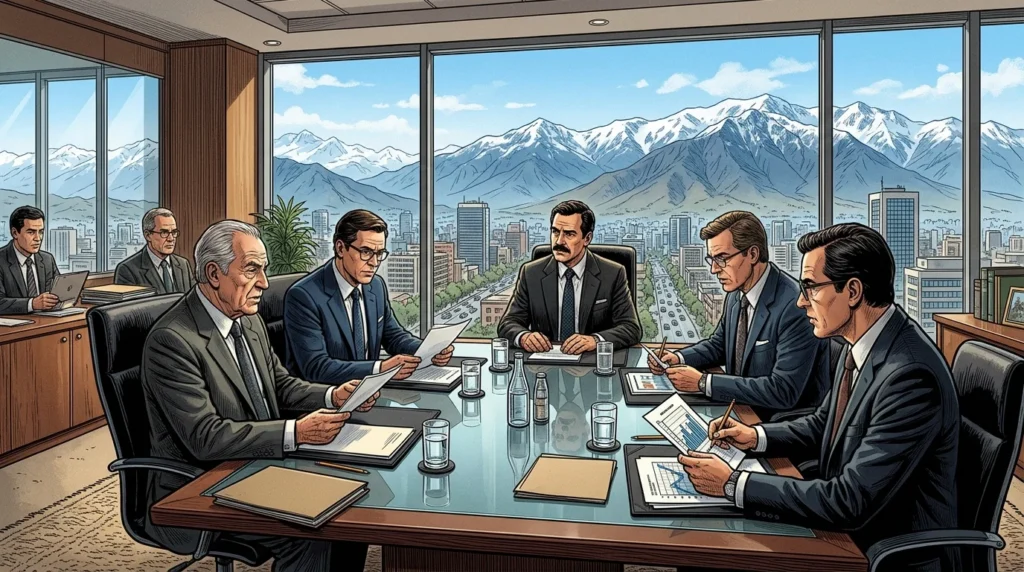
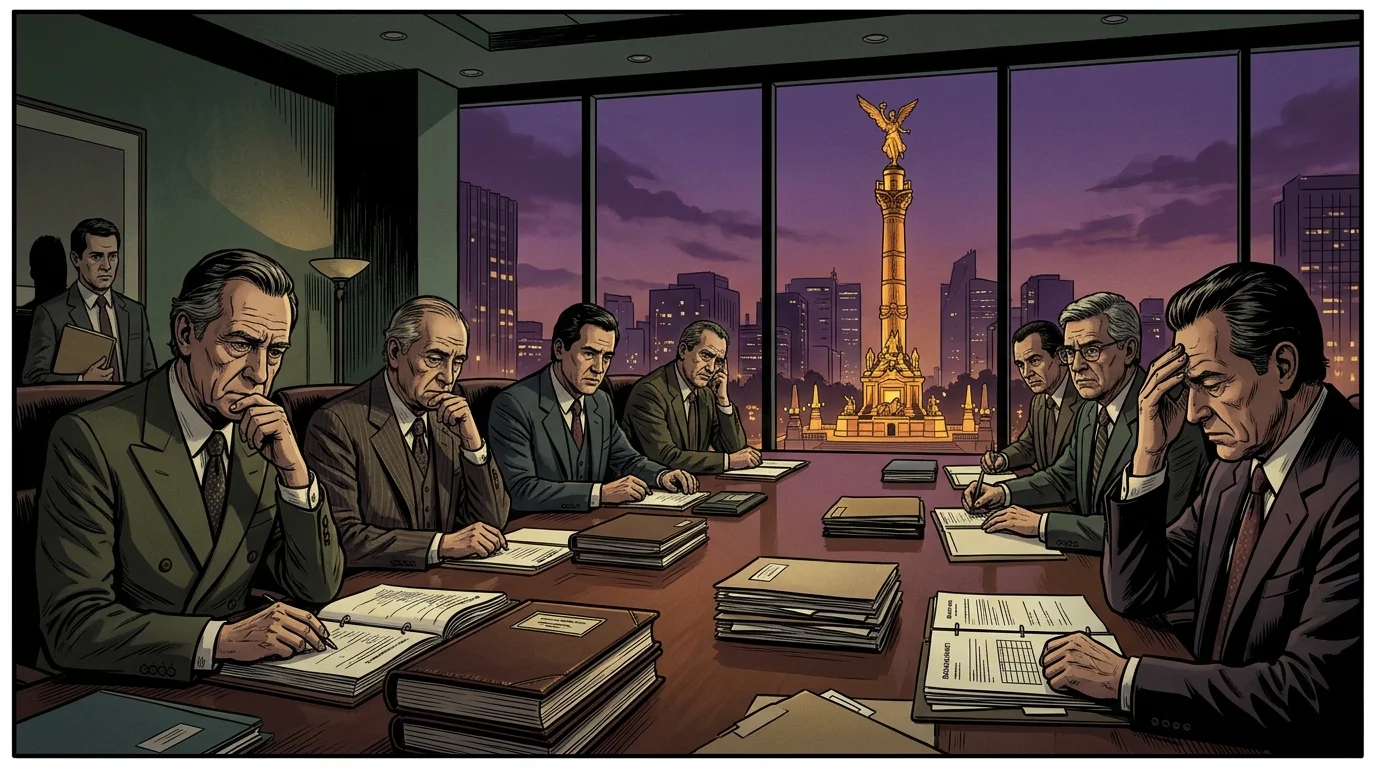
Between 1994 and 1998, Mexico suffered one of the costliest systemic banking crises in modern Latin American history, an upheaval that transformed tens of billions of dollars in private commercial bank losses into a multi-generational sovereign debt burden. Rooted in the rapid and poorly supervised reprivatization of 18 state-owned commercial banks between June 1991 and July 1992 under President Carlos Salinas de Gortari, the banking system expanded domestic credit at breakneck speed while tolerating widespread related-party lending and outright fraud. When the December 1994 peso devaluation—known in Mexico as the Error de Diciembre and internationally as the Tequila Crisis—sent domestic interest rates past 80 to 100 percent, millions of mortgage, commercial, and consumer borrowers defaulted. To prevent a systemic run on deposits, President Ernesto Zedillo’s administration used a central bank trust, the Bank Fund for the Protection of Savings (Fondo Bancario de Protección al Ahorro, or FOBAPROA), to absorb non-performing bank portfolios and rescue insolvent lenders. By December 1998, when the Mexican Congress converted FOBAPROA’s promissory notes into public liabilities managed by the newly created Institute for the Protection of Bank Savings (IPAB), the bailout exceeded 552 billion pesos—roughly USD $65 billion, or 15 percent of Mexico’s gross domestic product. [1]
The 1991–1992 Bank Reprivatization and Moral Hazard
Mexico’s commercial banks had been nationalized in September 1982 by outgoing President José López Portillo in the midst of the Latin American sovereign debt crisis. Throughout the mid-1980s, the nationalized banks functioned primarily as captive financiers for the federal deficit, channeling deposits into government treasury bills (CETES) while starving the private sector of commercial credit. Beginning in 1989, the Salinas administration launched a sweeping financial liberalization program: interest rate ceilings were abolished, mandatory reserve requirements were eliminated, and in May 1990 the Mexican Congress amended the Constitution to reprivatize the commercial banking system. [2]
Executed between June 1991 and July 1992 by the Bank Divestiture Committee (Comité de Desincorporación Bancaria) chaired by Finance Ministry official Guillermo Ortiz Martínez, the auction of the 18 state-owned commercial banks—led by Banamex, Bancomer, and Banca Serfin—was structured primarily to maximize fiscal proceeds for the Mexican state rather than to vet the banking experience or capital adequacy of the buyers. Foreign banks were barred from bidding for controlling stakes, and the 18 institutions were sold in sealed-bid auctions largely to domestic stockbrokerage houses (casas de bolsa) and industrial conglomerates. Eager to capture oligopolistic rents in a protected domestic market, winning bidders paid a staggering total of approximately 38.7 billion new pesos (roughly USD $12.4 billion), representing an average multiple of 3.07 times book value and nearly 15 times historic earnings—far above international banking norms of 1.2 to 1.5 times book value. [3]
Worse still, the institutional and accounting architecture surrounding the newly privatized banks invited reckless risk-taking. Many winning investor syndicates borrowed heavily—often from other Mexican banks or offshore credit lines—to finance their auction bids, leaving the banks thinly capitalized from day one. At the same time, the Mexican government had established FOBAPROA in 1990 as a preventative trust administered by the Banco de México. Each December, the central bank quietly published a notice affirming an unlimited, implicit blanket guarantee covering virtually all bank liabilities, including interbank lines and wholesale deposits, without risk-adjusted insurance premiums. Meanwhile, the National Banking Commission (Comisión Nacional Bancaria, or CNB) lacked consolidated supervision powers and enforced lax Mexican accounting standards that required banks to classify only the overdue installment of a loan—rather than the entire principal balance—as non-performing, allowing troubled banks to roll over unpaid interest and report phantom profits. [4]
| Documented Figure / Metric | Historical Significance & Archival Context |
|---|---|
| 51 percent | The peso plunged from 3.45 per U.S. dollar to over 7.20 per dollar in early 1995, while inflation surged past 51 percent for the year and real GDP contracted by 6.2 percent—Mexico's deepest recession since the 1930s. |
| $50 billion | Second, to stem capital flight and stabilize the exchange rate under the USD $50 billion international rescue package arranged by the U.S. |
| 30 percent | Although the banks remained legally responsible for administering and collecting the transferred loans while sharing 20 to 30 percent of eventual write-offs, recovery rates proved dismal—ultimately yielding less than 20 cents on the dollar. |
| 552.3 billion pesos | By early 1998, FOBAPROA's accumulated liabilities had ballooned to 552.3 billion pesos—approximately USD $65 billion, or roughly 15 percent of Mexican GDP—representing nearly one-third of all commercial bank assets. |
Credit Boom and Insider Fraud at Banca Unión and Banpaís
Needing rapid earnings growth to recoup the 3-times-book-value prices paid at auction, Mexico’s new bank owners unleashed an explosive credit boom. Between 1991 and 1994, real bank lending to the private sector expanded at more than 25 percent per year, rising from roughly 20 percent of GDP in 1990 to over 43 percent of GDP by late 1994. Operating without a national credit bureau, commercial banks competed fiercely to issue adjustable-rate mortgages, auto loans, credit cards, and corporate dollar-denominated lines of credit to borrowers whose creditworthiness had never been tested in a high-interest-rate environment. [5]
Even before the macroeconomic crash of December 1994, non-performing loans were rising sharply and severe insider fraud had rotted several second-tier institutions from within. The most notorious scandal centered on Carlos Cabal Peniche, a charismatic Tabasco agribusinessman who led investor groups that acquired Banco BCH (renamed Banca Unión) in November 1991 and Banca Cremi in 1992. Rather than operating his banks as prudent intermediaries, Cabal Peniche used Banca Unión and Banca Cremi as personal treasuries, routing between USD $700 million and USD $900 million in fraudulent, uncollateralized self-loans through dozens of shell companies to finance his leveraged buyout of Fresh Del Monte Produce and to fund political campaigns. In September 1994—three months before the peso devaluation—Mexican authorities intervened in Banca Unión and Banca Cremi as Cabal Peniche fled the country, becoming an international fugitive until his arrest in Australia in 1998. [6]
A parallel looting scheme unfolded at Banpaís, acquired in June 1991 by an investor group led by thirty-two-year-old financier Ángel Isidoro Rodríguez Sáez, nicknamed “El Divino.” Federal auditors later determined that Rodríguez Sáez had authorized hundreds of millions of dollars in irregular loans to his own companies, family members, and business associates—including financing for executive jets and speculative corporate ventures—without collateral or board oversight. In March 1995, the National Banking Commission seized Banpaís due to pervasive management irregularities and capital insolvency. [7]
The December 1994 Peso Devaluation and Interest Rate Shock
The fragile edifice of Mexican banking shattered in December 1994. Throughout 1994, political shocks—including the January Zapatista uprising in Chiapas and the March assassination of ruling-party presidential candidate Luis Donaldo Colosio—combined with a widening current-account deficit (approaching 7 percent of GDP) and rising U.S. Federal Reserve interest rates to drain the Banco de México’s foreign exchange reserves. To stave off devaluation before the August 1994 presidential election, the Salinas administration replaced peso-denominated CETES with roughly USD $29 billion in short-term, dollar-indexed treasury bills known as Tesobonos. [8]
On December 20, 1994, nineteen days after President Ernesto Zedillo took office, Finance Minister Jaime Serra Puche attempted a controlled 15 percent widening of the peso’s exchange-rate band after allegedly sharing advance word with prominent Mexican business leaders in a meeting dubbed the “Error of December.” Within forty-eight hours, roughly USD $4.5 billion fled the central bank’s dwindling reserves, forcing Mexico to abandon the currency peg on December 22. The peso plunged from 3.45 per U.S. dollar to over 7.20 per dollar in early 1995, while inflation surged past 51 percent for the year and real GDP contracted by 6.2 percent—Mexico’s deepest recession since the 1930s.
For the banking sector, the devaluation delivered a fatal double blow. First, Mexican commercial banks held substantial short-term dollar liabilities and off-balance-sheet currency swaps whose peso cost doubled overnight, while corporate borrowers earning peso revenues defaulted on dollar-denominated bank loans. Second, to stem capital flight and stabilize the exchange rate under the USD $50 billion international rescue package arranged by the U.S. Treasury and the International Monetary Fund in early 1995, the Banco de México tightened monetary policy drastically. Benchmark 28-day CETES rates soared above 80 percent in March 1995, pushing floating-rate mortgage, credit-card, and small-business loan rates past 100 to 120 percent. Unable to service debts that doubled or tripled in months, middle-class households and small businesses organized the mass debtors’ protest movement El Barzón, while true non-performing loans across the banking system exceeded 30 to 35 percent of total credit portfolios.
FOBAPROA’s Capitalization and Loan Purchase Programs
Confronted with the imminent collapse of the national payments system, the Zedillo administration and CNBV President Eduardo Fernández García deployed a multi-tiered rescue architecture through FOBAPROA beginning in early 1995:
- Dollar Liquidity Window and PROCAPTE: In January 1995, the Banco de México opened a special dollar credit window charging punitive interest rates near 25 percent to help commercial banks roll over maturing foreign credit lines. In March 1995, authorities launched the Temporary Capitalization Program (Programa de Capitalización Temporal, or PROCAPTE), under which FOBAPROA purchased 5-year mandatory convertible subordinated debentures from banks whose capital ratios fell below the 8 percent Basel threshold.
- Direct Bank Interventions: Between September 1994 and 1997, the newly merged National Banking and Securities Commission (CNBV) directly intervened in or seized 12 insolvent commercial banks—including Banca Cremi, Banca Unión, Banpaís, Banco Obrero, Banco Interestatal, Banco Inverlat, Banca Confía, and Banco del Oriente—wiping out existing shareholders, replacing management, and having FOBAPROA guarantee 100 percent of their deposit liabilities.
- The Loan Purchase and Capitalization Mechanism: For surviving major banks such as Banamex, Bancomer, Serfin, Bital, Banorte, and Promex, the government introduced the Capitalization and Loan Purchase Program (Programa de Capitalización y Compra de Cartera) in mid-1995. Under this scheme, FOBAPROA agreed to buy two pesos of non-performing loans (net of provisions) for every one peso of fresh tier-one capital injected by the bank’s shareholders. In exchange for the bad loans transferred into trusts, FOBAPROA issued 10-year zero-coupon promissory notes (pagarés) guaranteed by the federal government and paying benchmark CETES interest rates, which compounded directly onto the principal.
Although the banks remained legally responsible for administering and collecting the transferred loans while sharing 20 to 30 percent of eventual write-offs, recovery rates proved dismal—ultimately yielding less than 20 cents on the dollar. Worse, as subsequent audits confirmed, several controlling shareholders fulfilled their “fresh capital” commitments with funds secretly borrowed from their own or allied banks, while offloading billions of dollars in uncollectible insider and related-party loans onto FOBAPROA.
The 1998 Congressional Standoff, the Mackey Audit, and IPAB
By early 1998, FOBAPROA’s accumulated liabilities had ballooned to 552.3 billion pesos—approximately USD $65 billion, or roughly 15 percent of Mexican GDP—representing nearly one-third of all commercial bank assets. Because the FOBAPROA promissory notes were off-budget trust obligations that were neither liquid nor tradeable on secondary markets, banks could not generate cash flow from them to resume normal lending. In March 1998, after the ruling Institutional Revolutionary Party (PRI) had lost its absolute majority in the Chamber of Deputies for the first time in nearly seven decades, President Zedillo submitted legislation to formally convert the 552 billion pesos of FOBAPROA liabilities into direct sovereign public debt.
The proposal triggered a nine-month political firestorm. Opposition lawmakers from the center-left Party of the Democratic Revolution (PRD), led by Andrés Manuel López Obrador, and the center-right National Action Party (PAN) condemned the bailout for socializing the illegal self-loans of fugitive bankers and wealthy industrialists while ordinary homeowners lost their properties. Congress commissioned independent Canadian forensic auditor Michael W. Mackey to examine FOBAPROA’s books. Submitted in July 1999, the Mackey Report confirmed that the 1991–1992 privatization had suffered from severe regulatory laxity and identified approximately 72.7 billion pesos (around USD $7.6 billion) in irregular, illegal, or related-party transactions that had violated FOBAPROA’s own eligibility rules.
On December 12, 1998, a legislative coalition of the PRI and the PAN passed the Law for the Protection of Bank Savings, dissolving FOBAPROA as an active rescue vehicle and establishing the Institute for the Protection of Bank Savings (Instituto para la Protección al Ahorro Bancario, or IPAB), which began operations in May 1999. IPAB assumed management and refinancing of the FOBAPROA debt through tradeable Savings Protection Bonds (Bonos de Protección al Ahorro), phased out Mexico’s unlimited blanket deposit guarantee in favor of an explicit cap of 400,000 inflation-indexed investment units (UDIs, roughly USD $130,000) by 2005, and lifted remaining caps on foreign ownership of Mexico’s largest systemic banks. Between 2000 and 2002, foreign banking giants Citigroup (acquiring Banamex), BBVA (acquiring Bancomer), Santander (acquiring Serfin), and HSBC (acquiring Bital) took over more than 80 percent of Mexican banking assets, leaving Mexican taxpayers to service IPAB’s legacy debt for decades to come.
Theoretical & Balance-Sheet Transmission Mechanism
In the Kindleberger–Minsky taxonomy of financial instability (Kindleberger, 1978; Minsky, 1986) and Irving Fisher’s (1933) debt-deflation framework, speculative asset booms become systemic crises when credit expansion shifts balance sheets from hedge finance (cash flows covering principal and interest) to speculative and Ponzi finance (relying on rising asset prices and short-term margin roll-overs).
Once monetary tightening or an exogenous shock halts price appreciation, forced margin liquidations trigger Fisherian debt-deflation: fire-sale asset discounts erode bank collateral values, contracting credit supply across the real economy.
Sources and Further Reading
- Stephen Haber, “ Mexico’s Experiments with Bank Privatization and Liberalization, 1991–2002,” Stanford Center for International Development, Working Paper No. 215, 2004. Peer-Reviewed / Academic Research
- Anne O. Krueger and Aaron Tornell, “ The Role of Bank Restructuring in Recovering from Crises: Mexico 1995–98,” National Bureau of Economic Research, Working Paper No. 7042, 1999. Peer-Reviewed / Academic Research
- William C. Gruben and Robert P. McComb, “ Liberalization, Privatization, and Crash: Mexico’s Banking System in the 1990s,” Federal Reserve Bank of Dallas Economic Review, 1997. Central Bank / Monetary Authority
- Guillermo Barnes, “ Lessons from Bank Privatization in Mexico,” World Bank Policy Research Working Paper No. 1027, 1992. International Financial Institution
- Stella Schaefer-Brown, “ Mexico: FOBAPROA Blanket Guarantee, 1993–1994,” Journal of Financial Crises, Yale Program on Financial Stability, 2022. Peer-Reviewed / Academic Research
- Nae Young Lee, “ Bank Restructuring and the Role of FOBAPROA in Mexico,” Journal of International Area Studies, 2003. Peer-Reviewed / Academic Research
- Irving Fisher — "The Debt-Deflation Theory of Great Depressions," Econometrica 1, no. 4 (FRASER Federal Reserve Archive, 1933): 337–357 Central Bank / Monetary Authority
- Charles P. Kindleberger & Robert Z. Aliber — Manias, Panics, and Crashes: A History of Financial Crises (Palgrave Macmillan) Peer-Reviewed / Academic Research
Cite This Historical Dossier (APA / Chicago)
APA (7th ed.): Ç., S. (Ed.). (2026). Mexico's 1994–1998 Banking Crisis and the $65 Billion FOBAPROA Bailout. In Forgotten Fortunes Historical Monograph Series (Forgotten Fortunes Editorial Desk). https://forgottenfortunes.net/mexico-1994-banking-crisis-fobaproa-bailout/
MLA (9th ed.): Ç., Soner, ed. "Mexico's 1994–1998 Banking Crisis and the $65 Billion FOBAPROA Bailout." Forgotten Fortunes: Financial & Monetary History Archive, 2026, https://forgottenfortunes.net/mexico-1994-banking-crisis-fobaproa-bailout/.
Chicago (17th ed.): Ç., Soner, ed. "Mexico's 1994–1998 Banking Crisis and the $65 Billion FOBAPROA Bailout." Forgotten Fortunes Historical Monograph Series (Forgotten Fortunes Editorial Desk), September 10, 2026. https://forgottenfortunes.net/mexico-1994-banking-crisis-fobaproa-bailout/.
Have an idea for another financial history documentary or article? Request a story →