In This Article
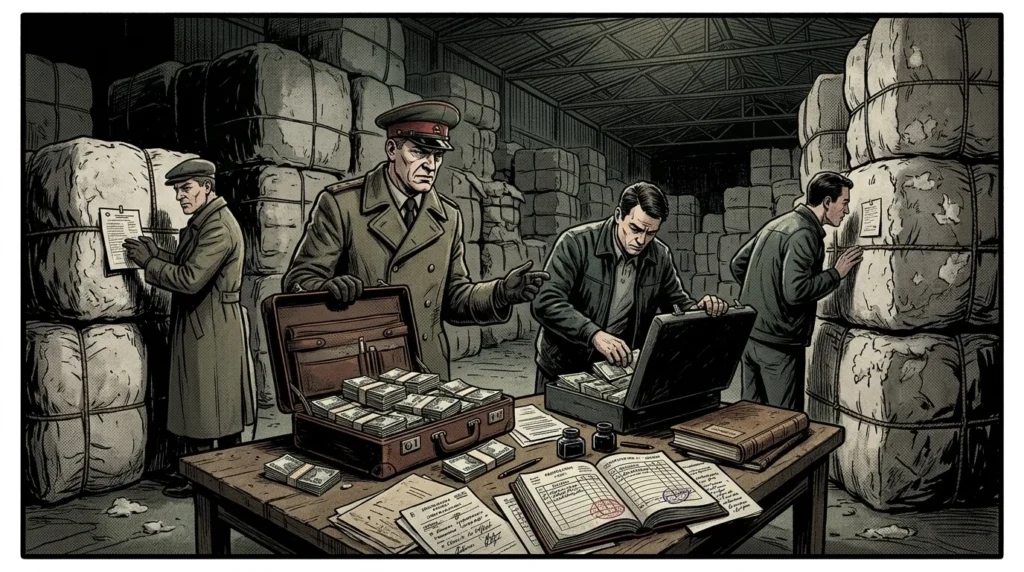
Few decades in corporate history illustrate the perils of petrodollar leverage, state-business cronyism, and speculative deregulation as vividly as Mexico’s 1980s “Lost Decade.” Between 1978 and 1989, three landmark corporate upheavals defined the arc of Mexican business finance. First came the April 1982 default of Monterrey’s flagship industrial empire, Grupo Industrial Alfa, on nearly US$2.5 billion in foreign bank loans—even after extracting a controversial 12-billion-peso rescue loan from state development bank Banobras. Second came the July 1983 arrest of former Petróleos Mexicanos (PEMEX) Director General Jorge Díaz Serrano over a US$34 million gas-tanker and equipment procurement fraud during President Miguel de la Madrid’s “Moral Renovation” campaign. Third came the October 1987 Mexican stock market crash and the February 1989 arrest of Operadora de Bolsa chairman Eduardo Legorreta Chauvet in the nation’s first major securities fraud prosecution. [1]

Monterrey’s Crown Jewel: Grupo Industrial Alfa and Petrodollar Fever
For nearly a century, the Garza Sada family of Monterrey stood at the apex of Mexican private enterprise. Having built the Cervecería Cuauhtémoc brewery in 1890 and the Hojalata y Lámina (Hylsa) steelworks in 1942, the dynasty reorganized its holdings in 1974 following the assassination of patriarch Eugenio Garza Sada by left-wing guerrillas. Out of that split emerged Grupo Industrial Alfa, headed by Bernardo Garza Sada and built around Hylsa’s pioneering direct-reduction steel technology and cardboard packaging operations. [2]
When massive offshore oil discoveries in the Sound of Campeche (led by the super-giant Cantarell complex) propelled Mexico into the 1978–1981 petroleum boom, President José López Portillo vowed to “administer the abundance” and urged private industrial groups to expand capacity at breakneck speed. Flush with OPEC petrodollar deposits and eager to lend to a fast-growing oil exporter with a de facto fixed exchange rate against the U.S. dollar, international commercial banks from New York, London, Tokyo, and Zurich descended on Monterrey. Between 1977 and 1981, Bernardo Garza Sada and his Harvard- and Wharton-trained executives embarked on a dizzying acquisition spree across completely unrelated sectors. [3]
Borrowing primarily in floating-rate Eurodollars linked to the London Interbank Offered Rate (LIBOR), Alfa acquired petrochemical plants, synthetic fiber mills, Philco and Admiral consumer-electronics factories, luxury Las Hadas resort hotels, food-processing companies, and tractor makers. In just four years, the number of Alfa subsidiaries more than tripled and its workforce swelled from roughly 19,500 to over 49,000 employees. By late 1981, Grupo Industrial Alfa had become the largest private corporation in Latin America—and had accumulated approximately US$2.4 billion to US$2.5 billion in foreign-currency debt owed to more than 130 international creditor banks. [4]
| Documented Figure / Metric | Historical Significance & Archival Context |
|---|---|
| US$920 million | Only after a grueling five-year restructuring completed in 1987–1988, in which foreign creditor banks swapped roughly US$920 million in debt for a 45 percent equity stake and forced the sale of dozens of hotel and electronics subsidiaries, did a slimmed-down Alfa survive. |
| US$20 billion | While Monterrey's private conglomerates reeled from currency devaluation, public anger turned toward the state oil monopoly PEMEX, whose explosive borrowing had left it with US$20 billion of Mexico's US$80 billion foreign debt. |
| 130 percent | Between 1985 and September 1987, as inflation topped 130 percent and the government relied on brokerages to place short-term treasury bills (Cetes), the Bolsa Mexicana de Valores staged the fastest stock market boom in the world: the main price index surged more than 700 percent in the first nine months of 1987 alone. |
The 1981 Banobras Bailout and the April 1982 Corporate Default
Alfa’s leveraged conglomerate model rested on three fragile assumptions: that Mexican domestic demand would grow at 8 percent annually indefinitely, that international interest rates would remain low, and that the Mexican peso would stay anchored near 22 to 25 pesos per U.S. dollar. In 1981, all three pillars shattered simultaneously. As Federal Reserve Chairman Paul Volcker tightened U.S. monetary policy to crush inflation, six-month dollar LIBOR surged toward 18 percent, doubling Alfa’s annual interest bill. At the same time, an overvalued peso flooded Mexico with cheap foreign imports that devastated Alfa’s electronics and capital-goods subsidiaries, while softening world oil prices in mid-1981 opened a yawning hole in Mexico’s external accounts. [5]
Facing an acute cash-flow crisis in October 1981, Bernardo Garza Sada appealed directly to President López Portillo for state assistance. Through the state-owned public works and development bank Banobras (Banco Nacional de Obras y Servicios Públicos), directed by Octavio Hernández, the federal government extended a 12-billion-peso (roughly US$480 million at the prevailing exchange rate) emergency credit package and preferred-share subscription to Grupo Industrial Alfa. When leaked details of the secret rescue surfaced in the Mexican press, the bailout sparked a firestorm of public indignation: critics questioned why a bank chartered to finance municipal waterworks and public housing was rescuing the nation’s wealthiest industrial family. [6]
Even the Banobras lifeline proved utterly inadequate once the Bank of Mexico withdrew from the foreign-exchange market on February 17, 1982, allowing the peso to plunge from 26 to 45 per dollar—and eventually past 100 per dollar by year-end. Overnight, the peso cost of servicing Alfa’s US$2.5 billion foreign debt nearly quadrupled. In late April 1982—four months before Finance Minister Jesús Silva Herzog triggered the sovereign Latin American debt crisis in August 1982—Grupo Industrial Alfa suspended all principal payments to its foreign creditor banks, suspending interest payments soon afterward. It was the largest private-sector corporate default in the history of the developing world. Only after a grueling five-year restructuring completed in 1987–1988, in which foreign creditor banks swapped roughly US$920 million in debt for a 45 percent equity stake and forced the sale of dozens of hotel and electronics subsidiaries, did a slimmed-down Alfa survive. [7]
Moral Renovation and the 1983 Arrest of PEMEX Chief Jorge Díaz Serrano
While Monterrey’s private conglomerates reeled from currency devaluation, public anger turned toward the state oil monopoly PEMEX, whose explosive borrowing had left it with US$20 billion of Mexico’s US$80 billion foreign debt. At the center of the storm stood Jorge Díaz Serrano, a wealthy Texas-educated mechanical engineer and former oil-drilling contractor who had partnered with George H. W. Bush in the 1960s before serving as López Portillo’s PEMEX Director General from December 1976 to June 1981. Revered during the boom as “The King” of Mexican oil after elevating production from 800,000 to over 2.5 million barrels per day, Díaz Serrano had resigned in June 1981 after cutting Mexican crude export prices by US$4 per barrel without cabinet approval, subsequently winning a seat as a federal Senator from Sonora. [8]
Taking office in December 1982 amid economic collapse, President Miguel de la Madrid launched a high-profile anticorruption drive dubbed “Moral Renovation of Society” (Renovación Moral). Meanwhile, in Houston, Texas, U.S. Justice Department prosecutors had already indicted executives of Crawford Enterprises Inc. under the Foreign Corrupt Practices Act for funneling nearly US$10 million in bribes through a Mexican intermediary firm (*Grupo Industrial Delta*) to senior PEMEX procurement officials to win over US$225 million in natural-gas compression equipment contracts. Soon afterward, Mexican federal auditors uncovered a separate procurement scandal directly implicating Díaz Serrano himself.
In July 1983, the Mexican Chamber of Deputies stripped Senator Díaz Serrano of his congressional immunity (desafuero), and federal agents arrested him on charges of defrauding PEMEX of US$34 million (then 5.1 billion pesos). Prosecutors proved that in 1980 Díaz Serrano had authorized PEMEX’s shipping contractor, Navimin, to purchase two Belgian-built liquefied natural gas tankers—subsequently named the Ahkatun and the Cantarell—through a Monrovia-registered Liberian shell company at a US$34 million markup over the shipyard price. In May 1987, a federal judge sentenced Díaz Serrano to ten years in prison and ordered him to repay US$54 million in damages; he served five years in Mexico City’s Reclusorio Sur before walking free in July 1988.
The October 1987 Bolsa Crash and the Operadora de Bolsa Scandal
With commercial banks nationalized by López Portillo in September 1982, Mexico’s former banking families—including the Legorreta family, former owners of Banamex—channeled their capital into private stock brokerages (casas de bolsa). Between 1985 and September 1987, as inflation topped 130 percent and the government relied on brokerages to place short-term treasury bills (Cetes), the Bolsa Mexicana de Valores staged the fastest stock market boom in the world: the main price index surged more than 700 percent in the first nine months of 1987 alone. Leading the frenzy was Operadora de Bolsa (OBSA), chaired by Eduardo Legorreta Chauvet, which lured tens of thousands of middle-class retail savers into leveraged margin accounts and unbacked corporate commercial paper.
When Wall Street crashed on Black Monday, October 19, 1987, the Mexican speculative bubble burst with catastrophic force, plunging 74 percent in five weeks and wiping out billions of dollars in household wealth. Hundreds of ruined investors filed criminal complaints alleging that Operadora de Bolsa and rival brokerage Abaco had executed unauthorized margin trades, dumped house losses into client accounts, and sold expired or nonexistent Cetes. In February 1989—just ten weeks after taking office—President Carlos Salinas de Gortari ordered the arrest of Eduardo Legorreta and three other senior brokerage executives. Convicted in July 1990 in Mexico’s first criminal prosecution under the Securities Market Law, Legorreta’s downfall prompted sweeping regulatory reforms at the National Securities Commission (CNV) to police insider dealing and brokerage solvency.
Theoretical & Balance-Sheet Transmission Mechanism
In the Kindleberger–Minsky taxonomy of financial instability (Kindleberger, 1978; Minsky, 1986) and Irving Fisher’s (1933) debt-deflation framework, speculative asset booms become systemic crises when credit expansion shifts balance sheets from hedge finance (cash flows covering principal and interest) to speculative and Ponzi finance (relying on rising asset prices and short-term margin roll-overs).
Once monetary tightening or an exogenous shock halts price appreciation, forced margin liquidations trigger Fisherian debt-deflation: fire-sale asset discounts erode bank collateral values, contracting credit supply across the real economy.
Sources and Further Reading
- Taeko Hoshino, “The Alfa Group: The Decline and Recovery of a Large-Scale Indigenous Business Group in Mexico,” The Developing Economies (Institute of Developing Economies), 1993. Historical & Financial Reference
- Jocelyn Sims and Jessie Romero, “Latin American Debt Crisis of the 1980s,” Federal Reserve History, 2013-11-22. Central Bank / Monetary Authority
- Dan Williams, “Ex-Pemex Chief Gets 10 Years for Fraud,” Los Angeles Times, 1987-05-08. Historical & Financial Reference
- Marjorie Miller, “Ex-Pemex Chief Leaves Prison: In Mexico, ‘The King’ Is Free—and Still Defiant,” Los Angeles Times, 1988-07-31. Historical & Financial Reference
- Marjorie Miller, “Mexico Arrests 4 in Wide-Ranging Stock Probe,” Los Angeles Times, 1989-02-15. Historical & Financial Reference
- Juanita Darling, “Ex-Chief of Big Brokerage Convicted in Mexico,” Los Angeles Times, 1990-07-05. Historical & Financial Reference
- Irving Fisher — "The Debt-Deflation Theory of Great Depressions," Econometrica 1, no. 4 (FRASER Federal Reserve Archive, 1933): 337–357 Central Bank / Monetary Authority
- Charles P. Kindleberger & Robert Z. Aliber — Manias, Panics, and Crashes: A History of Financial Crises (Palgrave Macmillan) Peer-Reviewed / Academic Research
Cite This Historical Dossier (APA / Chicago)
APA (7th ed.): Ç., S. (Ed.). (2026). Grupo Alfa's $2.5B Default, the PEMEX Fraud Trial, and the 1987 Bolsa Scandal. In Forgotten Fortunes Historical Monograph Series (Forgotten Fortunes Editorial Desk). https://forgottenfortunes.net/grupo-industrial-alfa-mexico-debt/
MLA (9th ed.): Ç., Soner, ed. "Grupo Alfa's $2.5B Default, the PEMEX Fraud Trial, and the 1987 Bolsa Scandal." Forgotten Fortunes: Financial & Monetary History Archive, 2026, https://forgottenfortunes.net/grupo-industrial-alfa-mexico-debt/.
Chicago (17th ed.): Ç., Soner, ed. "Grupo Alfa's $2.5B Default, the PEMEX Fraud Trial, and the 1987 Bolsa Scandal." Forgotten Fortunes Historical Monograph Series (Forgotten Fortunes Editorial Desk), September 20, 2026. https://forgottenfortunes.net/grupo-industrial-alfa-mexico-debt/.
Have an idea for another financial history documentary or article? Request a story →