
In This Article
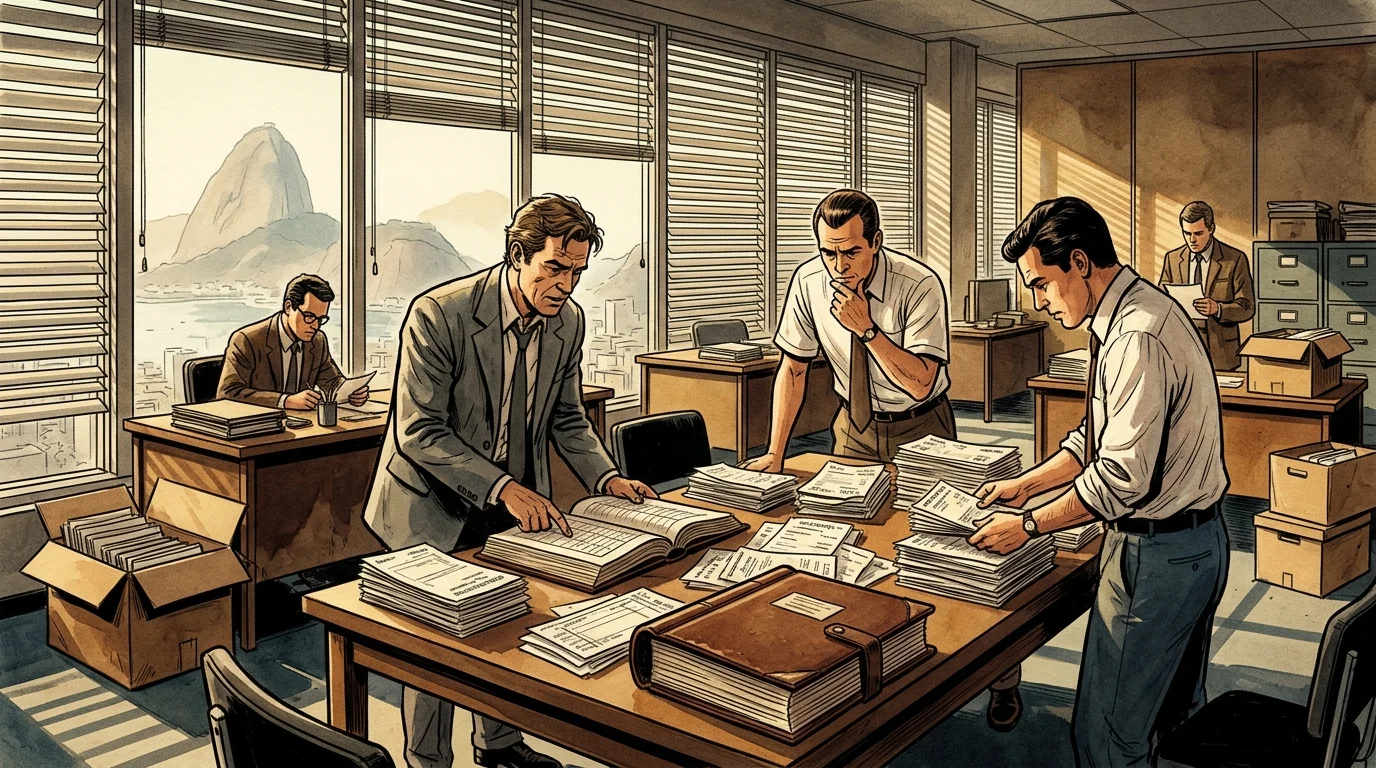
In the two decades following Brazil’s March 1964 military coup, the regime presented itself as an austere technocratic guardian cleansing the nation of populist patronage and financial disorder. Beneath that official narrative, the evolution of Brazilian corporate finance between 1965 and 1983 was defined by a recurring tension between institutional modernization and authoritarian cronyism. In early 1965, two shockwaves struck Rio de Janeiro and Belo Horizonte within weeks of each other: the summary state liquidation of Brazil’s premier international airline, Panair do Brasil, and the collapse of the unregulated street commercial-paper market after the Brazilian subsidiary of West Germany’s steel giant Mannesmann repudiated roughly Cr$30 billion in unauthorized promissory notes. While the Mannesmann fraud prompted technocrats to enact the 1965 Capital Markets Law and eventually create the Comissão de Valores Mobiliários (CVM) in 1976, censored governance allowed a second wave of politically shielded financial disasters to fester during the regime’s final decade—culminating in the 1977 Lutfalla bailout and the 1983 implosions of the Capemi military pension conglomerate and the Coroa-Brastel commercial-paper empire. [1]
The Grounding and Forced Liquidation of Panair do Brasil (February 1965)
At the start of 1965, Panair do Brasil S.A. stood as one of the most prestigious commercial airlines in the Southern Hemisphere. Originally established in 1929 as a subsidiary of Pan American World Airways before becoming majority Brazilian-owned in 1961 under industrialists Celso da Rocha Miranda and Mário Wallace Simonsen, Panair operated a flagship fleet of Douglas DC-8 jets, Caravelles, and Constellations serving Europe, the Middle East, Africa, and an extensive domestic network, including Amazonian riverine routes. However, Rocha Miranda and Simonsen had maintained close personal and economic ties to democratically elected presidents Juscelino Kubitschek and João Goulart. Following the April 1964 coup, the military government of President Humberto de Alencar Castelo Branco targeted Simonsen’s coffee-exporting and media conglomerate (which included the TV Excelsior network) while rival carrier Varig, led by Ruben Berta and closely aligned with the military establishment, lobbied for Panair’s international concessions. [2]
On the afternoon of February 10, 1965, through a terse telegram signed by Castelo Branco and Aeronautics Minister Brigadier Eduardo Gomes, the federal government abruptly canceled all of Panair do Brasil’s domestic and international route concessions without prior administrative notice or judicial hearing. That very evening, Varig aircraft—already fueled and crewed at Galeão Airport in Rio de Janeiro—assumed Panair’s scheduled transatlantic flights to Europe, while Cruzeiro do Sul absorbed its South American regional routes. Stripped of its operating revenues overnight, Panair filed a petition for preventive receivership (concordata preventiva) to reorganize its obligations using its substantial real estate, hangar facilities, and fleet assets. On February 15, 1965, under intense pressure from regime authorities, Judge José Cândido Sampaio de Lacerda rejected the restructuring petition and decreed Panair’s immediate bankruptcy liquidation, throwing 5,000 aviation employees out of work. Decades later, after the Supreme Federal Court overturned the bankruptcy decree in 1995, Brazil’s National Truth Commission and the Ministry of Human Rights’ Amnesty Commission formally ruled in September 2023 that Panair had been solvent and was destroyed through state political persecution to forge a private international aviation monopoly. [3]
The Mannesmann Duplicate Promissory Note Scandal and Law 4,728 (1965)
Almost simultaneously with Panair’s destruction, a massive corporate securities fraud exposed the lawlessness of Brazil’s informal credit markets. During the high inflation and tight official bank credit ceilings of the early 1960s, major corporations raised working capital on Rio de Janeiro’s booming parallel credit market (mercado paralelo), selling short-term promissory notes (notas promissórias) and duplicate trade bills (duplicatas) directly to retail savers at steep discounts. Among the most trusted names in this gray market was Companhia Siderúrgica Mannesmann (CSM), the Belo Horizonte steel-tube subsidiary inaugurated in 1954 by Düsseldorf-based Mannesmann AG. [4]
Unknown to Mannesmann’s German supervisory board led by General Director Egon Overbeck, Brazilian CSM president Dr. Sigmund Weiss and Rio financial intermediary Jorge Serpa Filho had allowed a vast, unrecorded stream of promissory notes bearing CSM’s endorsement to circulate on the street market. Brokers sold billions of cruzeiros of these high-yield paper obligations to middle-class widows, civil servants, pensioners, and more than twenty Catholic religious orders across Rio de Janeiro. When the notes began maturing in February and March 1965, CSM’s treasury halted payments, asserting that the signatures had been forged or issued without corporate authorization and that the proceeds had never entered the steelmaker’s official books. [5]
A military police inquiry headed by General Ayrton Salgueiro de Freitas and a subsequent Congressional Inquiry (CPI) revealed an off-balance-sheet chasm of roughly Cr$30 billion (equivalent to tens of millions of Deutsche Marks) in unauthorized paper, which Brazilian markets dubbed duplicatas e promissórias frias (“cold” or fictitious notes). The Minas Gerais state government briefly intervened at the Belo Horizonte steelworks, Sigmund Weiss was forced to resign in December 1965, and Mannesmann AG ultimately had to negotiate a costly settlement to salvage its industrial assets in Brazil. More enduringly, the Mannesmann panic convinced Finance Minister Octávio Gouveia de Bulhões and Planning Minister Roberto Campos that Brazil could not industrialize without a regulated securities architecture. On July 14, 1965, Castelo Branco signed Law No. 4,728—Brazil’s landmark Capital Markets Law—which criminalized parallel-market note issuances, required corporate commercial paper and debentures to carry formal financial-institution co-signatures and central registration, and laid the legal groundwork for Law No. 6,385 of December 7, 1976, establishing the Comissão de Valores Mobiliários (CVM) modeled on the U.S. Securities and Exchange Commission. [6]
Crony Capitalism Under Censorship: The 1977 Lutfalla Bailout
While the 1965 and 1976 reforms modernized stock exchanges and corporate disclosure on paper, the concentration of discretionary credit inside state development banks during the military regime shielded politically connected conglomerates from market discipline. The contradictions of this model burst into public view in April 1977 with the Caso Lutfalla. Founded in São Paulo, S.A. Fiação e Tecelagem Lutfalla was a traditional spinning and weaving enterprise controlled by the family of Sylvia Lutfalla Maluf, wife of prominent São Paulo politician and former municipal transport secretary Paulo Maluf. [7]
By the mid-1970s, the Lutfalla textile mill was deeply insolvent and accumulating heavy operating losses. Despite technical assessments inside the National Bank for Economic Development (Banco Nacional de Desenvolvimento Econômico, BNDE, presided over by Marcos Pereira Vianna) warning that the firm’s financial deterioration was irreversible, political intervention secured roughly Cr$500 million in subsidized BNDE bailout loans and credit rollovers for the failing company. When reports surfaced that theLutfalla family had pledged overvalued collateral while channeling funds outside the mill before filing for bankruptcy, a storm of criticism erupted in the press and the National Congress. Seeking to contain the embarrassment to the regime, President Ernesto Geisel invoked the authoritarian powers of Institutional Act No. 5 (AI-5) in August 1978 to order federal intervention in the Lutfalla group and confiscate the personal assets of its directors to reimburse the public treasury—though subsequent judicial and audit proceedings dragged on for years without criminal convictions of the political sponsors. [8]
The Capemi Military Pension and Tucuruí Dam Timber Blowup (1980–1983)
As press censorship receded during the political opening (abertura) under President João Baptista Figueiredo, two far larger financial implosions in 1983 exposed the entanglement of the military intelligence apparatus and economic ministries in speculative corporate ventures. The first centered on Capemi (Caixa de Pecúlios, Pensões e Montepios Beneficente), a private military pension and mutual-aid foundation administered by retired army officers led by General Ademar Messias de Aragão and closely linked to senior figures in the Serviço Nacional de Informações (SNI), Brazil’s domestic intelligence agency.
In 1980, state power utility Eletronorte opened a massive public tender to harvest and commercialize tropical hardwood across more than 64,000 hectares of dense Amazon rainforest along the Tocantins River in Pará before the basin was flooded by the giant Tucuruí Hydroelectric Dam reservoir. Although Capemi had zero prior experience in forestry or logging, its newly formed subsidiary, Agropecuária Capemi Indústria e Comércio, won the billion-dollar timber concession and received a US$100 million foreign loan from the Banque Nationale de Paris guaranteed by the state-owned Banco Nacional de Crédito Cooperativo (BNCC). On the ground in Tucuruí, the operation proved a logistical and financial fiasco: Agropecuária Capemi cleared less than 10 percent of the contracted forest area, squandered funds on unusable equipment and French herbicide defoliants, and diverted millions of cruzeiros into political and media ventures—including Cr$12 million paid to journalist Alexandre von Baumgarten to acquire the magazine O Cruzeiro as a pro-SNI organ. In October 1982, Baumgarten was kidnapped and murdered in Rio de Janeiro after penning a dossier detailing SNI involvement in Capemi; four months later, in February 1983, Agropecuária Capemi collapsed into bankruptcy, triggering a parliamentary inquiry that shook the military high command.
The June 1983 Coroa-Brastel Collapse and Its Institutional Legacy
Four months after Capemi’s bankruptcy, Brazil suffered the largest commercial-paper fraud of the military era: the collapse of the Grupo Coroa-Brastel in June 1983. Built by Rio de Janeiro entrepreneur Assis Paim Cunha, the conglomerate combined the nationwide Brastel home-appliance retail chain with a financial arm led by Coroa S.A. Corretora de Valores. According to Paim Cunha’s subsequent congressional testimony, his group’s troubles began in the late 1970s when senior Central Bank and Finance Ministry officials pressured him to absorb the insolvent Rio brokerage Laureano to prevent a wider market panic, promising compensatory state credit lines that never fully materialized.
As Brazilian interest rates soared during the 1981–1982 Latin American debt crisis, Planning Minister Antônio Delfim Netto and Finance Minister Ernane Galvêas authorized irregular emergency loans from the state-owned Caixa Econômica Federal to prop up Paim Cunha’s group. When those injections proved insufficient, Coroa S.A. resorted to the exact mechanism that Mannesmann had used eighteen years earlier: issuing between Cr$300 billion and Cr$400 billion in unbacked bills of exchange (letras de câmbio frias) without genuine underlying consumer-credit receivables. On June 27, 1983, the Central Bank of Brazil decreed the extrajudicial intervention and liquidation of the Coroa-Brastel financial companies, wiping out the savings of more than 34,000 retail investors. The resulting congressional investigation and federal criminal indictments—which reached the Supreme Federal Court and named both Paim Cunha and cabinet ministers—shattered the myth of technocratic infallibility under military rule and drove the enactment of Brazil’s 1986 White-Collar Crime Law (Law No. 7,492/1986), defining crimes against the National Financial System.
Theoretical & Balance-Sheet Transmission Mechanism
In the Kindleberger–Minsky taxonomy of financial instability (Kindleberger, 1978; Minsky, 1986) and Irving Fisher’s (1933) debt-deflation framework, speculative asset booms become systemic crises when credit expansion shifts balance sheets from hedge finance (cash flows covering principal and interest) to speculative and Ponzi finance (relying on rising asset prices and short-term margin roll-overs).
Once monetary tightening or an exogenous shock halts price appreciation, forced margin liquidations trigger Fisherian debt-deflation: fire-sale asset discounts erode bank collateral values, contracting credit supply across the real economy.
Sources and Further Reading
- Presidência da República (Casa Civil), “Lei nº 4.728, de 14 de julho de 1965: Disciplina o mercado de capitais e estabelece medidas para o seu desenvolvimento,” Palácio do Planalto, 1965-07-14. Official / State Archive
- Comissão de Valores Mobiliários (CVM), “Lei nº 6.385, de 7 de dezembro de 1976: Dispõe sobre o mercado de valores mobiliários e cria a Comissão de Valores Mobiliários,” CVM / Imprensa Nacional, 1976-12-07. Official / State Archive
- Der Spiegel, “Brasilien / Mannesmann: In der Zange,” Der Spiegel (Nr. 10/1966), 1966-02-27. Historical & Financial Reference
- Memórias Reveladas (Arquivo Nacional / Ministério dos Direitos Humanos e da Cidadania), “Caso Panair: Após 58 anos, empresa tem pedido de anistia acatado,” Governo Federal do Brasil, 2023-10-16. Official / State Archive
- Instituto Vladimir Herzog, “Casos de corrupção durante a ditadura,” Portal Memórias da Ditadura, 2014. Historical & Financial Reference
- Senado Federal (Biblioteca Digital), “Corrupção: Caso Lutfalla — Dossiê Parlamentar e Recortes,” Senado Federal, 1978. Historical & Financial Reference
- Irving Fisher — "The Debt-Deflation Theory of Great Depressions," Econometrica 1, no. 4 (FRASER Federal Reserve Archive, 1933): 337–357 Central Bank / Monetary Authority
- Charles P. Kindleberger & Robert Z. Aliber — Manias, Panics, and Crashes: A History of Financial Crises (Palgrave Macmillan) Peer-Reviewed / Academic Research
Cite This Historical Dossier (APA / Chicago)
APA (7th ed.): Ç., S. (Ed.). (2026). Duplicate Notes and Dictatorship Bailouts: From Mannesmann to Coroa-Brastel (1965–1983). In Forgotten Fortunes Historical Monograph Series (Forgotten Fortunes Editorial Desk). https://forgottenfortunes.net/brazil-mannesmann-panair-scandals/
MLA (9th ed.): Ç., Soner, ed. "Duplicate Notes and Dictatorship Bailouts: From Mannesmann to Coroa-Brastel (1965–1983)." Forgotten Fortunes: Financial & Monetary History Archive, 2026, https://forgottenfortunes.net/brazil-mannesmann-panair-scandals/.
Chicago (17th ed.): Ç., Soner, ed. "Duplicate Notes and Dictatorship Bailouts: From Mannesmann to Coroa-Brastel (1965–1983)." Forgotten Fortunes Historical Monograph Series (Forgotten Fortunes Editorial Desk), September 20, 2026. https://forgottenfortunes.net/brazil-mannesmann-panair-scandals/.
Have an idea for another financial history documentary or article? Request a story →