In This Article
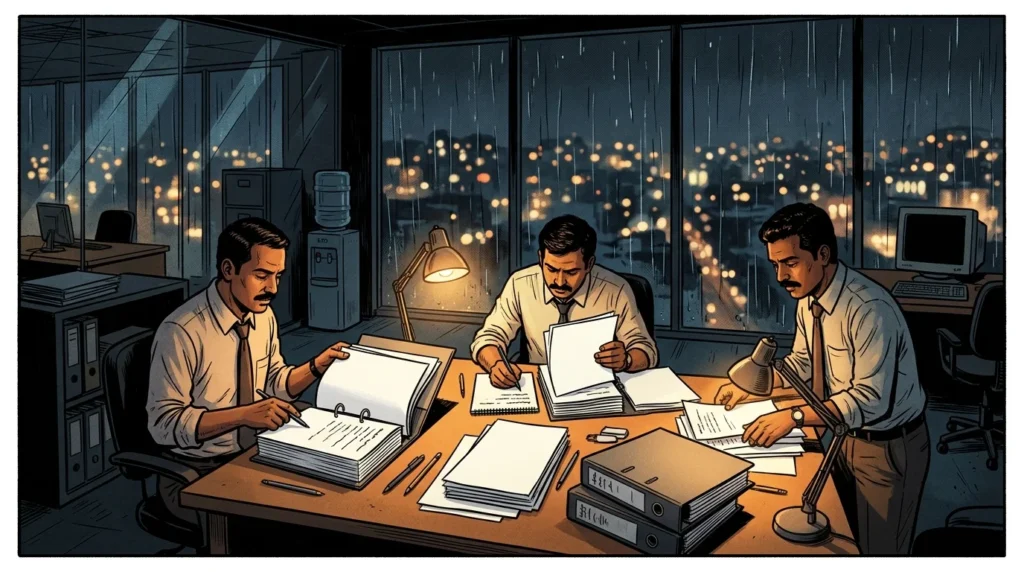
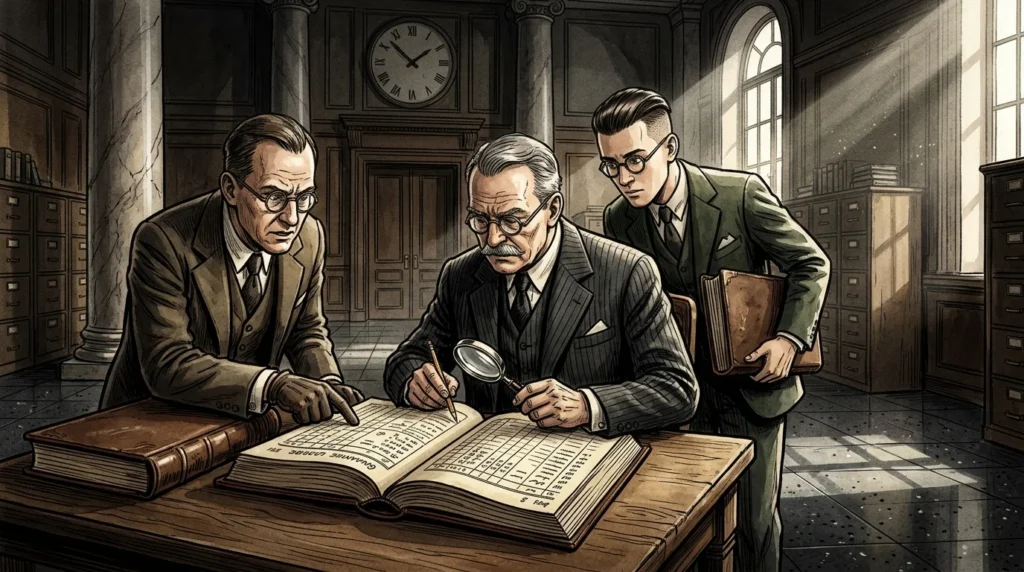
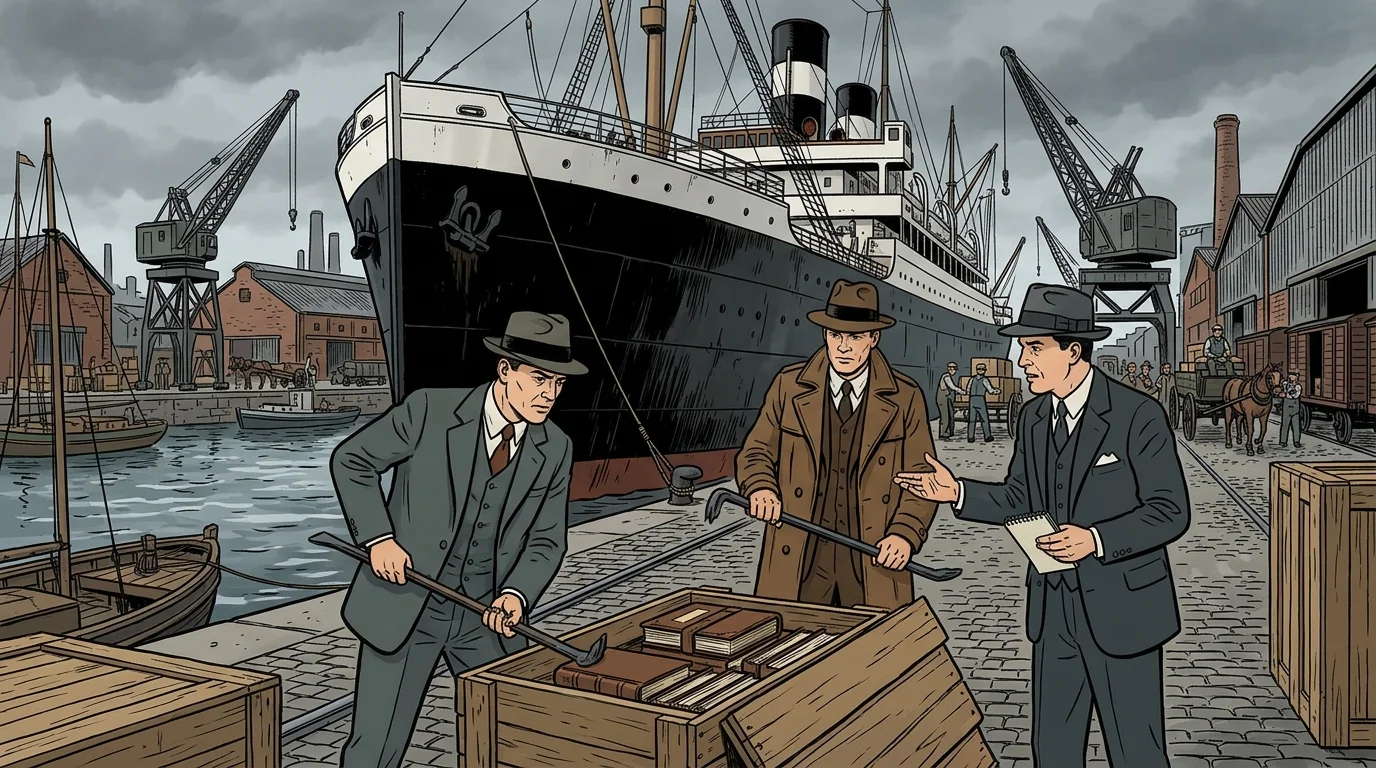
During the period of Argentine history known as the “Infamous Decade” (Década Infame, 1930–1943), a conservative coalition maintained power through electoral fraud while foreign industrial cartels exercised extraordinary control over the republic’s lifelines of agro-exports and urban utilities. Between 1935 and 1936, two landmark scandals laid bare the financial mechanics of this collusion. In the National Senate, Santa Fe Senator Lisandro de la Torre led a parliamentary investigation into the British and American meat-packing trust (el pool de los frigoríficos), catching the British-owned Frigorífico Anglo attempting to smuggle its true cost-accounting books to London inside wooden crates labeled “Corned Beef” aboard the steamer Norman Star—an inquiry that ended in bloodshed on July 23, 1935 when a gunman assassinated Senator-elect Enzo Bordabehere on the Senate floor. Barely a year later, in December 1936, the European utility holding company SOFINA and its local subsidiary CHADE–CADE bribed municipal councilmen and national politicians to extend Buenos Aires’s private electricity monopoly by twenty-five years, a scheme subsequently documented in the exhaustive 1943–1945 Rodríguez Conde Report. [1]
The 1933 Roca–Runciman Treaty and the Anglo-American Meat Cartel
The structural roots of the 1935 Senate meat inquiry lay in the Great Depression and Britain’s pivot toward imperial protectionism. At the 1932 Ottawa Imperial Economic Conference, the British government agreed to restrict chilled and frozen beef imports from non-empire nations in favor of Australia, New Zealand, and South Africa. Panic swept Argentina’s elite cattle breeders (invernadores) in the humid Pampas, who relied almost entirely on the British market to absorb their high-grade chilled beef (chilled beef). [2]
To preserve market access under President Agustín P. Justo, Vice President Julio Argentino Roca Jr. traveled to London and signed the Roca–Runciman Treaty on May 1, 1933 with British Board of Trade President Walter Runciman. Under the agreement, Britain guaranteed Argentina its 1932 chilled-beef quota of 390,000 metric tons only in exchange for sweeping financial and commercial concessions: Argentina pledged to spend 100 percent of the sterling earned from British exports on British goods and debt service, eliminated tariffs on British coal, granted preferential exchange rates to British railways, and agreed that 85 percent of all Argentine beef export licenses would be allocated directly by the British government to the foreign meat-packing cartel. At most 15 percent of the quota could be handled by non-profit Argentine producer organizations—and even within that slice, 11 percent was already controlled by foreign-linked packing houses. [3]
In practice, the 85 percent cartel quota entrenched a tight oligopoly of British and U.S. packing plants operating along the Río de la Plata: the British Frigorífico Anglo at Dock Sud (controlled by the Vestey brothers, Lord William and Sir Edmund Vestey, through Union Cold Storage) and the Chicago-based American packers Swift, Armour, and Wilson. Operating as a coordinated freight and purchasing pool, the cartel fixed depressed prices for steers bought from small and medium domestic cattle raisers (criadores) while showering favored political insiders with above-market cattle contracts. [4]
The Raid on the Steamer Norman Star and the Corned-Beef Crates (1934–1935)
In September 1934, progressive Santa Fe Senator Lisandro de la Torre—founder of the Progressive Democratic Party (Partido Demócrata Progresista)—denounced the cartel before the Senate and secured the appointment of a parliamentary investigative committee to audit cattle purchasing costs, freight charges, and corporate tax payments. From the outset, Finance Minister Federico Pinedo and Agriculture Minister Luis Duhau obstructed the committee, while the executives of Swift, Armour, and Frigorífico Anglo flatly refused to hand over their unit-cost accounting books, claiming that production cost sheets were commercial secrets maintained in Chicago and London. [5]
The stalemate broke when Socialist Senator Alfredo Palacios received a confidential tip from three dockworkers employed at the Frigorífico Anglo plant in Avellaneda. The workers reported that the company was secretly loading its internal cost ledgers and double-accounting records onto the British refrigerated Blue Star Line steamer Norman Star, anchored in Buenos Aires harbor and preparing to sail for London. Accompanied by the Senate committee’s chief forensic accountant, Samuel Yasky, and backed by officers of the Argentine Maritime Prefecture, investigators boarded the Norman Star despite furious protests from Anglo executives, who claimed that searching a British-flagged merchant vessel violated the sovereignty of His Britannic Majesty.
Deep inside the cargo holds of the Norman Star, Yasky and the prefectural officers seized twenty-eight wooden packing crates officially manifested as exports of “Chilled Beef” and “Corned Beef” and bearing the official lead inspection seals of the Argentine Ministry of Agriculture. Inside the corned-beef crates lay the complete, unredacted cost-accounting ledgers and internal correspondence of the Frigorífico Anglo. Forensic audits by Yasky proved that the foreign packers systematically understated export profits in Buenos Aires to evade Argentine income taxes, pocketed illicit foreign-exchange margins worth roughly 25 percent of export proceeds, falsified cattle-grade statistics, and paid premium cattle prices to Minister of Agriculture Luis Duhau’s family estate (Estancia La Sofía) in exchange for regulatory impunity. [6]
Blood on the Senate Floor: The Assassination of Enzo Bordabehere (July 23, 1935)
On May 27, 1935, Lisandro de la Torre submitted his explosive minority report containing forty-eight documented conclusions and launched a weeks-long parliamentary interpellation known to Argentine history as El Debate de las Carnes (“The Meat Debate”). Speaking for days before packed galleries, the sixty-six-year-old senator dismantled the defenses of Ministers Federico Pinedo and Luis Duhau line by line, displaying the ledgers pulled from the Norman Star‘s corned-beef crates and warning that Argentina had been reduced to economic subservience worse than a British dominion. [7]
By late July 1935, cornered by De la Torre’s evidence of personal conflict of interest and tax fraud facilitation, Duhau and Pinedo resorted to intimidation. During the afternoon session of July 23, 1935, as De la Torre advanced toward the ministerial desks to challenge Duhau’s denials, Minister of Agriculture Luis Duhau stood up and violently shoved the elderly senator, knocking De la Torre backward onto the chamber floor. As fellow legislators rushed forward, a former police commissioner and conservative political bodyguard on Duhau’s payroll, Ramón Valdez Cora—who had been granted irregular floor access beside the presidential rostrum—drew a revolver and fired multiple shots toward De la Torre. [8]
Senator-elect Enzo Bordabehere, De la Torre’s close friend and Progressive Democratic colleague from Santa Fe who had stepped forward to protect his mentor as he rose from the floor, was struck by three bullets in the back and chest. Bordabehere collapsed and died moments later, while stray rounds wounded Santa Fe Deputy Rafael Mancini in the chest and grazed Duhau’s hand. Although Valdez Cora was convicted as the lone gunman, the masterminds behind the political assassination were never prosecuted, and Pinedo shortly thereafter challenged De la Torre to a pistol duel before the heartbroken senator resigned his seat in 1937 and took his own life in January 1939.
The 1936 CHADE–CADE Electricity Bribery Scandal and the Rodríguez Conde Report
The institutional rot exposed by De la Torre in the meat sector was mirrored seventeen months later in the municipal utility network of Buenos Aires. Electrical power in the Argentine capital was dominated by CHADE (Compañía Hispano-Americana de Electricidad), a subsidiary controlled by the powerful Brussels-based multinational holding company SOFINA (Société Financière de Transports et d’Entreprises Industrielles), directed by American-Belgian financier Daniel Heineman and Catalan politician Francesc Cambó. Operating alongside a smaller Swiss-Italian rival (CIADE or Ítalo), CHADE reorganized its corporate facade in 1936 under the name CADE (Compañía Argentina de Electricidad) to shield its assets during the Spanish Civil War.
Under its original 1907 fifty-year municipal contract, CHADE’s power plants and distribution grids were scheduled to revert free of charge to the City of Buenos Aires in 1957, accompanied by mandatory rate reductions and maintenance reserve funds. Determined to eliminate the reversion clause twenty-one years ahead of schedule, SOFINA and CADE executives orchestrated a massive bipartisan bribery campaign targeting both conservative officials and opposition councilmen of the Radical Civic Union (Unión Cívica Radical, UCR), with the tacit blessing of former President Marcelo T. de Alvear, who sought corporate campaign funds for the UCR. In December 1936, the Buenos Aires City Council (Concejo Deliberante) hastily passed Ordinances 8028 and 8029, extending CADE’s and CIADE’s electricity concessions by up to twenty-five additional years (stretching into the end of the twentieth century), forgiving accumulated municipal obligations, and inflating the valuation of utility assets.
Public outrage over the “December 1936 ordinances” festered for years until the nationalist military coup of June 4, 1943 overthrew President Ramón Castillo. Two months later, the military government established a federal investigative commission headed by Colonel Matías Rodríguez Conde, assisted by legal counsel Juan P. Oliver and engineer Salvador San Martín. Seizing CADE’s coded internal telegrams and bank ledgers between 1943 and 1944, the commission compiled the monumental Rodríguez Conde Report (submitted in May 1944 and debated through 1945), which documented to the peso how SOFINA and CADE had funneled millions of pesos in bribes to city councilmen, cabinet intermediaries, and party treasuries—cementing the 1935 meat debate and the 1936 CHADE–CADE ordinances as the twin symbols of corporate corruption in interwar Argentina.
Theoretical & Balance-Sheet Transmission Mechanism
In the Kindleberger–Minsky taxonomy of financial instability (Kindleberger, 1978; Minsky, 1986) and Irving Fisher’s (1933) debt-deflation framework, speculative asset booms become systemic crises when credit expansion shifts balance sheets from hedge finance (cash flows covering principal and interest) to speculative and Ponzi finance (relying on rising asset prices and short-term margin roll-overs).
Once monetary tightening or an exogenous shock halts price appreciation, forced margin liquidations trigger Fisherian debt-deflation: fire-sale asset discounts erode bank collateral values, contracting credit supply across the real economy.
Sources and Further Reading
- Honorable Senado de la Nación Argentina, “Homenaje al Dr. Enzo Bordabehere y a Lisandro de la Torre en el Aniversario del Debate de las Carnes de 1935,” Senado de la Nación Argentina, 2015. Historical & Financial Reference
- Felipe Pigna, “Lisandro de la Torre y el debate de la carne,” El Historiador, 2006. Historical & Financial Reference
- Diario El Mundo / El Historiador, “El asesinato de Enzo Bordabehere (Crónica del 24 de julio de 1935),” El Historiador / Diario El Mundo (Año VIII, Nº 2612), 1935-07-24. Historical & Financial Reference
- Consejo Superior de Investigaciones Científicas (CSIC), “El escándalo de la CHADE-CADE, SOFINA y el Informe Rodríguez Conde en la Argentina (1936–1945),” Revista de Indias (CSIC), 2007. Historical & Financial Reference
- Perfil, “A 85 años del debate de las carnes y el asesinato de Bordabehere,” Diario Perfil, 2020-07-23. Historical & Financial Reference
- Infobae, “El asesinato de Enzo Bordabehere en el Senado: dos balas por la espalda y la lucha en soledad de De la Torre,” Infobae, 2022-07-23. Historical & Financial Reference
- Irving Fisher — "The Debt-Deflation Theory of Great Depressions," Econometrica 1, no. 4 (FRASER Federal Reserve Archive, 1933): 337–357 Central Bank / Monetary Authority
- Charles P. Kindleberger & Robert Z. Aliber — Manias, Panics, and Crashes: A History of Financial Crises (Palgrave Macmillan) Peer-Reviewed / Academic Research
Cite This Historical Dossier (APA / Chicago)
APA (7th ed.): Ç., S. (Ed.). (2026). Ledgers in Corned-Beef Crates: De la Torre's 1935 Meat Inquiry and the CHADE Scandal. In Forgotten Fortunes Historical Monograph Series (Forgotten Fortunes Editorial Desk). https://forgottenfortunes.net/lisandro-de-la-torre-meat-scandal/
MLA (9th ed.): Ç., Soner, ed. "Ledgers in Corned-Beef Crates: De la Torre's 1935 Meat Inquiry and the CHADE Scandal." Forgotten Fortunes: Financial & Monetary History Archive, 2026, https://forgottenfortunes.net/lisandro-de-la-torre-meat-scandal/.
Chicago (17th ed.): Ç., Soner, ed. "Ledgers in Corned-Beef Crates: De la Torre's 1935 Meat Inquiry and the CHADE Scandal." Forgotten Fortunes Historical Monograph Series (Forgotten Fortunes Editorial Desk), September 20, 2026. https://forgottenfortunes.net/lisandro-de-la-torre-meat-scandal/.
Have an idea for another financial history documentary or article? Request a story →