In This Article
On February 18, 1983—a date remembered in Venezuelan history as Viernes Negro (Black Friday)—President Luis Herrera Campíns suspended foreign-exchange trading in Caracas and severed the Venezuelan bolívar from its twenty-year peg of Bs. 4.30 to the US dollar. Ten days later, by Executive Decree 1,848 of February 28, 1983, the government created the Oficina del Régimen de Cambios Diferenciales (RECADI) to ration subsidized US dollars for debt servicing and essential imports. Over the next six years, between March 1983 and February 1989, RECADI disbursed more than $30 billion in preferential foreign exchange at rates of Bs. 4.30, Bs. 7.50, and Bs. 14.50 per dollar while the parallel street rate climbed past Bs. 40. What began as an emergency balance-of-payments buffer mutated into the largest corporate-state currency fraud in twentieth-century Latin American history, compounding earlier procurement scandals like the 1979 Sierra Nevada affair and the 1982 Banco Industrial de Venezuela guarantee defaults, and culminating in the May 1993 impeachment of President Carlos Andrés Pérez. [1]
La Gran Venezuela and the 1979 Sierra Nevada Ship Scandal
The structural roots of Venezuela’s late-twentieth-century financial scandals lay in the 1973–1974 OPEC oil price quadrupling, which coincided with the first presidency of Carlos Andrés Pérez (1974–1979). Flush with an unprecedented windfall of more than $50 billion in oil revenues—a period Venezuelans called La Gran Venezuela or Venezuela Saudita—Pérez nationalized the iron-ore and petroleum industries (creating Petróleos de Venezuela, or PDVSA, in January 1976) and launched mega-industrial spending programs through autonomous state corporations that bypassed traditional comptroller audits. [2]
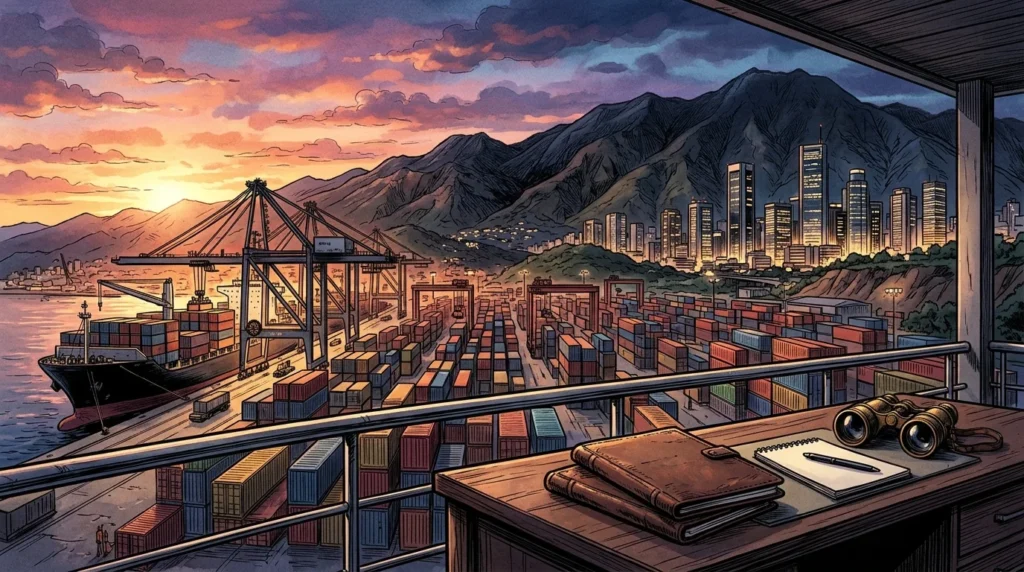
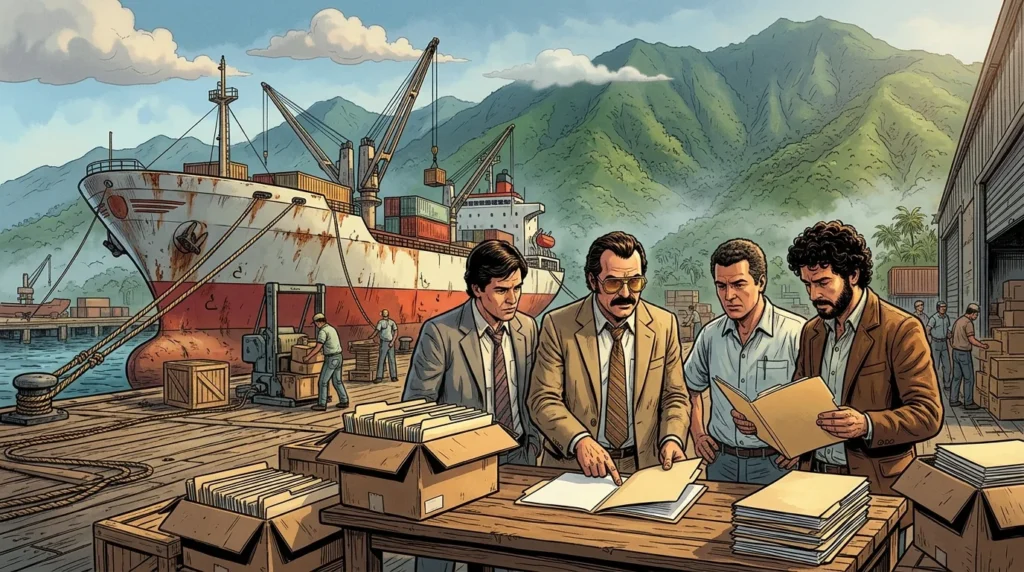
In June 1977, arguing that severe port congestion at La Guaira and Puerto Cabello required a floating cold-storage warehouse to prevent imported food from spoiling, the state agricultural marketing agency Corporación de Mercadeo Agrícola (CMA) and the Corporación Venezolana de Fomento (CVF) authorized the emergency purchase of a Norwegian-built refrigerated cargo vessel, the Ragni Berg, which was renamed the Sierra Nevada. Conducted without public competitive bidding through a chain of Swiss and Panamanian intermediaries—specifically involving the firm Norberto Odebrecht and European shipbrokers—the Venezuelan state paid $20 million in cash for the ship. [3]
In August 1979, shortly after Pérez handed the presidency to opposition leader Luis Herrera Campíns of the Christian Democratic party (COPEI), journalist Leopoldo Linares and parliamentary investigators revealed that the Ragni Berg had been purchased from its Norwegian owners days earlier for approximately $11.8 million, generating an immediate kickback and overpricing surcharge of more than $8.2 million. A special parliamentary commission chaired by Deputy Ramón Tenorio Sifontes investigated the transaction across late 1979 and early 1980. In a dramatic joint session of the National Congress on May 8, 1980, legislators voted to declare former President Carlos Andrés Pérez politically responsible for the Sierra Nevada irregular purchase, though motions to declare him morally and administratively guilty—which would have triggered criminal prosecution and disqualification—fell short by a single decisive margin after loyalists in his Acción Democrática (AD) party closed ranks. [4]
| Documented Figure / Metric | Historical Significance & Archival Context |
|---|---|
| $14 billion | Established ten days after Viernes Negro and dramatically expanded during the presidency of Jaime Lusinchi (1984–1989), RECADI was designed to insulate consumers from inflation and help private Venezuelan firms service an estimated $10–$14 billion in pre-1983 external private debt. |
| 400 percent | Because a single signature from a RECADI director or ministry liaison yielded an instant risk-free arbitrage profit of 100 to 400 percent, the agency rapidly devolved into a vast extortion and invoicing racket. |
| $300 million | When Carlos Andrés Pérez returned to the presidency in February 1989, he found that the Central Bank of Venezuela's liquid operational international reserves had been exhausted to roughly $300 million, while the state owed over $6 billion in unpaid commercial letters of credit settled through RECADI. |
| $8 billion | Days later, Deputy Luis Raúl Matos Azócar and opposition lawmakers released explosive evidence alleging that at least $8 billion to $11 billion of RECADI's preferential dollar allocations had been stolen or fraudulently over-invoiced. |
State Banking Off the Books: The 1982 Banco Industrial de Venezuela Guarantees
Even as Congress debated the Sierra Nevada kickbacks, Venezuela’s decentralized network of more than 300 state enterprises, regional development corporations, and public banks engaged in unchecked short-term dollar borrowing on the Eurodollar market. Because the Public Credit Law required congressional approval for long-term sovereign loans, state-owned banks and corporations exploited a statutory exemption allowing them to contract short-term external credit lines and issue payment guarantees without legislative oversight. [5]
At the epicenter of this shadow borrowing stood the state-owned Banco Industrial de Venezuela (BIV) and the Corporación Venezolana de Fomento (CVF). Between 1979 and 1982, BIV executives issued hundreds of millions of dollars in sovereign-backed letters of credit, loan guarantees (avales), and off-balance-sheet acceptances to politically connected contractors, shipping ventures, and private shells—many of which defaulted immediately. By 1982, congressional and comptroller audits uncovered more than $1.4 billion in irregular or non-performing BIV and CVF guarantee exposures, alongside a ballooning short-term public debt exceeding $27 billion. When Mexican debt markets froze in August 1982 and world oil prices softened, Venezuelan elites drained over $8 billion in capital flight from the Central Bank of Venezuela (BCV), forcing the February 18, 1983 Viernes Negro devaluation. [6]
The Mechanics of RECADI (1983–1989): Arbitraging Preferential Dollars
Established ten days after Viernes Negro and dramatically expanded during the presidency of Jaime Lusinchi (1984–1989), RECADI was designed to insulate consumers from inflation and help private Venezuelan firms service an estimated $10–$14 billion in pre-1983 external private debt. Under the multi-tier regime, RECADI bureaucrats held discretionary power to grant importers certificates of conformidad de importación, entitling them to buy US dollars from the Central Bank at Bs. 4.30 or Bs. 7.50 (and later Bs. 14.50) at a time when the free-market bolívar traded between Bs. 15 and Bs. 42 per dollar. [7]
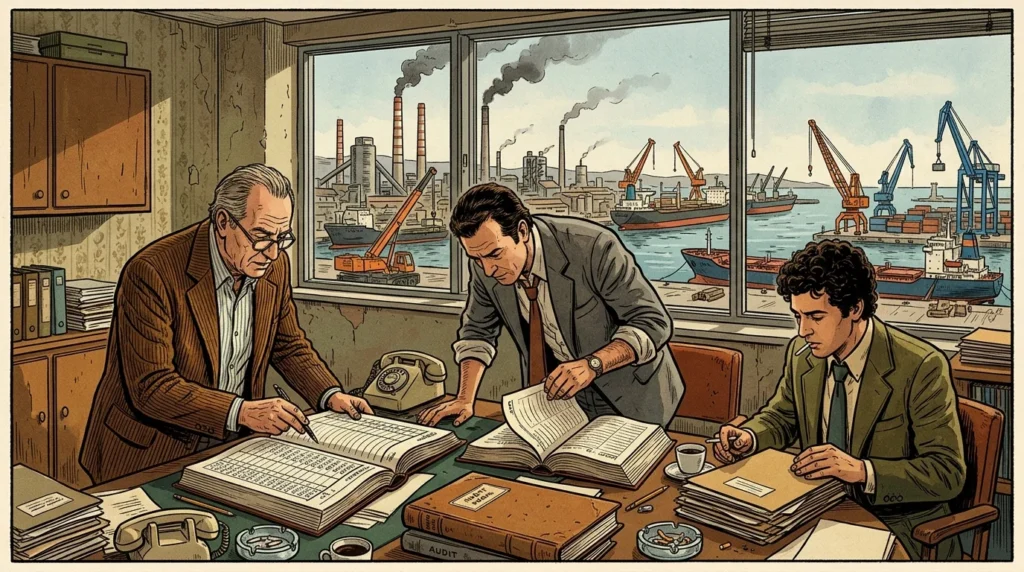
Because a single signature from a RECADI director or ministry liaison yielded an instant risk-free arbitrage profit of 100 to 400 percent, the agency rapidly devolved into a vast extortion and invoicing racket. Investigations later documented three primary mechanisms of corporate-state fraud: [8]
- Over-invoicing of legitimate imports (sobrefacturación): Importers of industrial machinery, pharmaceuticals, wheat, and auto parts colluded with foreign suppliers in Miami, Panama, and Europe to inflate commercial invoices by 200 to 500 percent, pocketing the excess preferential dollars in offshore bank accounts.
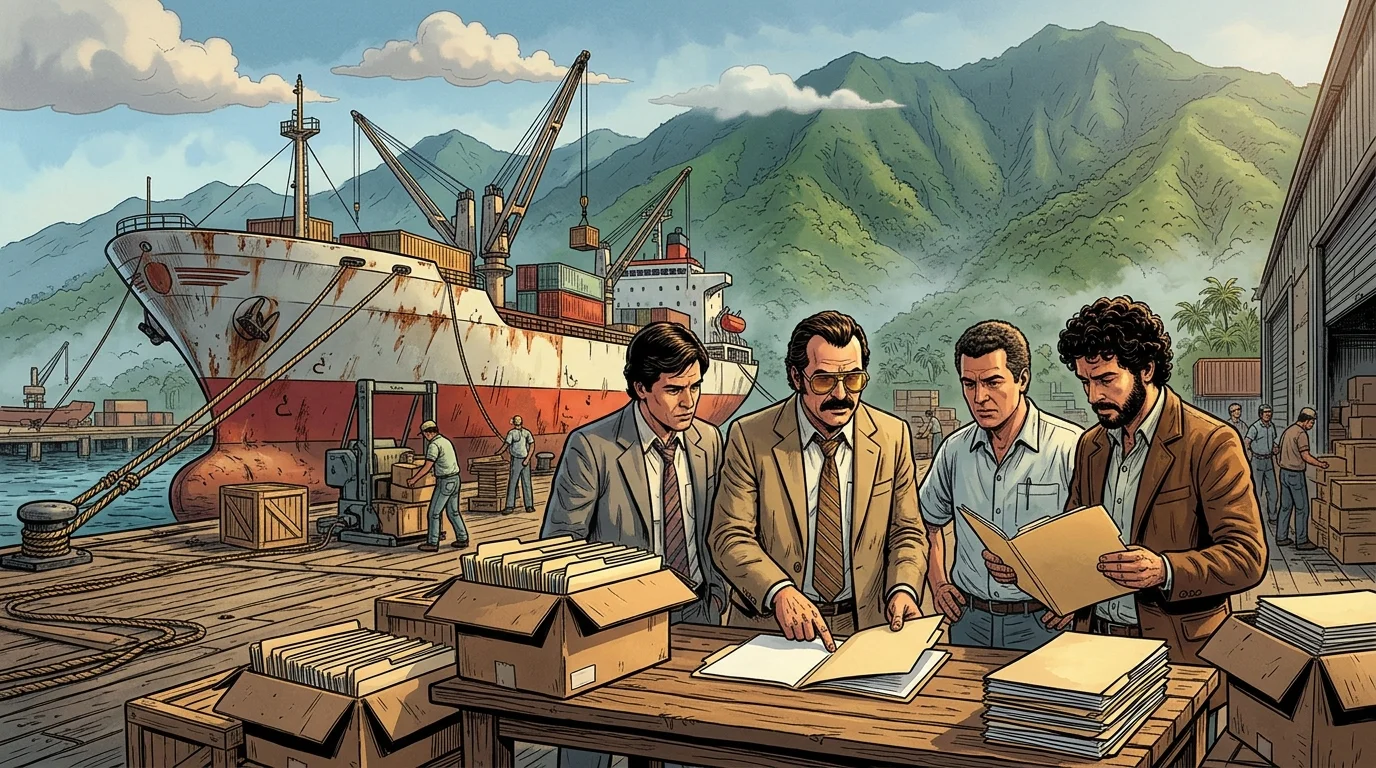
- Phantom shipments and empty containers: Shell corporations incorporated overnight obtained tens of millions of preferential dollars to import high-value electronics or agricultural equipment, while customs inspections at La Guaira and Puerto Cabello revealed shipping containers filled with scrap iron, bricks, or sawdust—or bills of lading for ships that never docked in Venezuela.
- Fraudulent letters of credit and international inspection kickbacks: Even after the Lusinchi government hired international pre-shipment inspection firms (Seated in Switzerland and Britain, including Société Générale de Surveillance, Caleb Brett, and Bureau Veritas) to verify import prices, networks of bank officers—including within the New York and Miami agencies of Banco Industrial de Venezuela—issued unbacked or falsified letters of credit to capture RECADI disbursements.
The 1989 Collapse of RECADI and the Scapegoating of Ho Fuk Wing
Between 1983 and early 1989, RECADI authorized more than $30 billion to $35 billion in preferential foreign exchange. When Carlos Andrés Pérez returned to the presidency in February 1989, he found that the Central Bank of Venezuela’s liquid operational international reserves had been exhausted to roughly $300 million, while the state owed over $6 billion in unpaid commercial letters of credit settled through RECADI.
On February 16, 1989, Pérez announced an orthodox IMF-backed structural adjustment package (El Gran Viraje) that abolished RECADI, unified the exchange rate at a floating market price of roughly Bs. 38–40 per dollar, and raised domestic fuel and transit tariffs—sparking the devastating February 27, 1989 urban riots known as the Caracazo. Days later, Deputy Luis Raúl Matos Azócar and opposition lawmakers released explosive evidence alleging that at least $8 billion to $11 billion of RECADI’s preferential dollar allocations had been stolen or fraudulently over-invoiced.
Judge Luis Guillermo La Riva López launched a sweeping criminal inquiry, issuing arrest warrants for dozens of business executives, customs brokers, and former ministers of the Lusinchi administration. Yet the Venezuelan Supreme Court and political establishment systematically quashed indictments against cabinet ministers and major oligarchs. Ultimately, only a single person remained imprisoned for the multi-billion-dollar RECADI heist: Ho Fuk Wing, a Chinese-born immigrant merchant accused of fraudulently obtaining preferential dollars for agricultural imports, who spent three years in jail without a final sentence and became known across the country as El Chino de RECADI—the enduring popular symbol of judicial impunity.
The 1993 Partida Secreta Impeachment of Carlos Andrés Pérez
Ironically, the very mechanics of RECADI preferential-dollar arbitrage brought down Carlos Andrés Pérez himself four years after he abolished the agency. Following two bloody but unsuccessful military coup attempts in February and November 1992 (the first led by Lieutenant Colonel Hugo Chávez), veteran journalist José Vicente Rangel revealed on television that in February and March 1989—during the final days of the differential exchange transition—Pérez’s administration had requisitioned Bs. 250 million from the Ministry of Interior Relations’ secret security budget (partida secreta) and converted the funds at the preferential RECADI rate of Bs. 14.50 per dollar to obtain $17.24 million in US currency.
Had those $17.24 million been reconverted at the newly floated free-market exchange rate of roughly Bs. 38–40 per dollar, the transaction would have yielded an undocumented windfall of more than Bs. 400 million. Although Pérez contended that the funds were lawfully used for external national-security operations—specifically dispatching Venezuelan police protection to safeguard newly elected President Violeta Chamorro in Nicaragua—he refused to provide accounting vouchers, citing state secrecy.
On May 20, 1993, the Supreme Court of Justice ruled 9 to 6 that there were sufficient grounds to try President Pérez for embezzlement (peculado doloso) and misappropriation (malversación agravada) of the Bs. 250 million fund. The next day, May 21, 1993, the Venezuelan Senate unanimously voted to suspend Pérez from the presidency, making him the first elected head of state in Venezuelan history to be removed by impeachment. In May 1996, the Supreme Court convicted Pérez of aggravated misappropriation and sentenced him to twenty-eight months of house arrest—closing the era of Puntofijismo that had been hollowed out by fifteen years of petrodollar and foreign-exchange scandals.
Theoretical & Balance-Sheet Transmission Mechanism
In the Kindleberger–Minsky taxonomy of financial instability (Kindleberger, 1978; Minsky, 1986) and Irving Fisher’s (1933) debt-deflation framework, speculative asset booms become systemic crises when credit expansion shifts balance sheets from hedge finance (cash flows covering principal and interest) to speculative and Ponzi finance (relying on rising asset prices and short-term margin roll-overs).
Once monetary tightening or an exogenous shock halts price appreciation, forced margin liquidations trigger Fisherian debt-deflation: fire-sale asset discounts erode bank collateral values, contracting credit supply across the real economy.
Sources and Further Reading
- Fundación Empresas Polar, “Pérez, Carlos Andrés,” Diccionario de Historia de Venezuela, 1997. Historical & Financial Reference
- Gott, Richard, “Carlos Andrés Pérez Obituary,” The Guardian, 2010-12-26. Historical & Financial Reference
- Barcelona Centre for International Affairs (CIDOB), “Carlos Andrés Pérez Rodríguez,” Biografías de Líderes Políticos, 2011. Historical & Financial Reference
- Encyclopedia of World Biography, “Carlos Andrés Pérez,” Encyclopedia.com, 2018. Historical & Financial Reference
- Universidad Sergio Arboleda, “Corruption, Rentier State, and Institutional Decay in Venezuela: From Sierra Nevada to RECADI,” Autocratization Review, 2023. Peer-Reviewed / Academic Research
- Time Magazine, “Banking: We’re All Going to Pay,” Time Archive, 1994. Historical & Financial Reference
- Irving Fisher — "The Debt-Deflation Theory of Great Depressions," Econometrica 1, no. 4 (FRASER Federal Reserve Archive, 1933): 337–357 Central Bank / Monetary Authority
- Charles P. Kindleberger & Robert Z. Aliber — Manias, Panics, and Crashes: A History of Financial Crises (Palgrave Macmillan) Peer-Reviewed / Academic Research
Cite This Historical Dossier (APA / Chicago)
APA (7th ed.): Ç., S. (Ed.). (2026). From the Sierra Nevada Affair to RECADI: Venezuela's Petrodollar Scandals (1979–1993). In Forgotten Fortunes Historical Monograph Series (Forgotten Fortunes Editorial Desk). https://forgottenfortunes.net/venezuela-recadi-dollar-scandal/
MLA (9th ed.): Ç., Soner, ed. "From the Sierra Nevada Affair to RECADI: Venezuela's Petrodollar Scandals (1979–1993)." Forgotten Fortunes: Financial & Monetary History Archive, 2026, https://forgottenfortunes.net/venezuela-recadi-dollar-scandal/.
Chicago (17th ed.): Ç., Soner, ed. "From the Sierra Nevada Affair to RECADI: Venezuela's Petrodollar Scandals (1979–1993)." Forgotten Fortunes Historical Monograph Series (Forgotten Fortunes Editorial Desk), September 20, 2026. https://forgottenfortunes.net/venezuela-recadi-dollar-scandal/.
Have an idea for another financial history documentary or article? Request a story →