In This Article
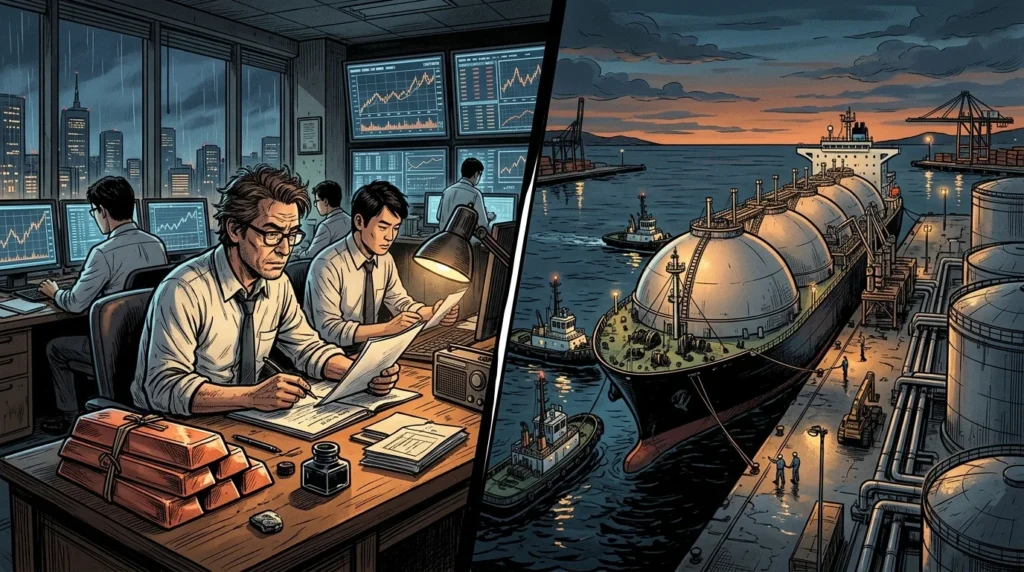
In October 2026, Brent crude oil was trading above $100 a barrel again. But the most dangerous feature of the latest oil crisis may not be the price displayed on a trading screen. It is the shrinking amount of disruption the global energy system can absorb. [1]
Oil inventories have been drawn down. Emergency reserves have been used. Tankers face security threats, higher transport costs and longer journeys. Some producers still have oil underground but cannot reliably move enough of it to customers.
This is the central paradox of an oil supply shock: the world can possess enormous petroleum resources and still experience a shortage of oil available in the right place, in the right form, at the right time.
The history of this vulnerability reaches back to the 1973 oil embargo. Nearly half a century of new production, strategic stockpiles and energy diversification has changed the system considerably. [2]
Yet one fundamental weakness remains. Oil must still travel through physical infrastructure that can be disrupted, damaged or overwhelmed.
Why $100 Oil Is Not the Whole Story
Oil prices are important, but they do not reveal everything about the security of global energy supplies.
A barrel of crude oil can become expensive because demand is rising, production is falling, transport is disrupted or traders expect future shortages. Each situation creates different economic risks.
High prices during strong economic growth are not necessarily the same problem as high prices caused by war or damaged infrastructure. The difference lies in the system’s ability to respond. Consider two hypothetical oil markets.
In the first, inventories are plentiful, tankers are available, refineries have spare capacity and producers can increase deliveries quickly. A disruption may temporarily raise prices, but alternative supplies can help restore balance.
In the second, inventories have already fallen, shipping routes are dangerous and refineries are struggling to obtain the crude oil they need. Even a relatively small additional disruption can force buyers to compete aggressively for the remaining available supplies.
The second market is more fragile, even if both markets initially display the same price.
Economists distinguish between ordinary production capacity and spare capacity. Spare capacity is additional production that can be brought into operation relatively quickly and maintained.
But production capacity alone is not sufficient. Additional oil must also be transported, processed and delivered. A barrel that cannot leave an export terminal does little to relieve shortages thousands of miles away. This distinction explains why oil inventories, pipeline availability, tanker movements and refinery operations matter alongside the headline price. It also helps explain why the world’s response to energy crises changed so dramatically after 1973. [3]
The 1973 Oil Shock: When Energy Became a Strategic Vulnerability
In October 1973, war broke out between Israel and a coalition led by Egypt and Syria.
The conflict soon developed an economic dimension.
Arab oil-producing countries imposed an embargo against the United States and certain other countries supporting Israel. Production restrictions also reduced supplies available to the wider international market.
The effects extended far beyond the countries directly targeted. Oil was already essential to transportation, industrial production, heating and international trade. Many industrialized economies had become increasingly dependent on imported petroleum. The price consequences were dramatic. Before the embargo, the benchmark price used in historical accounts was approximately $2.90 per barrel. By January 1974, it had reached about $11.65. [4]
Oil prices had increased roughly fourfold.
Motorists encountered fuel shortages and long lines at filling stations. Governments introduced conservation measures, while businesses faced higher energy costs and uncertainty over future supplies.
The crisis exposed a deeper weakness: importing countries had organized large parts of their economies around continuous access to relatively inexpensive petroleum without developing sufficient protection against a major interruption.
Yet the embargo did not single-handedly create the economic troubles of the 1970s.
Inflationary pressure was already building before the crisis. The breakdown of the Bretton Woods monetary arrangements, currency movements, earlier commodity-price increases and domestic economic policies all contributed to the difficult environment.
The oil shock intensified these problems.
Higher energy costs pushed up production and transportation expenses while reducing the purchasing power of consumers. Economic activity weakened even as prices continued rising.
This combination became closely associated with stagflation, a situation in which weak economic growth and high inflation occur together.
The important historical lesson was not merely that oil prices could rise dramatically.
It was that a supply disruption in one essential commodity could spread through the wider economy, exposing weaknesses that had accumulated over many years.
The Emergency Protection System Built After 1973
Governments responded by trying to ensure that another supply interruption would not leave consuming economies equally exposed. One major development was the creation of the International Energy Agency in 1974. Its original mission centered on energy security and coordination among oil-consuming countries. [5]
A central requirement was that members maintain emergency oil stocks equivalent to at least 90 days of net oil imports. [6]
This did not mean every member had to maintain 90 days of its total national oil consumption in government-owned tanks. [7]
The requirement is based on net imports, and countries can satisfy their obligations through different combinations of government reserves and eligible industry-held stocks. Net exporters are not subject to the same minimum stockholding obligation.
The United States created its Strategic Petroleum Reserve through the Energy Policy and Conservation Act, signed by President Gerald Ford on December 22, 1975. The first oil entered the reserve in July 1977. Its storage system was unusual. [8]
Rather than relying entirely on conventional above-ground tanks, the government selected underground salt caverns along the Gulf Coast. These offered substantial storage capacity near major refining, pipeline and maritime facilities.
The principle was straightforward. During a severe supply disruption, stored oil could be released into the market to help replace missing barrels and reduce the immediate economic damage. Over subsequent decades, emergency reserves became a central component of energy-security policy. They provided a mechanism for responding to wars, natural disasters and other major interruptions.
But strategic reserves also introduced a difficult policy question.
How much emergency oil should governments release today, knowing that every barrel used reduces the amount available for another crisis tomorrow?
The answer depends on the severity of the disruption, the availability of other supplies and the time needed to rebuild stocks.
An emergency reserve is valuable precisely because it is finite.
The Strait of Hormuz: Geography’s Enduring Oil Bottleneck
<text preserveWhitespace>{“”}</text>
The global energy system has changed enormously since 1973.
New oil-producing regions have developed. The United States has expanded domestic production. Renewable electricity, electric vehicles and improvements in energy efficiency have begun reducing dependence on petroleum in certain activities.
Yet the geography of international oil transportation remains a major source of vulnerability. The Strait of Hormuz is one of its most important examples. Located between Iran and Oman, the strait connects the Persian Gulf with the Gulf of Oman and the Arabian Sea. It provides access to international markets for substantial oil production from Saudi Arabia, Iraq, Kuwait, the United Arab Emirates and other Gulf producers.
In 2024, approximately 20 million barrels of oil and petroleum products passed through the strait each day.
That represented roughly one-fifth of global petroleum liquids consumption. It also accounted for more than one-quarter of seaborne oil trade. The importance of this route is not simply the amount of oil passing through it. The problem is the limited ability to redirect that volume elsewhere. Saudi Arabia operates an East-West pipeline connecting its eastern oil infrastructure to export facilities at Yanbu on the Red Sea.
The United Arab Emirates also operates a pipeline leading to Fujairah, outside the strait.
These routes can reduce dependence on Hormuz, but they cannot automatically replace everything that normally passes through it.
Before the disruptions of 2026, estimates suggested that the Saudi and Emirati systems had approximately 2.6 million barrels per day of additional bypass capacity available under the operating conditions assessed at the time. [9]
That was only a fraction of the normal oil traffic through Hormuz.
Moreover, alternative routes introduce their own vulnerabilities.
Pipelines can be damaged. Ports can become congested. The Red Sea has experienced security disruptions around the Bab el-Mandeb passage, demonstrating that bypassing one chokepoint does not necessarily eliminate maritime risk.
The destinations of Gulf oil also matter. Most crude oil and condensate passing through Hormuz in 2024 was destined for Asian markets, particularly major importing economies including China, India, Japan and South Korea. A disruption therefore creates immediate pressure on Asian refiners and buyers, but the consequences do not remain confined to Asia. Oil is traded internationally. When one region loses access to its normal supplies, buyers seek alternatives elsewhere, pushing competition into other markets. [10]
A shipping interruption in the Persian Gulf can influence fuel costs in countries that import relatively little oil directly through Hormuz.
Why Tankers and Refineries Matter as Much as Oil Wells
It is tempting to imagine oil supply as a simple calculation of production minus consumption. The real system is more complicated. Crude oil moves through pipelines, export terminals, tankers, import terminals, storage facilities and refineries before it becomes a usable petroleum product. A disruption at any major stage can constrain the entire chain.
The tanker problem
A tanker may carry oil from the Persian Gulf to a refinery thousands of miles away. If the direct route becomes dangerous, its operator must evaluate security threats, insurance costs and alternative voyages. Even when passage remains physically possible, increased risks can make transportation more expensive or discourage certain vessels from entering the region. Longer journeys create a second problem.
A tanker spending additional days at sea is unavailable for its next scheduled cargo. This reduces the effective transport capacity of the existing fleet without requiring a single vessel to be destroyed. Shipping companies may earn higher freight rates, but oil importers face larger delivery costs. Those costs can eventually reach refiners and fuel buyers.
The maritime disruptions surrounding the Red Sea in 2024 demonstrated how rerouting can increase voyage distances, operating expenses and demand for shipping capacity. [11]
The refinery problem
Crude oil is not interchangeable with gasoline, diesel or jet fuel. Refineries must process it into usable products. They also differ in their ability to handle particular crude oil grades.
Some plants are designed to process heavier or higher-sulfur crude, while others rely on lighter supplies. Replacing one type of crude with another may require operational adjustments or reduce the amount of valuable fuel produced.
A country can therefore have access to crude oil yet still experience shortages of particular refined products. Diesel is especially important because it powers freight trucks, agricultural machinery, construction equipment and many other commercial activities. If refineries cannot obtain the right crude, or if exports of refined fuel are interrupted, diesel prices can rise much faster than the headline price of oil. This distinction became a defining feature of the 2026 disruption. [12]
The 2026 Oil Supply Shock: How the Buffers Shrunk
The conflict in the Middle East that began on February 28, 2026, severely disrupted oil trade through the Strait of Hormuz. The shock affected production, shipping and refinery supply chains. By September, the scale of the pressure was visible in several important indicators.
The International Energy Agency’s September Oil Market Report estimated that observed global oil inventories had declined by approximately 507 million barrels between February and August 2026.
August alone recorded an estimated draw of 95 million barrels. These figures referred to observed oil inventories across the agency’s reporting coverage, not exclusively to government emergency reserves. They nevertheless revealed how heavily the market had depended on previously stored oil. Production was also affected.
Global oil supply fell to approximately 100.1 million barrels per day in August, while substantial production capacity in the Gulf remained shut in.
In practical terms, shut-in production means oil that could otherwise have been produced is temporarily not being brought to market, often because of infrastructure, security or transportation constraints.
Refined products faced particularly severe pressure.
During early September, diesel and gasoil prices in some markets rose far more sharply than crude benchmarks. The disruption of Gulf exports, together with difficulties affecting Russian refining and product shipments, tightened the international fuel market.
The situation also exposed the fragility of alternative export routes. In September, attacks temporarily interrupted operations along Saudi Arabia’s East-West pipeline. Before the disruption, the pipeline had been transporting more than 5 million barrels per day of oil exports through the Red Sea port of Yanbu. Its interruption removed a substantial part of a vital alternative to Hormuz.
Brent spot prices briefly reached approximately $131 per barrel on September 15, according to the U.S. Energy Information Administration. Some pipeline operations subsequently resumed, helping relieve part of the immediate pressure. Nevertheless, the episode demonstrated that alternative infrastructure could itself become a target.
By early October, oil prices remained elevated. The U.S. Energy Information Administration’s October outlook projected an average Brent price of approximately $105 per barrel for the final quarter of 2026.
That was a forecast, not a guaranteed outcome. The same outlook expected oil inventories to continue declining during the fourth quarter, though more slowly than during the preceding quarter. The lesson was clear. The world was not simply paying more for crude oil.
It was consuming part of the financial and physical protection that helps prevent temporary disruptions from becoming prolonged economic crises.
Strategic Oil Reserves Can Buy Time, Not Create Unlimited Supply
The 2026 crisis tested the emergency system created after the oil shocks of the 1970s.
On March 11, 2026, the International Energy Agency’s 32 member countries agreed to make 400 million barrels of oil available from emergency stocks to address the disruption.
It was the largest coordinated emergency stock-release decision in the agency’s history. The decision illustrated the value of international cooperation. Instead of relying entirely on market forces during a severe supply interruption, governments could collectively increase the oil available to buyers. Yet the size of an announced release must not be confused with the volume actually delivered on a particular day.
Oil must be withdrawn, transported, purchased and processed. Different countries follow different release schedules, and some contributions involve refined products or adjustments to industry stockholding requirements.
The United States also faced the challenge of diminished emergency stocks.
The Strategic Petroleum Reserve had already been used extensively in earlier crises, including the major 2022 release following Russia’s invasion of Ukraine.
By the week ending October 2, 2026, U.S. government data showed approximately 283 million barrels remaining in the reserve.
This was far below its authorized storage capacity of approximately 714 million barrels.
That comparison does not mean the United States had only a fixed number of days before running out of oil. The country also produces petroleum, maintains commercial inventories and participates in international trade.
Nor does the American reserve level describe the combined emergency stocks of every importing country. But it does illustrate a serious constraint. Emergency inventories can soften a supply shock only to the extent that sufficient usable oil remains available and can be delivered at the required rate. They cannot instantly repair a pipeline, reopen a dangerous shipping route or replace lost refining capacity.
If a disruption lasts long enough, governments face a choice between continuing withdrawals and preserving stocks for future emergencies. Replenishment eventually creates additional demand for oil. A strategic reserve is therefore a bridge between a temporary loss of supply and the restoration of normal operations.
The bridge becomes less protective when the interruption lasts longer than expected.
How an Oil Shock Spreads Into Inflation and Economic Growth
The economic consequences of expensive oil extend beyond motorists paying more at filling stations. Oil is embedded in the cost of transporting goods, producing agricultural commodities and operating industrial equipment. When diesel becomes more expensive, a trucking company faces higher operating expenses. Those costs may be passed to manufacturers, wholesalers and retailers.
Farmers can encounter higher expenses for machinery, transport and certain petroleum-based inputs. Airlines face larger jet fuel bills, while shipping companies must account for fuel prices alongside freight rates and insurance. Consumers eventually encounter parts of these pressures in the prices of goods and services. The impact is neither immediate nor identical across countries.
Exchange rates, fuel taxes, subsidies, contracts and domestic energy policies affect how quickly international oil prices influence local costs. Oil-exporting countries can benefit from higher export revenues, although production interruptions may prevent them from realizing those gains. Import-dependent countries generally face a more difficult adjustment. Their import bills rise, leaving less income available for other spending.
Businesses may postpone investment when costs become uncertain. Central banks then confront a familiar dilemma. Higher energy prices can increase inflation while simultaneously weakening economic activity. Raising interest rates may help contain persistent inflationary pressures, but it can also further reduce borrowing, investment and consumption.
Cutting interest rates to support growth may risk allowing inflation to become more entrenched. This tension was an important feature of the economic difficulties experienced during the 1970s. However, the consequences of an oil shock are not predetermined. Modern economies generally use energy more efficiently than they did in the early 1970s, and monetary institutions have developed different approaches to controlling inflation.
Electric vehicles, alternative fuels and renewable electricity also create opportunities to reduce petroleum dependence over time. These changes improve resilience, but they do not immediately eliminate the demand for oil in aviation, freight transport, petrochemicals and other sectors. The economic damage of any particular shock ultimately depends on its duration, the ability to substitute supplies and the policy response.
What Would Show That the Oil Crisis Is Easing?
A fall in crude oil prices would be welcome, but it would not prove that energy security had been restored. The more meaningful evidence would come from several connected developments. First, more consistent shipping traffic through the Strait of Hormuz would indicate that oil exporters can once again use established routes without exceptional levels of disruption. Second, stable operations along alternative pipelines and export terminals would reduce dependence on any single transport corridor.
Third, a recovery in refinery activity and improved availability of diesel, jet fuel and other products would show that crude supplies were reaching the industries that need them. Fourth, a sustained rebuilding of commercial inventories and emergency reserves would restore some of the protection consumed during the crisis. Finally, the return of reliable spare production and transport capacity would make future disruptions easier to absorb. These improvements would not necessarily happen simultaneously.
Oil prices might decline before inventories recover. Refiners might continue experiencing shortages after crude exports begin to normalize. Governments might require years to replenish emergency reserves fully.
There is also a less desirable way for an oil market to rebalance.
If fuel becomes sufficiently expensive, businesses and consumers reduce their consumption. This is known as demand destruction.
It can bring supply and demand closer together, but often through economic hardship rather than improved energy security.
That distinction matters when interpreting a lower oil price.
A market that has stabilized because trade routes reopened and inventories are rebuilding is fundamentally healthier than one where demand collapsed because households and businesses could no longer afford fuel.
The Real Lesson of the Oil Crises
The 1973 oil embargo demonstrated that access to petroleum could become a strategic vulnerability for industrial economies. The response was to build strategic stockpiles, coordinate emergency action and diversify energy supplies. Those protections have proved valuable. But the events of 2026 show that emergency inventories and production capacity are only parts of a much larger system.
Oil must still pass through narrow waterways, functioning pipelines, secure ports and operating refineries. When several of those systems are under pressure at once, a disruption can become much harder to absorb. The most important question is therefore not whether crude oil costs $100, $120 or another headline figure. It is whether the world still possesses sufficient reserves, transport capacity and operational flexibility to withstand the next interruption.
The true measure of energy security is not how much oil exists underground, but how reliably the system can deliver what economies need when something goes wrong.
That was the central lesson of 1973.
In 2026, it remains unfinished business.
Theoretical & Balance-Sheet Transmission Mechanism
In the Kindleberger–Minsky taxonomy of financial instability (Kindleberger, 1978; Minsky, 1986) and Irving Fisher’s (1933) debt-deflation framework, speculative asset booms become systemic crises when credit expansion shifts balance sheets from hedge finance (cash flows covering principal and interest) to speculative and Ponzi finance (relying on rising asset prices and short-term margin roll-overs).
Once monetary tightening or an exogenous shock halts price appreciation, forced margin liquidations trigger Fisherian debt-deflation: fire-sale asset discounts erode bank collateral values, contracting credit supply across the real economy.
Sources & Further Reading
- 1. Michael Corbett — Oil Shock of 1973–74 · Federal Reserve History, Federal Reserve Bank of St. Louis. · Historical analysis of the 1973 embargo, oil prices, inflation and the wider economic consequences. · https://www.federalreservehistory.org/essays/oil-shock-of-1973-74 Central Bank / Monetary Authority
- 2. U.S. Department of Energy — SPR Origins · Office of Petroleum Reserves, U.S. Department of Energy. · Historical account of the Strategic Petroleum Reserve, the Energy Policy and Conservation Act of 1975 and the establishment of emergency oil storage. · https://www.energy.gov/hgeo/opr/spr-origins Official / State Archive
- 3. International Energy Agency — Oil Security and Emergency Response · International Energy Agency. · Institutional framework for emergency oil stockholding, coordinated responses and the 90-day net-import requirement. · https://www.iea.org/about/oil-security-and-emergency-response Historical & Financial Reference
- 4. U.S. Energy Information Administration — Amid Regional Conflict, the Strait of Hormuz Remains Critical Oil Chokepoint · Today in Energy, June 16, 2025. · Official analysis of oil flows through Hormuz, global trade exposure, alternative pipelines and major importing regions. · https://www.eia.gov/todayinenergy/detail.php?id=65504 Official / State Archive
- 5. International Energy Agency — IEA Member Countries to Carry Out Largest Ever Oil Stock Release Amid Market Disruptions from Middle East Conflict · International Energy Agency, March 11, 2026. · Official announcement of the coordinated decision to make 400 million barrels available from emergency oil stocks. · https://www.iea.org/news/iea-member-countries-to-carry-out-largest-ever-oil-stock-release-amid-market-disruptions-from-middle-east-conflict Historical & Financial Reference
- 6. International Energy Agency — Oil Market Report: September 2026 · International Energy Agency, September 11, 2026. · Primary statistical assessment of global oil production, inventories, refining activity, prices and Middle East supply disruptions. · https://www.iea.org/reports/oil-market-report-september-2026 Historical & Financial Reference
- 7. U.S. Energy Information Administration — Short-Term Energy Outlook: Global Oil Markets · U.S. Department of Energy, October 6, 2026. · Official analysis of global oil supply constraints, the Saudi East-West pipeline disruption, inventories, tanker costs and Brent price forecasts. · https://www.eia.gov/outlooks/steo/report/global_oil.php Official / State Archive
- 8. U.S. Energy Information Administration — U.S. Stocks of Crude Oil and Petroleum Products · Weekly Petroleum Statistics, data through October 2, 2026. · Official historical and current statistics for commercial petroleum inventories and U.S. Strategic Petroleum Reserve stocks. · https://www.eia.gov/dnav/pet/pet_stoc_wstk_dcu_NUS_W.htm Official / State Archive
- 9. UN Trade and Development — Review of Maritime Transport 2025: Staying the Course in Turbulent Waters · United Nations Trade and Development, September 2025. · Research on shipping disruptions, freight-rate volatility, vessel rerouting, transport costs and maritime supply-chain resilience. · https://unctad.org/publication/review-maritime-transport-2025 Peer-Reviewed / Academic Research
- 10. Reuters — Oil Jumps 5%, Then Pares Gains After Trump Says No Attack on Iran This Month · Reuters, October 8, 2026. · Contemporary reporting on Brent prices above $100, tanker security concerns, Middle East tensions and the immediate oil-market response. · https://www.reuters.com/business/energy/oil-rises-middle-east-supply-concerns-persist-amid-shipping-attacks-2026-10-08/ Historical & Financial Reference
- Irving Fisher — "The Debt-Deflation Theory of Great Depressions," Econometrica 1, no. 4 (FRASER Federal Reserve Archive, 1933): 337–357 Central Bank / Monetary Authority
- Charles P. Kindleberger & Robert Z. Aliber — Manias, Panics, and Crashes: A History of Financial Crises (Palgrave Macmillan) Peer-Reviewed / Academic Research
Cite This Historical Dossier (APA / Chicago)
APA (7th ed.): Ç., S. (Ed.). (2026). The Oil Supply Shock Behind $100 Crude: Why the World's Energy Safety Margin Is Shrinking. In Forgotten Fortunes Historical Monograph Series (Forgotten Fortunes Editorial Desk). https://forgottenfortunes.net/oil-supply-shock-energy-security/
MLA (9th ed.): Ç., Soner, ed. "The Oil Supply Shock Behind $100 Crude: Why the World's Energy Safety Margin Is Shrinking." Forgotten Fortunes: Financial & Monetary History Archive, 2026, https://forgottenfortunes.net/oil-supply-shock-energy-security/.
Chicago (17th ed.): Ç., Soner, ed. "The Oil Supply Shock Behind $100 Crude: Why the World's Energy Safety Margin Is Shrinking." Forgotten Fortunes Historical Monograph Series (Forgotten Fortunes Editorial Desk), August 19, 2026. https://forgottenfortunes.net/oil-supply-shock-energy-security/.
Have an idea for another financial history documentary or article? Request a story →