In This Article
Over the past three decades, the macroeconomic fate of Argentina has hinged on a relentless struggle over resource rents between the federal treasury in Buenos Aires and two giant commodity frontiers: the transgenic soybean belt of the Pampas and the unconventional hydrocarbon basin of Patagonia. Beginning in March 1996, the regulatory approval of glyphosate-resistant Roundup Ready soybeans combined with no-till farming (siembra directa) to transform Argentina into the world’s premier exporter of soybean meal and oil. After the 2001–2002 sovereign default, successive governments relied heavily on agricultural export duties (retenciones) to fund public spending and rebuild central bank reserves—until Economy Minister Martín Lousteau’s March 2008 Resolution 125 triggered a 129-day nationwide agrarian revolt that ended at 4:25 a.m. on July 17, 2008 when Vice President Julio Cobos cast a tie-breaking Senate vote against his own administration. Blocked from raising farm taxes further and squeezed by a growing energy deficit, the state expropriated 51 percent of oil company YPF from Spain’s Repsol in April 2012 to develop the giant Vaca Muerta shale formation, even as farmers turned white polyethylene silo bags (silobolsas) into a physical currency hedge against peso devaluation. [1]

The 1996 Roundup Ready Approval and the No-Till Soybean Revolution
The modern financial architecture of Argentine agriculture was born on March 25, 1996, when Secretary of Agriculture, Livestock, and Fisheries Felipe Solá—serving under President Carlos Menem—signed Resolution No. 167/1996, authorizing the commercial release of Monsanto’s genetically modified 40-3-2 glyphosate-tolerant soybean (soja Roundup Ready or soja RR). Argentina became the first country in Latin America to adopt the transgenic oilseed at scale, and an unusual intellectual-property twist supercharged its diffusion: because Monsanto had failed to secure an Argentine patent on the Roundup Ready gene construct before the deadline and Argentine Seed Law No. 20,247 protected farmers’ right to save harvested seed for replanting (uso propio), producers acquired transgenic seeds without paying per-bag technology royalties, complemented by an informal market in uncertified “white bag” (bolsa blanca) seed. [2]
Crucially, the Roundup Ready trait merged with an indigenous agronomic innovation championed by the Argentine No-Till Farmers Association (AAPRESID) and the National Institute of Agricultural Technology (INTA): siembra directa (no-till farming). Instead of plowing fields—which eroded Pampas topsoil and evaporated moisture—farmers planted soybeans directly through the crop stubble of the previous harvest and sprayed broad-spectrum glyphosate herbicide to eliminate weeds in a single pass. This technological package cut tractor diesel consumption by roughly 40 to 50 percent, allowed a profitable double-cropping cycle of winter wheat followed immediately by second-crop soybeans (soja de segunda), and enabled outside investment pools (pools de siembra) to lease hundreds of thousands of hectares across Buenos Aires, Córdoba, Santa Fe, and Entre Ríos. [3]
Within a decade of the 1996 resolution, Argentina’s planted soybean area tripled from roughly 6 million hectares to nearly 20 million hectares—accounting for more than half of the nation’s total grain acreage—while annual soybean harvests climbed past 50 million metric tons. Along the Paraná River corridor north of Rosario, multinational and domestic crushers built the largest oilseed-processing cluster on earth, converting raw beans into high-protein meal (harina de soja), oil, and biodiesel that generated roughly one-third of Argentina’s total merchandise export dollars. [4]
Export Duties (Retenciones) and the 2008 Resolution 125 Agrarian Revolt
When Argentina’s one-to-one peso-dollar convertibility regime collapsed in January 2002 amid a US$100 billion sovereign debt default, the federal government turned immediately to the booming soybean complex for fiscal survival. Interim President Eduardo Duhalde reinstated agricultural export duties (derechos de exportación or retenciones)—which could be levied by executive decree without revenue-sharing (coparticipación) with provincial governors—setting the soybean tariff at 10 percent and quickly raising it to 23.5 percent.Export duties served two macroeconomic goals simultaneously: capturing a large share of dollar commodity revenues for the national treasury and depressing the domestic peso price of food staples below international parity. [5]
Under President Néstor Kirchner (2003–2007) and his successor Cristina Fernández de Kirchner, soaring Chinese demand pushed Chicago soybean prices to historic highs, and the government repeatedly ratcheted up the fixed export tax—first to 27.5 percent in January 2007 and then to 35 percent in November 2007. On March 11, 2008, as international soybean prices surged past US$500 per metric ton, thirty-seven-year-old Economy Minister Martín Lousteau unveiled Ministry of Economy Resolution 125/2008. Rather than a flat tariff, Resolution 125 introduced a sliding-scale formula (retenciones móviles) indexed to Chicago Board of Trade grain prices: when soybeans traded between US$200 and US$400 per ton, the tax stood near 35.7 percent, but at the prevailing March 2008 price it jumped immediately above 44 percent, reaching 49.33 percent above US$600 per ton and confiscating 95 percent of any marginal price gain above that threshold. [6]
Resolution 125 accomplished overnight what decades of rural politics had never achieved: it united Argentina’s four historically antagonistic farm associations—the aristocratic large-landowner Sociedad Rural Argentina (SRA), the regional Confederaciones Rurales Argentinas (CRA), the cooperative federation Coninagro, and the smallholders’ Federación Agraria Argentina (FAA)—into a single coordinating council, the Mesa de Enlace Agropecuaria. For 129 days between March and July 2008, hundreds of thousands of farmers staged commercial grain lockouts and set up more than 300 highway checkpoints (piquetes), halting grain trucks and cattle deliveries across the Pampas. [7]
Julio Cobos’s 4:25 a.m. “Non-Positive Vote” in the Senate (July 17, 2008)
As supermarket shelves emptied in major cities, rival mass demonstrations filled the Plaza de Mayo and the Palermo monument in Buenos Aires, and Martín Lousteau resigned as Economy Minister in late April 2008, President Cristina Fernández de Kirchner gambled by submitting Resolution 125 to the National Congress for legislative ratification. After the Chamber of Deputies narrowly approved the government’s bill by 129 to 122 votes on July 5, the conflict moved to the Argentine Senate for a decisive showdown on July 16, 2008. [8]
Following an exhausting eighteen-hour floor debate watched live across the nation, the roll-call vote concluded shortly after 4:00 a.m. on July 17, 2008 in an exact 36-to-36 deadlock. Under the Argentine Constitution, the tie-breaking vote fell to the President of the Senate: Vice President Julio Cobos, a former Radical Civic Union (UCR) governor of Mendoza who had joined Fernández de Kirchner’s coalition ticket in 2007 as a bridge to moderate provinces. Pressured intensely by the presidential palace to back the administration’s fiscal pillar and by provincial governors to end the rural uprising, a visibly emotional Cobos addressed the chamber at 4:25 a.m. on July 17, 2008: “May history judge me. I ask forgiveness if I am mistaken. My vote is not positive; my vote is against” (Mi voto no es positivo; mi voto es en contra). By a final tally of 37 to 36, the Senate rejected Resolution 125. Within twenty-four hours, the executive signed Decree 1176/2008 revoking the sliding-scale tax and restoring the fixed 35 percent soybean duty.
The 2012 YPF Renationalization, Vaca Muerta Shale, and the Silobolsa Hedge
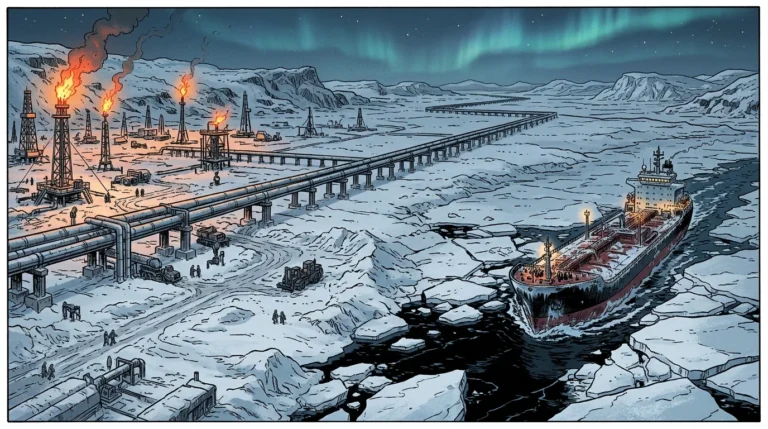
The defeat of Resolution 125 permanently altered Argentina’s political economy. Unable to extract higher marginal tax rates from the Pampas and confronting a rapid decline in conventional domestic oil and gas output—which flipped Argentina from a net energy exporter in 2006 into a net energy importer spending over US$9 billion to US$12 billion annually on foreign fuel by 2011–2013—the Fernández de Kirchner administration turned its focus to the Neuquén Basin in northern Patagonia. There, in 2010–2011, geologists at YPF (Yacimientos Petrolíferos Fiscales, privatized in the 1990s and acquired in 1999 by Spanish oil major Repsol) confirmed that the 30,000-square-kilometer Vaca Muerta geological formation held one of the world’s largest recoverable deposits of unconventional shale gas and shale oil.
Accusing Repsol of draining YPF through excessive dividend payouts rather than investing the billions of dollars required for horizontal drilling and hydraulic fracturing in Vaca Muerta, President Fernández de Kirchner and Deputy Economy Minister Axel Kicillof announced on April 16, 2012 the sovereign expropriation of 51 percent of YPF’s shares from Repsol, enacted by Congress as Law No. 26,741 on May 3, 2012. While Argentina compensated Repsol in 2014 with US$5 billion in sovereign bonds—enabling state-controlled YPF to partner with Chevron and Petronas to turn Vaca Muerta into a major shale producer—the government refused to launch a mandatory tender offer for the remaining 49 percent of shares required under Section 7 of YPF’s corporate bylaws. Minority shareholders Petersen Energía and Eton Park (funded by litigation financier Burford Capital) sued in U.S. federal court in New York, where District Judge Loretta Preska issued a landmark US$16.1 billion final judgment against Argentina in September 2023.
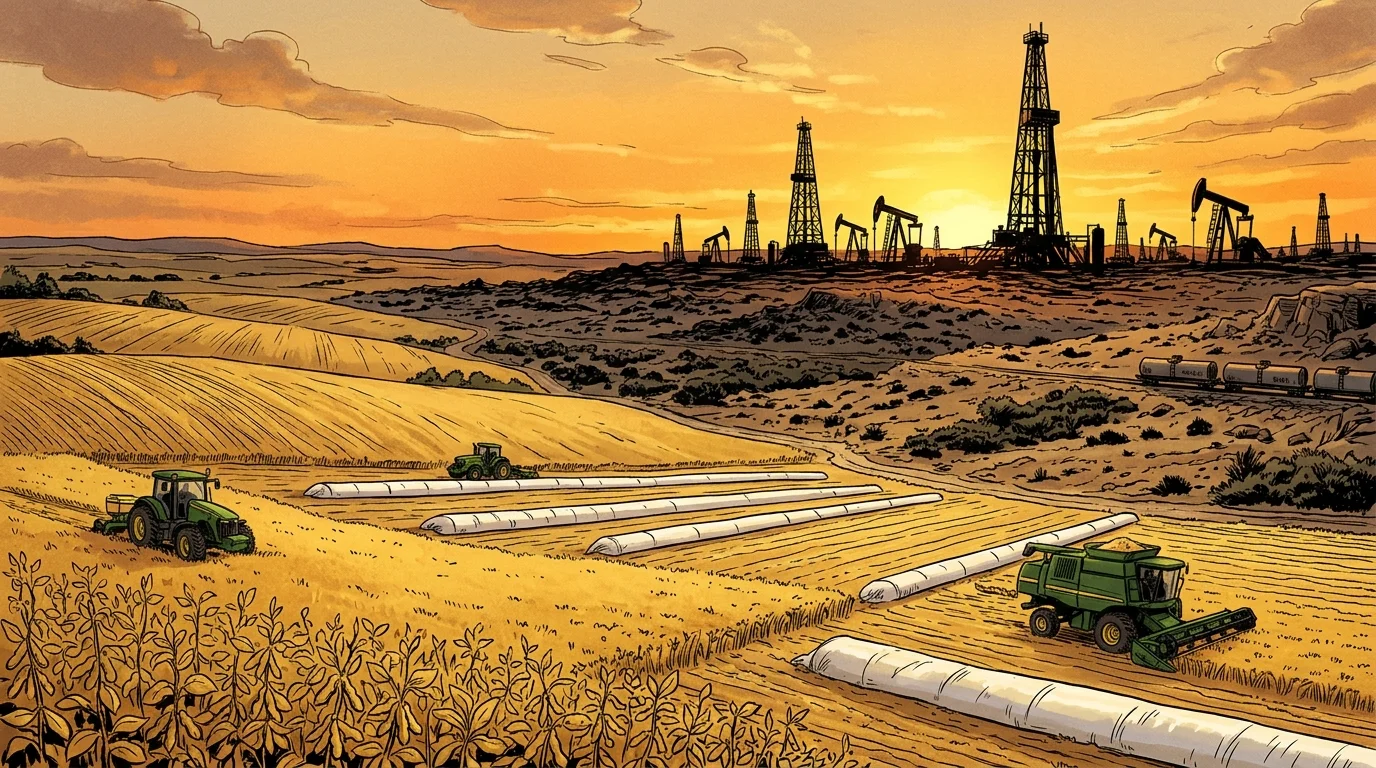
Meanwhile, in the countryside, the post-2008 estrangement between farmers and the state elevated another Argentine agricultural invention into a macroeconomic instrument: the silobolsa. Co-developed in the late 1990s by INTA post-harvest specialists and Argentine plastics manufacturers, these hermetically sealed, three-layer black-and-white polyethylene tubes—measuring 60 meters long and storing roughly 200 metric tons of soybeans or corn right on the farm field—allowed producers to bypass port bottlenecks and commercial grain elevators. Whenever strict currency controls (cepo cambiario) widened the gap between the official peso exchange rate (at which grain exports were taxed and liquidated) and the free-market parallel dollar, tens of millions of metric tons of soybeans remained locked inside white silobolsas dotting the Pampas—serving as a decentralized hard-currency vault that forced successive central bank governors to negotiate temporary special exchange rates (dólar soja) simply to coax farmers into selling their harvest.
Theoretical & Balance-Sheet Transmission Mechanism
In the Kindleberger–Minsky taxonomy of financial instability (Kindleberger, 1978; Minsky, 1986) and Irving Fisher’s (1933) debt-deflation framework, speculative asset booms become systemic crises when credit expansion shifts balance sheets from hedge finance (cash flows covering principal and interest) to speculative and Ponzi finance (relying on rising asset prices and short-term margin roll-overs).
Once monetary tightening or an exogenous shock halts price appreciation, forced margin liquidations trigger Fisherian debt-deflation: fire-sale asset discounts erode bank collateral values, contracting credit supply across the real economy.
Sources and Further Reading
- Revista Iberoamericana de Ciencia, Tecnología y Sociedad (CTS), “La difusión de la soja transgénica en la Argentina: 1996, siembra directa y cambio tecnológico,” Revista CTS (Vol. 1, Nº 3), 2004-09. Historical & Financial Reference
- Página/12, “La historia de la soja transgénica: La Resolución de Felipe Solá de marzo de 1996,” Página/12, 2009-04-26. Historical & Financial Reference
- Instituto Argentino para el Desarrollo Económico (IADE), “Resolución 125: a 17 años del conflicto entre el Estado y el campo,” IADE / Realidad Económica, 2025-03-11. Historical & Financial Reference
- Página/12, “¿Qué fue la 125, la resolución que Cristina Kirchner le recordó a Lousteau y el voto no positivo de Julio Cobos?,” Página/12, 2023-05-11. Historical & Financial Reference
- El País, “U.S. Judge Orders Argentina to Pay $16.1 Billion for Expropriation of YPF Oil Company,” El País English, 2023-09-16. Historical & Financial Reference
- Universidad de Navarra (Global Affairs), “Argentina ve en Vaca Muerta una tabla de salvación, pero falta más capital para su desarrollo,” Universidad de Navarra, 2019. Peer-Reviewed / Academic Research
- Irving Fisher — "The Debt-Deflation Theory of Great Depressions," Econometrica 1, no. 4 (FRASER Federal Reserve Archive, 1933): 337–357 Central Bank / Monetary Authority
- Charles P. Kindleberger & Robert Z. Aliber — Manias, Panics, and Crashes: A History of Financial Crises (Palgrave Macmillan) Peer-Reviewed / Academic Research
Cite This Historical Dossier (APA / Chicago)
APA (7th ed.): Ç., S. (Ed.). (2026). Transgenic Soy, Silo Bags, and Shale: Resolution 125 and YPF's Vaca Muerta Gamble. In Forgotten Fortunes Historical Monograph Series (Forgotten Fortunes Editorial Desk). https://forgottenfortunes.net/argentina-resolution-125-soybeans/
MLA (9th ed.): Ç., Soner, ed. "Transgenic Soy, Silo Bags, and Shale: Resolution 125 and YPF's Vaca Muerta Gamble." Forgotten Fortunes: Financial & Monetary History Archive, 2026, https://forgottenfortunes.net/argentina-resolution-125-soybeans/.
Chicago (17th ed.): Ç., Soner, ed. "Transgenic Soy, Silo Bags, and Shale: Resolution 125 and YPF's Vaca Muerta Gamble." Forgotten Fortunes Historical Monograph Series (Forgotten Fortunes Editorial Desk), September 20, 2026. https://forgottenfortunes.net/argentina-resolution-125-soybeans/.
Have an idea for another financial history documentary or article? Request a story →