In This Article
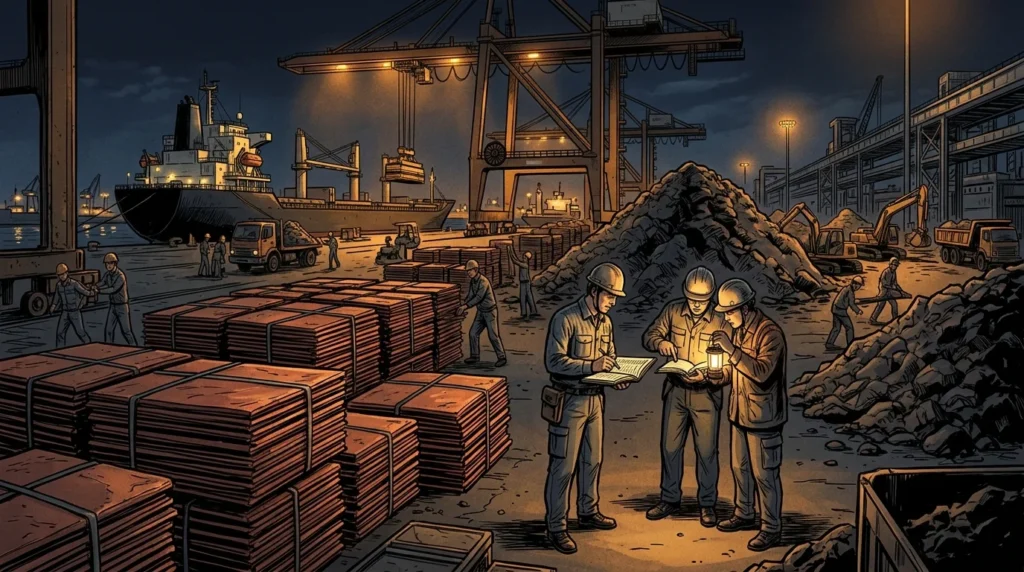
Between the fall of state socialism in 1989–1990 and its preparation for eurozone entry in the mid-2020s, Bulgaria’s economy underwent a turbulent institutional transformation shaped by capital-intensive commodity processing, macroeconomic stabilization, and recurring battles over state capture [1][3][4][5]. Across three and a half decades, the country evolved from a Soviet-aligned industrial economy into a specialized processing hub within European Union supply chains, importing billions of dollars in crude oil and mineral concentrates to export refined petroleum fuels, copper cathodes, lead, and zinc across Europe [1][2].
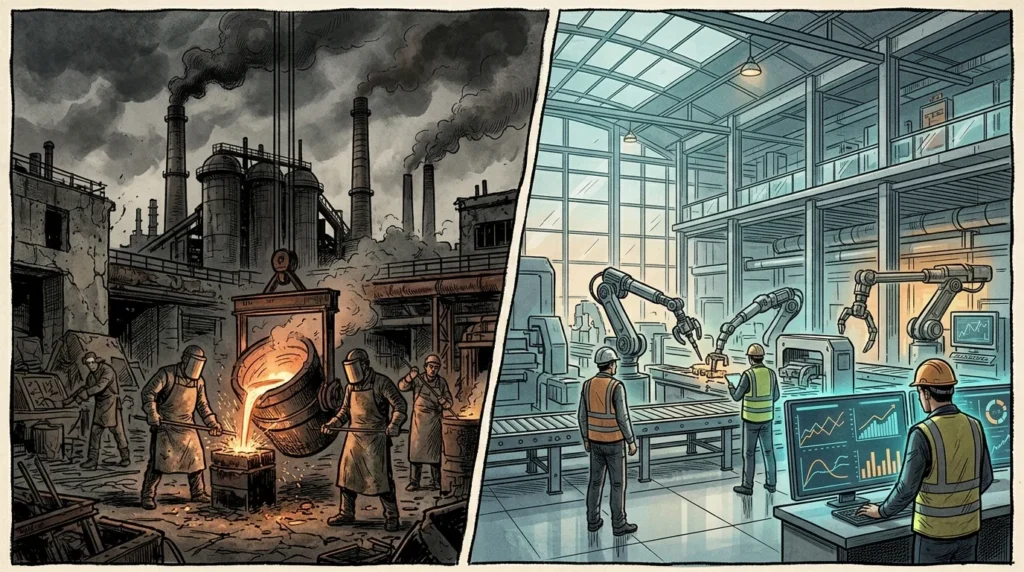
Yet Bulgaria’s integration into Western markets did not automatically dissolve the opaque patronage networks forged during the 1990s transition [4]. Early post-communist conglomerates rooted in former state security services gave way after the 1996–1997 hyperinflation crisis and 2007 European Union accession to subtler forms of public-procurement rent-seeking [4][5]. The resulting friction between a productive, export-oriented industrial private sector and entrenched political patronage repeatedly destabilized national governance—triggering mass anti-corruption protests in July 2020, seven snap parliamentary elections over the following five years, and the collapse of Prime Minister Rosen Zhelyazkov’s coalition government in December 2025 over a contested tax-and-spending budget just weeks before scheduled euro adoption [3][4].
Post-Socialist Conglomerates, Soft Budget Constraints, and the 1997 Currency Board
When Bulgaria’s centrally planned economy and the Soviet-led Council for Mutual Economic Assistance (Comecon) dissolved at the start of the 1990s, control over state industrial enterprises, energy imports, and metallurgical plants fractured [4][5]. Rather than moving immediately to transparent privatization, the early transition was dominated by shadowy holding groups organized by former operatives of the communist-era state security apparatus (Darzhavna Sigurnost) [4]. During the violent turf wars of the 1990s, these networks captured lucrative commodity trade channels, placing intermediaries at the gates of state-owned refineries, smelters, and chemical plants to buy raw inputs high and sell finished outputs cheap at the expense of the public treasury [4][5].
The most prominent emblem of this era was Multigrup, a sprawling conglomerate headed by former wrestler and state security officer Iliya Pavlov, which established broad influence across natural gas distribution, metals trading, food processing, and tourism [4]. Throughout the early and mid-1990s, delayed enterprise restructuring and “soft budget constraints” allowed politically connected industrial managers to pile up operating losses at state-owned enterprises, which were continually refinanced by state-controlled commercial banks and the central bank [5].
In 1996 and early 1997, that circular credit mechanism collapsed in a systemic banking panic, sovereign default, and hyperinflation that wiped out household savings in Bulgarian leva [5]. To halt the monetary freefall, Bulgaria enacted an International Monetary Fund-supported stabilization program anchored on July 1, 1997 by a strict Currency Board Arrangement—pegging the lev first to the German Deutsche Mark and subsequently to the euro—while accelerating the privatization of commercial banks and heavy industrial assets [5]. Although early transitional conglomerates gradually lost their monopoly grip—reaching a symbolic end when Multigrup chief Iliya Pavlov was killed by a sniper in March 2003—legacy patronage networks adapted to the new era of private ownership and approaching European Union membership [4].
Industrial Processing Mechanics: Hydrocarbons and Non-Ferrous Metallurgy
Under the monetary discipline of the post-1997 currency board and following its accession to the European Union in 2007, Bulgaria’s tradable industrial economy consolidated around an intermediate-goods processing model [1][2][5]. Because the country possesses limited domestic oil and gas reserves alongside historic mining and smelting infrastructure, its foreign trade became heavily concentrated in importing primary raw materials and converting them into refined industrial commodities [1][2].
World Bank World Integrated Trade Solution (WITS) data for 2022 illustrate the scale of this commodity-conversion architecture [1]. Out of Bulgaria’s US$50,250 million in total merchandise exports and US$58,092 million in total merchandise imports in 2022, intermediate goods accounted for 31.70 percent of all exports (US$15,930 million) and 25.25 percent of all imports (US$14,667 million), while raw materials represented 11.33 percent of exports and 18.78 percent of imports [1].
Two capital-intensive sectors anchored these flows: hydrocarbon refining and non-ferrous metallurgy [1][2]. On the energy side, crude petroleum oils represented Bulgaria’s single largest import category in 2022 at US$4,124.44 million; processed domestically into motor fuels and distillates, refined petroleum oils (excluding crude) constituted the country’s single largest export category at US$3,964.28 million [1]. Immediately behind refined fuels stood refined copper cathodes, which generated US$1,406.69 million in 2022 exports [1].
Multilateral Financing and European Supply-Chain Integration
To maintain cost competitiveness and comply with stringent European Union environmental directives, Bulgarian metallurgical producers relied on multilateral long-term credit to modernize Soviet-era and twentieth-century smelting complexes [2]. A leading example is KCM AD—part of the domestically owned KCM 2000 Group near Plovdiv—the only primary lead and zinc smelter in Central and Southeast Europe, employing more than 1,500 workers and accounting for roughly 1 percent of global output and 3 to 4 percent of total European lead and zinc production [2].
In December 2019, the European Investment Bank (EIB)—having provided EUR 359 million in loans and guarantees across Bulgaria the previous year—approved a EUR 65 million loan to KCM AD backed by the European Fund for Strategic Investments (the Juncker Plan) [2]. Designed to finance a 2020–2023 technological upgrade of KCM’s lead refining, precious-metals recovery, and zinc electrolysis units, the investment targeted a 25 percent expansion in total output while raising the share of recycled secondary waste lead and zinc inputs from 20 percent to 35 percent [2]. Through such upgrades, Bulgarian smelters integrated directly into Western European manufacturing, supplying refined zinc for galvanized steel and die-cast alloys and refined lead for automotive and industrial battery producers [2].
State Capture, the 2020 Protests, and the 2025 Fiscal Collapse
While private industrial exporters modernized with European development financing, governance over public finances and EU structural grants remained plagued by institutional capture [4]. As investigative reporting by Politico documented in 2020, large public infrastructure tenders—such as motorway construction backed by EU cohesion funds—were frequently split into small segments so that politically connected contractors could extract inflated profit margins, often delivering substandard work that required continual repair contracts [4].
Public anger over oligarchic control erupted on July 7, 2020, when former justice minister and anti-corruption party leader Hristo Ivanov livestreamed an amphibious landing in a rubber dinghy onto a public Black Sea beach at Rosenets that had been cordoned off for the private summer compound of political powerbroker Ahmed Dogan [4]. The incident ignited months of nightly demonstrations across Bulgaria demanding the resignations of Prime Minister Boyko Borissov and Chief Prosecutor Ivan Geshev, with opinion polls showing that 80 percent of Bulgarians viewed corruption as widespread and more than 70 percent supported the protests [4].
The 2020 uprising shattered Bulgaria’s party system, ushering in a protracted political deadlock that forced seven snap parliamentary elections between 2021 and late 2024 [3]. Even when a governing coalition under Prime Minister Rosen Zhelyazkov took office in January 2025 to steer the country toward its scheduled January 1, 2026 adoption of the euro, fiscal trust between the state and the productive economy remained brittle [3]. In November 2025, the cabinet introduced a draft 2026 budget that proposed raising taxes and social contributions on private businesses while channeling expanded funding into the state sector [3].
Viewing the budget as an extractive transfer from private enterprise to an unaccountable public bureaucracy, tens of thousands of citizens and business groups took to the streets across Sofia and provincial cities [3]. On December 11, 2025—just moments before facing its sixth parliamentary no-confidence vote since January—Zhelyazkov announced his cabinet’s resignation, prompting President Rumen Radev to initiate constitutional consultations for a new government or caretaker administration [3]. Occurring just three weeks before scheduled eurozone entry—amid public anxieties over conversion-driven price inflation and Russian disinformation campaigns targeting the single currency—the December 2025 collapse underscored the central paradox of Bulgaria’s post-1990 trajectory: deep industrial and monetary integration into Europe coexisting with unresolved domestic conflict over fiscal governance and the rule of law [1][2][3][4].
Theoretical & Balance-Sheet Transmission Mechanism
In the Kindleberger–Minsky taxonomy of financial instability (Kindleberger, 1978; Minsky, 1986) and Irving Fisher’s (1933) debt-deflation framework, speculative asset booms become systemic crises when credit expansion shifts balance sheets from hedge finance (cash flows covering principal and interest) to speculative and Ponzi finance (relying on rising asset prices and short-term margin roll-overs).
Once monetary tightening or an exogenous shock halts price appreciation, forced margin liquidations trigger Fisherian debt-deflation: fire-sale asset discounts erode bank collateral values, contracting credit supply across the real economy.
Sources and Further Reading
- World Integrated Trade Solution (WITS), “ Bulgaria Trade Summary 2022,” World Bank / UNSD Comtrade, 2024-12-12. International Financial Institution
- European Investment Bank, “ EIB supports expansion of more environmentally friendly production of lead and zinc in Bulgaria under the Investment Plan for Europe,” European Investment Bank (EIB), 2019-12-19. Historical & Financial Reference
- POLITICO Europe, “ Bulgarian government collapses after weeks of mass protests,” POLITICO Europe, 2025-12-11. Historical & Financial Reference
- Christian Oliver, “ How Bulgaria became the EU’s mafia state,” POLITICO Europe, 2020-09-09. Historical & Financial Reference
- Anne-Marie Gulde, “ The Role of the Currency Board in Bulgaria’s Stabilization,” International Monetary Fund (IMF Policy Discussion Paper PDP/99/3), 1999-04-01. International Financial Institution
- Irving Fisher — "The Debt-Deflation Theory of Great Depressions," Econometrica 1, no. 4 (FRASER Federal Reserve Archive, 1933): 337–357 Central Bank / Monetary Authority
- Charles P. Kindleberger & Robert Z. Aliber — Manias, Panics, and Crashes: A History of Financial Crises (Palgrave Macmillan) Peer-Reviewed / Academic Research
Cite This Historical Dossier (APA / Chicago)
APA (7th ed.): Ç., S. (Ed.). (2026). From State Socialism to the Eurozone: Bulgaria's Commodity Trade and Governance (1990–2025). In Forgotten Fortunes Historical Monograph Series (Forgotten Fortunes Editorial Desk). https://forgottenfortunes.net/bulgaria-commodity-trade-economic-history-1990-2025/
MLA (9th ed.): Ç., Soner, ed. "From State Socialism to the Eurozone: Bulgaria's Commodity Trade and Governance (1990–2025)." Forgotten Fortunes: Financial & Monetary History Archive, 2026, https://forgottenfortunes.net/bulgaria-commodity-trade-economic-history-1990-2025/.
Chicago (17th ed.): Ç., Soner, ed. "From State Socialism to the Eurozone: Bulgaria's Commodity Trade and Governance (1990–2025)." Forgotten Fortunes Historical Monograph Series (Forgotten Fortunes Editorial Desk), August 29, 2026. https://forgottenfortunes.net/bulgaria-commodity-trade-economic-history-1990-2025/.
Have an idea for another financial history documentary or article? Request a story →