In This Article
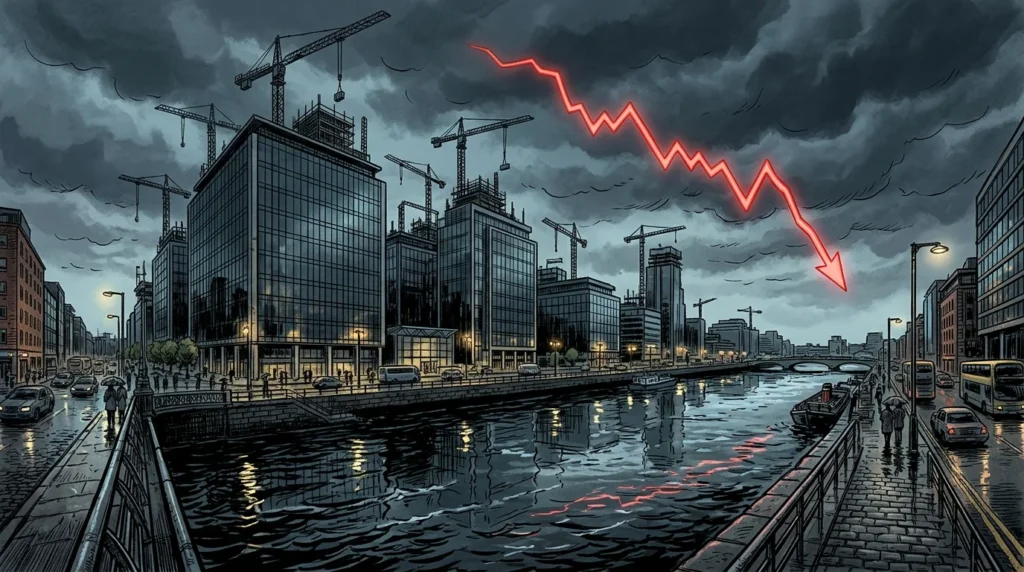
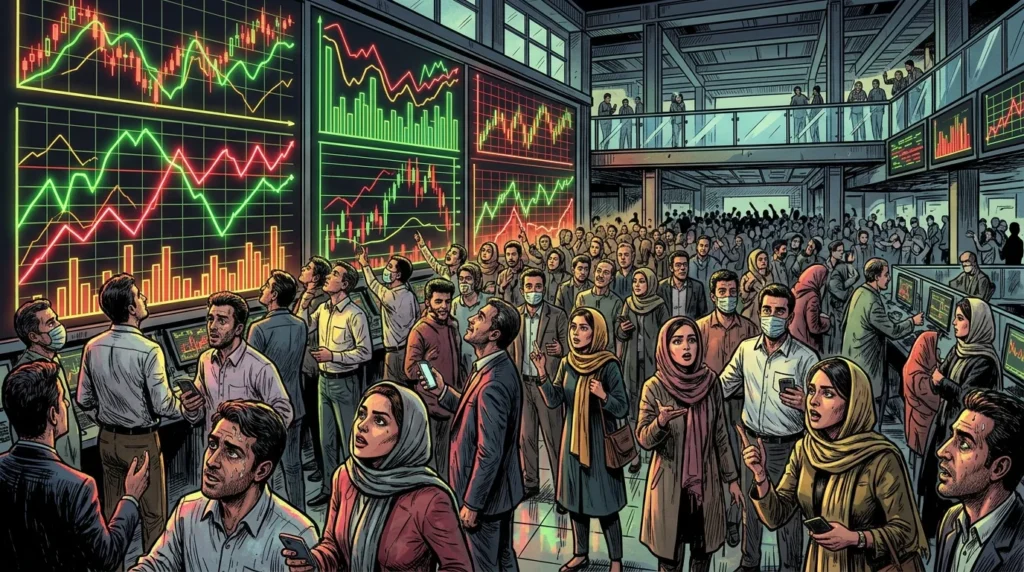
On February 19, 2007, the Irish Stock Exchange Overall Index (ISEQ) reached an all-time intraday peak of 9,981.08 points, crowning a decade in which the Republic of Ireland transformed from a peripheral agrarian economy into a hyper-financialized property boomtown. Less than two years later, the ISEQ had lost more than 80 percent of its value, plunging below 1,900 points by late 2008 and bottoming out near 1,916 by early 2009. At the center of this equity market implosion stood Anglo Irish Bank Corporation, a specialist commercial property lender whose market capitalization had soared past €13 billion at the height of the mania, and Sean Quinn, then Ireland’s richest industrialist. Unknown to the public and equity market participants, Quinn had quietly amassed a 28 percent economic interest in Anglo Irish Bank using leveraged Contracts for Difference (CFDs). When global wholesale funding markets froze and Irish bank shares tumbled in 2007 and 2008, Quinn’s derivative wager generated €2.8 billion in losses, triggering a desperate and unlawful July 2008 rescue operation in which Anglo Irish Bank lent €451 million to a handpicked circle of ten developers—the “Maple 10″—and €169 million to the Quinn family to absorb the overhanging shares just weeks before the Irish state issued its fateful blanket bank guarantee. [1]

The Celtic Tiger Shift from Export Growth to Property Mania
Ireland’s economic expansion during the 1990s was initially anchored in export-oriented foreign direct investment, European Union structural funds, a young English-speaking workforce, and a 12.5 percent corporate tax rate. Following Ireland’s entry into the Eurozone in January 1999, however, the domestic economy underwent a profound structural mutation. Exchange rate risk against continental European lenders vanished overnight, and Irish commercial banks gained access to deep pools of low-cost wholesale funding across the euro area. Real interest rates in Ireland turned negative relative to domestic inflation, igniting an unprecedented boom in residential and commercial real estate construction. [2]
By 2006, construction accounted for more than 13 percent of Irish gross domestic product and over 12 percent of total employment—roughly double the Western European average. Rather than diversifying internationally, Ireland’s domestic clearing banks—Allied Irish Banks (AIB) and Bank of Ireland—alongside aggressive challengers led by Anglo Irish Bank and Irish Nationwide Building Society, competed fiercely for market share by relaxing loan-to-value ratios, offering 100 percent residential mortgages, and financing speculative land banks on the fringes of Dublin and across provincial towns. Tax incentives for property development and pro-cyclical fiscal policies that relied heavily on stamp duty and capital gains taxes reinforced the belief among policymakers and bank boards that Irish property prices would experience a gentle “soft landing.” [3]
| Documented Figure / Metric | Historical Significance & Archival Context |
|---|---|
| 40 percent | Whereas industrial, pharmaceutical, and food conglomerates such as CRH, Elan, and Kerry Group had historically balanced the Dublin market, financial stocks grew to represent more than 40 percent of the total capitalization of the ISEQ Overall Index by early 2007. |
| €4.4 billion | Between 1998 and 2007, Anglo's loan book expanded at an average compound rate of nearly 30 percent per year, rising from €4.4 billion to €72.3 billion by early 2008. |
| 3 percent | Rather than purchasing ordinary shares in Anglo Irish Bank on the open market—which would have required immediate cash settlement and triggered mandatory public disclosure to the Irish Stock Exchange once his holding crossed the 3 percent threshold—Quinn utilized Contracts for Difference (CFDs). |
| €17.65 | As Quinn progressively doubled down on his position throughout 2006 and 2007, his CFD brokers bought hundreds of millions of Anglo shares, artificially constricting the free float on the ISEQ and helping propel Anglo's stock price toward its €17.65 peak. |
ISEQ Financial Concentration and the Rise of Anglo Irish Bank
The credit-fueled real estate frenzy reshaped the composition of the Irish Stock Exchange. Whereas industrial, pharmaceutical, and food conglomerates such as CRH, Elan, and Kerry Group had historically balanced the Dublin market, financial stocks grew to represent more than 40 percent of the total capitalization of the ISEQ Overall Index by early 2007. Investors seeking exposure to the Irish construction boom poured capital into AIB, Bank of Ireland, Irish Life & Permanent, and, above all, Anglo Irish Bank. [4]
Under the leadership of long-serving chief executive and later chairman Sean FitzPatrick, and his successor David Drumm (who became CEO in January 2005), Anglo Irish Bank operated as a monoline commercial property lender. Unlike AIB and Bank of Ireland, Anglo maintained almost no retail branch network, focusing instead on fast-turnaround relationship lending to a concentrated cadre of roughly twenty major property developers. Between 1998 and 2007, Anglo’s loan book expanded at an average compound rate of nearly 30 percent per year, rising from €4.4 billion to €72.3 billion by early 2008. Because its overhead costs were low and reported loan impairment charges were negligible during the upswing, Anglo posted return-on-equity figures exceeding 25 percent. On the Dublin exchange, Anglo Irish Bank’s share price climbed from less than €1.50 in the late 1990s to an all-time high of €17.65 in May 2007, making it the third-largest company on the ISEQ and a darling of international bank equity analysts. [5]
Sean Quinn’s Secret 28% Stake via Contracts for Difference
Among the most ardent believers in Anglo Irish Bank’s seemingly unstoppable trajectory was Sean Quinn. Starting in 1973 with a modest gravel quarry on his family farm in Derrylin, County Fermanagh, Quinn had built the Quinn Group into one of Ireland’s largest industrial and financial empires, spanning cement manufacturing, glass production, radiator factories, hospitality, and the booming general insurer Quinn Direct. Flush with hundreds of millions of euros in annual operating cash flow from Quinn Insurance and industrial operations, Quinn began speculating heavily in equity markets in late 2005. [6]
Rather than purchasing ordinary shares in Anglo Irish Bank on the open market—which would have required immediate cash settlement and triggered mandatory public disclosure to the Irish Stock Exchange once his holding crossed the 3 percent threshold—Quinn utilized Contracts for Difference (CFDs). A CFD is an over-the-counter derivative contract between an investor and an investment bank or prime broker. Under a long CFD, the investor puts down an initial margin deposit (typically 10 percent to 20 percent of the notional share value) and receives any appreciation in the underlying stock price plus equivalent dividends, while paying an overnight financing charge and bearing full liability for any decline in the share price. Because CFDs conferred purely economic exposure without legal voting rights over the underlying shares, Irish securities rules prior to late 2007 did not require CFD holders to disclose their positions publicly. [7]
To hedge their obligations to Quinn, the international investment banks writing the CFDs—including UBS, Merrill Lynch, Deutsche Bank, Rabobank, and Macquarie—purchased physical Anglo Irish Bank shares on the open market. As Quinn progressively doubled down on his position throughout 2006 and 2007, his CFD brokers bought hundreds of millions of Anglo shares, artificially constricting the free float on the ISEQ and helping propel Anglo’s stock price toward its €17.65 peak. By September 2007, Quinn controlled CFDs referencing roughly 25 percent to 28 percent of Anglo Irish Bank’s entire issued share capital, with a notional value exceeding €2.5 billion. [8]
The 2007–2008 Liquidity Crunch and €2.8 Billion Margin Spiral
The turning point arrived in mid-2007 when the U.S. subprime mortgage crisis and the August 2007 BNP Paribas fund freeze seized up global interbank markets. International short-sellers and hedge funds began scrutinizing European banks with high wholesale funding ratios and concentrated commercial real estate exposure. Anglo Irish Bank, heavily reliant on short-term international money markets and corporate deposits to fund long-term development loans, became a prime target for short-selling.
As Anglo’s share price retreated from €17.65 in May 2007 to below €11.00 by the autumn of 2007, Quinn’s CFD counterparties issued relentless daily margin calls demanding hundreds of millions of euros in cash to cover his mark-to-market losses. Instead of cutting his losses, Quinn treated each price drop as a buying opportunity, drawing down vast sums from the Quinn Group—including improper loans and guarantees involving reserves at his regulated insurer, Quinn Insurance—and borrowing directly from Anglo Irish Bank itself to meet CFD margin calls. In September 2007, Quinn finally informed Anglo chairman Sean FitzPatrick and CEO David Drumm of the true scale of his secret CFD overhang. Both the bank’s board and Ireland’s Financial Regulator, Patrick Neary, were horrified to discover that more than a quarter of the country’s most aggressive property bank was locked inside leveraged derivative contracts held by a single family. If Quinn defaulted on a margin call, his London and Wall Street prime brokers would dump over 200 million Anglo shares onto the Dublin market simultaneously, wiping out the stock price and sparking an immediate run on the bank’s wholesale deposits.
The July 2008 “Maple 10” Unwind and Unlawful Financial Assistance
Throughout the spring of 2008, Anglo Irish Bank secretly advanced hundreds of millions of euros in liquidity facilities to Quinn entities so he could continue meeting margin calls while the bank searched in vain for a sovereign wealth fund or private equity buyer to take over his stake. After the St. Patrick’s Day massacre of March 17, 2008—when the collapse of Bear Stearns triggered a 17 percent single-day plunge in Anglo’s shares—and further declines into the summer, the position became untenable.
In July 2008, with the knowledge of the Financial Regulator’s office, Anglo Irish Bank executives executed a covert share-support transaction code-named “Project Maple.” To unwind approximately half of Quinn’s 28 percent CFD stake without allowing the shares to hit the open market, Anglo lent €45.1 million apiece—€451 million in total—to ten of its wealthiest property-developer clients, dubbed the “Maple 10” (Paddy McKillen, Seán Mulryan, Jerry Conlan, Joe O’Reilly, Paddy Kearney, Brianamaire Limited/Gerry Gannon, Seamus Ross, John McCabe, Gerard Maguire, and Patrick McGrath). Each developer used the borrowed money to acquire roughly 1.2 percent of Anglo’s shares from Quinn’s CFD brokers at €6.05 per share. Crucially, Anglo granted these loans on a limited-recourse basis: as to 75 percent of the debt, the only security was the Anglo shares themselves, meaning the bank bore almost all the downside risk of buying its own equity. Simultaneously, Anglo lent €169 million directly to six members of the Quinn family (Sean Quinn Jr. and his five sisters) to convert a further 14.9 percent CFD bloc into physical shares.
The Blanket Guarantee, Nationalization, and Reckoning
The Maple 10 maneuver failed to arrest the collapse. As global markets convulsed following the September 15, 2008 bankruptcy of Lehman Brothers, corporate depositors fled Anglo Irish Bank, draining billions of euros per week. On the night of September 29–30, 2008, the Irish government enacted the Credit Institutions (Financial Support) Act 2008, guaranteeing €440 billion in deposits and senior liabilities across six domestic institutions based on the mistaken assumption that the banks faced a temporary liquidity shortage rather than deep insolvency.
In December 2008 and January 2009, revelations that chairman Sean FitzPatrick had temporarily hidden up to €87 million in personal director loans at year-end by transferring them for eight days to Irish Nationwide Building Society—followed by the exposure of the secret Maple 10 loans—destroyed the last vestiges of market confidence. The Irish government nationalized Anglo Irish Bank on January 15, 2009, wiping out equity holders entirely. Rescuing Anglo Irish Bank and Irish Nationwide (later merged into the Irish Bank Resolution Corporation) ultimately cost Irish taxpayers €34.7 billion out of a €64 billion total banking bailout, forcing Ireland into an €85 billion EU-IMF sovereign troika program in November 2010. For Sean Quinn, the €2.8 billion Anglo Irish CFD disaster cost him control of the Quinn Group in April 2010 and culminated in his personal bankruptcy in 2012, while former Anglo executives Willie McAteer, Pat Whelan, and David Drumm were subsequently convicted in the Dublin Circuit Criminal Court for unlawful financial assistance and accounting offenses under Section 60 of the Companies Act 1963.
Theoretical & Balance-Sheet Transmission Mechanism
In the Kindleberger–Minsky taxonomy of financial instability (Kindleberger, 1978; Minsky, 1986) and Irving Fisher’s (1933) debt-deflation framework, speculative asset booms become systemic crises when credit expansion shifts balance sheets from hedge finance (cash flows covering principal and interest) to speculative and Ponzi finance (relying on rising asset prices and short-term margin roll-overs).
Once monetary tightening or an exogenous shock halts price appreciation, forced margin liquidations trigger Fisherian debt-deflation: fire-sale asset discounts erode bank collateral values, contracting credit supply across the real economy.
Sources and Further Reading
- Kenneth Patrick Vincent O’Sullivan and Stephen Kinsella, “ An institutional architecture for meta-risk regulation in Irish banking: Lessons from Anglo Irish Bank’s Minsky moment,” Journal of Banking Regulation, 2011. Peer-Reviewed / Academic Research
- Patrick Honohan, “ The Irish Banking Crisis: Regulatory and Financial Stability Policy 2003–2008,” Central Bank of Ireland / MPRA, 2010. Central Bank / Monetary Authority
- Peter Nyberg, “ Misjudging Risk: Causes of the Systemic Banking Crisis in Ireland,” Commission of Investigation into the Banking Sector in Ireland, 2011. Peer-Reviewed / Academic Research
- Philip R. Lane, “ The Irish Crisis,” in The Euro Area and the Financial Crisis, Cambridge University Press, 2011. Peer-Reviewed / Academic Research
- Patrick Honohan, “ Currency, Credit and Crisis: Central Banking in Ireland and Europe,” Cambridge University Press, 2019. Peer-Reviewed / Academic Research
- Salil Gupta, Mahdi Khairallah, and Nik Adlina Nik Moktar, “ Ireland: Anglo Irish Bank Emergency Liquidity Assistance, 2009,” Journal of Financial Crises, 2025. Peer-Reviewed / Academic Research
- Irving Fisher — "The Debt-Deflation Theory of Great Depressions," Econometrica 1, no. 4 (FRASER Federal Reserve Archive, 1933): 337–357 Central Bank / Monetary Authority
- Charles P. Kindleberger & Robert Z. Aliber — Manias, Panics, and Crashes: A History of Financial Crises (Palgrave Macmillan) Peer-Reviewed / Academic Research
Cite This Historical Dossier (APA / Chicago)
APA (7th ed.): Ç., S. (Ed.). (2026). The 2007–2008 Irish Stock Exchange Crash and Sean Quinn's €2.8B Anglo Irish CFD Bet. In Forgotten Fortunes Historical Monograph Series (Forgotten Fortunes Editorial Desk). https://forgottenfortunes.net/irish-stock-exchange-crash-quinn-anglo-cfd/
MLA (9th ed.): Ç., Soner, ed. "The 2007–2008 Irish Stock Exchange Crash and Sean Quinn's €2.8B Anglo Irish CFD Bet." Forgotten Fortunes: Financial & Monetary History Archive, 2026, https://forgottenfortunes.net/irish-stock-exchange-crash-quinn-anglo-cfd/.
Chicago (17th ed.): Ç., Soner, ed. "The 2007–2008 Irish Stock Exchange Crash and Sean Quinn's €2.8B Anglo Irish CFD Bet." Forgotten Fortunes Historical Monograph Series (Forgotten Fortunes Editorial Desk), September 10, 2026. https://forgottenfortunes.net/irish-stock-exchange-crash-quinn-anglo-cfd/.
Have an idea for another financial history documentary or article? Request a story →