In This Article
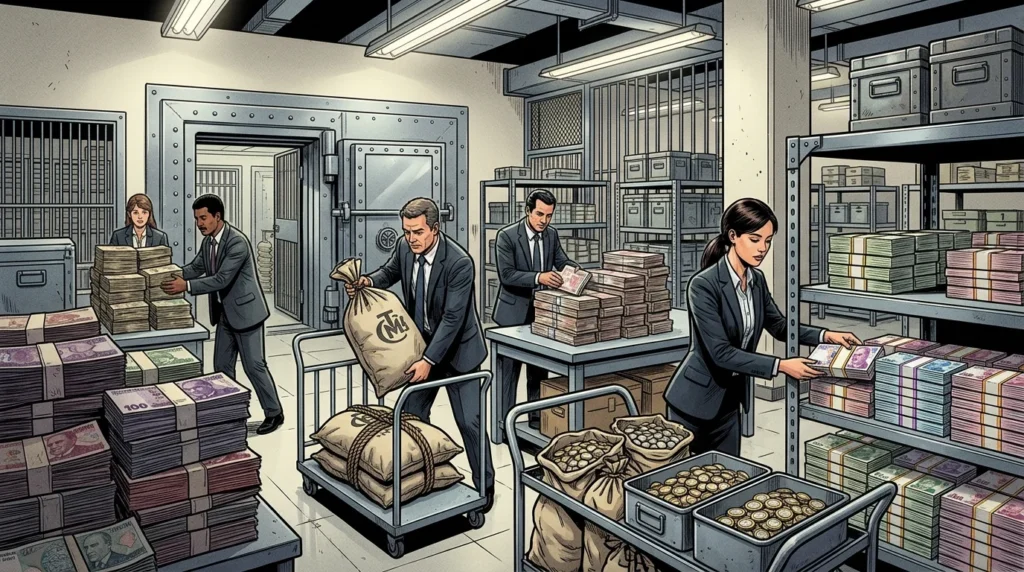
Between January 1, 1993, and April 4, 1995, Mexico executed three interlocking monetary and constitutional reforms that permanently reshaped its financial system after nearly two decades of chronic inflation, fiscal monetization, and balance-of-payments crises. First, on January 1, 1993, President Carlos Salinas de Gortari and the Bank of Mexico (Banco de Mexico, or Banxico) introduced the Nuevo Peso (N$, ISO 4217 code MXN), stripping three zeros from the national currency at a ratio of 1,000 old pesos (MXP) to 1 new peso. Second, on April 1, 1994, a landmark amendment to Article 28 of the Mexican Constitution took effect, granting Banco de Mexico operational and administrative autonomy and constitutionally prohibiting the executive branch from forcing the central bank to finance federal budget deficits. [1]

Less than nine months after Banxico’s autonomy took effect, however, the sudden December 1994 peso devaluation—known inside Mexico as the Error de Diciembre and internationally as the Tequila Crisis—forced Mexico to abandon its crawling-band exchange-rate peg, adopt a free-floating currency regime, and confront a systemic banking emergency as annualized inflation spiked back above 50 percent. To prevent mass mortgage defaults and systemic bank insolvencies without returning to fiscal money printing, Banxico and the Mexican Congress launched a third monetary innovation on April 4, 1995: the Unidad de Inversion (UDI), a daily inflation-indexed unit of account that stabilized real credit contracts and paved the way for Mexico’s formal adoption of inflation targeting in 2001. [2]
From “Stabilizing Development” to the 1987 Hyperinflationary Shock
To understand why Mexico had to lop three zeros off its currency in 1993, one must trace the collapse of its post-World War II monetary anchor. From April 1954 until August 1976—the era celebrated as “Stabilizing Development” (Desarrollo Estabilizador)—Mexico maintained an unbroken fixed exchange rate of 12.50 old pesos per U.S. dollar, accompanied by low single-digit inflation. During the 1970s and early 1980s, however, deficit-financed public spending under Presidents Luis Echeverria and Jose Lopez Portillo was systematically monetized through compulsory central bank credit and commercial-bank reserve requirements administered by Banco de Mexico. [3]
When the fixed peg broke on August 31, 1976, and oil revenues collapsed in 1982, the Mexican peso entered a fourteen-year downward spiral against the U.S. dollar. From 12.50 pesos per dollar in 1976, the exchange rate fell past 150 pesos in 1982, 900 pesos in 1986, and 2,200 pesos after the November 1987 stock market crash, before stabilizing above 3,000 pesos per dollar in the early 1990s. Annual consumer price inflation peaked at 159.2 percent in 1987, while cumulative price increases between 1975 and 1992 exceeded 130,000 percent. [4]
By the end of the 1980s, everyday cash transactions, commercial bookkeeping, and electronic banking computers were strained by astronomical nominal numbers. Banco de Mexico had been forced to issue circulating banknotes in denominations of 10,000, 20,000, 50,000, and 100,000 pesos (featuring President Plutarco Elias Calles), while routine middle-class salaries and automobile or housing prices were quoted in tens or hundreds of millions of pesos. Beginning in December 1987, heterodox stabilization agreements known as the Economic Solidarity Pact (Pacto de Solidaridad Economica) and the Pact for Stability and Economic Growth (PECE)—combining fiscal austerity, external Brady Plan debt restructuring in 1989–1990, trade liberalization, and a pre-announced daily crawling exchange-rate band—successfully brought annual inflation down from 159.2 percent in 1987 to 11.9 percent by 1992. [5]
The January 1, 1993 Nuevo Peso Redenomination (1,000:1)
With inflation approaching single digits and negotiations concluding on the North American Free Trade Agreement (NAFTA), the Salinas administration submitted a monetary reform bill to Congress in June 1992 to simplify monetary calculations and signal a permanent break with high inflation. Published in the Diario Oficial de la Federacion on June 22, 1992, the Monetary Decree established a three-stage transition that took effect on January 1, 1993: [6]
- The 1,000-to-1 Conversion Ratio: Starting January 1, 1993, a new monetary unit temporarily named the Nuevo Peso was created, equal to 1,000 old pesos (
MXP). To prevent confusion on price tags, checks, and financial contracts during the transition, the unit was designated by the prefix symbolN$, while the International Organization for Standardization assigned the new three-letter currency codeMXN. - Dual Circulation and New Banknote Series (1993–1995): To ease the logistical changeover, Banco de Mexico initially issued Series B banknotes in denominations of N$10, N$20, N$50, and N$100 featuring the identical historical portraits and designs of the old 10,000-, 20,000-, 50,000-, and 100,000-peso notes, but printed with the word “Nuevos Pesos,” alongside redesigned bi-metallic coins of N$1, N$2, N$5, N$10, N$20, and N$50 (the latter three featuring sterling silver cores). In October 1994, Banxico introduced the modernized Series C banknotes (including the new N$200 and N$500 notes).
- Restoration of the Name “Peso” (January 1, 1996): In accordance with the June 1992 decree, once the old pre-1993 bills and coins were demonetized at the end of 1995, the temporary adjective “Nuevo” and the “N” prefix were officially dropped on January 1, 1996, restoring the historic name peso (
$/MXN) across Series D banknotes.
The April 1994 Constitutional Autonomy of Banco de México
While stripping three zeros from the currency simplified arithmetic, Mexican policymakers led by Finance Secretary Pedro Aspe and central bank governor Miguel Mancera Aguayo recognized that redenomination alone could not guarantee long-term price stability unless the institutional root of inflation—executive fiscal dominance over the central bank—was severed. Founded on September 1, 1925, Banco de Mexico had functioned for nearly seven decades under laws that permitted the Ministry of Finance (Secretaria de Hacienda y Credito Publico) to compel central bank credit whenever tax revenues fell short. [7]
In May 1993, President Salinas sent a constitutional amendment to Congress reforming Article 28 of the Political Constitution of the United Mexican States. Approved by Congress and state legislatures in August 1993 and reinforced by a new Law of the Bank of Mexico (Ley del Banco de Mexico) in December 1993, the reform entered into force on April 1, 1994, resting on three foundational pillars: [8]
- Constitutional Mandate for Price Stability: Article 28 established that the state would have a central bank that is autonomous in the exercise of its functions and administration, whose primary objective is to procure the stability of the purchasing power of the national currency.
- Prohibition of Forced Deficit Financing: The Constitution explicitly declared that “no authority may order the bank to grant financing,” ending decades in which Mexican presidents financed spending surges through the printing press.
- Staggered Board of Governors (Junta de Gobierno): Governance was vested in a five-member Board of Governors—one Governor appointed for a six-year term beginning midway through the presidential six-year term (sexenio) and four Deputy Governors appointed for staggered eight-year terms—removable only for strict statutory cause. Miguel Mancera Aguayo, who had directed the bank since 1982, became the first autonomous Governor of Banco de Mexico.
The December 1994 Tequila Crisis and the Creation of the UDI in April 1995
Ironically, Banxico’s newly won autonomy was tested almost immediately by a catastrophic balance-of-payments crisis. Throughout 1994—an election year marred by the January 1994 Zapatista uprising in Chiapas, the March 1994 assassination of PRI presidential candidate Luis Donaldo Colosio, and rising U.S. Federal Reserve interest rates—Mexico’s current-account deficit approached 7 percent of GDP. Yet Exchange Commission (Comision de Cambios) authorities—where the Finance Ministry retained the deciding vote over exchange-rate policy—resisted widening the narrow crawling-peg band (around N$3.10 to N$3.47 per dollar) and instead refinanced flight-prone peso debt by issuing nearly $29 billion in short-term, dollar-indexed treasury bills known as Tesobonos.
As Banxico’s foreign-exchange reserves plunged from $29 billion in February 1994 to roughly $6 billion by mid-December 1994, newly inaugurated President Ernesto Zedillo Ponce de Leon and Finance Secretary Jaime Serra Puche attempted a 15 percent widening of the exchange-rate band on December 20, 1994, before abandoning the peg altogether on December 22, 1994. Within months, the Nuevo Peso plummeted from N$3.47 to more than N$7.50 per dollar, annual inflation surged to 52.0 percent in 1995, and interbank interest rates (TIIE and CETES) spiked past 80 to 100 percent.
This interest-rate shock threatened to destroy Mexico’s recently privatized banking system through the “accelerated amortization” effect: when nominal interest rates jump from 15 percent to 80 percent to match inflation, borrowers must effectively repay a huge fraction of the real principal of their mortgages and business loans in the very first monthly installments, triggering mass defaults. Drawing inspiration from Chile’s Unidad de Fomento (UF), Banco de Mexico and the Zedillo administration published a decree on April 1, 1995 creating the Unidad de Inversion (UDI).
Launched on April 4, 1995 at an initial par value of exactly 1.000000 Nuevo Peso per UDI, the UDI is an official unit of account whose peso value is calculated and published daily by Banco de Mexico in direct proportion to variations in the bi-weekly National Consumer Price Index (INPC). By restructuring millions of residential mortgages, commercial bank loans, and long-term government bonds (Udibonos) into UDIs, borrowers paid a low, stable real interest rate while the peso principal adjusted gradually with inflation. Coupled with the transition to a free-floating exchange rate after December 22, 1994, and Banxico’s formal adoption of an explicit inflation-targeting framework in 2001 (anchoring long-term inflation around a 3 percent target), the 1993–1995 monetary reforms transformed the Mexican peso into one of the most liquid and institutionally credible emerging-market currencies in the world.
Theoretical & Balance-Sheet Transmission Mechanism
In the Kindleberger–Minsky taxonomy of financial instability (Kindleberger, 1978; Minsky, 1986) and Irving Fisher’s (1933) debt-deflation framework, speculative asset booms become systemic crises when credit expansion shifts balance sheets from hedge finance (cash flows covering principal and interest) to speculative and Ponzi finance (relying on rising asset prices and short-term margin roll-overs).
Once monetary tightening or an exogenous shock halts price appreciation, forced margin liquidations trigger Fisherian debt-deflation: fire-sale asset discounts erode bank collateral values, contracting credit supply across the real economy.
Sources and Further Reading
- Banco de Mexico, “ Monetary Policy and Inflation Targeting in Mexico,” Banco de Mexico Working Papers, 2008. Central Bank / Monetary Authority
- Banco de Mexico, “ A 30 anos de la entrada en vigor de la autonomia del Banco de Mexico,” Blog Banxico, 2024-04-01. Central Bank / Monetary Authority
- Diario Oficial de la Federacion / Orden Juridico Nacional, “ Decreto por el que se establecen las obligaciones que podran denominarse en Unidades de Inversion (UDIs),” Secretaria de Gobernacion, 1995-04-01. Historical & Financial Reference
- Banco de Mexico, “ Valor de las Unidades de Inversion (UDIs) — Serie Historica desde el 4 de abril de 1995,” Sistema de Informacion Economica (SIE), 2025. Central Bank / Monetary Authority
- Carlos Cabrera Morales, “ La Autonomia del Banco de Mexico y la Reforma Monetaria,” Memoria Politica de Mexico, 2014. Historical & Financial Reference
- Darinka Rodriguez, “ Cuando a los pesos mexicanos se les quitaron tres ceros: la historia de los nuevos pesos,” El Pais, 2018-03-17. Historical & Financial Reference
- Irving Fisher — "The Debt-Deflation Theory of Great Depressions," Econometrica 1, no. 4 (FRASER Federal Reserve Archive, 1933): 337–357 Central Bank / Monetary Authority
- Charles P. Kindleberger & Robert Z. Aliber — Manias, Panics, and Crashes: A History of Financial Crises (Palgrave Macmillan) Peer-Reviewed / Academic Research
Cite This Historical Dossier (APA / Chicago)
APA (7th ed.): Ç., S. (Ed.). (2026). Mexico’s Nuevo Peso: Three Zeros, a Central Bank and a Crisis. In Forgotten Fortunes Historical Monograph Series (Forgotten Fortunes Editorial Desk). https://forgottenfortunes.net/mexico-nuevo-peso-1993-reform/
MLA (9th ed.): Ç., Soner, ed. "Mexico’s Nuevo Peso: Three Zeros, a Central Bank and a Crisis." Forgotten Fortunes: Financial & Monetary History Archive, 2026, https://forgottenfortunes.net/mexico-nuevo-peso-1993-reform/.
Chicago (17th ed.): Ç., Soner, ed. "Mexico’s Nuevo Peso: Three Zeros, a Central Bank and a Crisis." Forgotten Fortunes Historical Monograph Series (Forgotten Fortunes Editorial Desk), September 17, 2026. https://forgottenfortunes.net/mexico-nuevo-peso-1993-reform/.
Have an idea for another financial history documentary or article? Request a story →