In This Article
Between November 17 and December 28, 1995, the Russian federal government conducted twelve extraordinary financial auctions in Moscow known officially as collateral auctions (zalogovye auktsiony) and globally as the “Loans-for-Shares” scheme. Conceived by commercial banker Vladimir Potanin and championed within the Kremlin by First Deputy Prime Minister Anatoly Chubais, the arrangement purported to solve a pressing fiscal shortfall: private Russian banks would lend hard currency to President Boris Yeltsin’s cash-strapped administration and receive temporary management rights over large blocks of shares in Russia’s crown-jewel oil, metals, and shipping enterprises as collateral. In practice, the auctions were administered by the very banks bidding for the stakes, rival consortia were disqualified on technicalities, and winning bids cleared barely above statutory reserve prices. When the Russian state predictably declined to repay the loans after Yeltsin’s July 1996 re-election, the insider banks sold the collateralized shares to their own affiliates, transferring controlling stakes in industrial giants such as Yukos, Norilsk Nickel, Sibneft, and Sidanko for a combined outlay of roughly $1 billion. [1]

The 1995 Fiscal Crunch and the Specter of Communist Restoration
The Loans-for-Shares mechanism emerged from the intersection of a failed cash-privatization budget and an existential political crisis for the Yeltsin administration. Between 1992 and 1994, Chubais had overseen Russia’s mass voucher privatization, which distributed equity across thousands of medium and large enterprises—chiefly benefiting incumbent Soviet-era factory directors (“red directors”)—while leaving the most lucrative natural-resource exporters in state hands. For the 1995 federal budget, the Russian government pledged to the International Monetary Fund that it would finance its deficit through non-inflationary means rather than central bank money creation, budgeting 9 trillion rubles (roughly $1.95 billion) in revenue from cash sales of state corporate shares. [2]
By the spring of 1995, however, the cash privatization program had stalled. Domestic capital markets were shallow, foreign institutional investors balked at political risk and hostile enterprise managers, and nationalist and Communist deputies in the State Duma sought to block the sale of strategic resource firms. At the same time, unpaid state wages and pensions were mounting, the First Chechen War was draining the treasury, and President Yeltsin’s approval rating had fallen into single digits ahead of the December 1995 parliamentary and June 1996 presidential elections, in which Communist Party leader Gennady Zyuganov was the clear front-runner. [3]
On March 30, 1995, Vladimir Potanin—president of Oneksimbank (United Export-Import Bank), a commercial bank founded just two years earlier that held lucrative customs and state treasury accounts—presented a formal proposal to the Russian cabinet on behalf of a consortium of Moscow commercial banks. Instead of selling shares outright in a depressed market, the banks offered to extend loans to the federal treasury secured by blocks of shares in premier state enterprises. On August 31, 1995, Yeltsin signed Presidential Decree No. 889 establishing the legal framework for the collateral auctions. [4]
| Documented Figure / Metric | Historical Significance & Archival Context |
|---|---|
| $130 million | On December 7, an Oneksimbank affiliate won a 51% stake in the oil holding company Sidanko for $130 million against a $125 million reserve. |
| $13.1 billion | In September 2005, state gas monopoly Gazprom paid Roman Abramovich $13.1 billion to buy back Sibneft—the same company privatized for $100.3 million a decade earlier—bringing the era of the 1995 Loans-for-Shares energy barons full circle under state capitalism. |
The Two-Stage Collateral Mechanism and Self-Administered Auctions
The financial structure designed under Decree No. 889 was a two-step transaction engineered to bypass parliamentary bans on outright privatization while insulating the insider banks from genuine competition. In the first stage, held in November and December 1995, bidders competed to offer the Russian government a three-year loan denominated in US dollars (bearing a modest interest rate of LIBOR plus 0.5%) in exchange for holding a specified block of state shares in trust as collateral. During the loan period, the lending bank exercised voting rights over the shares—allowing it to replace entrenched enterprise boards—barring only major asset sales without State Property Committee approval. [5]
The second stage was built around an inevitable sovereign default. If the Russian federal government did not appropriate funds to repay the principal of the loans by September 1, 1996—two months after the presidential election—the lending bank acquired the legal right to organize a second auction to sell the shares permanently. Crucially, the bank that held the collateral was entitled not only to recover its original loan principal from the sale proceeds, but also to retain 30% of any capital gain above the initial loan amount, while acting as the auctioneer determining bidder eligibility. [6]
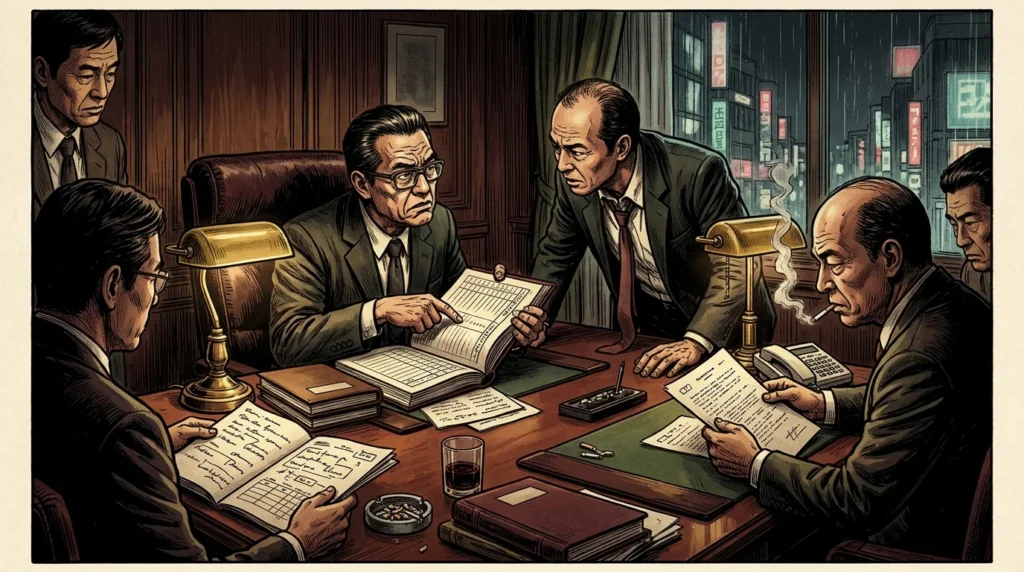
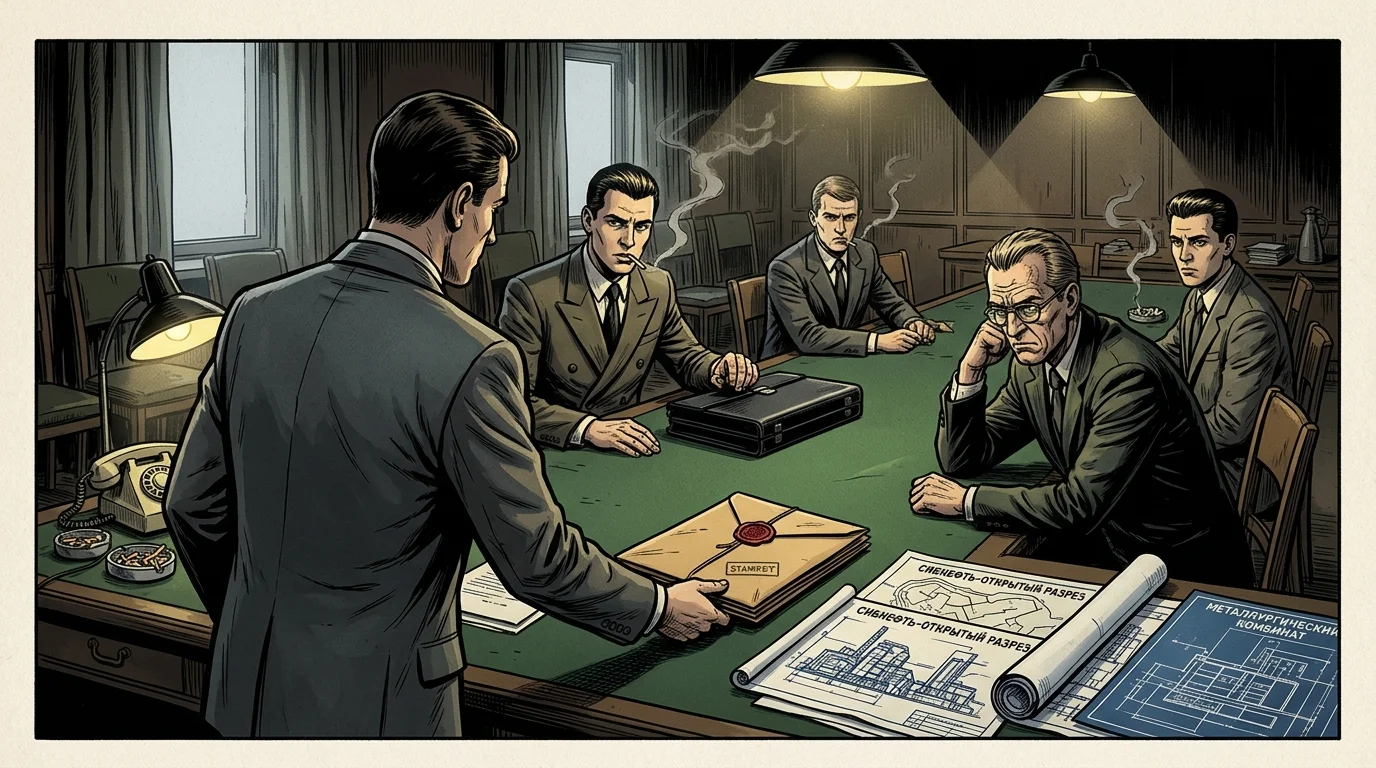
Because the State Property Committee delegated the administration of the initial 1995 collateral auctions to the leading Moscow banks themselves—notably Potanin’s Oneksimbank and Mikhail Khodorkovsky’s Bank Menatep—the auctioneers were simultaneously the primary bidders through thinly veiled shell companies and front organizations. Foreign investors were barred from bidding on several of the most valuable resource enterprises, and where competing domestic banks attempted to submit significantly higher bids, the organizing banks used procedural pretexts to exclude them. [7]
Norilsk Nickel, Yukos, and Sibneft: Inside the Rigged Bids
The twelve auctions conducted over six weeks in late 1995 transferred control over stakes in some of the world’s largest mineral and hydrocarbon reserves for sums barely exceeding the minimum opening prices. On November 17, 1995, Oneksimbank conducted the auction for a 38% stake (comprising 51% of the voting stock) in RAO Norilsk Nickel, the producer of more than 90% of Russia’s nickel and platinum-group metals and over a fifth of global nickel supply. The minimum reserve price was set at $170 million. A rival banking group led by Rossiisky Kredit submitted a bid of $355 million—more than double the reserve price—but Oneksimbank officials disqualified Rossiisky Kredit minutes before the auction, claiming its financial guarantee exceeded its statutory capital limit. Three companies affiliated with Oneksimbank then bid against one another, with Oneksimbank itself winning the 38% stake for a loan of $170.1 million—just $100,000 above the floor.
Three weeks later, on December 8, 1995, Bank Menatep—founded by 32-year-old financier Mikhail Khodorkovsky—administered the dual auction for a 45% collateral stake and an additional 33% investment-tender stake in Yukos, Russia’s second-largest oil producer. A rival consortium formed by Inkombank, Alfa Bank, and Rossiisky Kredit attempted to bid using Russian government Treasury bonds as part of its security deposit, only to be disqualified by Menatep on the grounds that cleared cash was required in accounts at Menatep itself. Menatep’s affiliate, Laguna, won the 45% Yukos collateral stake with a loan of $159 million (against a $150 million minimum) and secured the accompanying 33% stake for $150.1 million plus pledged future investment.
The pattern repeated across the remaining auctions. On December 7, an Oneksimbank affiliate won a 51% stake in the oil holding company Sidanko for $130 million against a $125 million reserve. The pension fund of Surgutneftegaz won a 40.1% stake in its own parent oil company after a rival bidder was barred from the provincial airport in Surgut when authorities shut the runway. On December 28, the final auction day, a 51% stake in the newly created oil giant Sibneft went to the Oil Finance Company—controlled by Boris Berezovsky and his young protégé Roman Abramovich, backed by Menatep—for a loan of $100.3 million against a $100 million minimum after Inkombank and Potanin’s group withdrew or were sidelined. Across all twelve auctions—which also included a 5% stake in Lukoil ($35.01 million), 15% of Novolipetsk Steel ($31 million), and stakes in Mechel, Murmansk Shipping, and North-West Shipping—the Russian state raised only about $1 billion in total loans and pledged investments.
The 1996 Election Pact and the 1997 Buyouts
For Chubais and the Kremlin, the fiscal disappointment of the auctions was secondary to their political objective. Having acquired vast industrial empires whose survival depended on preventing a Communist victory—since Zyuganov openly vowed to renationalize the collateralized enterprises—the newly minted financial barons united in early 1996 to bankroll and manage Yeltsin’s re-election campaign. Meeting at the World Economic Forum in Davos in February 1996, the leading bankers forged the “Davos Pact,” hiring Chubais to run a fiercely coordinated campaign backed by Berezovsky’s ORT television network and Gusinsky’s NTV.
Following Yeltsin’s second-round victory in July 1996, Potanin was appointed First Deputy Prime Minister in charge of economic policy, while the September 1996 deadline for the state to repay the Loans-for-Shares advances expired without payment. Throughout 1997, the banks held the second-stage buyout auctions to transfer formal title over the shares. Once again, affiliates of the lending banks won every single auction at prices just marginally above the 1995 loan amounts: a Menatep affiliate bought the 45% Yukos stake for $160.1 million in December 1996, an Abramovich-Berezovsky vehicle bought the 51% Sibneft stake for $110 million in May 1997, and an Oneksimbank affiliate bought the 38% Norilsk Nickel stake for $251 million in August 1997.
Economic Reassessment, Public Outrage, and the Putin Reversal
In historical and economic scholarship, the 1995 Loans-for-Shares program occupies a dual legacy. As UCLA economist Daniel Treisman demonstrated in a landmark 2010 National Bureau of Economic Research reassessment, the execution of the auctions was undeniably rigged and corrupt, yet standard accounts overstated how cheap the stakes were relative to Russia’s depressed 1995 market capitalization and extreme risk of communist expropriation. Moreover, once the new oligarch owners consolidated majority control after 1997 and replaced Soviet-era management, enterprises such as Yukos, Sibneft, and Norilsk Nickel restructured operations, invested heavily, and increased oil output and pretax profits far faster than state-run or insider-manager peers. By 2003, Yukos’s share price had risen more than tenfold from its post-1998 crisis lows, transforming Khodorkovsky into Russia’s richest man.
Politically and socially, however, the rigged auctions delegitimized private property rights and market capitalism in the eyes of the Russian public, who viewed the 1995 sales as a brazen theft of national patrimony. That popular resentment provided Vladimir Putin—who succeeded Yeltsin in 2000—with potent public support when the Kremlin moved to subordinate or expropriate the 1990s oligarchs. In October 2003, Russian authorities arrested Khodorkovsky at gunpoint and hit Yukos with multibillion-dollar back-tax claims, dismantling the company and folding its core production unit into state-owned Rosneft. In September 2005, state gas monopoly Gazprom paid Roman Abramovich $13.1 billion to buy back Sibneft—the same company privatized for $100.3 million a decade earlier—bringing the era of the 1995 Loans-for-Shares energy barons full circle under state capitalism.
Theoretical & Balance-Sheet Transmission Mechanism
In the Kindleberger–Minsky taxonomy of financial instability (Kindleberger, 1978; Minsky, 1986) and Irving Fisher’s (1933) debt-deflation framework, speculative asset booms become systemic crises when credit expansion shifts balance sheets from hedge finance (cash flows covering principal and interest) to speculative and Ponzi finance (relying on rising asset prices and short-term margin roll-overs).
Once monetary tightening or an exogenous shock halts price appreciation, forced margin liquidations trigger Fisherian debt-deflation: fire-sale asset discounts erode bank collateral values, contracting credit supply across the real economy.
Sources and Further Reading
- Daniel Treisman, “ ‘Loans for Shares’ Revisited (NBER Working Paper No. 15819),” National Bureau of Economic Research, 2010-03. Peer-Reviewed / Academic Research
- Jonas Bernstein, “ Loans for the Sharks,” The Moscow Times, 1995-12-23. Historical & Financial Reference
- Richard Boudreaux, “ Russia’s Lofty Plan to Privatize State Companies Is Near Collapse,” Los Angeles Times, 1995-12-08. Historical & Financial Reference
- David Gow, “ The billionaire oligarchs,” The Guardian, 2003-10-31. Historical & Financial Reference
- Robert Parsons, “ Russia: The End Of Loans-For-Shares,” Radio Free Europe/Radio Liberty, 2005-09-30. Historical & Financial Reference
- Irving Fisher — "The Debt-Deflation Theory of Great Depressions," Econometrica 1, no. 4 (FRASER Federal Reserve Archive, 1933): 337–357 Central Bank / Monetary Authority
- Charles P. Kindleberger & Robert Z. Aliber — Manias, Panics, and Crashes: A History of Financial Crises (Palgrave Macmillan) Peer-Reviewed / Academic Research
Cite This Historical Dossier (APA / Chicago)
APA (7th ed.): Ç., S. (Ed.). (2026). The 1995 Russian "Loans-for-Shares" (Zalogovye Auktsiony) Privatization Rig. In Forgotten Fortunes Historical Monograph Series (Forgotten Fortunes Editorial Desk). https://forgottenfortunes.net/russia-1995-loans-for-shares/
MLA (9th ed.): Ç., Soner, ed. "The 1995 Russian "Loans-for-Shares" (Zalogovye Auktsiony) Privatization Rig." Forgotten Fortunes: Financial & Monetary History Archive, 2026, https://forgottenfortunes.net/russia-1995-loans-for-shares/.
Chicago (17th ed.): Ç., Soner, ed. "The 1995 Russian "Loans-for-Shares" (Zalogovye Auktsiony) Privatization Rig." Forgotten Fortunes Historical Monograph Series (Forgotten Fortunes Editorial Desk), September 10, 2026. https://forgottenfortunes.net/russia-1995-loans-for-shares/.
Have an idea for another financial history documentary or article? Request a story →