In This Article
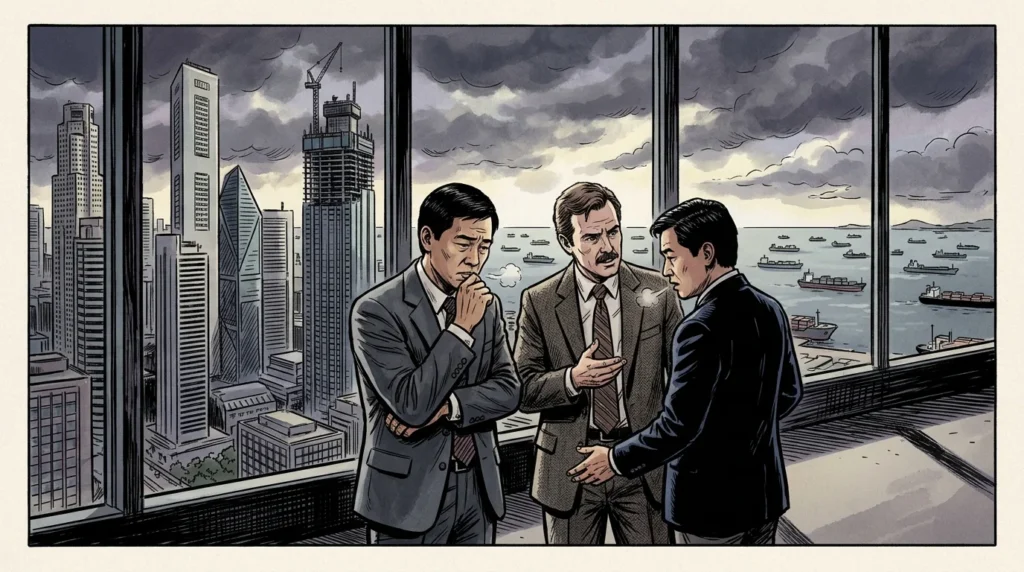
In the early hours of Thursday, September 15, 2011, City of London Police arrested 31-year-old Kweku Mawuli Adoboli, a director on the Exchange-Traded Funds (ETF) / Delta One desk within the Global Synthetic Equities division of Swiss banking giant UBS AG in London. Hours earlier, Adoboli had sent an email to his superiors and accounting control staff confessing that the profitable, hedged ETF positions recorded on the bank’s front-office risk systems were fictitious and that he had accumulated massive unhedged directional losses in equity index futures. By the time UBS liquidated the unauthorized positions later that day, the bank announced a loss of approximately $2.3 billion—the largest unauthorized trading loss in British banking history. [1]
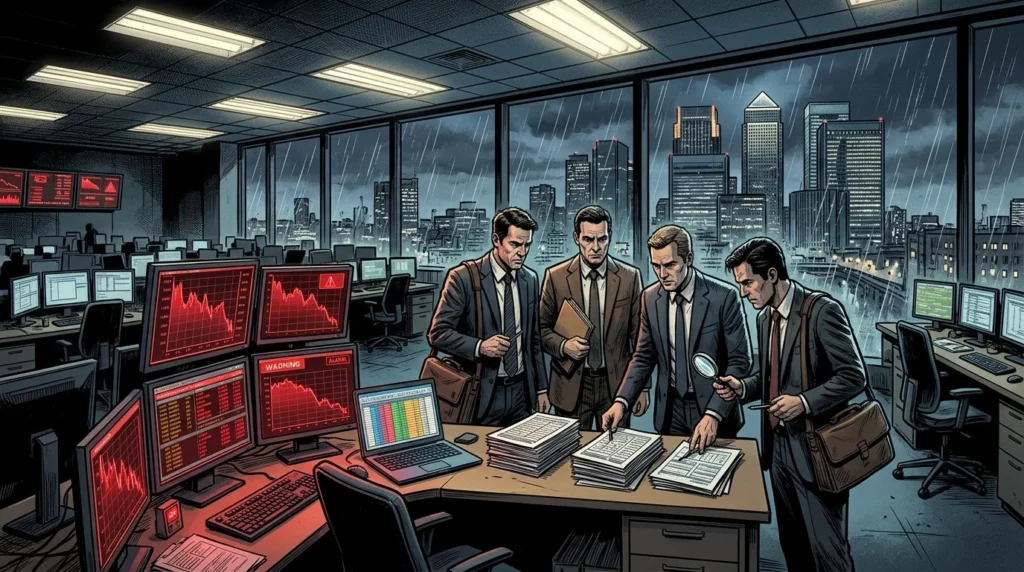
Joint regulatory investigations by the Swiss Financial Market Supervisory Authority (FINMA) and the United Kingdom’s Financial Services Authority (FSA, later succeeded by the Financial Conduct Authority) revealed that Adoboli’s fraud had gone undetected since late 2008 across a desk whose verbal overnight net risk limit was just $25 million to $50 million. Exploiting broken back-office settlement reports, one-sided internal futures entries, deferred-settlement European ETF trades, and an undeclared profit-smoothing reserve known on the desk as the “Umbrella,” Adoboli built unhedged long positions peaking at roughly $12 billion during the August 2011 US credit-rating downgrade before flipping to an $8.5 billion short bet on S&P 500 and DAX futures. Within ten days of Adoboli’s arrest, UBS chief executive Oswald Grübel resigned; in November 2012, Adoboli was sentenced to seven years in prison, the UK FSA fined UBS £29.7 million, and FINMA imposed sweeping supervisory restrictions on the bank’s investment banking arm. [2]
From Back-Office Operations to the Global Synthetic Equities Desk
Born in Ghana in 1980, the son of a senior United Nations official, Kweku Adoboli was educated in England and graduated in computer science and management from the University of Nottingham before joining UBS’s London investment bank as a graduate trainee in 2003. Crucially for the mechanics of the subsequent fraud, Adoboli spent his first years at UBS working as a back-office operations analyst before transferring to the front office as a junior trader on the Exchange-Traded Funds Desk in 2006 and rising to Director in 2010. That operational background gave him an intimate understanding of how UBS’s trade-capture software, T+14 deferred-settlement exception reports, and counterparty reconciliation breaks functioned—and how back-office queries could be deflected. [3]
Located at 1 Finsbury Avenue in the City of London, the ETF Desk consisted of four traders: two Directors—John Christopher Hughes (the most senior trader on the desk) and Adoboli—who conducted both client facilitation and proprietary trading for UBS’s own book, alongside two Associate Directors who focused primarily on client flows. The desk’s mandate was to make markets in exchange-traded funds, cash equities baskets, and depositary receipts, hedging market exposure almost instantaneously with exchange-traded index futures, options, and spot foreign exchange so that net directional risk (“net delta”) remained near zero. [4]
In April 2011, UBS reorganized its Global Equities division and transferred the London ETF Desk from Cash Equities into a newly formed business sector, Global Synthetic Equities (GSE). As FINMA’s November 2012 investigation report documented, the reorganization created an immediate supervisory vacuum: the desk’s new GSE supervisor was based in New York, no concrete handover took place from the previous London supervisor, and no local front-office supervision was put in place in London during the interim. At the same time, the desk’s intraday net delta limit was doubled from $50 million to $100 million and its overnight net delta limit from $25 million to $50 million—yet neither the trading mandate nor the risk limits were formally documented or enforced by automated hard stops in the trading system, having been communicated to traders only verbally. [5]
| Documented Figure / Metric | Historical Significance & Archival Context |
|---|---|
| $12 billion | According to FINMA's investigation, Adoboli's unauthorized long equity index exposure peaked on August 8, 2011—the first trading day after the US downgrade, when global stock indices plunged—at roughly $12 billion, more than 200 times the desk's $50 million overnight risk limit. |
| $8.5 billion | Unable to roll the phantom hedges any further, Adoboli left the office on the afternoon of September 14, 2011 and sent his confession email, prompting UBS to call the City of London Police and unwind the $8.5 billion short position at a crystallized total loss of $2.3 billion. |
| CHF 6 billion | The fallout struck UBS at a moment when the bank was still rebuilding its reputation after requiring a CHF 6 billion Swiss state and central bank rescue package for US subprime mortgage losses in 2008. |
Anatomy of the Concealment: The “Umbrella” and Fictitious ETF Trades
Although UBS’s Global Equities division derived most of its income from client commissions, management expected the four-person London ETF Desk to generate the bulk of its revenue from proprietary trading. When the desk’s reported proprietary revenues soared from $11.7 million for all of 2010 to $15.9 million in the first quarter of 2011 and $47.8 million in the second quarter of 2011—an increase exceeding 600 percent on an annualized basis—senior management praised the performance without conducting a detailed audit of how a low-risk arbitrage desk was generating such returns. [6]
In reality, Adoboli had been breaching risk limits and disguising losses since October 2008. Between late 2008 and the end of 2010, his concealment methods generated up to $296 million in fictitious risk offsets and over $40 million in hidden profit-and-loss (P&L) distortions, before escalating exponentially in 2011. According to FINMA’s forensic findings, Adoboli relied on four interconnected booking techniques to make massive directional futures bets appear fully hedged on daily risk and P&L reports: [7]
- One-Sided Internal Futures Trades: Adoboli entered fictitious internal futures transactions into the front-office ledger that were not matched against an internal counterparty, did not require automated confirmation, and bypassed strict reconciliation checks, creating artificial risk and P&L offsets.
- Late Booking of Genuine External Futures: By intentionally delaying the input of real external exchange-traded futures trades into the front-office risk system, he concealed intraday and overnight directional exposures from market risk monitors.
- Fictitious Deferred-Settlement ETF Trades: Adoboli booked phantom purchases and sales of European ETFs with deferred settlement dates (where European market rules allowed settlement weeks after trade execution) and then cancelled or rolled the trades before the settlement date arrived. A control report known as the “T+14 report” was supposed to flag trades with settlement dates more than 14 days out, but FINMA discovered that UBS’s T+14 report had been non-operational between May and November 2009 and again from November 2010 right up to September 2011. By booking these phantom ETF trades at off-market prices or amending their prices afterward, Adoboli manufactured immediate “Day 1” artificial profits.
- Zero-Notional Bullet Cash Trades and the “Umbrella”: Using a booking mechanism normally reserved for cash-settled events like dividend adjustments—trades with a quantity and price of zero but an added cash flow—Adoboli cleared back-office reconciliation breaks and maintained a secret off-ledger profit reserve dubbed the “Umbrella” from January 2011. When unauthorized directional trades made windfall gains, Adoboli parked the excess profits inside the Umbrella rather than reporting them immediately, then “leaked” those reserves back into the desk’s reported P&L to smooth earnings and mask losing days. As the FCA later established when banning senior desk trader John Christopher Hughes in May 2014, other traders on the ETF Desk knew about the Umbrella reserve and allowed it to continue for at least eight months without escalating the breach to compliance.
Summer 2011 Market Turmoil and the $12 Billion Unhedged Gamble
During the summer of 2011, global equity markets were whipsawed by two systemic shocks: the escalating Eurozone sovereign debt crisis and the protracted US congressional debt-ceiling standoff, which culminated on August 5, 2011 in Standard & Poor’s downgrading the United States’ AAA sovereign credit rating for the first time in history. Convinced that markets would rebound, Adoboli doubled down on massive unhedged long positions in Euro Stoxx 50, German DAX, and S&P 500 index futures. [8]
According to FINMA’s investigation, Adoboli’s unauthorized long equity index exposure peaked on August 8, 2011—the first trading day after the US downgrade, when global stock indices plunged—at roughly $12 billion, more than 200 times the desk’s $50 million overnight risk limit. Forced to close out those deeply underwater long positions by August 11, 2011, Adoboli immediately reversed direction in a desperate bid to recoup the losses before quarterly accounting reconciliations, building an enormous unhedged short position in S&P 500 and DAX futures. When European and US stock markets rallied in early September 2011 following central bank liquidity interventions, his short positions suffered catastrophic further losses, peaking at $8.5 billion in gross short exposure on September 15, 2011.
Discovery, Trial, Oswald Grübel’s Resignation, and Regulatory Penalties
In mid-September 2011, a back-office operations accountant finally pressed Adoboli to provide counterparty confirmation details for chains of expiring deferred-settlement ETF trades that had failed to settle. Unable to roll the phantom hedges any further, Adoboli left the office on the afternoon of September 14, 2011 and sent his confession email, prompting UBS to call the City of London Police and unwind the $8.5 billion short position at a crystallized total loss of $2.3 billion.
The fallout struck UBS at a moment when the bank was still rebuilding its reputation after requiring a CHF 6 billion Swiss state and central bank rescue package for US subprime mortgage losses in 2008. On September 24, 2011, UBS chief executive Oswald Grübel resigned to assume institutional responsibility for the control breakdown, succeeded by Sergio Ermotti, who accelerated a strategic overhaul scaling back UBS’s capital-intensive investment banking operations in favor of global wealth management.
Following a nine-week trial at Southwark Crown Court in London, a jury on November 20, 2012 convicted Adoboli on two counts of fraud by abuse of position (while acquitting him on four counts of false accounting), and Justice Brian Keith sentenced him to seven years in prison. Six days later, on November 26, 2012, the UK FSA and Swiss FINMA announced coordinated enforcement conclusions:
- The £29.7 Million FSA Fine: The UK FSA imposed a £29.7 million ($47.6 million) civil penalty on UBS—reduced by 30 percent from £42.4 million for early settlement—citing pervasive failures in front-office supervision, computer trade-capture systems, broken T+14 exception reports, and a compensation culture that rewarded unexamined revenue growth over risk discipline.
- FINMA Supervisory Restrictions: Because Swiss law does not grant FINMA statutory authority to levy monetary fines, the Swiss supervisor published its 14-page investigative summary report, reprimanded UBS under administrative enforcement law, froze variable compensation pools for investment banking risk-takers, banned acquisitions in the Investment Bank, required prior supervisory approval for any new high-operational-risk business initiatives, and appointed an independent third-party auditor to verify a comprehensive control remediation program.
Theoretical & Balance-Sheet Transmission Mechanism
In the Kindleberger–Minsky taxonomy of financial instability (Kindleberger, 1978; Minsky, 1986) and Irving Fisher’s (1933) debt-deflation framework, speculative asset booms become systemic crises when credit expansion shifts balance sheets from hedge finance (cash flows covering principal and interest) to speculative and Ponzi finance (relying on rising asset prices and short-term margin roll-overs).
Once monetary tightening or an exogenous shock halts price appreciation, forced margin liquidations trigger Fisherian debt-deflation: fire-sale asset discounts erode bank collateral values, contracting credit supply across the real economy.
Sources and Further Reading
- Swiss Financial Market Supervisory Authority (FINMA), “ Summary Report: FINMA Investigation into the Events surrounding Trading Losses of USD 2.3 billion incurred by the Investment Banking Division of UBS AG in London,” FINMA, 2012-11-21. Historical & Financial Reference
- Swiss Financial Market Supervisory Authority (FINMA), “ FINMA concludes UBS rogue trader case,” FINMA, 2012-11-26. Historical & Financial Reference
- Financial Conduct Authority (FCA), “ Former UBS trader banned for failings related to US$2.3 billion unauthorised trading losses by Kweku Adoboli,” Financial Conduct Authority, 2014-05-01. Official / State Archive
- Jill Treanor, “ UBS fined £30m over rogue trader,” The Guardian, 2012-11-26. Historical & Financial Reference
- Jill Treanor and Dominic Rushe, “ ‘Rogue trader’ Kweku Adoboli faces fraud charges dating back to 2008,” The Guardian, 2011-09-17. Historical & Financial Reference
- Matthew Allen, “ Kweku Adoboli: a rogue trader’s tale,” SWI swissinfo.ch, 2015-10-16. Historical & Financial Reference
- Irving Fisher — "The Debt-Deflation Theory of Great Depressions," Econometrica 1, no. 4 (FRASER Federal Reserve Archive, 1933): 337–357 Central Bank / Monetary Authority
- Charles P. Kindleberger & Robert Z. Aliber — Manias, Panics, and Crashes: A History of Financial Crises (Palgrave Macmillan) Peer-Reviewed / Academic Research
Cite This Historical Dossier (APA / Chicago)
APA (7th ed.): Ç., S. (Ed.). (2026). The 2011 UBS Rogue Trader Scandal: Kweku Adoboli's $2.3 Billion Delta One Loss. In Forgotten Fortunes Historical Monograph Series (Forgotten Fortunes Editorial Desk). https://forgottenfortunes.net/ubs-rogue-trader-scandal-kweku-adoboli-loss/
MLA (9th ed.): Ç., Soner, ed. "The 2011 UBS Rogue Trader Scandal: Kweku Adoboli's $2.3 Billion Delta One Loss." Forgotten Fortunes: Financial & Monetary History Archive, 2026, https://forgottenfortunes.net/ubs-rogue-trader-scandal-kweku-adoboli-loss/.
Chicago (17th ed.): Ç., Soner, ed. "The 2011 UBS Rogue Trader Scandal: Kweku Adoboli's $2.3 Billion Delta One Loss." Forgotten Fortunes Historical Monograph Series (Forgotten Fortunes Editorial Desk), September 10, 2026. https://forgottenfortunes.net/ubs-rogue-trader-scandal-kweku-adoboli-loss/.
Have an idea for another financial history documentary or article? Request a story →