In This Article
Between the final speculative boom before the 1997 Asian Financial Crisis and the political upheaval of 2006, Thailand’s financial and corporate landscape was convulsed by three landmark governance battles that exposed deep vulnerabilities in bank supervision, insolvency enforcement, and offshore tax structuring. In May 1996, the collapse of the Bangkok Bank of Commerce (BBC) revealed that bank president Krirkkiat Jalichandra and Indian treasury adviser Rakesh Saxena had siphoned more than 75 billion baht (roughly US$3 billion) out of the lender through uncollateralized loans to dummy offshore shells. In 1997, the floating of the baht triggered a US$3.8 billion default at Prachai Leophairatana’s Thai Petrochemical Industry (TPI), igniting an eight-year courtroom war that tested Thailand’s newly established Central Bankruptcy Court until a state-backed rescue led by PTT in 2005. Finally, on January 23, 2006, Prime Minister Thaksin Shinawatra’s family sold its 49.6 percent controlling stake in telecommunications giant Shin Corporation to Singapore’s state investment fund Temasek Holdings for 73.27 billion baht (US$1.88 billion) completely free of capital-gains tax via a British Virgin Islands shell company—sparking mass street protests and the September 2006 military coup. [1]
Rakesh Saxena, Krirkkiat Jalichandra, and the 1996 Looting of Bangkok Bank of Commerce
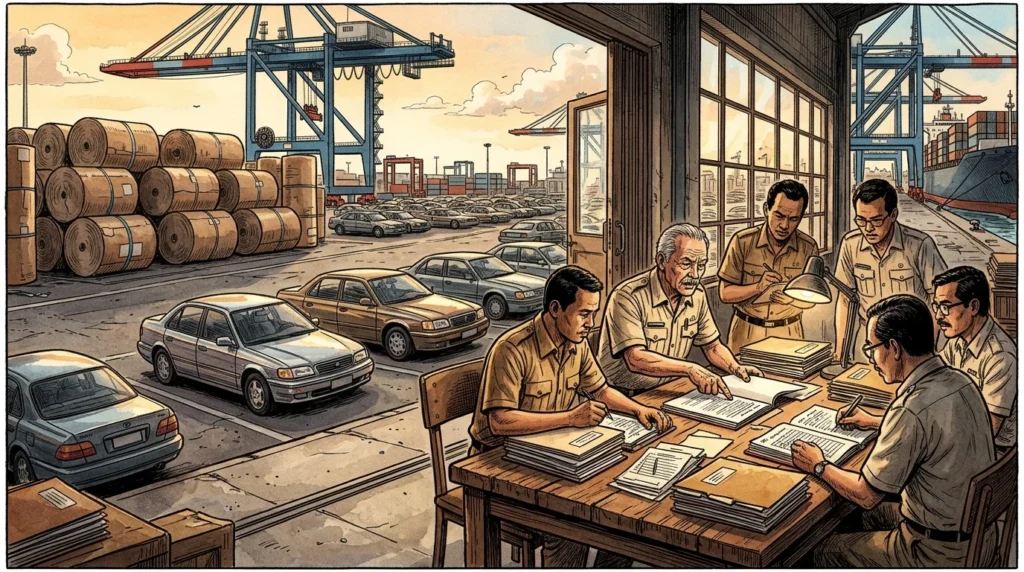
During the early 1990s financial liberalization propelled by the creation of the Bangkok International Banking Facility (BIBF), cheap offshore dollar funding flooded into Thai commercial banks and finance companies. Few institutions epitomized the era’s regulatory blind spots more dramatically than the Bangkok Bank of Commerce (BBC), a mid-sized commercial lender led by president Krirkkiat Jalichandra. In 1994, Krirkkiat appointed Indian-born financier Rakesh Saxena as the bank’s chief treasury and corporate takeover adviser. [2]
Between 1994 and early 1996, Krirkkiat and Saxena turned BBC into a private merchant-banking vehicle for leveraged stock manipulation and hostile takeovers on the Stock Exchange of Thailand (SET). Using scores of dummy companies registered in the Cayman Islands, the British Virgin Islands, and the Middle East, BBC extended tens of billions of baht in unverified, vastly overvalued, or wholly uncollateralized loans. Proceeds were recycled to bid up shares of target companies, finance political allies inside the ruling coalition’s “Group of 16” parliamentary faction, and extract massive advisory fees and personal kickbacks. [3]
Although Bank of Thailand examiners detected alarming irregularities in BBC’s loan portfolio as early as 1995, political pressure delayed intervention until opposition lawmakers exposed the insider loans during a May 1996 parliamentary no-confidence debate. A panicked deposit run forced the Finance Ministry and the Bank of Thailand to seize control of BBC on May 17, 1996. Subsequent audits uncovered approximately 75 billion baht (around US$3 billion at the pre-crisis fixed exchange rate of 25 baht per dollar) in fraudulent and non-performing loans—nearly half of the bank’s total assets. The Bank of Thailand’s Financial Institutions Development Fund (FIDF) spent heavily to bail out depositors before shutting BBC down in 1998, fatally weakening central bank credibility and foreign-exchange reserves on the eve of the July 1997 baht crisis. [4]
While Krirkkiat Jalichandra remained in Thailand and was convicted on multiple counts of embezzlement and banking fraud before dying of cancer in 2012, Rakesh Saxena fled to Whistler, British Columbia, in July 1996 on a Yugoslav passport. Saxena waged an extraordinary thirteen-year legal battle against extradition—living under privately funded house arrest in Vancouver—before Canada’s Supreme Court cleared his deportation to Bangkok in October 2009. In 2022, Thailand’s Supreme Court upheld maximum prison terms (capped at twenty years served under Thai statutory limits) and ordered Saxena to return more than 2 billion baht in restitution before he was deported to India in 2024 following a royal pardon. [5]
Prachai Leophairatana and the US$3.8 Billion Thai Petrochemical Industry Bankruptcy War
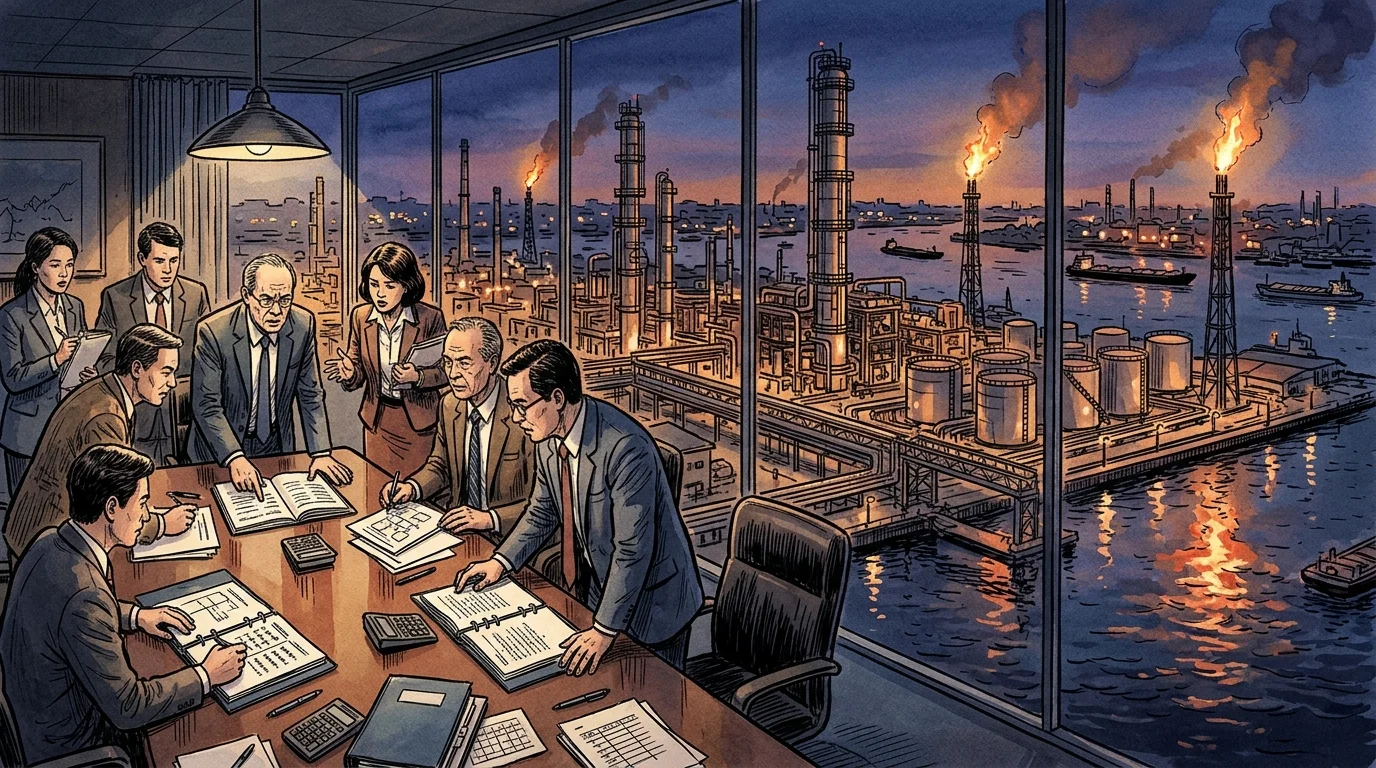
Just fourteen months after BBC’s seizure, the Bank of Thailand exhausted its forward dollar reserves and floated the Thai baht on July 2, 1997. Across Bangkok’s industrial conglomerates, unhedged US dollar borrowing doubled in local-currency terms overnight. The single largest corporate casualty was Thai Petrochemical Industry Public Company Limited (TPI), founded by US-educated chemical engineer Prachai Leophairatana and his family to build Southeast Asia’s first fully integrated oil-refining and petrochemical complex in Rayong province. [6]
Having financed its Rayong expansion with short-term dollar and yen credits from roughly 148 international and domestic banks—including the International Finance Corporation (IFC), US Export-Import Bank, and Bangkok Bank—TPI suspended debt payments in August 1997 with total liabilities reaching US$3.8 billion (including US$3.2 billion at the parent company and US$600 million at affiliate TPI Polene). At the time, Thailand’s archaic 1940 bankruptcy law lacked any corporate reorganization mechanism analogous to US Chapter 11, enabling “strategic defaulting” tycoons to stall foreign creditors indefinitely while retaining management control. [7]
Under intense pressure from the International Monetary Fund, the Thai parliament enacted the Bankruptcy Act Amendments of 1998 and 1999, establishing the specialized Central Bankruptcy Court. TPI quickly became the flagship test case of the new court. In March 2000, the Central Bankruptcy Court declared TPI insolvent and appointed Effective Planners Ltd.—a Bangkok subsidiary of Australian insolvency firm Ferrier Hodgson—as the court-mandated plan administrator over Prachai Leophairatana’s fierce objections. [8]
Refusing to surrender his family’s industrial empire, Prachai waged an unprecedented five-year legal, media, and factory-floor campaign against Effective Planners and the steering committee of 148 creditors. He filed more than thirty criminal and civil lawsuits accusing the Australian administrators of embezzlement and incompetence, mobilized thousands of TPI labor union workers to block creditor representatives from entering the Rayong complex, and draped Bangkok office towers in giant nationalist banners denouncing foreign creditors. In April 2003, Prachai briefly persuaded the Central Bankruptcy Court to dismiss Effective Planners, prompting the Finance Ministry to step in as interim planner. The eight-year stalemate ended only in late 2005 when Prime Minister Thaksin Shinawatra’s government engineered a state-backed white-knight bailout: state energy flagship PTT Public Company Limited, the Government Pension Fund, the Government Savings Bank, and the Vayupak Fund injected US$1.1 billion in fresh equity to acquire a 61.5 percent controlling stake, paying off creditors at a steep discount, ousting Prachai from management, and renaming the restructured petrochemical complex IRPC Public Company Limited in 2006.
The January 2006 Tax-Free Sale of Shin Corp to Temasek Holdings
Barely months after resolving the TPI deadlock, Prime Minister Thaksin Shinawatra triggered the most explosive corporate and political scandal in modern Thai history. Before entering politics in the late 1990s and winning landslide elections in 2001 and 2005 at the head of the Thai Rak Thai party, Thaksin had built Shin Corporation (Shin Corp) into Thailand’s dominant wireless telecommunications, satellite, and aviation conglomerate—anchored by mobile operator Advanced Info Service (AIS) and satellite monopoly Thaicom. To comply with constitutional asset-declaration rules upon taking office in 2001, Thaksin transferred his Shin Corp shares to his wife Pojaman, his adult children Panthongtae and Pintongta, and his brother-in-law Bannapot Damapong.
On Friday, January 20, 2006, Thailand’s new Telecommunications Business Act took effect, raising the statutory foreign ownership ceiling in Thai telecom companies from 25 percent to 49 percent. On the very next trading day—Monday, January 23, 2006—the Shinawatra and Damapong family members sold their entire 49.6 percent stake (1.487 billion shares at 49.25 baht per share) in Shin Corp to Cedar Holdings and Aspen Holdings, acquisition vehicles controlled by Singapore’s state-owned sovereign investment company Temasek Holdings, for 73.27 billion baht (US$1.88 billion).
The Ample Rich Offshore Loop and the 2006 Political Reckoning
Public fury erupted immediately over two aspects of the transaction: the sale of strategic national satellite and telecom monopolies to a foreign state fund, and the revelation that Thailand’s wealthiest prime minister and his family had paid zero baht in taxes on a 73.27-billion-baht windfall. Whereas capital gains realized by individuals selling shares directly on the Stock Exchange of Thailand were exempt from personal income tax, approximately 329.2 million of those Shin Corp shares had previously been parked inside Ample Rich Investments Ltd., a shell company incorporated by Thaksin in the British Virgin Islands in 1999.
Days before the Temasek closing, Ample Rich sold those 329.2 million shares internally to Thaksin’s children, Panthongtae and Pintongta Shinawatra, at the original par value of just 1 baht per share, allowing the children to immediately resell them across the SET board to Temasek at 49.25 baht per share and claim the stock-exchange tax exemption on the 16-billion-baht gain. Securities and Exchange Commission (SEC) and Revenue Department rulings later concluded that the Ample Rich transfer was a disguised nominee transaction designed to evade personal income tax on the implicit benefit between the 1-baht transfer price and the 49.25-baht market price.
The tax-free Shin Corp sale united urban middle-class taxpayers, anti-corruption activists, and royalist elites under the yellow-shirted People’s Alliance for Democracy (PAD), whose mass rallies paralyzed Bangkok throughout early 2006 and culminated in the military coup of September 19, 2006, while Thaksin was attending the United Nations General Assembly in New York. In February 2010, Thailand’s Supreme Court Criminal Division for Holders of Political Positions ruled that Thaksin had concealed his true beneficial ownership of the Shin Corp shares while abusing prime ministerial authority to benefit the conglomerate’s satellite and telecom concessions, ordering the confiscation of 46.37 billion baht (US$1.4 billion) of the frozen Temasek sale proceeds—followed in November 2025 by a final Supreme Court tax ruling ordering Thaksin to pay an additional 17.6 billion baht in back taxes and penalties stemming from the Ample Rich transfer.
Theoretical & Balance-Sheet Transmission Mechanism
In the Kindleberger–Minsky taxonomy of financial instability (Kindleberger, 1978; Minsky, 1986) and Irving Fisher’s (1933) debt-deflation framework, speculative asset booms become systemic crises when credit expansion shifts balance sheets from hedge finance (cash flows covering principal and interest) to speculative and Ponzi finance (relying on rising asset prices and short-term margin roll-overs).
Once monetary tightening or an exogenous shock halts price appreciation, forced margin liquidations trigger Fisherian debt-deflation: fire-sale asset discounts erode bank collateral values, contracting credit supply across the real economy.
Sources and Further Reading
- Bangkok Post, “ Supreme Court Upholds Rulings Against Rakesh Saxena,” Bangkok Post, 2022-09-12. Historical & Financial Reference
- Bangkok Post, “ Ex-BBC Bank President Krirkkiat Jalichandra Dies,” Bangkok Post, 2012-10-25. Historical & Financial Reference
- Los Angeles Times, “ Thai Petrochemical Saga Illustrates Asia’s Debt Bind,” Los Angeles Times, 2001-04-01. Historical & Financial Reference
- The Nation Thailand, “ Supreme Court Orders Hearing in TPI Rehabilitation Dispute,” The Nation Thailand, 2012-10-14. Historical & Financial Reference
- Al Jazeera, “ Thais Protest Over Singapore Deal,” Al Jazeera, 2006-03-09. Historical & Financial Reference
- Bangkok Post, “ Supreme Court Orders B17bn Tax on Thaksin Over Shin Corp Sale,” Bangkok Post, 2025-11-17. Historical & Financial Reference
- Irving Fisher — "The Debt-Deflation Theory of Great Depressions," Econometrica 1, no. 4 (FRASER Federal Reserve Archive, 1933): 337–357 Central Bank / Monetary Authority
- Charles P. Kindleberger & Robert Z. Aliber — Manias, Panics, and Crashes: A History of Financial Crises (Palgrave Macmillan) Peer-Reviewed / Academic Research
Cite This Historical Dossier (APA / Chicago)
APA (7th ed.): Ç., S. (Ed.). (2026). Thailand's Corporate Reckonings: The BBC Bank Collapse, TPI's Debt War, and Shin Corp. In Forgotten Fortunes Historical Monograph Series (Forgotten Fortunes Editorial Desk). https://forgottenfortunes.net/thailand-corporate-scandals/
MLA (9th ed.): Ç., Soner, ed. "Thailand's Corporate Reckonings: The BBC Bank Collapse, TPI's Debt War, and Shin Corp." Forgotten Fortunes: Financial & Monetary History Archive, 2026, https://forgottenfortunes.net/thailand-corporate-scandals/.
Chicago (17th ed.): Ç., Soner, ed. "Thailand's Corporate Reckonings: The BBC Bank Collapse, TPI's Debt War, and Shin Corp." Forgotten Fortunes Historical Monograph Series (Forgotten Fortunes Editorial Desk), September 15, 2026. https://forgottenfortunes.net/thailand-corporate-scandals/.
Have an idea for another financial history documentary or article? Request a story →