In This Article
Between the late New Order era of the 1990s and the aftermath of the 2008 global financial crisis, Indonesian corporate finance underwent a turbulent transition from palace-directed patronage to contested parliamentary and judicial accountability. Three episodes stand out as defining stress tests of corporate governance, creditor rights, and state intervention in Southeast Asia’s largest economy: President Suharto’s February 1996 decree granting his youngest son’s company an exclusive tax-free monopoly to build the “Timor” National Car; the March 2001 suspension of debt payments on US$13.9 billion by Sinar Mas flagship Asia Pulp & Paper (APP), the largest corporate default in emerging-market history; and the November 2008 rescue of Robert Tantular’s looted Bank Century, whose escalating Rp 6.76 trillion bailout cost convulsed Indonesian politics and triggered an unprecedented legislative inquiry into the central bank and Ministry of Finance. [1]
Presidential Instruction No. 2/1996 and the Timor National Car Monopoly
In the final years of President Suharto’s three-decade rule, preferential decrees and state bank credit routinely funneled lucrative monopolies to presidential family members and connected conglomerates. On February 19, 1996, Suharto signed Presidential Instruction No. 2/1996 (Inpres No. 2/1996) establishing the National Car Programme (Program Mobil Nasional). The ostensible industrial policy goal was to cultivate an indigenous Indonesian automotive manufacturer capable of competing with the Japanese joint ventures—led by Toyota, Daihatsu, Mitsubishi, and Suzuki—that controlled more than 90 percent of the domestic car market. [2]
In practice, the Ministry of Industry and Trade designated a single company as the exclusive “Pioneer” national car enterprise: PT Timor Putra Nasional (TPN), founded and controlled by Suharto’s youngest son, Hutomo Mandala Putra, universally known as Tommy Suharto. Under the February 1996 decree, a designated national car producer received complete exemption from Indonesia’s 35 percent luxury-goods sales tax (PPnBM) and steep import duties on automotive components (which ranged up to 65 percent), provided the vehicle used an Indonesian brand name and achieved domestic content thresholds of 20 percent at the end of the first year, 40 percent by the second year, and 60 percent by the end of the third year. [3]
Because PT Timor Putra Nasional possessed neither an operational assembly plant nor automotive engineering capacity in early 1996, TPN formed a joint venture with South Korea’s Kia Motors Corporation to rebadge the compact Kia Sephia sedan as the Timor S515. To circumvent the inability to assemble vehicles domestically during the first year, Suharto issued Presidential Decree No. 42/1996 on June 4, 1996, granting TPN permission to import up to 45,000 completely built-up (CBU) Kia Sephia sedans directly from South Korea over a twelve-month period completely free of import tariffs and luxury sales taxes, on the paper condition that Indonesian workers participated in the Korean assembly plants. Priced at roughly Rp 35.75 million—approximately half the price of competing Japanese sedans burdened by full duties and luxury taxes—the imported Timor sedans undercut established automakers overnight. [4]
The 1998 WTO Ruling and State Bank Losses
The blatant discrimination embedded in the Timor decrees provoked an immediate international trade confrontation. In October and November 1996, the European Communities (WT/DS54), Japan (WT/DS55 and WT/DS64), and the United States (WT/DS59) initiated formal dispute settlement proceedings against Indonesia at the World Trade Organization (WTO). Simultaneously, a state-directed banking consortium led by Bank Dagang Negara, Bank Bumi Daya, Bank Rakyat Indonesia, and Bank Ekspor Impor Indonesia was pressured by authorities to extend US$690 million in syndicated loans—later swelling alongside unpaid interest and working-capital facilities to more than US$1 billion—to finance TPN’s planned assembly complex in Cikampek, West Java. [5]
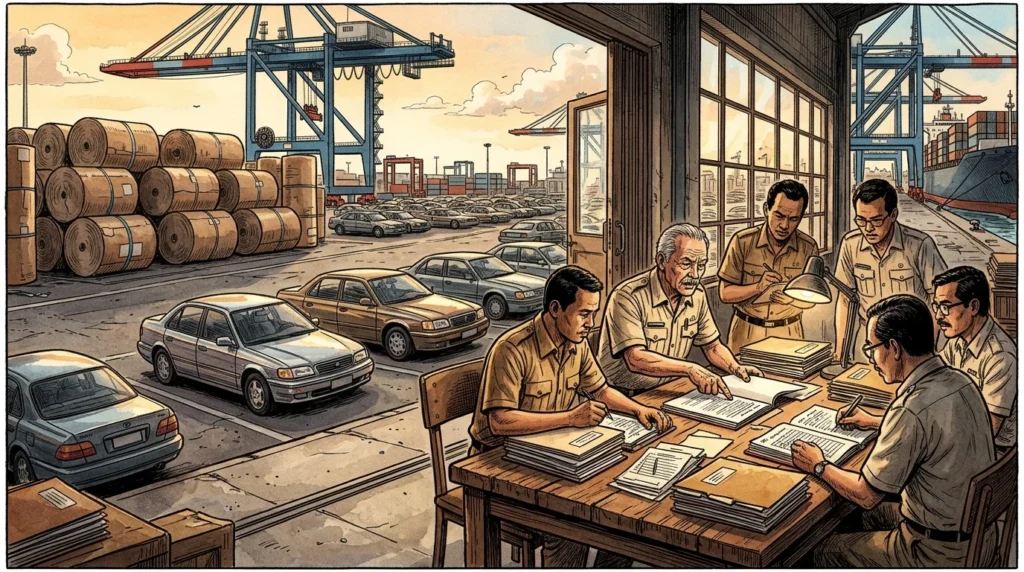
When the Asian Financial Crisis struck in late 1997, collapsing the Indonesian rupiah from Rp 2,450 per US dollar to beyond Rp 10,000, domestic auto demand evaporated, leaving tens of thousands of unsold Timor sedans parked on lots around Jakarta. Under the January 1998 structural adjustment Letter of Intent signed with the International Monetary Fund (IMF), Suharto was forced to revoke the special tax, customs, and credit privileges of the National Car Programme. On July 2, 1998—six weeks after Suharto resigned amid mass protests—a consolidated WTO Dispute Settlement Panel ruled comprehensively against Indonesia, finding that the 1996 National Car measures violated Article I (Most-Favored-Nation treatment) and Article III (National Treatment) of GATT 1994, as well as the Agreement on Trade-Related Investment Measures (TRIMs). TPN’s defaulted state-bank loans were subsequently transferred to the Indonesian Bank Restructuring Agency (IBRA), leaving Indonesian taxpayers to absorb the wreckage of the venture. [6]
Asia Pulp & Paper’s US$13.9 Billion Default in March 2001
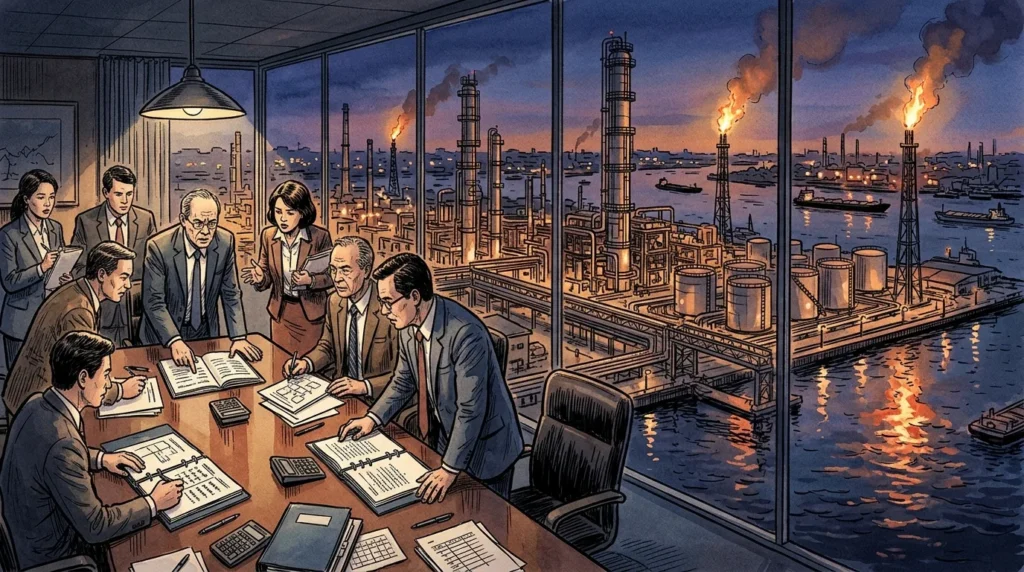
Even more consequential for global capital markets was the collapse of Asia Pulp & Paper Company Ltd. (APP), the Singapore-incorporated, New York Stock Exchange-listed pulp and paper flagship of the Sinar Mas Group founded by Indonesian tycoon Eka Tjipta Widjaja and managed by his son Teguh Ganda Widjaja. Throughout the 1990s, APP leveraged two decisive advantages: cheap access to vast Sumatran tropical timber concessions and an insatiable appetite among Western institutional bond buyers and European, Japanese, and American export credit agencies (ECAs) for high-yielding emerging-market industrial paper.
Between 1994 and 2000, APP raised billions of dollars in Yankee bonds, Eurobonds, syndicated bank loans, and ECA-guaranteed equipment credits to construct giant pulp and paper mills in Riau and Jambi provinces—primarily PT Indah Kiat Pulp & Paper and PT Pabrik Kertas Tjiwi Kimia—as well as expansive mill operations in China. By late 2000, however, declining global pulp prices, massive debt-service burdens, and opaque treasury practices caught up with the group. Audits and regulatory inquiries revealed that APP had lost roughly US$220 million on unhedged foreign-exchange and interest-rate derivative contracts and had parked over US$1.2 billion in cash deposits at related Widjaja family offshore banking entities that could not be freely accessed to pay bondholders. [7]
On March 12, 2001, APP stunned international credit markets by declaring an unilateral standstill on all principal and interest payments across the parent holding company and its operating subsidiaries. Total defaulted obligations stood at US$13.9 billion—including roughly US$6.7 billion in international bonds and notes alongside loans owed to more than 200 commercial banks and a dozen sovereign export credit agencies from Germany, Sweden, Finland, Japan, and the United States. The March 2001 moratorium represented the largest corporate debt default in emerging-market history to that date. [8]
In the contentious multi-year restructuring that followed, foreign creditors discovered how difficult it was to enforce offshore debt claims against onshore Indonesian operating assets. While the Widjaja family retained operational control of the Indonesian mills, APP engaged in protracted battles with bondholders and ECAs before signing a Master Restructuring Agreement (MRA) in October 2003 covering US$6.7 billion of Indonesian operating-company debt, followed by court-contested workouts that stretched across the decade and imposed deep net present value haircuts on unsecured international creditors.
The November 2008 Bank Century Bailout and Robert Tantular’s Fraud
Seven years after APP’s default, a third scandal exposed persistent vulnerabilities inside Indonesia’s domestic banking supervision and crisis-resolution framework. PT Bank Century Tbk had been formed in December 2004 through the Bank Indonesia-approved merger of three troubled small lenders—Bank CIC, Bank Pikko, and Bank Danpac—controlled by Indonesian financier Robert Tantular and foreign co-shareholders Rafat Ali Rizvi and Hesham Al Warraq. Even prior to the merger, central bank examiners had identified non-performing foreign-currency securities and fictitious letters of credit on Bank CIC’s balance sheet, yet the merged bank was allowed to continue gathering retail deposits.
When global interbank liquidity froze following the September 2008 collapse of Lehman Brothers, Bank Century experienced a severe deposit run in October and November 2008. Investigations subsequently revealed that Robert Tantular and his offshore associates had systematically looted the bank: Tantular funneled Rp 1.4 trillion in customer money through an unlicensed affiliate, PT Antaboga Delta Sekuritas, selling bogus high-yield discretionary investment products to retail depositors, while Rizvi and Al Warraq pledged billions of rupiah in dubious foreign securities that vanished when liquidity dried up.
On the night of November 20–21, 2008, Indonesia’s Financial System Stability Committee (Komite Stabilitas Sistem Keuangan, or KSSK)—chaired by Finance Minister Sri Mulyani Indrawati alongside Bank Indonesia Governor Boediono—convened an emergency meeting. Operating on Bank Indonesia’s initial estimate that bringing Bank Century’s capital adequacy ratio (CAR) back to the required 8 percent would cost roughly Rp 632 billion, KSSK designated Bank Century a failing bank posing a “systemic risk” to Indonesia’s banking system and ordered the Deposit Insurance Corporation (Lembaga Penjamin Simpanan, or LPS) to take over and recapitalize the institution.
The Rp 6.76 Trillion Cost Escalation and Parliamentary Inquiry
Once LPS assumed control and recognized the massive hole left by Tantular’s fraudulent loans, Antaboga redemptions, and worthless securities, Bank Century’s negative capital position proved vastly deeper than reported on November 20. Between November 2008 and July 2009, LPS injected four successive tranches of state funds totaling Rp 6.76 trillion (approximately US$710 million) into the bank, later renamed Bank Mutiara.
Although Robert Tantular was arrested on November 25, 2008, and eventually sentenced to prison terms totaling more than twenty years for banking crimes and money laundering, the tenfold jump in the bailout cost from Rp 632 billion to Rp 6.76 trillion ignited a fierce political firestorm after Boediono was elected Vice President alongside President Susilo Bambang Yudhoyono in July 2009. In late 2009, the House of Representatives (DPR) formed a Special Inquiry Committee (Pansus Hak Angket Bank Century) following an audit by the Supreme Audit Agency (BPK).
In March 2010, the DPR plenary voted to declare that the November 2008 bailout decision and subsequent capital disbursements contained legal and administrative irregularities, despite Sri Mulyani Indrawati’s steadfast defense that letting a bank fail abruptly during the November 2008 global panic could have triggered contagious runs across twenty other medium-sized Indonesian banks. Two months later, in May 2010, Sri Mulyani resigned as Finance Minister to become a Managing Director at the World Bank in Washington, D.C., before returning to serve as Finance Minister again in 2016. Together, the Timor monopoly, the APP default, and the Bank Century crisis reshaped Indonesian economic law—leading directly to tighter single-borrower limits, stronger creditor scrutiny of conglomerate balance sheets, and the 2016 Prevention and Resolution of Financial System Crisis Law (Law No. 9/2016), which outlawed open-ended taxpayer bank bailouts in favor of formal bail-in mechanisms.
Theoretical & Balance-Sheet Transmission Mechanism
In the Kindleberger–Minsky taxonomy of financial instability (Kindleberger, 1978; Minsky, 1986) and Irving Fisher’s (1933) debt-deflation framework, speculative asset booms become systemic crises when credit expansion shifts balance sheets from hedge finance (cash flows covering principal and interest) to speculative and Ponzi finance (relying on rising asset prices and short-term margin roll-overs).
Once monetary tightening or an exogenous shock halts price appreciation, forced margin liquidations trigger Fisherian debt-deflation: fire-sale asset discounts erode bank collateral values, contracting credit supply across the real economy.
Sources and Further Reading
- World Trade Organization, “ DS54: Indonesia — Certain Measures Affecting the Automobile Industry,” WTO Dispute Settlement Summary, 1998. International Financial Institution
- World Trade Organization Dispute Settlement Panel, “ Indonesia — Certain Measures Affecting the Automobile Industry: Report of the Panel (WT/DS54/R, WT/DS55/R, WT/DS59/R, WT/DS64/R),” World Trade Organization, 1998-07-02. International Financial Institution
- Rainerohnen / Friedrich-Ebert-Stiftung, “ The National Car Project of Indonesia: Industrial Policy and Crony Capitalism,” Friedrich-Ebert-Stiftung, 1998. Historical & Financial Reference
- Environmental Paper Network, “ Asia Pulp & Paper (APP) Defaults and Export Credit Agencies,” Environmental Paper Network, 2017. Historical & Financial Reference
- The Jakarta Post, “ Robert Tantular Questioned Again on Century,” The Jakarta Post, 2013-08-22. Historical & Financial Reference
- Bretton Woods Project, “ Indrawati Under Investigation Over Indonesian Banking Scandal,” Bretton Woods Project, 2013-06-12. Historical & Financial Reference
- Irving Fisher — "The Debt-Deflation Theory of Great Depressions," Econometrica 1, no. 4 (FRASER Federal Reserve Archive, 1933): 337–357 Central Bank / Monetary Authority
- Charles P. Kindleberger & Robert Z. Aliber — Manias, Panics, and Crashes: A History of Financial Crises (Palgrave Macmillan) Peer-Reviewed / Academic Research
Cite This Historical Dossier (APA / Chicago)
APA (7th ed.): Ç., S. (Ed.). (2026). Indonesia's Corporate Reckonings: Timor Cars, APP's $13.9B Default, and Bank Century. In Forgotten Fortunes Historical Monograph Series (Forgotten Fortunes Editorial Desk). https://forgottenfortunes.net/indonesia-corporate-scandals/
MLA (9th ed.): Ç., Soner, ed. "Indonesia's Corporate Reckonings: Timor Cars, APP's $13.9B Default, and Bank Century." Forgotten Fortunes: Financial & Monetary History Archive, 2026, https://forgottenfortunes.net/indonesia-corporate-scandals/.
Chicago (17th ed.): Ç., Soner, ed. "Indonesia's Corporate Reckonings: Timor Cars, APP's $13.9B Default, and Bank Century." Forgotten Fortunes Historical Monograph Series (Forgotten Fortunes Editorial Desk), September 15, 2026. https://forgottenfortunes.net/indonesia-corporate-scandals/.
Have an idea for another financial history documentary or article? Request a story →