In This Article
On June 17, 1982, Italy’s Minister of the Treasury, acting on the formal proposal of Bank of Italy Governor Carlo Azeglio Ciampi, dissolved the board of directors of Milan-based Banco Ambrosiano and placed the country’s largest private commercial banking group under special administration. Less than twenty-four hours later, on the morning of June 18, 1982, Banco Ambrosiano’s fugitive sixty-two-year-old chairman, Roberto Calvi—known across European financial markets as “God’s Banker” for his intimate dealings with the Holy See—was discovered hanged from scaffolding beneath Blackfriars Bridge in London with bricks stuffed into his clothing and roughly $14,000 in foreign banknotes in his pockets. Behind him lay an uncollateralized balance-sheet chasm estimated at 1.9 trillion to 2.2 trillion Italian lire, or roughly $1.28 billion to $1.4 billion, hidden inside a labyrinth of Luxembourg, Latin American, and Bahamian subsidiaries. [1]
From Catholic Mutualism to Offshore Empire
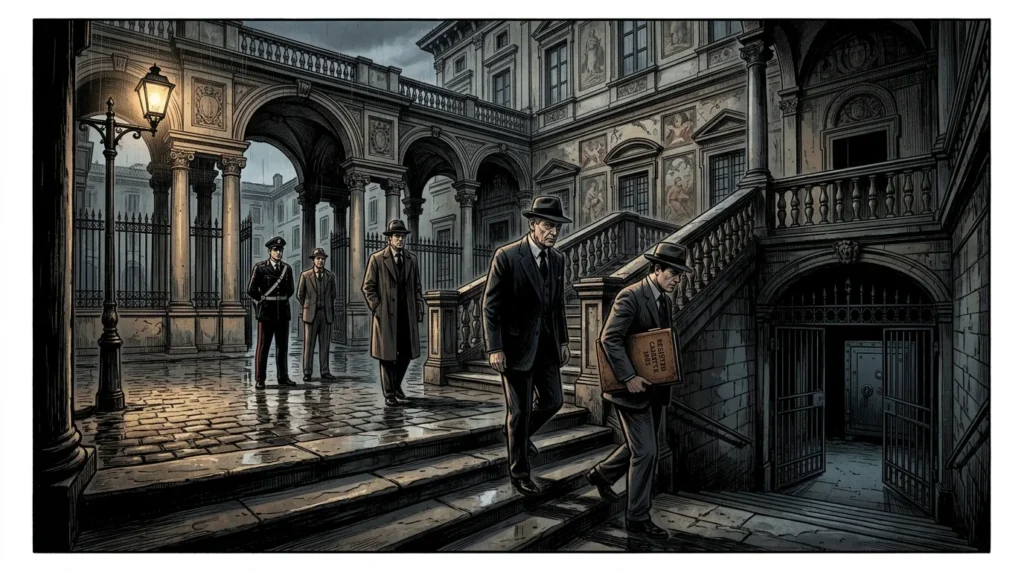
Founded in Milan in 1896 by Monsignor Giuseppe Tovini as a Catholic counterweight to secular joint-stock lenders, Banco Ambrosiano spent its first seven decades serving pious Lombard savers, diocesan charities, and small industrial enterprises. That conservative posture changed dramatically after Roberto Calvi joined the institution in 1947, rising to general manager in 1971 and chairman in 1975. Recognizing that strict Italian exchange controls and Bank of Italy reporting rules constrained domestic balance-sheet expansion, Calvi constructed an opaque web of cross-border holding companies and foreign banking affiliates designed to operate beyond the reach of Milanese bank examiners. [2]
As early as 1963, Banco Ambrosiano had established Compendium S.A. in Luxembourg—later renamed Banco Ambrosiano Holding S.A. (BAH)—which was classified under Grand Ducal law as a financial holding company rather than a licensed bank, thereby escaping consolidated prudential supervision. Through BAH, Calvi acquired majority stakes in Ultrafin AG in Zurich, Banco Ambrosiano Overseas Ltd. (BAOL) in Nassau, the Bahamas, and, in 1979, Banco Ambrosiano Andino (BAA) in Lima, Peru, supplemented by Ambrosiano Group Banco Comercial in Managua, Nicaragua. Alongside Archbishop Paul Marcinkus, the American prelate who headed the Vatican’s financial arm—the Istituto per le Opere di Religione (IOR)—and Sicilian financier Michele Sindona, Calvi used Nassau and Latin American balance sheets to tap the booming London and European eurodollar interbank market. [3]
Crucially, this offshore expansion intersected with clandestine Italian politics through Licio Gelli’s secret Masonic lodge, Propaganda Due (P2). After Italian magistrates raided Gelli’s villa in Arezzo in March 1981 and discovered Calvi’s name on the P2 membership roster alongside cabinet ministers, intelligence chiefs, and military officers, investigators learned that Banco Ambrosiano had channeled hundreds of millions of dollars into Italian publishing groups—most notably the Rizzoli-Corriere della Sera media conglomerate—and political factions under Gelli’s brokerage. In May 1981, Calvi was arrested and convicted of illegal capital exports totaling 27 billion lire, receiving a four-year prison sentence and a fine exceeding 15 billion lire before being released on bail pending appeal in July 1981 while retaining his chairmanship. [4]
| Documented Figure / Metric | Historical Significance & Archival Context |
|---|---|
| 97 billion lire | According to Bank of Italy records analyzed by the Yale Program on Financial Stability, the central bank extended an initial 97 billion lire fixed-term advance on July 7, 1982, expanded the facility to 126 billion lire on July 28, and provided currency swaps and reserve-requirement relief. |
| $450 million | Simultaneously, however, the Bank of Italy refused to assume responsibility for roughly $450 million to $600 million in eurodollar interbank loans owed to international banks by Banco Ambrosiano Holding S.A. in Luxembourg. |
The Mechanics of the $1.3 Billion Eurodollar Carousel
The financial mechanism that destroyed Banco Ambrosiano was a circular, self-referential eurodollar borrowing and stock-manipulation scheme. Because Italian banking law barred a bank from purchasing substantial blocks of its own shares using domestic deposits, Calvi raised short-term eurodollar deposits from more than 250 international creditor banks through the Milan parent bank, its Luxembourg holding company BAH, and its Nassau and Lima subsidiaries. The Milan parent and its affiliates then funneled these hard-currency funds to Banco Ambrosiano Andino in Lima and Banco Ambrosiano Overseas Ltd. in Nassau. [5]
From Lima and Nassau, the funds were lent out on an unsecured basis to more than a dozen Panamanian and Liechtenstein shell companies—entities bearing names such as Bellatrix, Belrosa, Erin, Laramie, Starfield, and United Trading Corporation (UTC). In reality, these shell companies had no genuine commercial operations or cash flow. Instead, they used the borrowed eurodollars to buy large blocks of shares in Banco Ambrosiano, La Centrale Finanziaria, and Rizzoli, artificially inflating the market price of Banco Ambrosiano’s stock on the Milan bourse while allowing Calvi to maintain voting control over his own institution without disclosing beneficial ownership. As interest rates in the eurodollar market surged above 16 percent during the Paul Volcker monetary tightening of 1979–1982, the debt service on these non-performing shell-company loans compounded relentlessly, requiring ever larger interbank borrowings merely to roll over accrued interest. [6]
When Bank of Italy inspectors demanded documentation regarding the ultimate ownership and solvency of the Panamanian borrowers during heightened examinations between 1978 and early 1982, Calvi relied on the institutional prestige of the Vatican Bank. On August 29 and September 1, 1981, Archbishop Paul Marcinkus and IOR officials signed formal “letters of patronage” (lettere di patrocinio) addressed to Banco Ambrosiano Andino and Ambrosiano Group Banco Comercial, stating that the IOR directly or indirectly controlled the Panamanian borrowing companies. In secret, however, Calvi simultaneously delivered a counter-letter (the so-called lettera liberatoria) absolving the IOR of any financial liability and promising that the patronage letters would never be enforced against the Vatican. [7]
The June 1982 Implosion and Blackfriars Bridge
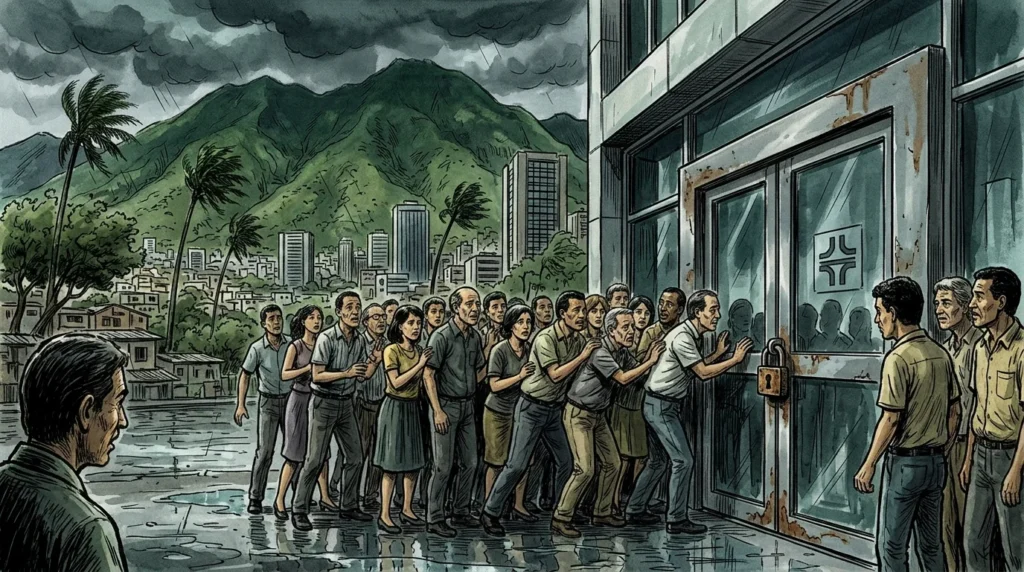
By the spring of 1982, foreign commercial banks had grown increasingly alarmed by rumors surrounding Calvi’s criminal appeal and requested repayment of maturing eurodollar lines. On May 31, 1982, the Bank of Italy’s supervisory directorate demanded that Banco Ambrosiano’s entire board be informed of the group’s unconsolidated foreign exposure, which had reached roughly $1.28 billion to $1.4 billion across its Lima and Nassau conduits. Soon afterward, the IOR refused to renew the letters of patronage that expired on June 30, 1982, leaving the Latin American subsidiaries with no credible backstop. [8]
On June 10, 1982, Calvi vanished from his Rome apartment, fleeing via Yugoslavia and Austria to London on a forged passport bearing the name Gian Roberto Calvini. On June 14, 1982, Banco Ambrosiano’s deputy chairman, Roberto Rosone—who had survived a street shooting in Milan weeks earlier after questioning irregular loans—notified the Bank of Italy of Calvi’s flight and the vast unbacked exposure at Banco Ambrosiano Andino. Trading in Banco Ambrosiano shares on the Milan Stock Exchange was immediately suspended as domestic depositors began withdrawing funds. On June 17, 1982, the board voted to dissolve itself and Treasury Minister Beniamino Andreatta, following Governor Ciampi’s recommendation, appointed three special commissioners to assume control of the bank. That same evening in Milan, Calvi’s faithful fifty-five-year-old private secretary, Graziella Corrocher, fell to her death from a fourth-floor window at Banco Ambrosiano’s headquarters after leaving a note denouncing Calvi for ruining the institution. Hours later, on the morning of June 18, a postal clerk walking across Blackfriars Bridge in London spotted Calvi’s body dangling from orange scaffolding over the Thames.
Ciampi’s Ring-Fencing Strategy and the Luxembourg Default
Confronted with the largest private bank failure in postwar Western Europe, Governor Carlo Azeglio Ciampi and Treasury Minister Andreatta drew a sharp legal and financial line between Banco Ambrosiano’s regulated domestic banking operations in Italy and its unregulated offshore holding company in Luxembourg. To prevent a systemic run on Italian deposits and preserve the international standing of Italian commercial banks, the Bank of Italy organized an emergency liquidity consortium comprising six major public-law and commercial banks—Istituto Mobiliare Italiano (IMI), Banca Nazionale del Lavoro, Istituto Bancario San Paolo di Torino, Banca Popolare di Milano, Banca San Paolo di Brescia, and Credito Romagnolo—alongside direct central bank advances.
According to Bank of Italy records analyzed by the Yale Program on Financial Stability, the central bank extended an initial 97 billion lire fixed-term advance on July 7, 1982, expanded the facility to 126 billion lire on July 28, and provided currency swaps and reserve-requirement relief. When the Vatican Bank refused Italian demands to cover the $1.3 billion offshore hole, the Italian authorities placed the original parent company into compulsory administrative liquidation on August 6, 1982, and transferred its healthy domestic branches, employees, and Italian lire deposits on August 8, 1982, into a newly capitalized successor institution, Nuovo Banco Ambrosiano, chaired by Catholic law professor Giovanni Bazoli and capitalized with 600 billion lire by a consortium of seven public and private banks.
Simultaneously, however, the Bank of Italy refused to assume responsibility for roughly $450 million to $600 million in eurodollar interbank loans owed to international banks by Banco Ambrosiano Holding S.A. in Luxembourg. Ciampi argued that under existing international supervisory norms, BAH was a non-bank holding company incorporated in Luxembourg that had deliberately evaded consolidated inspection by Italian authorities, and that foreign lenders had extended unsecured credit to BAH without obtaining a parent-bank guarantee. International creditor banks in London, Zurich, and New York protested fiercely, temporarily freezing credit lines to Italian borrowers before prolonged negotiations produced the Geneva Settlement of May 1984. Under that accord, the Vatican Bank—while explicitly denying legal culpability—agreed to pay $240.9 million (often cited as roughly $241 million to $250 million) as a “voluntary contribution” in recognition of moral involvement, allowing liquidators to distribute roughly $406 million to creditor banks.
Consequences: The 1983 Revised Basel Concordat
The collapse of Banco Ambrosiano permanently reshaped both Italian banking architecture and global cross-border financial regulation. Domestically, Nuovo Banco Ambrosiano was rehabilitated under Giovanni Bazoli and merged with Banca Cattolica del Veneto in 1989 to form Banco Ambrosiano Veneto, which later became the cornerstone of Banca Intesa (today Intesa Sanpaolo). In Italian courts, decades of criminal investigations culminated in 1992 convictions of thirty-three defendants—including Licio Gelli and Sicilian Mafia financier Giuseppe “Pippo” Calò—for fraudulent bankruptcy, while British and Italian forensic inquiries in 2002 exhumed Calvi’s body and reclassified his death from suicide to murder, though five defendants tried in Rome for his killing were acquitted in 2007 for insufficient evidence.
For central bankers, the dispute between Rome, Luxembourg, and London exposed a fatal flaw in the original 1975 Basel Concordat: non-bank holding companies and offshore subsidiaries situated in secrecy jurisdictions could sit in a regulatory vacuum where neither home nor host supervisors exercised effective oversight. In May 1983, the Basel Committee on Banking Supervision issued its revised Principles for the Supervision of Banks’ Foreign Establishments (the 1983 Basel Concordat), enshrining the principle of mandatory global consolidated supervision. Henceforth, home-country central banks were required to monitor the totality of a banking group’s worldwide risk exposure, and host regulators were instructed to deny operating licenses to foreign structures designed to evade consolidated scrutiny.
Theoretical & Balance-Sheet Transmission Mechanism
In the Kindleberger–Minsky taxonomy of financial instability (Kindleberger, 1978; Minsky, 1986) and Irving Fisher’s (1933) debt-deflation framework, speculative asset booms become systemic crises when credit expansion shifts balance sheets from hedge finance (cash flows covering principal and interest) to speculative and Ponzi finance (relying on rising asset prices and short-term margin roll-overs).
Once monetary tightening or an exogenous shock halts price appreciation, forced margin liquidations trigger Fisherian debt-deflation: fire-sale asset discounts erode bank collateral values, contracting credit supply across the real economy.
Sources and Further Reading
- Carlo Azeglio Ciampi, “ The Governor's Concluding Remarks for the Year 1982“, Banca d'Italia Annual Report, 1983-05-31. Historical & Financial Reference
- Kopal Ardimento, “ Italy: Banco Ambrosiano Emergency Liquidity Program, 1982“, Journal of Financial Crises (Yale Program on Financial Stability), 2025-04. Peer-Reviewed / Academic Research
- Guardian Staff, “ Top banker found hanged“, The Guardian, 1982-06-20. Historical & Financial Reference
- Felix Corley, “ Archbishop Paul Marcinkus“, The Guardian, 2006-02-23. Historical & Financial Reference
- Philip Willan, “ New clue turns up in 'God's banker' death“, The Guardian, 2002-10-14. Historical & Financial Reference
- Simon Amrein, “ How Banking Crises Drive Capital Regulation“, Cambridge University Press, 2024. Peer-Reviewed / Academic Research
- Irving Fisher — "The Debt-Deflation Theory of Great Depressions," Econometrica 1, no. 4 (FRASER Federal Reserve Archive, 1933): 337–357 Central Bank / Monetary Authority
- Charles P. Kindleberger & Robert Z. Aliber — Manias, Panics, and Crashes: A History of Financial Crises (Palgrave Macmillan) Peer-Reviewed / Academic Research
Cite This Historical Dossier (APA / Chicago)
APA (7th ed.): Ç., S. (Ed.). (2026). The 1982 Collapse of Banco Ambrosiano and the $1.3 Billion Vatican Bank Hole. In Forgotten Fortunes Historical Monograph Series (Forgotten Fortunes Editorial Desk). https://forgottenfortunes.net/banco-ambrosiano-collapse-calvi-vatican-bank-1982/
MLA (9th ed.): Ç., Soner, ed. "The 1982 Collapse of Banco Ambrosiano and the $1.3 Billion Vatican Bank Hole." Forgotten Fortunes: Financial & Monetary History Archive, 2026, https://forgottenfortunes.net/banco-ambrosiano-collapse-calvi-vatican-bank-1982/.
Chicago (17th ed.): Ç., Soner, ed. "The 1982 Collapse of Banco Ambrosiano and the $1.3 Billion Vatican Bank Hole." Forgotten Fortunes Historical Monograph Series (Forgotten Fortunes Editorial Desk), September 5, 2026. https://forgottenfortunes.net/banco-ambrosiano-collapse-calvi-vatican-bank-1982/.
Have an idea for another financial history documentary or article? Request a story →