In This Article
When Allied forces liberated Paris in August 1944, the French economy lay shattered by four years of German occupation and wartime bombardment [1][2]. Industrial production had fallen to roughly half its pre-war level, railways and ports were crippled, and public debt had swollen to 170 percent of gross domestic product [1][2]. Between 1940 and 1944, the Vichy regime had been forced to pay massive occupation tributes to Nazi Germany—one of the largest international fiscal transfers in modern history, equivalent in welfare terms to a 16 percent reduction in French consumption over twenty years [1]. Yet within a decade of Liberation, France had dismantled its wartime debt overhang, modernized its heavy industrial base, and launched the Trente Glorieuses—three decades of rapid post-war growth that transformed French living standards [2][7].

That turnaround rested on a distinctive financial and institutional architecture known as dirigisme: state-guided indicative planning combined with targeted foreign credit, inflationary debt liquidation, and supranational European market integration [1][2][3][6]. Rather than relying on decentralized private capital markets to rebuild a devastated country, the Provisional Government of the French Republic and the ensuing Fourth Republic established the General Planning Commission (Commissariat général du Plan) under Jean Monnet, channeling domestic resources and American Marshall Plan counterpart funds directly into foundational bottleneck sectors while ultimately resolving the fiscal drain of colonial warfare in Indochina by pivoting toward European economic integration [2][4][6].
Wartime Extraction, Debt Overhang, and Post-Liberation Inflation (1940–1946)
To understand why post-war France turned to state-directed finance, economists Filippo Occhino, Kim Oosterlinck, and Eugene N. White examined the fiscal mechanics of the German occupation between 1940 and 1944 [1]. Under the 1940 Armistice, the Vichy government was compelled to pay daily occupation charges straight into the Reich’s accounts at the Banque de France [1]. To prevent hyperinflation while extracting vast real resources for the German war machine, Vichy authorities operated a “circuit” policy: wage and price controls suppressed household consumption, rationing restricted civilian goods, and excess franc liquidity printed by the central bank was systematically mopped up through compulsory and semi-compulsory sovereign bond issues placed with French banks and savers [1].
When Liberation arrived in 1944, defeated Germany was in no position to pay large war reparations to make the French treasury whole [1][2]. Consequently, the new government headed by Charles de Gaulle inherited a crushing nominal domestic debt reaching 170 percent of GDP alongside severe physical destruction [1][2]. As Occhino, Oosterlinck, and White demonstrated, servicing and retiring Vichy’s debt overhang at pre-existing price levels would have required decades of punitive budget surpluses and austerity that a war-weary society could neither politically tolerate nor economically sustain [1].
Instead, post-Liberation France resolved its sovereign debt crisis through rapid price inflation between 1945 and 1948 [1][2]. Because Vichy-era government bonds and central bank advances were denominated in nominal francs, surging post-war prices swiftly eroded the real purchasing-power value of the state’s internal liabilities [1]. Mechanically, inflation functioned as an implicit capital levy on fixed-income bondholders, driving the real debt-to-GDP ratio well below its steady-state level, redistributing the adjustment costs of wartime exploitation, and clearing fiscal space on the sovereign balance sheet for physical reconstruction [1].
| Documented Figure / Metric | Historical Significance & Archival Context |
|---|---|
| $13 billion | Bradford De Long and Barry Eichengreen argued in a landmark 1991 NBER paper that the $13 billion Marshall Plan was too small relative to European GDP to have single-handedly financed recovery through physical capital accumulation alone. |
| $1.2 billion | XIII), France had been spending at a rate of $1.2 billion per year on the Indochina war while suffering 148,000 French Union casualties over the first seven years of fighting, draining the regular officer corps of the French army. |
| 0.5 percent | Whereas European economic growth had stagnated at roughly 0.5 percent per year between 1913 and 1950, Western European and French output expanded at an average annual clip of 4 to 5 percent between 1950 and 1970. |
Dirigisme and the Monnet Plan for Modernization (1946)
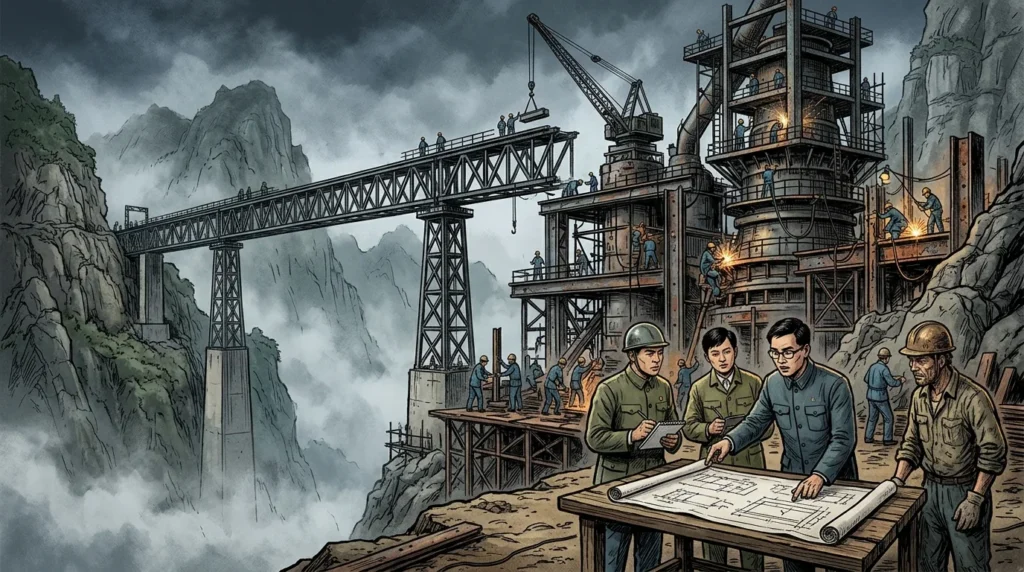
Clearing nominal debt did not, by itself, rebuild bombed rail yards, coal mines, or hydroelectric dams [2]. Between 1944 and 1946, de Gaulle’s provisional government nationalized key financial and industrial pillars—including the Banque de France, the four largest deposit banks, coal mining (Charbonnages de France), and electric utilities (Électricité de France, or EDF)—giving the state direct command over credit and basic infrastructure [2].
On January 3, 1946, the French government institutionalized this dirigiste model by creating the Commissariat général du Plan (General Planning Commission) and appointing Jean Monnet—a veteran international financier and wartime Allied supply coordinator—as its first commissioner [2][6]. Assisted by applied economists including Jean Fourastié, who joined the commission to lead productivity measurement, Monnet rejected both rigid Soviet-style command quotas and laissez-faire market allocation [2][7]. As Cristina Peicuti notes, the explicit aim of Monnet’s four-year Plan de modernisation et d’équipement (the Monnet Plan) was “to invent and build the France of tomorrow, not to rebuild the France of yesterday, destroyed by the war” [2].
The Monnet Plan operated through “indicative planning,” bringing together civil servants, industrialists, and labor representatives to set output targets and channel scarce capital into six foundational bottleneck sectors: coal, electricity, steel, cement, agricultural machinery, and transport (centered on the national railway company, SNCF) [2]. By concentrating capital investment in energy, transport, and primary industrial inputs first, state planners sought to eliminate supply bottlenecks that would otherwise choke off downstream manufacturing growth [2][3].
International Credits, the Marshall Plan, and Counterpart Funds (1946–1953)
The immediate obstacle confronting the Monnet Plan was an acute “dollar gap”: accelerating domestic reconstruction required importing American coal, petroleum, machine tools, and raw materials, rapidly exhausting France’s gold and hard-currency reserves [1][2][3]. To bridge this external deficit, France negotiated a series of international credit agreements—beginning with the 1946 Blum-Byrnes bilateral settlement and Export-Import Bank loans—before becoming the second-largest European beneficiary of the U.S. European Recovery Program, universally known as the Marshall Plan (1948–1951) [2][3].
Across the broader 1946–1953 reconstruction window, total American grants and credits to France reached approximately $4.9 billion, including roughly $2.3 billion to $2.4 billion in direct Marshall Plan assistance (representing 20 percent of the total $13 billion European Recovery Program envelope) [2][3]. Because the targets of the 1946 Monnet Plan aligned closely with the productivity objectives of the Marshall Plan, French planners integrated American aid directly into their domestic investment machinery [2].
The financial transmission worked through a dual mechanism. First, dollar grants paid for essential machinery and raw-material imports without adding foreign-currency debt to the French treasury [2][3]. Second, French businesses and state agencies that received Marshall Plan goods paid for them in domestic francs deposited into special counterpart accounts, which the French treasury channeled through the Modernization and Equipment Fund (Fonds de modernisation et d’équipement) as long-term, low-interest loans to priority industries [2]. As Peicuti documents, France deployed its entire Marshall Plan allocation into core infrastructure: 22 percent of the total envelope went to Électricité de France (EDF), 13 percent to Charbonnages de France (coal mining), and 11 percent to the national railway operator SNCF [2].
Economic historians have long debated the relative weight of Marshall Plan dollars versus broader macroeconomic forces in driving Europe’s recovery [1][3]. In their NBER study of occupied and post-war France, Occhino, Oosterlinck, and White concluded that while broader international credits substantially eased France’s transition burden, the Marshall Plan itself played a relatively minor direct quantitative role compared to post-Liberation inflationary debt relief [1]. Similarly, J. Bradford De Long and Barry Eichengreen argued in a landmark 1991 NBER paper that the $13 billion Marshall Plan was too small relative to European GDP to have single-handedly financed recovery through physical capital accumulation alone [3]. Rather, De Long and Eichengreen showed that the Marshall Plan succeeded as “history’s most successful structural adjustment program”: American conditionality pushed European political economies away from autarkic wartime rationing and price controls toward outward-looking mixed economies, financial stabilization, and intra-European trade liberalization [3].
Colonial War Budgets and the Fiscal Crisis of Indochina (1946–1954)
Even as the Monnet Plan and Marshall Plan modernized metropolitan industry, French state finances faced a relentless external drain from colonial warfare in Southeast Asia [4][5]. At the end of World War II, the French colonial empire spanned five continents and covered an area more than seven times the size of metropolitan France [2]. When negotiations with Ho Chi Minh’s nationalist Viet Minh movement broke down in late 1946, France plunged into the eight-year First Indochina War across Vietnam, Laos, and Cambodia [5].
Declassified U.S. National Security Council records from August 1953 reveal the staggering fiscal and human toll of the conflict on the French Fourth Republic [4]. According to the August 5, 1953 National Security Council report (FRUS 1952–1954, Vol. XIII), France had been spending at a rate of $1.2 billion per year on the Indochina war while suffering 148,000 French Union casualties over the first seven years of fighting, draining the regular officer corps of the French army [4]. In August 1953, Paris formally requested an additional 150 billion francs ($400 million) in emergency U.S. military aid for calendar year 1954 alone [4].
As the National Security Council report observed, the financial consequences inside metropolitan France were severe: “The costs of this war, on top of those of rearming within NATO, have been a major factor in the French budgetary deficits, the attendant inflation, and the resulting financial instability” [4]. Fearful that the unending financial and military drain in Southeast Asia would leave France weaker than a rearmed West Germany in Europe, French governments repeatedly hesitated over ratifying the proposed European Defense Community (EDC) [4].
The military and fiscal crisis came to a head in the spring of 1954 at the remote mountain valley fortress of Dien Bien Phu in northwestern Vietnam [5]. After a four-month siege by Viet Minh forces, the French garrison at Dien Bien Phu fell on May 7, 1954 [5]. By the time the Geneva Accords ended the conflict that summer—following cumulative French Union losses commonly cited at roughly 92,000 dead, 114,000 wounded, and 28,000 captured—the defeat had shattered domestic political support for the war and forced French policymakers to wind down the Indochina commitment and refocus fiscal resources on metropolitan modernization and European integration [2][4][5].
European Integration and the Legacy of the Trente Glorieuses
Well before the collapse in Indochina, Jean Monnet had recognized that French heavy industry could not achieve lasting scale or security within closed national borders—particularly given the need for Ruhr coking coal to feed French steel mills [6]. Working closely with Monnet, French Foreign Minister Robert Schuman delivered the historic Schuman Declaration on May 9, 1950, proposing to place Franco-German coal and steel production under a single supranational High Authority [6]. On April 18, 1951, France joined West Germany, Italy, Belgium, the Netherlands, and Luxembourg in signing the Treaty of Paris, which established the European Coal and Steel Community (ECSC) in 1952 with Monnet as its first president [6].
By eliminating customs duties, quantitative quotas, and discriminatory freight rates across the six member states’ coal and steel markets, the ECSC guaranteed French industry equal access to German coal while locking in continental trade liberalization [3][6]. Building on the success of the coal and steel pool, the six nations signed the Treaties of Rome on March 25, 1957 (entering into force on January 1, 1958), creating both the European Atomic Energy Community (Euratom) and the European Economic Community (EEC), a comprehensive common market and customs union [6].
Together, domestic dirigiste investment, inflationary debt reduction, international credit inflows, and European market integration propelled France through the three-decade expansion that Jean Fourastié famously christened the Trente Glorieuses (1946–1975) [1][2][7]. Whereas European economic growth had stagnated at roughly 0.5 percent per year between 1913 and 1950, Western European and French output expanded at an average annual clip of 4 to 5 percent between 1950 and 1970 [3][7]. Driven by what Fourastié described as an “invisible revolution” in labor productivity and technology, the real purchasing power of the average French worker’s wage rose by approximately 170 percent between 1950 and 1975, while private household consumption expanded by 174 percent between 1950 and 1974—completing France’s transition from wartime insolvency to a modern mass-consumption economy [2][7].
Theoretical & Balance-Sheet Transmission Mechanism
In the Kindleberger–Minsky taxonomy of financial instability (Kindleberger, 1978; Minsky, 1986) and Irving Fisher’s (1933) debt-deflation framework, speculative asset booms become systemic crises when credit expansion shifts balance sheets from hedge finance (cash flows covering principal and interest) to speculative and Ponzi finance (relying on rising asset prices and short-term margin roll-overs).
Once monetary tightening or an exogenous shock halts price appreciation, forced margin liquidations trigger Fisherian debt-deflation: fire-sale asset discounts erode bank collateral values, contracting credit supply across the real economy.
Sources and Further Reading
- Filippo Occhino, Kim Oosterlinck, and Eugene N. White, “ How Occupied France Financed Its Own Exploitation in World War II,” National Bureau of Economic Research (Working Paper No. 12137), 2006. Peer-Reviewed / Academic Research
- Cristina Peicuti, “ Post-war Reconstruction and Marshall Plan (in A Monetary and Economic History of France since 1944),” Springer / RePEc, 2025. Historical & Financial Reference
- J. Bradford De Long and Barry Eichengreen, “ The Marshall Plan: History’s Most Successful Structural Adjustment Program,” National Bureau of Economic Research (Working Paper No. 3899), 1991. Peer-Reviewed / Academic Research
- Office of the Historian, “ Foreign Relations of the United States, 1952–1954, Indochina, Vol. XIII, Part 1, Document 367: Report to the National Security Council,” U.S. Department of State, 1953-08-05. Official / State Archive
- Office of the Historian, “ Dien Bien Phu & the Fall of French Indochina, 1954,” U.S. Department of State. Official / State Archive
- European Union, “ History of the European Union: 1945–59,” European Union. International Financial Institution
- David Le Bris and Elie Gray, “ Why Jean Fourastié’s Theory of Economic Development is Still Relevant Today,” ProMarket (Stigler Center, University of Chicago Booth School of Business), 2022-04-08. Historical & Financial Reference
- Irving Fisher — "The Debt-Deflation Theory of Great Depressions," Econometrica 1, no. 4 (FRASER Federal Reserve Archive, 1933): 337–357 Central Bank / Monetary Authority
- Charles P. Kindleberger & Robert Z. Aliber — Manias, Panics, and Crashes: A History of Financial Crises (Palgrave Macmillan) Peer-Reviewed / Academic Research
Cite This Historical Dossier (APA / Chicago)
APA (7th ed.): Ç., S. (Ed.). (2026). Dirigisme and Debt: How Post-War France Financed the Trente Glorieuses. In Forgotten Fortunes Historical Monograph Series (Forgotten Fortunes Editorial Desk). https://forgottenfortunes.net/dirigisme-french-post-war-reconstruction-economy/
MLA (9th ed.): Ç., Soner, ed. "Dirigisme and Debt: How Post-War France Financed the Trente Glorieuses." Forgotten Fortunes: Financial & Monetary History Archive, 2026, https://forgottenfortunes.net/dirigisme-french-post-war-reconstruction-economy/.
Chicago (17th ed.): Ç., Soner, ed. "Dirigisme and Debt: How Post-War France Financed the Trente Glorieuses." Forgotten Fortunes Historical Monograph Series (Forgotten Fortunes Editorial Desk), August 29, 2026. https://forgottenfortunes.net/dirigisme-french-post-war-reconstruction-economy/.
Have an idea for another financial history documentary or article? Request a story →