
In This Article
Few modern economies illustrate the fiscal collision between acute geopolitical deterrence and sovereign debt sustainability as starkly as Greece between 1996 and 2025. After a January 1996 naval standoff with Türkiye over the uninhabited Aegean islets of Imia brought the two NATO allies to the brink of armed conflict, Athens launched consecutive five-year Unified Medium-Term Development and Modernization Programs (Eniaio Mesoprothesmo Programma Anaptyxis kai Eksynchronismou, or EMPAE) that committed more than €30 billion to foreign weapons systems and pushed Greek military expenditure toward 4 to 5 percent of GDP. Shielded by national-security secrecy and financed through deferred debt and off-market currency and interest-rate swaps, the post-Imia procurement boom—anchored by German HDW Type-214 submarines, Leopard 2HEL tanks, and Russian TOR-M1 missiles—generated a sprawling kickback apparatus that culminated in the October 2013 money-laundering conviction of former Defense Minister Akis Tsochatzopoulos. When Greece’s sovereign debt crisis erupted in 2009–2010, Troika austerity programs slashed annual military outlays by more than 50 percent, freezing procurement for a decade until Eastern Mediterranean maritime tensions in 2020 prompted an €11.5+ billion rearmament centered on French Dassault Rafale fighters and Naval Group FDI Belharra frigates. [1]

The January 1996 Imia Standoff and the EMPAE Armaments Boom
In late December 1995, the grounding of a Turkish bulk carrier on the rocky islets of Imia (known in Turkish as Kardak) in the southeastern Aegean touched off a sovereignty crisis that escalated throughout January 1996. As Greek and Turkish warships deployed around the rocks, rival special-forces commandos landed on the twin islets on January 30–31, 1996, and a Hellenic Navy Bell 212 helicopter crashed into the sea in severe weather, killing three Greek officers before U.S. diplomatic intervention brokered a mutual withdrawal. For Greece’s newly installed Prime Minister Costas Simitis and the Hellenic National Defense General Staff, the Imia crisis exposed severe operational gaps in all-weather surveillance, air-independent submarine endurance, long-range air interdiction, and modern armored mobility. [2]
Later in 1996, the Greek government unveiled an initial 10-year, US$17 billion (roughly 4 trillion drachmas) force-modernization blueprint under the institutional umbrella of the five-year EMPAE framework (1996–2000), followed by a second massive EMPAE tranche for 2001–2005 that carried cumulative multi-year procurement commitments past €30 billion. Throughout the late 1990s and early 2000s, Greece consistently maintained the highest defense burden in the European Union and one of the highest in NATO, dedicating between 3.5 and nearly 5 percent of GDP to defense budgets and off-budget military borrowing. To reconcile these multi-billion-euro import commitments with the Maastricht Treaty’s 3-percent fiscal deficit ceiling ahead of Greece’s 2001 entry into the eurozone, Athens relied on deferred-delivery accounting—recording military hardware expenses only upon physical delivery rather than when advance cash payments were wired—alongside complex off-market cross-currency and interest-rate swaps structured with international investment banks. [3]
Under Defense Minister Akis Tsochatzopoulos, a founding baron of the ruling PASOK party who led the Ministry of National Defense from September 1996 to October 2001, Athens signed a succession of landmark procurement contracts across the United States, Germany, France, and Russia. These commitments included F-16 Block 52+ and Mirage 2000-5 Mk2 multirole fighters, 170 German Krauss-Maffei Wegmann Leopard 2HEL main battle tanks, Russian S-300PMU1 long-range surface-to-air missiles (initially ordered by Cyprus and transferred to Crete) and TOR-M1 short-range air-defense systems, and the centerpiece of the Hellenic Navy’s fleet renewal: the Type-214 air-independent propulsion (AIP) submarine program. [4]
The Type-214 Papanikolis Submarine Deal and the Miza Kickback Network
Designed to replace the Hellenic Navy’s aging Type-209 boats built in the 1970s, the Project Archimedes submarine contract was signed in February 2000 with a German consortium led by Howaldtswerke-Deutsche Werft (HDW) of Kiel and Essen-based industrial services group Ferrostaal. Initially valued at €1.26 billion for three fuel-cell-equipped Type-214 submarines—with a June 2002 option exercised for a fourth boat—the contract was paired with the consortium’s takeover of the financially distressed Hellenic Shipyards at Skaramangas and a parallel Project Neptune II contract to modernize existing Type-209 submarines, lifting total program obligations toward €3 billion. Crucially, Athens agreed to pay roughly €2 billion in advance before the vessels were delivered. [5]
Technical and financial disputes soon paralyzed the program. Whereas the lead boat, HS Papanikolis (S-120), was built at HDW’s Kiel shipyard and the remaining three boats (Pipinos, Matrozos, and Katsonis) were laid down at Skaramangas, the Hellenic Navy refused to accept Papanikolis after sea trials in 2004–2006, citing excessive rolling in surface swells, fuel-cell overheating, and periscope vibration. German executives countered that Athens was using technical pretexts to stall final payments; by 2009–2010, Greece had paid nearly €2 billion while accumulating more than €500 million in arrears across the submarine and shipyard programs before the four Type-214 boats were finally commissioned between 2010 and 2016. [6]
Behind the inflated contract terms and extraordinary advance payments lay systemic corruption known in Greece as miza (large-scale illicit commissions). Investigations launched in May 2010 by Munich state prosecutors into Ferrostaal and in May 2011 by Greece’s Financial Crimes Squad (SDOE) revealed that the submarine contracts had been padded to finance between €100 million and €133 million in bribes to Greek defense officials, shipyard executives, and political intermediaries. In December 2011, a Munich court fined Ferrostaal €140 million (including €40 million in direct Greek-related penalties) and handed suspended prison sentences to two senior Ferrostaal managers, Johann-Friedrich Haun and Hans-Dieter Mühlenbeck, while Bremen prosecutors later forced naval sensor supplier Atlas Elektronik (successor to STN Atlas, which had paid up to €13 million in commissions to install its ISUS 90 combat system) to disgorge €48 million in profits in June 2017. [7]
The 2013 Tsochatzopoulos Conviction and Troika Defense Austerity
In Athens, parliamentary and judicial inquiries pierced the offshore shell companies in Cyprus, Liberia, Switzerland, and the Caribbean that had funneled defense kickbacks into luxury real estate and cash suitcases. On October 7, 2013, a three-judge felony court in Athens convicted 73-year-old former Defense Minister Akis Tsochatzopoulos of money laundering and sentenced him to the maximum 20 years in prison—added to an earlier eight-year sentence for tax fraud and false asset declarations—after Prosecutor Georgia Adilini detailed how he had laundered millions of euros in bribes from the German Type-214 submarine and Russian TOR-M1 missile contracts, including the purchase of a neoclassical mansion near the Acropolis. Later testimony by Antonis Kantas, who served as deputy director of armaments in the Defense Ministry from 1997 to 2002 and confessed to pocketing roughly €15 million in kickbacks across multiple arms deals, led to the indictment of 32 officials and arms agents; in January 2019, Greek courts handed a 20-year suspended sentence to former Skaramangas managing director Sotiris Emmanouil and a five-year prison sentence in absentia to French banker Jean-Claude Oswald. [8]
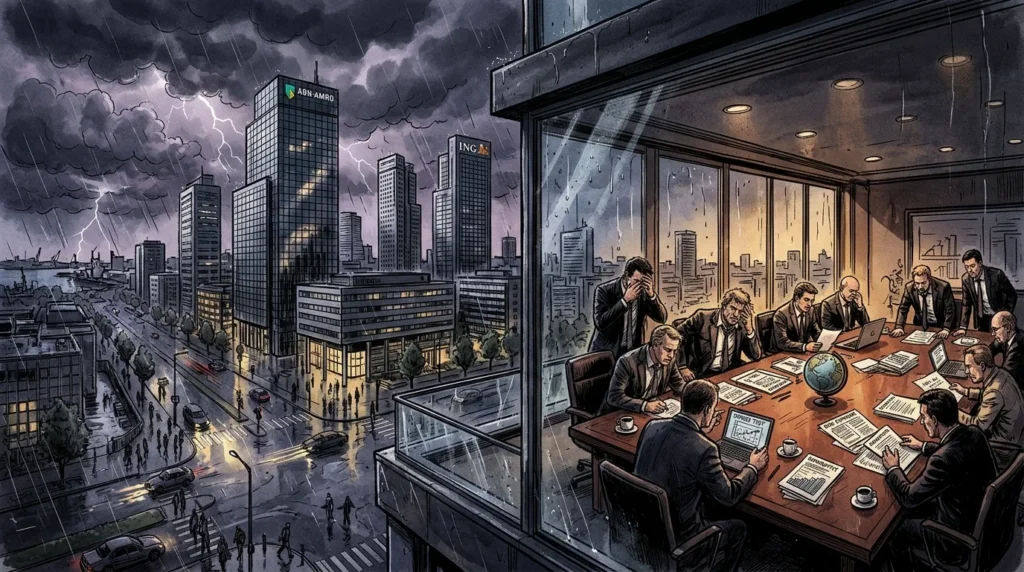
The defense corruption trials unfolded against the backdrop of the 2009–2018 Greek sovereign debt crisis, which forced the sharpest peacetime contraction of military spending in modern Greek history. When Eurostat revisions in late 2009 revealed that Greece’s budget deficit had exceeded 15 percent of GDP—swollen in part by unrecorded military deliveries and hospital and defense arrears—Athens was shut out of international bond markets and entered three consecutive bailout adjustment programs (2010, 2012, and 2015) supervised by the European Commission, the European Central Bank, and the International Monetary Fund (the Troika).
International creditors singled out Greece’s outsized military budget for immediate fiscal consolidation. Between 2009 and 2015, Greek nominal defense expenditure was cut by more than 50 percent, plunging from roughly €9.5–€10 billion at its pre-crisis peak to approximately €4 billion per year during the depths of austerity. Major procurement programs under EMPAE were frozen, spare-parts budgets were curtailed, military pay and pensions were slashed alongside civil-service salaries, and Athens relied heavily on U.S. Excess Defense Articles (EDA) grants—such as surplus Kiowa Warrior helicopters and M1117 armored security vehicles—to maintain basic readiness. Yet because Greece’s overall GDP contracted by roughly 25 percent during the depression, military spending never fell below 2.3 percent of GDP, keeping Greece above NATO’s 2-percent Wales Summit guideline even throughout its bailout decade.
Post-2020 Rearmament: Rafale Jets, Belharra Frigates, and Achilles Shield
Greece exited its third Troika bailout program in August 2018, and within two years a sharp escalation in Eastern Mediterranean maritime and energy disputes with Türkiye during the summer of 2020—when rival naval flotillas shadowed seismic research vessels between Crete, Rhodes, and Kastellorizo—convinced Prime Minister Kyriakos Mitsotakis’s government to launch an emergency, €11.5+ billion force modernization. Unlike the debt-fueled EMPAE spree of the late 1990s, the post-2020 rearmament bypassed sprawling multi-year bureaucratic tenders in favor of rapid government-to-government (G2G) defense agreements backed by Greece’s restored sovereign bond market access and strong post-pandemic GDP recovery.
France became the cornerstone of Athens’s initial procurement surge. In January 2021, Greece signed a €2.5 billion contract with Dassault Aviation for 18 Rafale F3R multirole fighter jets (12 ex-French Air Force aircraft and 6 newly manufactured jets) armed with long-range Meteor air-to-air and Exocet missiles, followed in March 2022 by a supplemental contract for 6 additional new-build aircraft—bringing the total fleet to 24 Rafale fighters, with the 24th aircraft delivered on January 9, 2025. Simultaneously, following a landmark bilateral mutual-defense pact signed by Athens and Paris in late 2021, Greek Defense Minister Nikolaos Panagiotopoulos and Naval Group CEO Pierre Éric Pommellet signed contracts on March 24, 2022—valued at roughly €3.3 billion—for three 4,500-tonne Defence and Intervention Frigates (FDI HN, or Belharra class: HS Kimon, Nearchos, and Formion) equipped with Thales Sea Fire AESA radars and Aster 30 surface-to-air missiles, plus an option for a fourth frigate (Themistocles) subsequently exercised in 2025.
Parallel agreements with the United States anchored the second pillar of the modernization: a program to upgrade more than 80 Hellenic Air Force F-16s to the F-16V Viper (Block 70/72) configuration at Hellenic Aerospace Industry (HAI) through 2027, followed by a €3.47 billion (US$3.9 billion) Letter of Offer and Acceptance signed in 2024 for 20 Lockheed Martin F-35A Lightning II stealth fighters (with an option for 20 more). By 2024–2025, Greek defense spending stood at €6.1 billion to €7.1 billion (US$7.6–$8.4 billion by NATO methodology, or roughly 3.1 to 3.8 percent of GDP), and in April 2025 Athens consolidated its long-term procurement pipeline into the 12-year, €25 billion “Achilles Shield” strategy—requiring domestic industrial participation at revitalized shipyards in Elefsis, Skaramangas, and Syros so that modern deterrence would never again replicate the opaque import dependency of the post-Imia era.
Theoretical & Balance-Sheet Transmission Mechanism
In the Kindleberger–Minsky taxonomy of financial instability (Kindleberger, 1978; Minsky, 1986) and Irving Fisher’s (1933) debt-deflation framework, speculative asset booms become systemic crises when credit expansion shifts balance sheets from hedge finance (cash flows covering principal and interest) to speculative and Ponzi finance (relying on rising asset prices and short-term margin roll-overs).
Once monetary tightening or an exogenous shock halts price appreciation, forced margin liquidations trigger Fisherian debt-deflation: fire-sale asset discounts erode bank collateral values, contracting credit supply across the real economy.
Sources and Further Reading
- Shadow World Investigations and World Peace Foundation, “The Greek Submarine Scandal,” Corruption Tracker, 2020. Historical & Financial Reference
- Jörg Schmitt, “Complicit in Corruption: How German Companies Bribed Their Way to Greek Deals,” Der Spiegel, 2010-05-11. Historical & Financial Reference
- Al Jazeera, “Greek ex-minister jailed for money laundering,” Al Jazeera, 2013-10-07. Historical & Financial Reference
- Naval Group, “Greece launches its program for three defence and intervention frigates (FDI HN) with Naval Group,” Naval Group Press Release, 2022-03-24. Peer-Reviewed / Academic Research
- U.S. International Trade Administration, “Greece Country Commercial Guide: Defense,” U.S. Department of Commerce, 2025-09-04. Official / State Archive
- Geopolitical Intelligence Services, “Greece’s defense spending and ambitions,” GIS Reports Online, 2025. Historical & Financial Reference
- Irving Fisher — "The Debt-Deflation Theory of Great Depressions," Econometrica 1, no. 4 (FRASER Federal Reserve Archive, 1933): 337–357 Central Bank / Monetary Authority
- Charles P. Kindleberger & Robert Z. Aliber — Manias, Panics, and Crashes: A History of Financial Crises (Palgrave Macmillan) Peer-Reviewed / Academic Research
Cite This Historical Dossier (APA / Chicago)
APA (7th ed.): Ç., S. (Ed.). (2026). From the 1996 Imia Crisis and Submarine Kickbacks to Greece's Rafale Rearmament. In Forgotten Fortunes Historical Monograph Series (Forgotten Fortunes Editorial Desk). https://forgottenfortunes.net/greece-submarine-bribery-rafale/
MLA (9th ed.): Ç., Soner, ed. "From the 1996 Imia Crisis and Submarine Kickbacks to Greece's Rafale Rearmament." Forgotten Fortunes: Financial & Monetary History Archive, 2026, https://forgottenfortunes.net/greece-submarine-bribery-rafale/.
Chicago (17th ed.): Ç., Soner, ed. "From the 1996 Imia Crisis and Submarine Kickbacks to Greece's Rafale Rearmament." Forgotten Fortunes Historical Monograph Series (Forgotten Fortunes Editorial Desk), September 19, 2026. https://forgottenfortunes.net/greece-submarine-bribery-rafale/.
Have an idea for another financial history documentary or article? Request a story →