In This Article
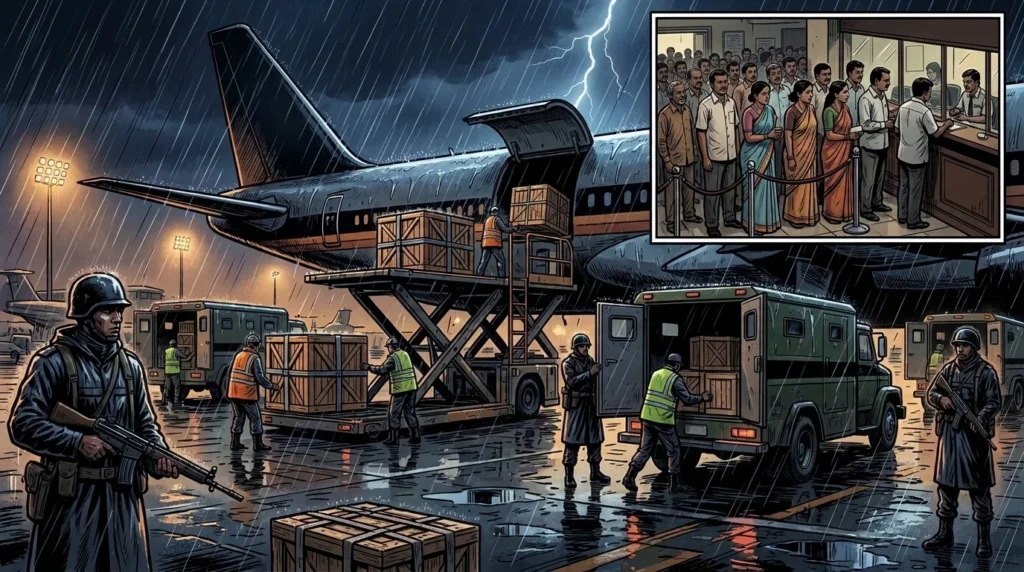
At 3:02 a.m. on August 17, 1999, a magnitude 7.4 earthquake ruptured the North Anatolian Fault beneath Gölcük and İzmit, tearing through the industrial heartland of the Marmara region that generated more than one-third of Türkiye’s gross domestic product. Followed less than three months later by a deadly magnitude 7.2 tremor in Düzce on November 12, the twin disasters killed more than 17,000 people, left hundreds of thousands homeless, and inflicted between $15 billion and $20 billion in direct economic and infrastructural losses. Already reeling from the 1998 Russian debt default and domestic real interest rates exceeding 40 percent, the coalition government in Ankara faced an existential fiscal emergency. On November 26, 1999, Finance Minister Sümer Oral shepherded Law No. 4481 through parliament, enacting an extraordinary reconstruction tax package whose centerpiece—a “temporary” 25 percent Special Communication Tax (Özel İletişim Vergisi) on mobile phone bills—was made permanent in 2003 and went on to collect tens of billions of dollars over the next quarter-century. [1]

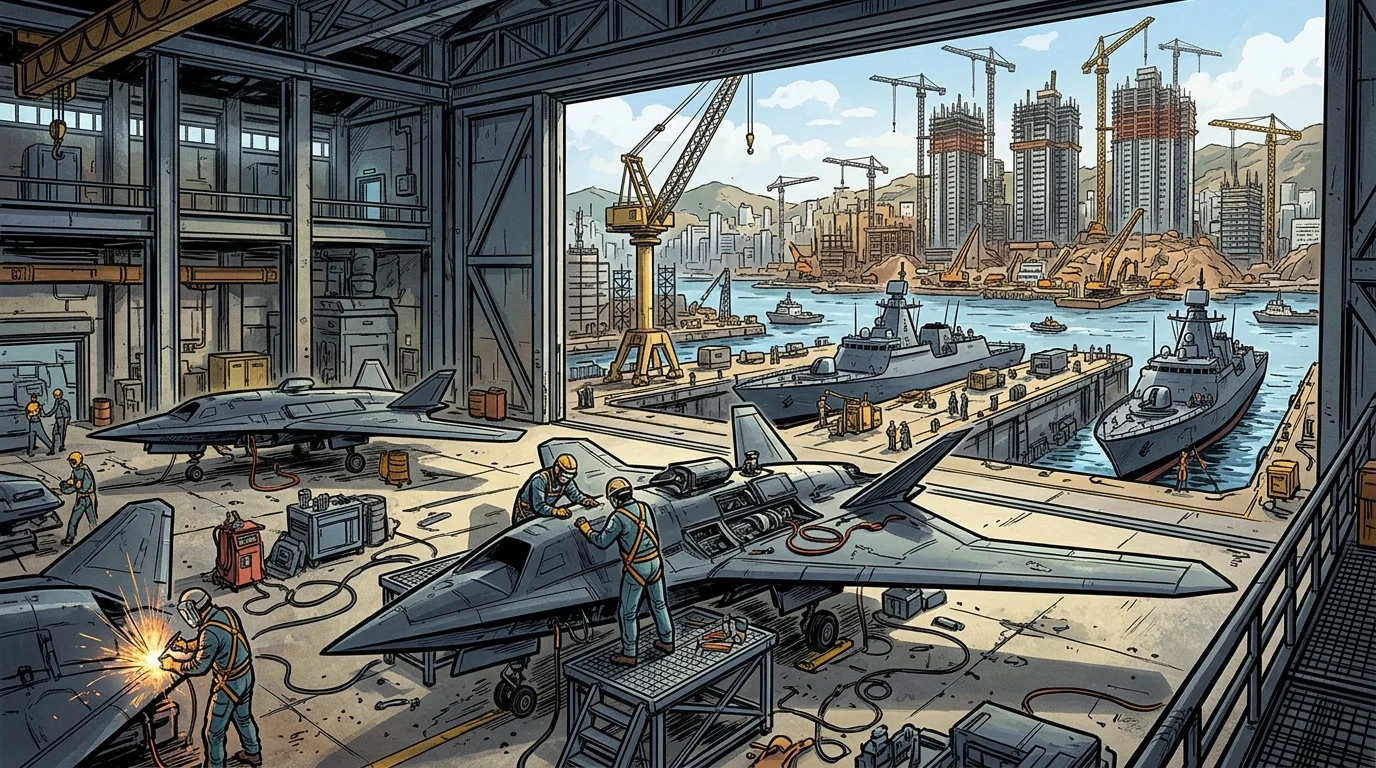
Alongside the 1999 reconstruction tax architecture, a second autonomous fiscal engine quietly reshaped the Turkish state’s industrial capacity: the extra-budgetary Defense Industry Support Fund (Savunma Sanayii Destekleme Fonu, or SSDF), created under Law No. 3238 in November 1985. Shielded from annual parliamentary budget cuts by earmarked revenues from alcohol, tobacco, lotteries,horse racing, and paid military-service exemptions (bedelli askerlik), the SSDF provided decades of uninterrupted patient capital to domestic defense firms such as ASELSAN, TUSAŞ (TAI), ROKETSAN, HAVELSAN, and private unmanned aerial vehicle pioneer Baykar. By 2024, that off-budget funding pipeline had raised domestic content in Turkish weapons procurement from roughly 20 percent in 2002 to nearly 80 percent and propelled annual defense and aerospace exports to a record $7.1 billion across 180 countries. [2]
Embargoes, Armed Forces Foundations, and Law No. 3238 of 1985
The financial blueprint for Türkiye’s modern defense industry was forged in the trauma of the 1974 Cyprus intervention and the subsequent three-year United States arms embargo (1975–1978). Discovering that foreign military aid could be suspended overnight—even down to spare parts and aviation electronics already paid for by the Turkish Treasury—the military and civilian leadership launched public donation campaigns to establish separate Army, Navy, Air Force, and Military Electronics foundations. Those public contributions capitalized Türkiye’s flagship defense companies: military electronics manufacturer ASELSAN (1975), aerospace producer TUSAŞ (1973/1984), software house HAVELSAN (1982), and later missile manufacturer ROKETSAN (1988), all consolidated in 1987 under the Turkish Armed Forces Foundation (Türk Silahlı Kuvvetlerini Güçlendirme Vakfı, or TSKGV). [3]
Charitable foundations alone, however, could not finance multi-billion-dollar aircraft co-production, armored vehicle factories, and naval shipyards at a time when Türkiye’s general budget was chronically strained by high inflation and debt service. On November 7, 1985, under Prime Minister Turgut Özal, the Grand National Assembly enacted Law No. 3238, establishing both the Defense Industry Development and Support Administration—later reorganized as the Undersecretariat for Defense Industries (Savunma Sanayii Müsteşarlığı, SSM) and in 2018 as the Presidency of Defense Industries (Savunma Sanayii Başkanlığı, SSB)—and its dedicated financial arm, the Defense Industry Support Fund (SSDF), held at the Central Bank of the Republic of Türkiye. [4]
Law No. 3238 pioneered an ingenious extra-budgetary war-economy mechanism. Rather than relying solely on volatile general budget appropriations, the SSDF was endowed with automatic, ring-fenced revenue streams: surcharges on alcohol and tobacco products, shares of national lottery and sports-betting receipts (Milli Piyango and Spor Toto), fuel and income tax surcharges, traffic fine transfers, and all cash payments collected from citizens opting for paid short-term military service (bedelli askerlik). Because SSDF balances rolled over from year to year without lapsing into the general treasury, defense planners could sign decade-long procurement and research-and-development contracts immune to short-term political and fiscal cycles. [5]
1990s Counter-Insurgency Costs and Supplier Restrictions
During the 1990s, the strategic value of the SSDF’s off-budget autonomy was tested by two simultaneous pressures: intense counter-insurgency operations in southeastern Türkiye—which consumed billions of dollars annually in operational military outlays—and renewed formal and informal arms restrictions imposed by European and North American allies. Throughout the early and mid-1990s, Germany repeatedly froze defense deliveries and naval transfers to Ankara, while the United States Congress blocked or delayed sales of attack helicopters, frigate transfers, and precision munitions.
While the regular Ministry of National Defense budget struggled to cover troop payrolls, fuel, and ammunition amid 70 to 100 percent annual consumer inflation, the SSM used SSDF reserves to co-finance local production lines for F-16 fighter aircraft, armored combat vehicles, tactical radios, night-vision electro-optics, and electronic warfare suites. Even when the International Monetary Fund demanded the closure of dozens of opaque extra-budgetary funds following the 2000–2001 Turkish banking crisis, Ankara successfully preserved the SSDF as a strategic exception. [6]
The August 1999 Marmara Earthquake and Law No. 4481’s Fiscal Shock
Before Türkiye’s fiscal overhaul could take hold, the August 17, 1999 Marmara earthquake and the November 12, 1999 Düzce earthquake dealt a devastating blow to the national economy. World Bank and official Turkish assessments estimated direct property, industrial, and fiscal damages at $15 billion to $20 billion—equivalent to roughly 7 to 9 percent of national output. Tax collection in the industrial provinces of Kocaeli, Sakarya, Yalova, Bolu, and Istanbul plummeted just as the Treasury needed billions of dollars to house displaced families, rebuild shattered highways and utilities, and recapitalize state banks. [7]
To prevent hyperinflationary money printing and secure emergency reconstruction loans from the World Bank and the International Monetary Fund, Finance Minister Sümer Oral introduced an unprecedented emergency tax bill. Enacted on November 26, 1999 as Law No. 4481, the package imposed one-off retrospective surcharges on corporate and personal income taxes, an additional real estate tax, a supplementary motor vehicle tax, higher levies on bank and insurance transactions, and two newly minted indirect taxes on mobile communications and financial services. [8]
The most consequential innovation of Law No. 4481 was Article 8, which created a 25 percent Special Communication Tax (Özel İletişim Vergisi, or ÖİV) on mobile telecommunications services, originally scheduled to expire on December 31, 2000. As mobile phone penetration exploded across Türkiye in the early 2000s, the Special Communication Tax proved far too lucrative for the Treasury to relinquish. After being extended during the 2001 financial crisis, the tax was permanently embedded into Article 39 of Expense Taxes Law No. 6802 by Law No. 5035 in December 2003, eventually expanding to cover wired internet, cable television, and data services. Between 2000 and 2022 alone, the “temporary” 1999 earthquake communication tax generated more than 88 billion Turkish liras—roughly $36 billion to $38 billion at historical exchange rates—transferred directly into the central government’s general budget.
Indigenous Platforms and the $7.1 Billion Defense Export Surge
Once post-2001 fiscal consolidation and indirect consumption taxes—led by the permanent Special Communication Tax and the 2002 Special Consumption Tax (Özel Tüketim Vergisi)—stabilized Türkiye’s central budget, the Presidency of Defense Industries dramatically scaled up SSDF allocations for indigenous design rather than licensed foreign assembly. Academic analyses of SSDF accounts between 2006 and 2024 document three distinct phases: a steady capital accumulation period from 2006 to 2013, an acceleration phase from 2014 to 2017, and a post-2018 leap in which SSDF outlays nearly doubled as a share of non-interest public spending and gross domestic product.
Backed by SSDF pre-financing, corporate tax exemptions, and state export credit guarantees, Turkish defense contractors achieved a series of technological breakthroughs: Baykar’s combat-proven Bayraktar TB2 and Akıncı unmanned aerial vehicles, TUSAŞ’s Anka drones, Hürjet trainer, and Kaan fifth-generation fighter prototype, ASELSAN’s radar and electro-optic sensors, ROKETSAN’s precision-guided missiles, and the MİLGEM indigenous corvette and frigate naval program. Domestic content across Turkish defense procurement rose from roughly 20 percent in the early 2000s to nearly 80 percent by 2024.
In February 2025, SSB President Haluk Görgün announced that Türkiye’s direct defense and aerospace exports had reached an all-time high of $7.1 billion in 2024—up 29 percent from $5.5 billion in 2023 and less than $250 million in 2002—with deliveries reaching 180 countries and NATO allies in Europe and the United States ranking among the largest buyers. From the 1985 extra-budgetary SSDF statute and the 1999 earthquake tax transformation to the global drone boom of the 2020s, Türkiye demonstrated how crisis-born fiscal instruments can permanently alter a nation’s industrial and military trajectory.
Theoretical & Balance-Sheet Transmission Mechanism
In the Kindleberger–Minsky taxonomy of financial instability (Kindleberger, 1978; Minsky, 1986) and Irving Fisher’s (1933) debt-deflation framework, speculative asset booms become systemic crises when credit expansion shifts balance sheets from hedge finance (cash flows covering principal and interest) to speculative and Ponzi finance (relying on rising asset prices and short-term margin roll-overs).
Once monetary tightening or an exogenous shock halts price appreciation, forced margin liquidations trigger Fisherian debt-deflation: fire-sale asset discounts erode bank collateral values, contracting credit supply across the real economy.
Sources and Further Reading
- Zeynep Müjde Sakar and Emrah Kıratoğlu, “Mali Saydamlık–Güvenlik İkileminde Savunma Sanayii Destekleme Fonu: Türkiye Ekonomi Politikalarında Bütçe Dışı Bir Fonun Konumu (2006–2024),” Gazi İktisat ve İşletme Dergisi, 2026. Historical & Financial Reference
- Burak Ege Bekdil, “Turkey’s Defense Exports Hit Record High of $7.1 Billion in 2024,” Defense News, 2025-02-04. Historical & Financial Reference
- World Bank, “Turkey: Marmara Earthquake Assessment,” World Bank Turkey Country Office, 1999-09-14. International Financial Institution
- Vergi Dünyası, “Özel İletişim Vergisi ve Bu Verginin Gider Olarak Yazılıp Yazılamayacağı (4481 Sayılı Kanun),” Vergi Dünyası Dergisi, 2004. Historical & Financial Reference
- Doğruluk Payı, “2000–2022 Arasında Toplanan Deprem Vergisi Ne Kadar?,” Doğruluk Payı, 2023-02-08. Historical & Financial Reference
- Erdem & Erdem Law Office, “Special Consumption Tax (SCT) from Past to Today,” Erdem & Erdem, 2016. Historical & Financial Reference
- Irving Fisher — "The Debt-Deflation Theory of Great Depressions," Econometrica 1, no. 4 (FRASER Federal Reserve Archive, 1933): 337–357 Central Bank / Monetary Authority
- Charles P. Kindleberger & Robert Z. Aliber — Manias, Panics, and Crashes: A History of Financial Crises (Palgrave Macmillan) Peer-Reviewed / Academic Research
Cite This Historical Dossier (APA / Chicago)
APA (7th ed.): Ç., S. (Ed.). (2026). From the 1985 SSDF Defense Fund and 1999 Earthquake Taxes to Türkiye's $7.1B Arms Boom. In Forgotten Fortunes Historical Monograph Series (Forgotten Fortunes Editorial Desk). https://forgottenfortunes.net/marmara-earthquake-tax-defense-fund/
MLA (9th ed.): Ç., Soner, ed. "From the 1985 SSDF Defense Fund and 1999 Earthquake Taxes to Türkiye's $7.1B Arms Boom." Forgotten Fortunes: Financial & Monetary History Archive, 2026, https://forgottenfortunes.net/marmara-earthquake-tax-defense-fund/.
Chicago (17th ed.): Ç., Soner, ed. "From the 1985 SSDF Defense Fund and 1999 Earthquake Taxes to Türkiye's $7.1B Arms Boom." Forgotten Fortunes Historical Monograph Series (Forgotten Fortunes Editorial Desk), September 20, 2026. https://forgottenfortunes.net/marmara-earthquake-tax-defense-fund/.
Have an idea for another financial history documentary or article? Request a story →