In This Article
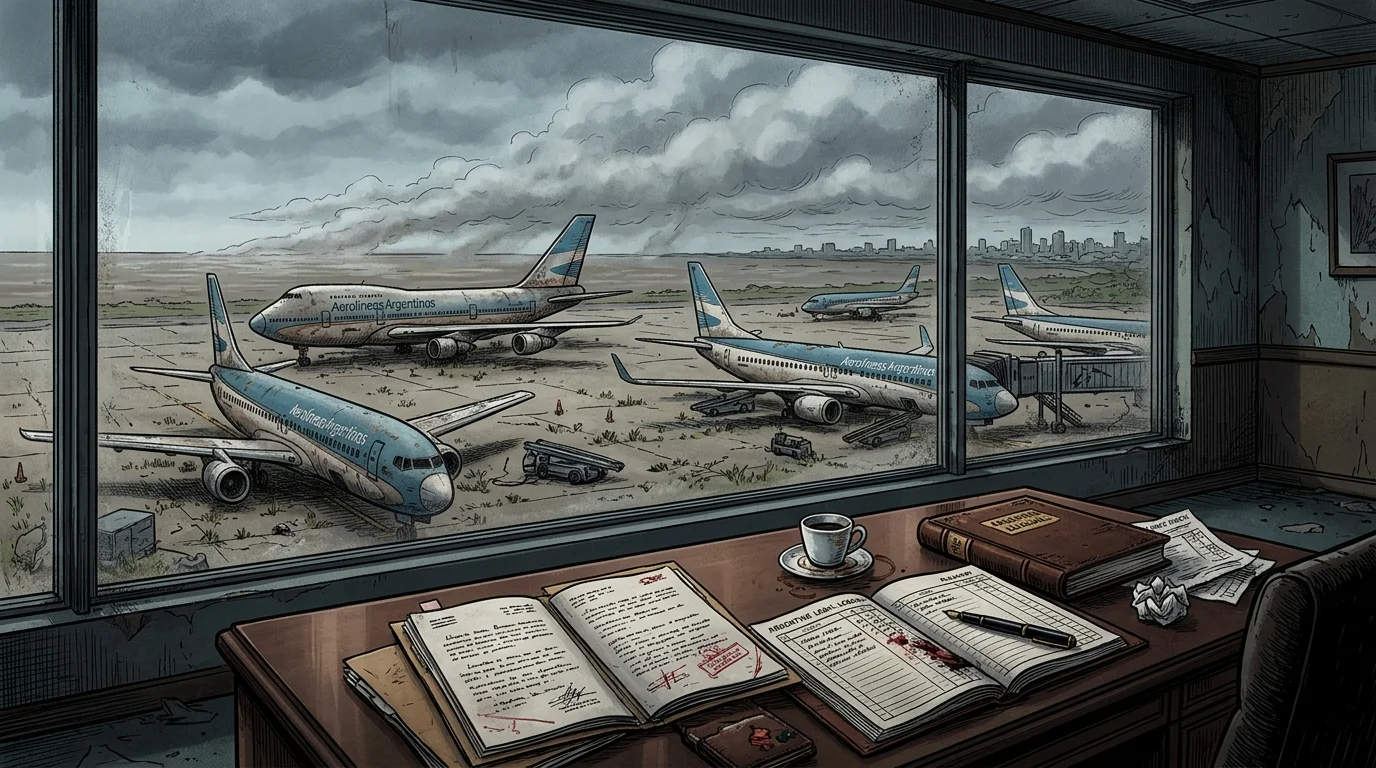
During the 1990s, Argentina executed one of the most sweeping liquidations of a state-owned military-industrial complex in modern history. For half a century after General Manuel Savio founded the Dirección General de Fabricaciones Militares (DGFM) in 1941, the Argentine Armed Forces had controlled an industrial empire spanning integrated steel mills, blast furnaces, petrochemical complexes, naval shipyards, aircraft plants, and munitions factories. Under President Carlos Saúl Menem (1989–1999) and Economy Minister Domingo Cavallo, the Argentine state dismantled that edifice in less than five years: privatizing the giant steelmaker SOMISA, selling off the naval shipyard Tandanor and the Altos Hornos Zapla steelworks, canceling the secret Cóndor II ballistic missile program, abolishing compulsory military conscription in 1994, and compressing defense expenditure from more than 3.5 percent of gross domestic product in the early 1980s to below 0.9 percent by the 2010s. Yet behind the official program of fiscal austerity and Washington Consensus privatization, senior officials used secret presidential decrees between 1991 and 1995 to divert 6,500 tons of DGFM artillery, rifles, and ammunition to embargoed war zones in Croatia and Ecuador—an illicit trade covered up on November 3, 1995 by the intentional sabotage detonation of the Río Tercero military munitions plant in Córdoba province. [1]
General Savio’s Legacy and the 1989 State Reform Laws
To understand the scale of the post-1990 dismantling, one must grasp the scope of the industrial apparatus built by the Argentine military after the 1930s. Convinced that national sovereignty required domestic self-sufficiency in basic metals and weaponry, General Manuel Savio drafted Law No. 12,709 of October 1941, establishing the Dirección General de Fabricaciones Militares (DGFM), and Law No. 12,987 of 1947 (the Savio Plan), creating the state steel company Sociedad Mixta Siderúrgica Argentina (SOMISA). By the late 1970s, DGFM and its sister military directorates operated more than two dozen industrial facilities and majority equity stakes across the country—from the General Savio steel plant in San Nicolás de los Arroyos and the Altos Hornos Zapla blast furnaces in Jujuy to the Bahía Blanca and General Mosconi petrochemical complexes, the Fábrica Militar de Aviones (FMA) in Córdoba, the Tandanor and AFNE shipyards, and specialized arms and artillery factories in Río Tercero, Villa María, Fray Luis Beltrán, and Azul. [2]
By the time Carlos Menem took office in July 1989 amid hyperinflation exceeding 3,000 percent and four successive carapintada military mutinies (1987–1990), the military-industrial conglomerate was running chronic operating deficits funded by the Treasury. Determined simultaneously to eliminate fiscal deficits under the 1991 Convertibility Plan and to strip the rebellious officer corps of autonomous economic power, Menem secured Congressional passage of Law No. 23,696 (the State Reform Law of August 1989) and Law No. 23,848 / Decree No. 1,398 of 1990, declaring the entire roster of Ministry of Defense companies subject to privatization, concession, or liquidation. [3]
Privatizing SOMISA, Altos Hornos Zapla, Petrochemicals, and Tandanor
Between 1990 and 1995, the Ministry of Defense and the Ministry of Economy—which took direct control of DGFM under Decree No. 517/1996—sold or concessioned the crown jewels of military industry for roughly US$700 million in cash and retired sovereign debt bonds: [4]
- SOMISA and Altos Hornos Zapla (1992): In July 1992, DGFM sold Altos Hornos Zapla in Palpalá, Jujuy, for US$33 million to the consortium Aceros Zapla after slashing its workforce from nearly 3,000 employees to fewer than 900. Four months later, in November 1992, the flagship steelmaker SOMISA—whose San Nicolás plant employed over 11,500 workers at the start of the decade—was privatized for approximately US$152 million in cash and debt assumptions to Aceros Paraná (later Siderar), a consortium led by the Argentine industrial group Techint alongside Brazilian and Chilean steelmakers.
- Petrochemical Holdings (1990–1995): DGFM divested its equity stakes in Petroquímica General Mosconi, Petroquímica Bahía Blanca, Polisur, Monómeros Vinílicos, and Indupa, transferring the downstream chemical sector to private domestic and multinational consortia.
- Tandanor and the Córdoba Aircraft Plant (1991–1995): In September 1991, the historic naval repair shipyard Talleres Navales Dársena Norte (Tandanor), occupying prime waterfront real estate in Buenos Aires, was privatized for a nominal valuation of US$59.8 million to the consortium Cinar (a sale later annulled after federal prosecutors proved that the buyers paid only US$7 million upfront and stripped its land assets, leading to Tandanor’s re-nationalization in 2007). In 1995, the historic Fábrica Militar de Aviones (FMA) in Córdoba was handed over under a twenty-five-year concession to US aerospace contractor Lockheed Martin Aircraft Argentina.
Scrapping the Cóndor II Missile and Compressing the Defense Budget
Alongside industrial privatization, the Menem administration realigned Argentine foreign policy with the United States—a doctrine foreign minister Guido Di Tella famously termed “carnal relations” (relaciones carnales)—and dismantled the military’s strategic weapons projects and personnel structure. Throughout the 1980s, the Argentine Air Force had secretly developed the Cóndor II (Alacrán), a two-stage solid-propellant medium-range ballistic missile built at the Falda del Carmen facility in Córdoba with European technical assistance and Egyptian and Iraqi financing. Under intense diplomatic pressure from Washington following the 1991 Persian Gulf War, Menem signed Decree No. 995 in May 1991 canceling the Cóndor II program, dismantling Falda del Carmen, shipping the missile guidance components to the United States for destruction in 1993, and joining the Missile Technology Control Regime (MTCR). [5]
Three years later, in March 1994, the brutal barracks murder of 18-year-old conscript soldier Omar Carrasco at an artillery group in Zapala, Neuquén, sparked nationwide outrage. On August 31, 1994, President Menem signed a decree abolishing compulsory military service (servicio militar obligatorio, in force since 1901) and transitioning to a smaller all-volunteer force under Law No. 24,429. Combined with the elimination of military industrial subsidies, Argentina’s defense spending experienced one of the steepest contractions in the world: falling from more than 3.5 percent of GDP during the 1982 South Atlantic conflict and 2.1 percent at the restoration of democracy in 1984 to 1.3 percent by the mid-1990s and below 0.9 percent of GDP by the 2010s, with more than 80 percent of the remaining defense budget absorbed by salaries and military pensions rather than equipment or maintenance. [6]
1991–1995: Secret Decrees and the 6,500-Ton Croatia and Ecuador Arms Scandal
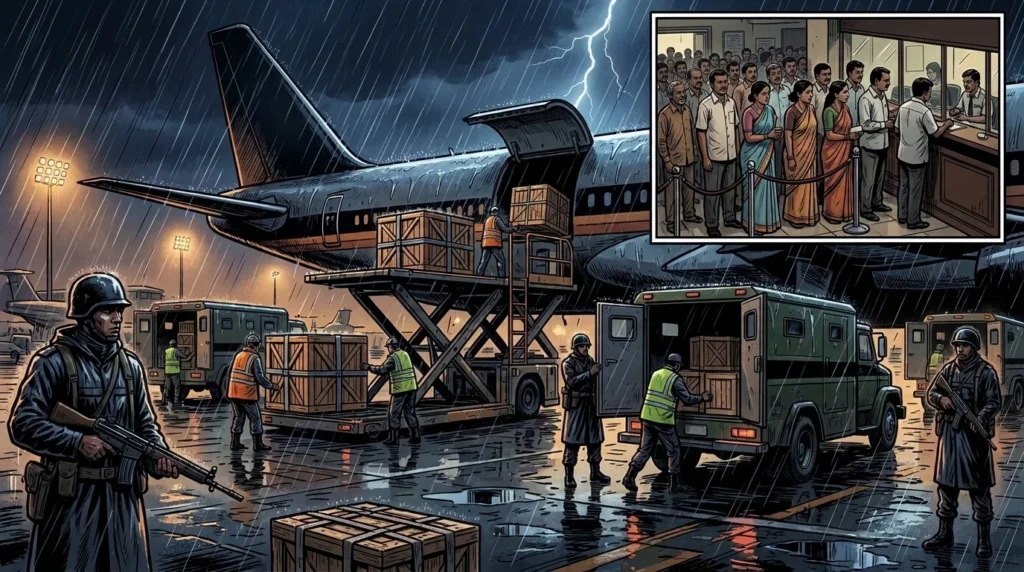
While DGFM’s civilian steel and chemical plants were being auctioned off, its remaining ordnance factories—above all the Fábrica Militar Río Tercero in Córdoba—became the hub of a brazen state-sponsored arms smuggling operation. Between 1991 and 1995, President Carlos Menem and cabinet ministers signed three secret executive decrees (Decree No. 1,697/1991, Decree No. 2,283/1991, and Decree No. 103/1995) authorizing DGFM to export thousands of tons of weapons ostensibly to the governments of Panama and Venezuela. [7]
In reality, neither Panama (which had abolished its army in 1990) nor Venezuela ever ordered or received the weapons. Between September 1991 and early 1995, seven maritime shipments and three cargo flights orchestrated through shell intermediaries (such as Hayton Trade and Debrol) diverted approximately 6,500 tons of Argentine weaponry—including 155mm CITER howitzers salvaged from Army regiments and refurbished at Río Tercero, FAL automatic rifles, mortars, anti-tank mines, and millions of rounds of ammunition—directly to two prohibited buyers: [8]
- Croatia (1991–1995): Roughly 6,400 tons of arms were shipped to the port of Rijeka in Croatia, in direct violation of United Nations Security Council Resolution 713 imposing a mandatory arms embargo on the former Yugoslavia even as Argentine peacekeepers served in UNPROFOR on the ground in Croatia.
- Ecuador (February 1995): Three Fine Air cargo flights delivered 75 tons of Argentine rifles and ammunition to Quito while Ecuador was actively fighting Peru in the 1995 Cenepa War—betraying Argentina’s legal status as one of the four official peace guarantors of the 1942 Rio de Janeiro Protocol between Peru and Ecuador. While the foreign buyers paid an estimated US$100 million, DGFM recorded barely US$34 million on its books, with the remaining US$66 million vanishing into offshore intermediaries and kickbacks.
November 3, 1995: The Río Tercero Sabotage Explosion
By October 1995, journalistic exposés and judicial inquiries into the Ecuadorian and Croatian shipments threatened to expose a glaring physical discrepancy at DGFM’s Fábrica Militar Río Tercero: thousands of shells, cannons, and rifles stripped from Argentine Army arsenals and supposed to be undergoing maintenance at Río Tercero were missing because they had already been shipped abroad.
At 8:55 a.m. on Friday, November 3, 1995, three powerful explosions erupted inside the propellant packaging and ammunition storage warehouses of the Río Tercero military factory. For hours, thousands of live artillery shells rained down across the residential neighborhoods of the city of Río Tercero, killing seven civilians, injuring more than 300 residents, and damaging or destroying dozens of city blocks. Hours after the blast, before any forensic examination had begun, President Menem flew to Córdoba and declared to the press that the disaster was an “accident” rather than an attack.
Subsequent investigations by explosive experts from the National Technological University (UTN) and federal judges dismantled the accident narrative. Forensic engineers proved that drums of trotyl (TNT) and hexogen had been professionally rigged with booster charges and detonators at two separate points by individuals intimately familiar with the plant layout. In December 2014, the Federal Oral Criminal Court No. 2 of Córdoba convicted four senior DGFM military officials and directors of intentional aggravated hazard resulting in death (estrago doloso agravado por la muerte de personas), ruling as a proven historical and judicial fact that the Río Tercero munitions factory was intentionally blown up to obliterate the physical inventory records and conceal the 1991–1995 arms smuggling operation.
Theoretical & Balance-Sheet Transmission Mechanism
In the Kindleberger–Minsky taxonomy of financial instability (Kindleberger, 1978; Minsky, 1986) and Irving Fisher’s (1933) debt-deflation framework, speculative asset booms become systemic crises when credit expansion shifts balance sheets from hedge finance (cash flows covering principal and interest) to speculative and Ponzi finance (relying on rising asset prices and short-term margin roll-overs).
Once monetary tightening or an exogenous shock halts price appreciation, forced margin liquidations trigger Fisherian debt-deflation: fire-sale asset discounts erode bank collateral values, contracting credit supply across the real economy.
Sources and Further Reading
- Herbert C. Huser, “ Argentine Civil-Military Relations: From Alfonsín to Menem,” Center for Hemispheric Defense Studies / National Defense University Press, 2002. Peer-Reviewed / Academic Research
- Nicolás Cerruti and Mariano Tapia, “ Fabricaciones Militares en la nueva identidad sudamericana de defensa,” Centro Cultural de la Memoria Haroldo Conti / Ministerio de Justicia y Derechos Humanos, 2013. Official / State Archive
- Liliana Bergesio and Fernando Castillo, “ Modelos productivos en Altos Hornos Zapla: de la expansión estatal a la retracción privada,” Cuadernos FHyCS-UNJu, 2012. Historical & Financial Reference
- Jonás Heliogábalo, “ Estatización de empresas en la Argentina (1930–2018): una tipología explicativa,” Postdata, 2021. Historical & Financial Reference
- Asamblea Permanente por los Derechos Humanos (APDH), “ A 25 años del atentado de la Fábrica Militar de Río Tercero, exigimos Justicia definitiva,” APDH Argentina, 2020. Historical & Financial Reference
- Fernando Fuentes, “ Río Tercero, la rebelde ciudad argentina que no le perdona a Menem las fatídicas explosiones de 1995,” La Tercera, 2021. Historical & Financial Reference
- Irving Fisher — "The Debt-Deflation Theory of Great Depressions," Econometrica 1, no. 4 (FRASER Federal Reserve Archive, 1933): 337–357 Central Bank / Monetary Authority
- Charles P. Kindleberger & Robert Z. Aliber — Manias, Panics, and Crashes: A History of Financial Crises (Palgrave Macmillan) Peer-Reviewed / Academic Research
Cite This Historical Dossier (APA / Chicago)
APA (7th ed.): Ç., S. (Ed.). (2026). Argentina’s Defense Sell-Off and the Río Tercero Disaster. In Forgotten Fortunes Historical Monograph Series (Forgotten Fortunes Editorial Desk). https://forgottenfortunes.net/argentina-rio-tercero-arms-scandal/
MLA (9th ed.): Ç., Soner, ed. "Argentina’s Defense Sell-Off and the Río Tercero Disaster." Forgotten Fortunes: Financial & Monetary History Archive, 2026, https://forgottenfortunes.net/argentina-rio-tercero-arms-scandal/.
Chicago (17th ed.): Ç., Soner, ed. "Argentina’s Defense Sell-Off and the Río Tercero Disaster." Forgotten Fortunes Historical Monograph Series (Forgotten Fortunes Editorial Desk), September 17, 2026. https://forgottenfortunes.net/argentina-rio-tercero-arms-scandal/.
Have an idea for another financial history documentary or article? Request a story →