In This Article
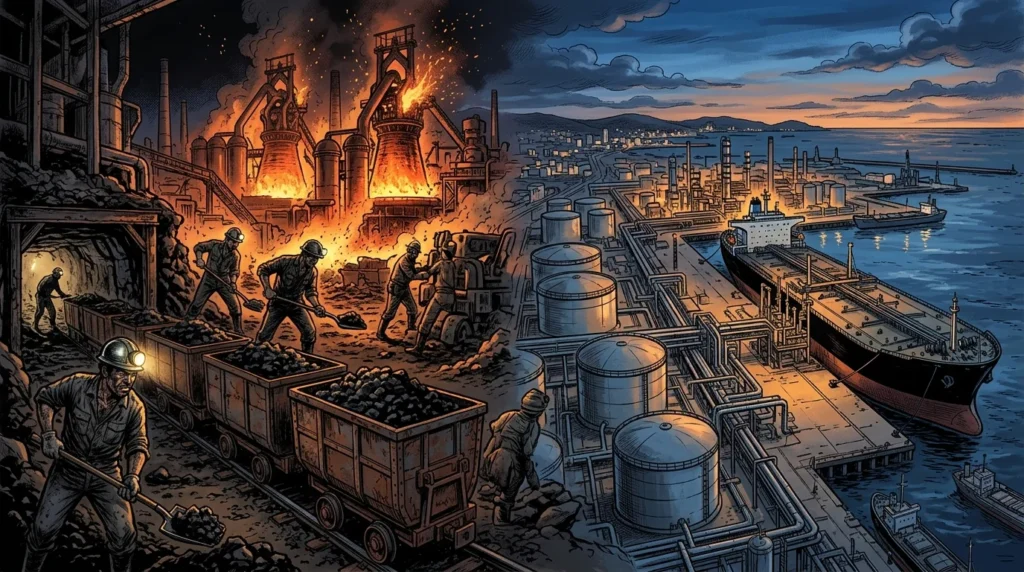
The Sumitomo copper affair demonstrated how hidden trading positions could damage a global company. As an industrial archipelago endowed with negligible domestic reserves of base metals, crude oil, or natural gas, post-1990 Japan relied on its giant general trading houses (sōgō shōsha) and regional electric utilities to secure vital raw materials from overseas markets. Between 1990 and 2025, two historic commodity shocks illustrated the financial hazards of that external dependence—first through rogue derivatives speculation inside one of Tokyo’s oldest trading conglomerates, and fifteen years later through an abrupt physical energy crisis that reversed thirty years of Japanese trade surpluses. [1]
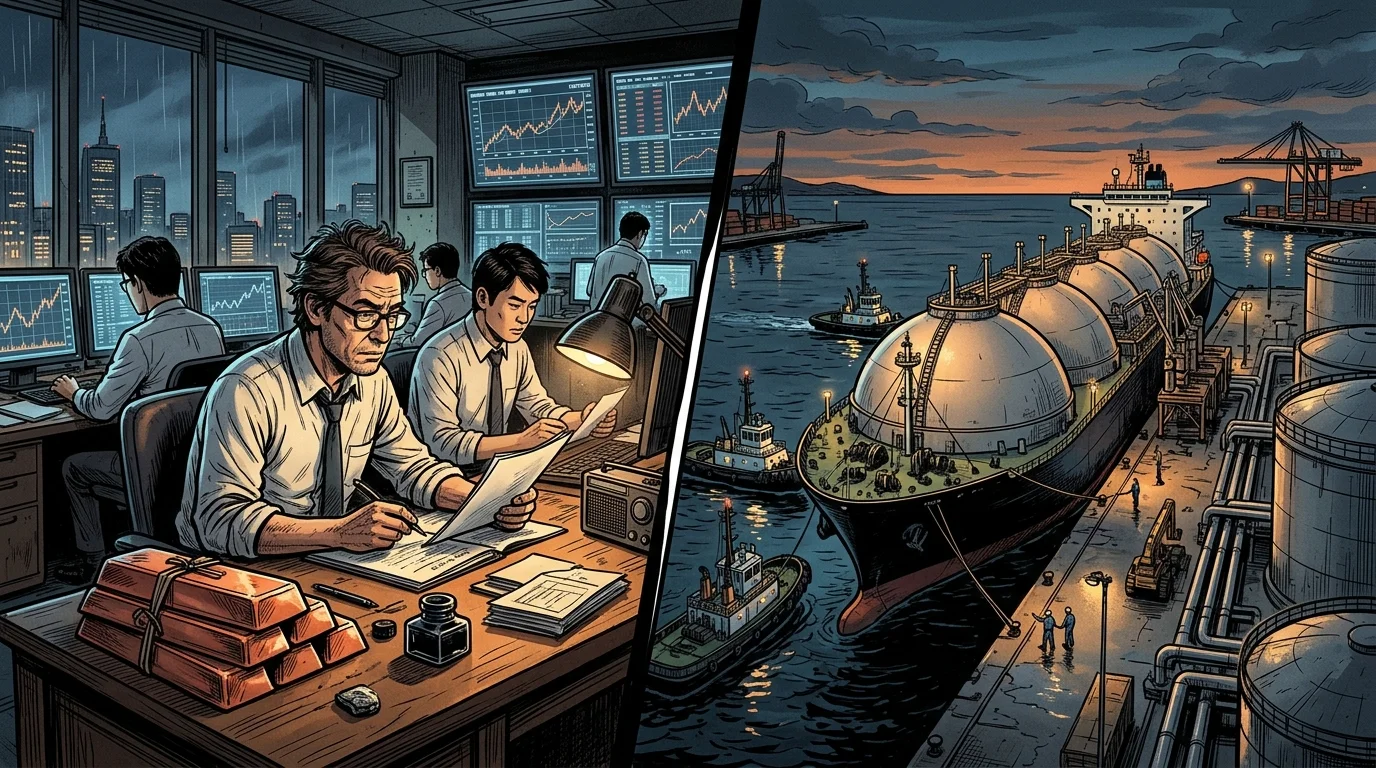
In June 1996, Sumitomo Corporation stunned global financial markets by disclosing that its chief copper trader in Tokyo, Yasuo Hamanaka—known across the London Metal Exchange (LME) as “Mr. Five Percent”—had accumulated US$2.6 billion in unauthorized losses during a ten-year campaign to corner the world’s physical and futures copper supply. Fifteen years later, the March 11, 2011 Great East Japan Earthquake and Fukushima Daiichi nuclear disaster led to the shutdown of all 54 of Japan’s commercial nuclear reactors, forcing Japanese power companies to purchase record volumes of spot Liquefied Natural Gas (LNG) at oil-indexed prices of US$16 to US$18 per million British thermal units (MMBtu) and plunging Japan into multi-year record trade deficits from 2011 through 2014. [2]
“Mr. Five Percent”: Yasuo Hamanaka and the Sumitomo Copper Desk
Within Japan’s non-ferrous metals trade, Sumitomo Corporation occupied a storied position dating back four centuries to the family’s Besshi copper mine in Shikoku. By the mid-1980s, however, Sumitomo’s Tokyo non-ferrous metals division operated primarily as an international merchant and hedger rather than a domestic miner. Yasuo Hamanaka, an unassuming clerk who had joined Sumitomo in 1970 and moved to the copper trading desk in the late 1970s, rose to lead the company’s global copper team in 1987. [3]
The origin of Hamanaka’s decade-long deception lay in unauthorized futures losses incurred on the Tokyo desk in 1985 and 1986 by his predecessor and mentor, Saburo Shimizu, in tin and copper contracts. Rather than reporting a cumulative deficit of several tens of millions of dollars to Sumitomo’s senior management—which would have ended the careers of everyone in the section—Hamanaka attempted to trade his way out of the hole through secret forward and futures positions on the London Metal Exchange. [4]
Unlike American futures exchanges such as the New York Commodity Exchange (COMEX), which operated as clearinghouse markets with daily mark-to-market margin calls and mandatory position reporting to the Commodity Futures Trading Commission (CFTC), the LME in the late 1980s and early 1990s functioned as a principal-to-principal forward market without automatic position limits or client-level position disclosure. Exploiting his dual authority over both front-office trading and back-office trade confirmations inside Sumitomo’s Tokyo headquarters, Hamanaka opened unauthorized brokerage accounts, diverted broker correspondence to a secret mail drop, and forged signatures on credit agreements and fictitious physical-option trades with offshore shell entities to disguise mounting cash outflows.
| Documented Figure / Metric | Historical Significance & Archival Context |
|---|---|
| 30 percent | Without Hamanaka's constant buying to prop up the market, world copper prices plunged by more than 30 percent—falling from US$2,700 per metric ton in early May to below US$1,850 in June. |
| US$100 | Crucially, Asian LNG contracts and emergency spot cargoes were priced through formulas linked to the Japan Crude Cocktail (JCC) basket of imported crude oil prices, which then hovered above US$100 to US$110 per barrel. |
| ¥25 trillion | Combined imports of LNG, crude oil, and thermal coal surged past ¥25 trillion to ¥28 trillion per year, compounded after late 2012 by the depreciation of the Japanese yen under Prime Minister Shinzō Abe's monetary easing program. |
Cornering the LME and the June 1996 $2.6 Billion Collapse
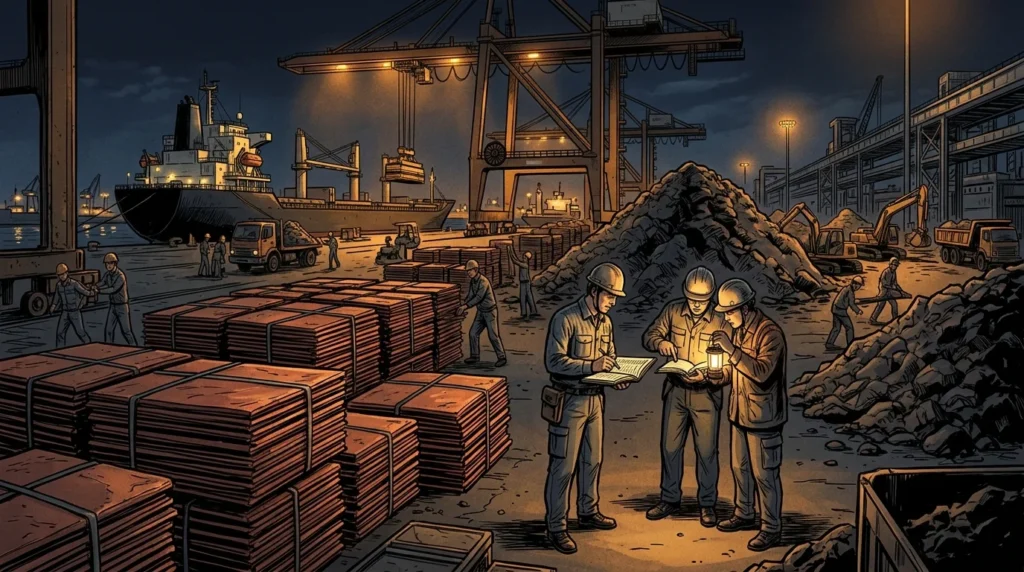
To prevent his massive long futures positions from losing value, Hamanaka realized he had to control the physical supply of copper deliverable into LME-registered warehouses. By the early 1990s, he commanded an estimated 5 percent of global annual copper trading volume—roughly 500,000 metric tons per year—earning him the moniker “Mr. Five Percent” or “Mr. Copper.” Whenever hedge funds or industrial merchants sold copper short on the belief that deteriorating industrial demand in Japan and Europe warranted lower prices, Hamanaka bought up LME warehouse warrants (title certificates to physical copper cathode) while simultaneously holding dominant long positions in nearby LME futures contracts. [5]
As the findings of the U.S. Commodity Futures Trading Commission later established, during the autumn of 1995 Hamanaka controlled up to 90 percent of all copper warrants stored in LME warehouses worldwide alongside a massive long futures position exceeding 1.5 million metric tons. Trapped short-sellers who needed physical warrants to settle expiring contracts were forced to borrow metal from Sumitomo at punitive “backwardation” premiums—where cash copper traded up to US$200 to US$400 per ton above the three-month forward price—allowing Hamanaka to extract short-term squeeze profits and keep spot prices elevated near US$3,000 per metric ton even as world mine output expanded. [6]
The corner began to crack in late 1995 and early 1996. High copper prices stimulated new mine supply from Chile and drew massive deliveries of physical cathode into LME warehouses in Long Beach, California. At the same time, the CFTC and the LME launched joint inquiries into abnormal backwardation spreads and huge concentrated positions held through British and American brokers including Winchester Commodities and Merrill Lynch. Under intense regulatory questioning, Sumitomo reassigned Hamanaka away from the trading desk on May 8, 1996. [7]
Without Hamanaka’s constant buying to prop up the market, world copper prices plunged by more than 30 percent—falling from US$2,700 per metric ton in early May to below US$1,850 in June. On June 13, 1996, Sumitomo Corporation announced that Hamanaka had engaged in ten years of unauthorized trading and initially estimated losses at US$1.8 billion. By September 1996, as Sumitomo liquidated its remaining LME overhang, the finalized loss reached US$2.6 billion (¥285 billion). Arrested by Tokyo prosecutors in October 1996, Hamanaka pleaded guilty to forgery and fraud and was sentenced in March 1998 to eight years in prison. On May 11, 1998, the CFTC ordered Sumitomo Corporation to pay a then-record US$150 million civil penalty for manipulating global copper prices, while the UK Financial Services Authority imposed an additional £8 million fine, prompting sweeping LME reforms that introduced automated warrant reporting and stricter clearing oversight. [8]
Fukushima and the Shutdown of Japan’s 54 Nuclear Reactors
While the Sumitomo scandal exposed the governance perils of concentrated metal derivatives trading, the commodity shock that struck Japan fifteen years later stemmed from a catastrophic physical disruption to its domestic power grid. Prior to March 2011, Japan operated 54 commercial nuclear power reactors across 16 generating stations, providing roughly 29 to 30 percent of the nation’s electricity and serving as the cornerstone of Tokyo’s strategy to limit dependence on imported Middle Eastern crude oil and fossil fuels.
On March 11, 2011, a magnitude-9.0 undersea earthquake off the Tōhoku coast and a devastating tsunami overwhelmed cooling systems at Tokyo Electric Power Company’s (TEPCO) Fukushima Daiichi nuclear facility, triggering core meltdowns across three reactors. In the aftermath of the disaster, eleven reactors in northeastern Japan shut down automatically, and Japanese local governments refused to permit the restart of other reactors across the country as they entered mandatory 13-month maintenance outages. When Hokkaido Electric shut down Unit 3 of the Tomari nuclear plant on May 5, 2012, all 54 commercial reactors in Japan were offline—leaving the world’s third-largest economy without nuclear electricity for the first time since 1970.
The $16–$18/MMBtu Spot LNG Surge and Japan’s 2011–2014 Trade Deficits
To prevent rolling blackouts across Tokyo, Osaka, and Nagoya’s industrial manufacturing belts, Japan’s ten regional electric utilities fired up every available thermal gas-, oil-, and coal-burning power station. Because pipeline natural gas could not reach the island nation, utilities scrambled to procure emergency cargoes of Liquefied Natural Gas (LNG) chilled to minus 162 degrees Celsius on specialized cryogenics tankers from Qatar, Australia, Malaysia, Russia, and Indonesia.
Japan’s annual LNG imports jumped from 70.0 million metric tons in 2010 to 78.5 million tons in 2011 and reached a record 87.3 to 88.5 million metric tons in 2012–2014—accounting for more than one-third of all seaborne LNG traded worldwide. Crucially, Asian LNG contracts and emergency spot cargoes were priced through formulas linked to the Japan Crude Cocktail (JCC) basket of imported crude oil prices, which then hovered above US$100 to US$110 per barrel. As a result, Japanese utilities paid record landed prices of US$16 to US$18 per MMBtu for spot and short-term LNG between 2011 and 2014—more than four times the US$3 to US$4 per MMBtu Henry Hub price then prevailing in the United States due to the North American shale-gas boom, and roughly 50 percent higher than European pipeline gas prices.
The macroeconomic consequences were immediate and profound. Combined imports of LNG, crude oil, and thermal coal surged past ¥25 trillion to ¥28 trillion per year, compounded after late 2012 by the depreciation of the Japanese yen under Prime Minister Shinzō Abe’s monetary easing program. In calendar year 2011, Japan recorded a merchandise trade deficit of ¥2.56 trillion—its first annual trade deficit since 1980, following the second OPEC oil shock. The deficit widened to ¥6.94 trillion in 2012, ¥11.47 trillion in 2013, and a historic peak of ¥12.82 trillion (approximately US$120 billion) in 2014. Forced to absorb trillions of yen in unrecovered fuel expenses, Japanese electric utilities raised industrial electricity tariffs by 20 to 30 percent, took emergency state bailouts and bank loans, and spearheaded a global push to replace rigid oil-indexed Asian LNG contracts with flexible hub-based pricing and overseas upstream equity stakes.
Theoretical & Balance-Sheet Transmission Mechanism
In the Kindleberger–Minsky taxonomy of financial instability (Kindleberger, 1978; Minsky, 1986) and Irving Fisher’s (1933) debt-deflation framework, speculative asset booms become systemic crises when credit expansion shifts balance sheets from hedge finance (cash flows covering principal and interest) to speculative and Ponzi finance (relying on rising asset prices and short-term margin roll-overs).
Once monetary tightening or an exogenous shock halts price appreciation, forced margin liquidations trigger Fisherian debt-deflation: fire-sale asset discounts erode bank collateral values, contracting credit supply across the real economy.
Sources and Further Reading
- U.S. Commodity Futures Trading Commission, “ In the Matter of Sumitomo Corporation: Order Instituting Proceedings and Making Findings (May 11, 1998)“, Financial Crisis Inquiry Commission Archive, Stanford Law School, 1998-05-11. Peer-Reviewed / Academic Research
- Bloomberg News, “ Sumitomo to Pay $158 Million Over Copper Scandal“, Los Angeles Times, 1998-08-13. Historical & Financial Reference
- U.S. Energy Information Administration, “ Nuclear power plant shutdowns in Japan result in increased LNG and oil use“, U.S. Department of Energy, 2013-03-13. Official / State Archive
- Justin McCurry, “ Japan trade deficit hits record high on post-Fukushima energy imports“, The Guardian, 2012-04-19. Historical & Financial Reference
- Akira Miyamoto and Chikako Ishiguro, “ A Realistic Perspective on Japan's LNG Demand after Fukushima“, Oxford Institute for Energy Studies, 2012. Peer-Reviewed / Academic Research
- U.S. Geological Survey, “ Mineral Commodity Summaries 2022“, U.S. Department of the Interior, 2022. Peer-Reviewed / Academic Research
- Irving Fisher — "The Debt-Deflation Theory of Great Depressions," Econometrica 1, no. 4 (FRASER Federal Reserve Archive, 1933): 337–357 Central Bank / Monetary Authority
- Charles P. Kindleberger & Robert Z. Aliber — Manias, Panics, and Crashes: A History of Financial Crises (Palgrave Macmillan) Peer-Reviewed / Academic Research
Cite This Historical Dossier (APA / Chicago)
APA (7th ed.): Ç., S. (Ed.). (2026). The 1996 Sumitomo $2.6B Copper Scandal and Japan's Post-2011 LNG Import Shock. In Forgotten Fortunes Historical Monograph Series (Forgotten Fortunes Editorial Desk). https://forgottenfortunes.net/sumitomo-copper-scandal-japan-fukushima-lng-import-shock/
MLA (9th ed.): Ç., Soner, ed. "The 1996 Sumitomo $2.6B Copper Scandal and Japan's Post-2011 LNG Import Shock." Forgotten Fortunes: Financial & Monetary History Archive, 2026, https://forgottenfortunes.net/sumitomo-copper-scandal-japan-fukushima-lng-import-shock/.
Chicago (17th ed.): Ç., Soner, ed. "The 1996 Sumitomo $2.6B Copper Scandal and Japan's Post-2011 LNG Import Shock." Forgotten Fortunes Historical Monograph Series (Forgotten Fortunes Editorial Desk), September 6, 2026. https://forgottenfortunes.net/sumitomo-copper-scandal-japan-fukushima-lng-import-shock/.
Have an idea for another financial history documentary or article? Request a story →