In This Article
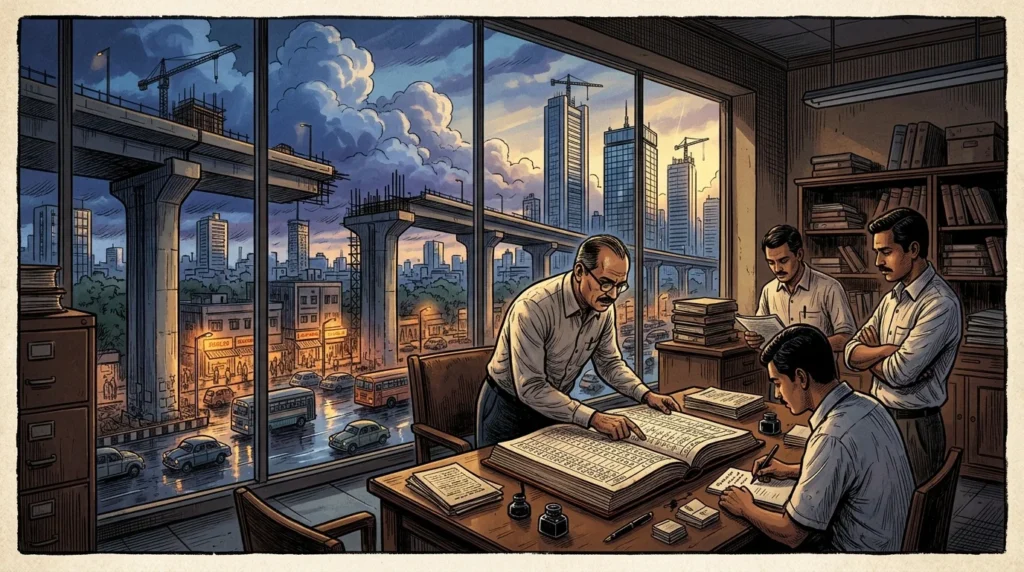
Argentina’s banking crisis revealed the risks of rapidly changing financial rules. Between 1946 and 1982, Argentina’s financial system swung between two radical institutional extremes—from total state monopoly over commercial bank deposits to unbridled interest-rate deregulation backed by 100 percent state deposit insurance. In March and April 1946, on the eve of Juan Domingo Perón’s inauguration as president, the military government nationalized the Central Bank of the Argentine Republic (BCRA) and issued Decree-Law 11,554/46, nationalizing every commercial bank deposit in the country and imposing an effective 100 percent reserve requirement so the state could allocate credit through central bank rediscounts. Three decades later, the military junta’s Financial Entities Law of June 1977 dismantled deposit nationalization and freed interest rates without building prudential bank supervision, igniting a speculative boom that collapsed on March 28, 1980 with the liquidation of Argentina’s largest private bank, Banco de Intercambio Regional (BIR), and culminated in Central Bank President Domingo Cavallo’s July 1982 socialization and inflationary liquidation of corporate and foreign debts. [1]

Decree-Law 11,554 and Perón’s 1946 Nationalization of Deposits
Originally established in 1935 under a mixed public-private shareholding structure designed by Raúl Prebisch and modeled on orthodox central banking principles, the Banco Central de la República Argentina (BCRA) was transformed in early 1946 into the financial engine of Perón’s state-led industrialization strategy. On March 25, 1946, outgoing President Edelmiro Farrell and incoming President-elect Juan Perón issued Decree-Law 8,503/46, nationalizing the BCRA’s capital and placing its board under direct executive control. One month later, on April 24, 1946, the government promulgated Decree-Law 11,554/46 (subsequently ratified by Congress under Law 12,962 in 1947), establishing the nationalization of bank deposits (*nacionalización de los depósitos bancarios*). [2]
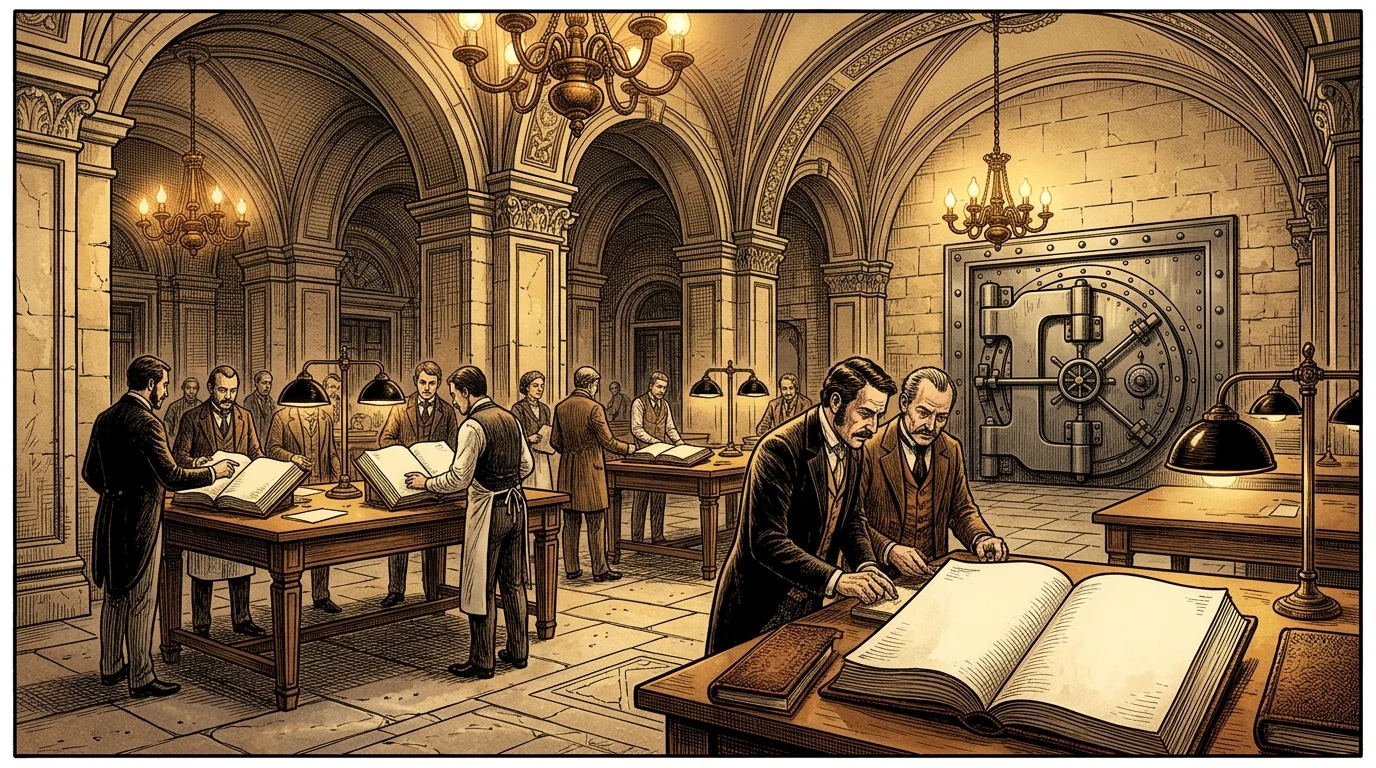
Under the legal mechanism of Decree-Law 11,554/46, all sight, savings, and time deposits collected by private and official commercial banks across Argentina ceased to belong to the deposit-taking institutions. Instead, every peso deposited by the public was registered directly on the balance sheet of the BCRA and guaranteed in full by the Argentine nation. Private commercial banks were stripped of the power to lend out their own deposit base; functionally, they operated under an implicit 100 percent reserve requirement and acted merely as administrative mandate agents (*mandatarios*) on behalf of the Central Bank, receiving a fixed administrative commission from the BCRA to cover branch operating expenses. [3]
To extend credit to borrowers, commercial banks could lend only their own paid-in equity capital or apply for targeted rediscount lines (*redescuentos*) allocated at the discretion of the BCRA under Economic Tsar Miguel Miranda. By severing the link between a bank’s deposit mobilization and its lending capacity, the Peronist regime turned the banking system into a centralized fiscal conduit. Between 1946 and 1949, BCRA rediscounts surged to finance urban industrial expansion, public utilities acquired from foreign owners, mortgage construction through the Banco Hipotecario Nacional, and the massive commodity-trading operations of the Argentine Institute for the Promotion of Trade (IAPI), which monopolized agricultural exports. When world grain prices fell and foreign-exchange reserves were exhausted after 1949, however, unbacked BCRA rediscounts to cover IAPI deficits and state enterprises fueled chronic inflation exceeding 30 percent annually, prompting the military government that overthrew Perón in 1955 to restore fractional-reserve banking in 1957—only for Perón to briefly re-impose deposit nationalization upon returning to power between 1973 and 1976. [4]
The 1977 Financial Liberalization and the Moral Hazard Trap
Following the March 1976 military coup, Economy Minister José Alfredo Martínez de Hoz and BCRA President Adolfo Diz sought to permanently eradicate Peronist financial repression. Effective June 1, 1977, the regime enacted Law 21,526 (the Financial Entities Law), which decentralized all nationalized bank deposits back to commercial banks, abolished interest-rate ceilings on deposits and loans, eliminated directed-credit rediscounts, and lowered barriers for regional cooperatives and finance companies (*financieras*) to convert into full-service commercial banks. To manage the transition from 100 percent state-owned deposits, the BCRA established a remunerated Minimum Cash Requirement (*Cuenta de Regulación Monetaria*), paying banks compensation on required reserves while taxing lending capacity. [5]
Crucially, however, the 1977 deregulation combined completely free interest rates and lax entry rules with full 100 percent state deposit insurance operated by the BCRA (only slightly trimmed to 90 percent for large deposits in late 1979). At the same time, the Central Bank’s banking supervision department remained severely understaffed, conducting routine on-site inspections of fewer than a fraction of Argentina’s more than 400 banks and non-bank financial institutions. In December 1978, Martínez de Hoz compounded the fragility by introducing the *Tablita*—a pre-announced schedule of gradually slowing peso devaluations against the US dollar designed to anchor inflation expectations. [6]
Because domestic inflation remained stubbornly higher than the pre-announced devaluation pace, the Argentine peso became severely overvalued in real terms while domestic real interest rates spiked. Aggressive regional banks exploited the 100 percent BCRA deposit guarantee by offering exorbitant interest rates on 30-day time deposits (*plazos fijos*) to attract household savings from across the country, then lending those high-cost funds to troubled industrial enterprises or to corporate conglomerates secretly owned by the bankers themselves. [7]
March 1980: The Collapse of BIR, Banco Oddone, and Banco Los Andes
The epicenter of this speculative expansion was Banco de Intercambio Regional (BIR), originally a small provincial bank from Corrientes acquired and expanded by financier José Rafael Trozzo. By offering the highest deposit rates in the market under the umbrella of full state deposit insurance, Trozzo transformed BIR into the largest private bank in Argentina by deposit volume, operating nearly 100 branches nationwide alongside representative offices in New York, Washington, and Paris, and controlling more than US$1 billion in deposits. Behind its marble branches, however, BIR’s loan portfolio was heavily concentrated in insolvent corporate affiliates and distressed manufacturing firms unable to survive import competition under the overvalued *Tablita* exchange rate; as borrows defaulted, BIR simply rolled over unpaid interest into new loans (*bicicleta financiera*). [8]
By early 1980, non-performing loans at BIR exceeded the bank’s entire capital multiple times over. When the BCRA finally refused to extend open-ended emergency liquidity without collateral, it ordered the closure and liquidation of Banco de Intercambio Regional on March 28, 1980. Although insured peso depositors eventually received compensation, BIR’s sudden liquidation shattered confidence across the entire domestic private banking sector, triggering an immediate run by depositors out of high-yielding private national banks and into state-owned banks and foreign bank branches. [9]
Within four weeks, the contagion toppled three more of Argentina’s largest fast-growing private banks. On April 28, 1980, the BCRA intervened simultaneously in Banco Los Andes (the country’s second-largest private bank, controlled by the Greco wine and agribusiness conglomerate in Mendoza), Banco Oddone (controlled by financier Luis Alberto Oddone’s holding group), and Banco Internacional (linked to the Sasetru grain and food empire). In each institution, examiners uncovered massive connected lending (*autopréstamos*) to the owners’ leveraged corporate empires. To stem the run across the financial system, the BCRA flooded the market with emergency rediscount advances exceeding 20 percent of the monetary base. Between March 1980 and mid-1982, more than 70 financial institutions—representing roughly 16 percent of total commercial bank assets and over 35 percent of finance company assets—were liquidated or intervened.
Domingo Cavallo’s July 1982 Reforms and Debt Socialization
The 1980 banking panic destroyed the credibility of the *Tablita* exchange-rate peg. In early 1981, incoming Economy Minister Lorenzo Sigaut abandoned the schedule and enacted a series of sharp peso devaluations exceeding 400 percent over the year, which devastated Argentine corporations and banks that had borrowed heavily in US dollars from international syndicates. To prevent mass corporate bankruptcies, the BCRA introduced subsidized exchange-rate insurance schemes (*seguros de cambio*) in mid-1981.
Following the April–June 1982 South Atlantic War and the appointment of Domingo Cavallo as President of the Central Bank in July 1982 (serving alongside Economy Minister José María Dagnino Pastore), the BCRA enacted a sweeping financial overhaul on July 5, 1982 (Circular A-137 and related measures). Cavallo re-imposed a 100 percent reserve requirement on short-term deposits, capped bank interest rates well below the roaring inflation rate, and refinanced corporate debts over five years at deeply negative real interest rates—intentionally using a surge in inflation to erode the real value of private domestic corporate debt (*licuación de pasivos*). Simultaneously, the Central Bank renewed and expanded the matured foreign-exchange insurance contracts (*seguros de cambio*) and later assumed the dollar obligations directly through government promissory notes (*bonos* and *promissory notes*), effectively transferring billions of dollars in private external corporate and bank debt onto the public balance sheet and plunging Argentina into the decade-long sovereign debt and hyperinflation crisis of the 1980s.
Theoretical & Balance-Sheet Transmission Mechanism
In the Kindleberger–Minsky taxonomy of financial instability (Kindleberger, 1978; Minsky, 1986) and Irving Fisher’s (1933) debt-deflation framework, speculative asset booms become systemic crises when credit expansion shifts balance sheets from hedge finance (cash flows covering principal and interest) to speculative and Ponzi finance (relying on rising asset prices and short-term margin roll-overs).
Once monetary tightening or an exogenous shock halts price appreciation, forced margin liquidations trigger Fisherian debt-deflation: fire-sale asset discounts erode bank collateral values, contracting credit supply across the real economy.
Sources and Further Reading
- Banco Central de la República Argentina, “ Directorio y Legislación 1935–2025: Memoria del BCRA“, Banco Central de la República Argentina, 2025. Central Bank / Monetary Authority
- Banco Central de la República Argentina, “ History and Architectural Heritage“, Banco Central de la República Argentina, 2024. Central Bank / Monetary Authority
- Tomás J. T. Baliño, “ The Argentine Banking Crisis of 1980“, International Monetary Fund, 1991. International Financial Institution
- Roque B. Fernández, “ La Crisis Financiera Argentina: 1980–1982“, Universidad del CEMA (UCEMA), 1983. Peer-Reviewed / Academic Research
- Stijn Claessens, Daniela Klingebiel, and Luc A. Laeven, “ Financial Restructuring in Banking and Corporate Sector Crises: What Policies to Pursue?“, National Bureau of Economic Research Working Paper 8386, 2001. Peer-Reviewed / Academic Research
- Ana María Cerro and Osvaldo Meloni, “ Crises and Crashes: Argentina 1825–2002“, Revista de Historia Económica / Journal of Iberian and Latin American Economic History (Cambridge University Press), 2013. Peer-Reviewed / Academic Research
- Carlo Edoardo Altamura, “ Friends in High Places? International Banks and the Argentinian Military Dictatorship“, Journal of Contemporary History (via PubMed Central), 2025. Official / State Archive
- Irving Fisher — "The Debt-Deflation Theory of Great Depressions," Econometrica 1, no. 4 (FRASER Federal Reserve Archive, 1933): 337–357 Central Bank / Monetary Authority
- Charles P. Kindleberger & Robert Z. Aliber — Manias, Panics, and Crashes: A History of Financial Crises (Palgrave Macmillan) Peer-Reviewed / Academic Research
Cite This Historical Dossier (APA / Chicago)
APA (7th ed.): Ç., S. (Ed.). (2026). Perón's 1946 Deposit Nationalization and Argentina's 1980 Banking Crisis. In Forgotten Fortunes Historical Monograph Series (Forgotten Fortunes Editorial Desk). https://forgottenfortunes.net/argentina-peron-deposit-nationalization-1980-banking-crisis/
MLA (9th ed.): Ç., Soner, ed. "Perón's 1946 Deposit Nationalization and Argentina's 1980 Banking Crisis." Forgotten Fortunes: Financial & Monetary History Archive, 2026, https://forgottenfortunes.net/argentina-peron-deposit-nationalization-1980-banking-crisis/.
Chicago (17th ed.): Ç., Soner, ed. "Perón's 1946 Deposit Nationalization and Argentina's 1980 Banking Crisis." Forgotten Fortunes Historical Monograph Series (Forgotten Fortunes Editorial Desk), September 6, 2026. https://forgottenfortunes.net/argentina-peron-deposit-nationalization-1980-banking-crisis/.
Have an idea for another financial history documentary or article? Request a story →