In This Article
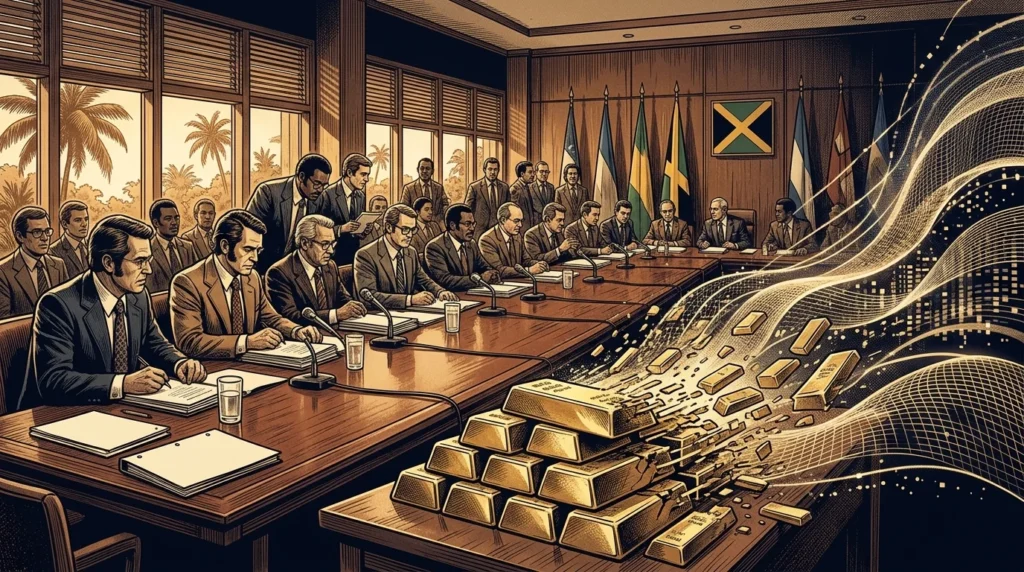
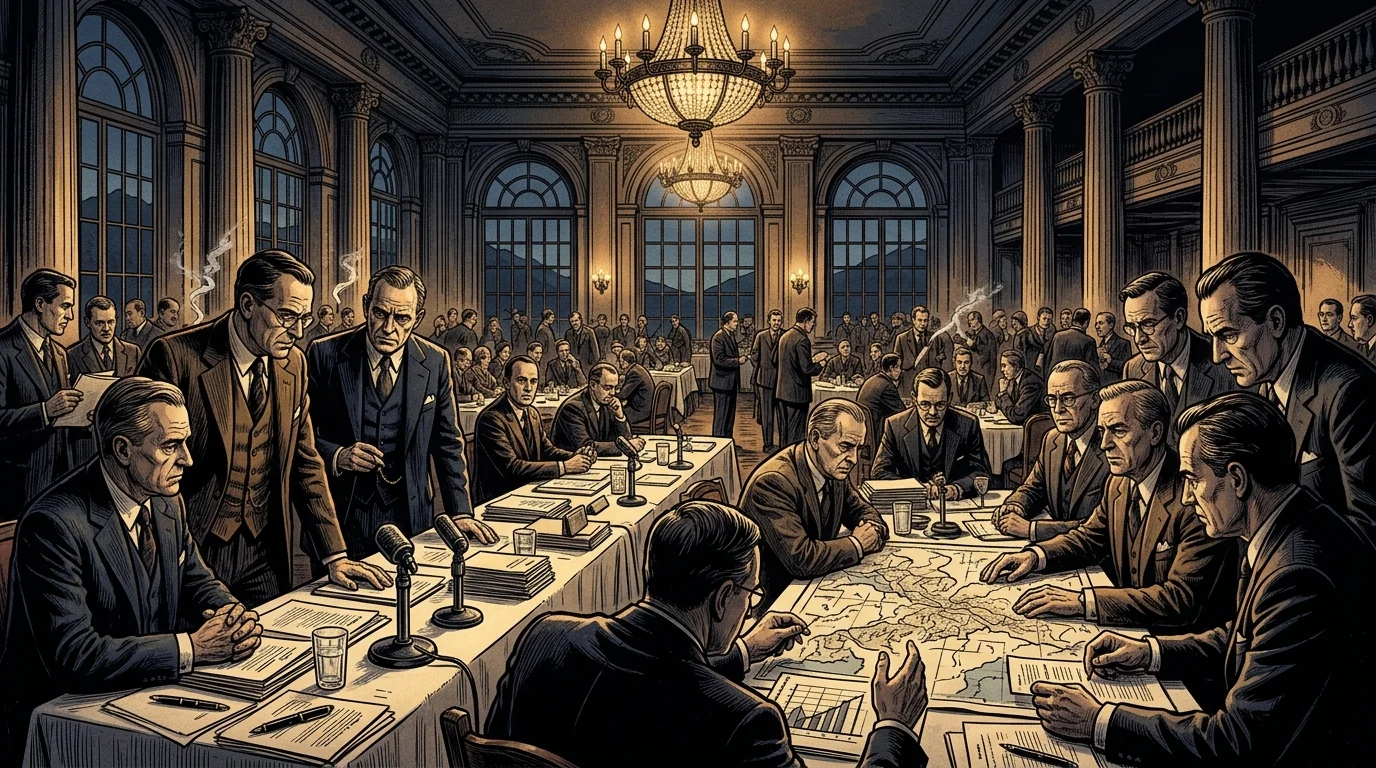
From July 1 to July 22, 1944, while Allied armies fought across Normandy and the Pacific, 730 delegates representing forty-four nations gathered at the secluded Mount Washington Hotel in Bretton Woods, New Hampshire, for the United Nations Monetary and Financial Conference [3][6]. Presided over by United States Treasury Secretary Henry Morgenthau Jr., the conference sought to prevent a repeat of the 1930s economic breakdown, when beggar-thy-neighbor currency devaluations, exchange controls, and discriminatory tariff blocs had deepened the Great Depression and contributed to the outbreak of the Second World War [5][6].

At the heart of the three-week negotiations stood an intellectual and geopolitical contest between the conference’s two foremost technical architects: Lord John Maynard Keynes, advisor to the British Treasury, and Harry Dexter White, chief international economist at the U.S. Treasury Department [3][4][5]. Although both men agreed that postwar prosperity required stable exchange rates and multilateral credit facilities, they represented starkly different national balance sheets [4][5]. Britain, exhausted by war debts and facing massive reconstruction imports, favored an expansive global overdraft facility that would pressure trade-surplus creditors to adjust equally with debtors; the United States, holding the bulk of the world’s monetary gold and facing domestic congressional scrutiny, insisted on a contributory fund with finite financial liability anchored to the U.S. dollar and gold [3][4].
Interwar Breakdown and the Anglo-American Blueprints (1941–1944)
Planning for a postwar monetary order began well before delegates arrived in New Hampshire [5][6]. In August 1941, U.S. President Franklin D. Roosevelt and British Prime Minister Winston Churchill issued the Atlantic Charter, pledging equal access to global trade and raw materials alongside international economic collaboration [5]. Those commitments were reinforced in Article VII of the February 1942 Anglo-American Master Lend-Lease Agreement, in which Britain agreed to work toward eliminating discriminatory exchange and commercial practices after the war [5].
Beginning in early 1942, Keynes in London and White in Washington independently drafted competing blueprints for a multilateral monetary institution [4][5]. Keynes proposed an ambitious International Clearing Union (ICU) structured like a global central bank for national central banks [3][4]. Rather than requiring financially depleted countries to pay in scarce gold and currency upfront, the Clearing Union would settle bilateral trade imbalances through overdraft accounts denominated in a new supranational unit of account tied to gold, which Keynes named the “bancor” [3][4]. Keynes envisioned total overdraft quotas scaled to world trade at roughly US$26 billion (often misprinted as “$26 million” in secondary summaries), and proposed taxing persistent creditor surpluses as well as debtor deficits so that surplus nations like the United States could not hoard global liquidity [3][4].
White countered with a proposal for an International Stabilization Fund built on a contributory subscription model rather than an overdraft bank [3][4]. Because any postwar facility would rely overwhelmingly on American dollars and gold, the U.S. Treasury refused to expose American taxpayers to the open-ended credit commitments of the Keynes plan [4]. Instead, White proposed a finite pool of national currencies and gold subscribed by member states through fixed quotas [3][4]. Initially pitched at “at least US$5 billion,” the proposed fund’s resources were negotiated upward to US$8.5 billion during bilateral consultations in 1943–1944 and finalized at US$8.8 billion in initial member quotas at Bretton Woods [3][4].
| Documented Figure / Metric | Historical Significance & Archival Context |
|---|---|
| 1 percent | Member authorities were required to keep spot exchange transactions within a 1 percent fluctuation band on either side of parity. |
| 100 percent | Crucially, Article III of the IBRD charter imposed a strict 1-to-1 statutory gearing ratio: the total amount outstanding of direct loans, loan participations, and guarantees made by the Bank could never exceed 100 percent of its unimpaired subscribed capital, reserves, and surplus. |
The Par Value System and the International Monetary Fund
At the Mount Washington Hotel, conference work was divided among three main commissions: Commission I, chaired by Harry Dexter White, drafted the charter of the International Monetary Fund (IMF); Commission II, chaired by Lord Keynes, designed the International Bank for Reconstruction and Development (IBRD); and Commission III examined other means of international financial cooperation [4][6]. Reflecting the overwhelming economic leverage of the United States in 1944, the IMF’s design followed White’s contributory quota model [3][4][5].
Under the Articles of Agreement of the International Monetary Fund adopted on July 22, 1944, member governments committed to promover international monetary cooperation, facilitate the balanced growth of international trade to support high employment and real income, maintain orderly exchange arrangements, and avoid competitive exchange depreciation [1]. The core operational mechanism was the par value system: each member country established a fixed par value for its currency expressed in terms of gold or the U.S. dollar, which was itself anchored to gold at an official parity of US$35 per troy ounce [2][3].
Member authorities were required to keep spot exchange transactions within a 1 percent fluctuation band on either side of parity [3]. Unlike the rigid pre-1914 gold standard, however, Bretton Woods established an “adjustable peg”: a member facing a “fundamental disequilibrium” in its balance of payments could adjust its currency’s par value—consulting the Fund for changes up to 10 percent and requiring explicit Fund concurrence for larger adjustments—while drawing short-term foreign-exchange credit from the IMF’s pooled currency resources to weather temporary deficits without imposing destructive domestic deflation or trade restrictions [1][3][5].
The Scarce Currency Clause and Capital Account Rules
Although the British delegation yielded on the bancor and accepted White’s quota-based fund, Keynes and his colleagues secured a crucial institutional safeguard in Article VII of the IMF charter: the “scarce currency clause” [3][4]. British negotiators feared that if the United States ran massive postwar trade surpluses while lending too little abroad, global demand for U.S. dollars would rapidly drain the IMF’s holdings of American currency, paralyzing the payment system [3][4].
Under the scarce currency provision, if the Fund determined that demand for a surplus member’s currency seriously threatened the IMF’s ability to supply it, the Fund could formally declare that currency “scarce” and ration its remaining supply among members [3]. Even more significantly, an official declaration of scarcity automatically authorized other member countries to impose temporary, discriminatory exchange restrictions and import controls against exports from the surplus nation—creating a legal mechanism to compel creditor adjustment [3][4].
Alongside the scarce currency clause, the 1944 architecture drew a sharp distinction between current-account payments for trade in goods and services—which members pledged to make convertible—and speculative capital flows [1][2][5]. Having witnessed destabilizing “hot money” flights during the 1930s, both Keynes and White agreed that governments should retain the authority to maintain capital controls, and the treaties required all official dealings between member states and the Bretton Woods institutions to be conducted strictly through designated fiscal agencies: national Treasuries, central banks, or official stabilization funds [2][4].
Commission II and the International Bank for Reconstruction and Development
While Commission I hammered out IMF quotas and exchange rules, Keynes presided over Commission II to craft the Articles of Agreement of the International Bank for Reconstruction and Development (IBRD), the foundational institution of the modern World Bank Group [2][3][6]. Delegations from forty-four nations—including active interventions from Latin American, European, and Asian representatives such as Mexico, Brazil, Chile, India, and China—ensured that the Bank’s charter gave permanent weight to long-term economic development alongside the urgent reconstruction of war-devastated Europe and Asia [6].
To win the confidence of private bond markets on Wall Street, where the Bank would need to borrow, the IBRD charter incorporated conservative financial guardrails [2][6]. The Bank’s initial authorized capital stock was set at US$10 billion, measured in U.S. dollars of the weight and fineness in effect on July 1, 1944, and divided into 100,000 shares of US$100,000 par value each [2]. Membership in the IBRD was restricted exclusively to countries that joined the IMF, linking exchange-rate discipline directly to long-term development lending [2].
Rather than lending out paid-in government funds alone, only a small fraction of each member’s capital subscription was paid in upfront, while the remainder served as callable guarantee capital backing the Bank’s own bond issuances and loan guarantees [2]. Crucially, Article III of the IBRD charter imposed a strict 1-to-1 statutory gearing ratio: the total amount outstanding of direct loans, loan participations, and guarantees made by the Bank could never exceed 100 percent of its unimpaired subscribed capital, reserves, and surplus [2]. During the Bank’s first ten years of operations, it was also required to charge an annual loan commission of between 1 percent and 1.5 percent per annum on guaranteed loans to build a dedicated special reserve against defaults [2].
Ratification, Evolution, and Institutional Legacy
On July 22, 1944, the delegates signed the Final Act of the Bretton Woods Conference, submitting the IMF and IBRD charters to their respective governments for ratification [1][6]. Following intense public debate, the U.S. Congress passed the Bretton Woods Agreements Act in July 1945, and the two institutions formally came into existence on December 27, 1945, when representatives of twenty-nine founding states (including twenty-one initial IBRD signatories) ratified the Articles of Agreement in Washington, D.C. [1][5][6].
For nearly three decades, the Bretton Woods par value system anchored postwar reconstruction and the rapid expansion of Western and Japanese trade [5]. As world trade outgrew gold production in the 1960s, the IMF amended its Articles of Agreement in 1969 to establish a Special Drawing Rights (SDR) Department capable of allocating an international reserve asset—a belated echo of Keynes’s wartime bancor concept [1][4]. Yet persistent U.S. balance-of-payments deficits eventually eroded foreign confidence in the US$35-per-ounce gold parity; after President Richard Nixon suspended the dollar’s gold convertibility in August 1971 and fixed parities collapsed in early 1973, the IMF’s Second Amendment (effective 1978) replaced the 1944 par value system with flexible exchange arrangements under formal IMF Article IV policy surveillance [1][5]. Even after the demise of fixed gold-dollar pegs, the twin institutions born at the Mount Washington Hotel expanded to 190 member countries, remaining the core pillars of global financial governance [1].
Theoretical & Balance-Sheet Transmission Mechanism
In the Kindleberger–Minsky taxonomy of financial instability (Kindleberger, 1978; Minsky, 1986) and Irving Fisher’s (1933) debt-deflation framework, speculative asset booms become systemic crises when credit expansion shifts balance sheets from hedge finance (cash flows covering principal and interest) to speculative and Ponzi finance (relying on rising asset prices and short-term margin roll-overs).
Once monetary tightening or an exogenous shock halts price appreciation, forced margin liquidations trigger Fisherian debt-deflation: fire-sale asset discounts erode bank collateral values, contracting credit supply across the real economy.
Sources and Further Reading
- International Monetary Fund, “ Articles of Agreement of the International Monetary Fund,” International Monetary Fund, 1944-07-22. International Financial Institution
- United Nations Monetary and Financial Conference, “ Articles of Agreement of the International Bank for Reconstruction and Development, July 22, 1944,” Avalon Project at Yale Law School, 1944-07-22. Peer-Reviewed / Academic Research
- Sandra Kollen Ghizoni, “ Creation of the Bretton Woods System,” Federal Reserve History, 2013-11-22. Central Bank / Monetary Authority
- James M. Boughton, “ Why White, Not Keynes? Inventing the Postwar International Monetary System,” International Monetary Fund (IMF Working Paper WP/02/52), 2002-03. International Financial Institution
- Office of the Historian, “ The Bretton Woods Conference, 1944,” U.S. Department of State. Official / State Archive
- World Bank Group Archives, “ Bretton Woods and the Birth of the World Bank,” World Bank Group. International Financial Institution
- Irving Fisher — "The Debt-Deflation Theory of Great Depressions," Econometrica 1, no. 4 (FRASER Federal Reserve Archive, 1933): 337–357 Central Bank / Monetary Authority
- Charles P. Kindleberger & Robert Z. Aliber — Manias, Panics, and Crashes: A History of Financial Crises (Palgrave Macmillan) Peer-Reviewed / Academic Research
Cite This Historical Dossier (APA / Chicago)
APA (7th ed.): Ç., S. (Ed.). (2026). Bretton Woods 1944: The Keynes–White Rivalry That Built the Postwar Monetary Order. In Forgotten Fortunes Historical Monograph Series (Forgotten Fortunes Editorial Desk). https://forgottenfortunes.net/bretton-woods-1944-architectural-rivalry/
MLA (9th ed.): Ç., Soner, ed. "Bretton Woods 1944: The Keynes–White Rivalry That Built the Postwar Monetary Order." Forgotten Fortunes: Financial & Monetary History Archive, 2026, https://forgottenfortunes.net/bretton-woods-1944-architectural-rivalry/.
Chicago (17th ed.): Ç., Soner, ed. "Bretton Woods 1944: The Keynes–White Rivalry That Built the Postwar Monetary Order." Forgotten Fortunes Historical Monograph Series (Forgotten Fortunes Editorial Desk), August 29, 2026. https://forgottenfortunes.net/bretton-woods-1944-architectural-rivalry/.
Have an idea for another financial history documentary or article? Request a story →