In This Article
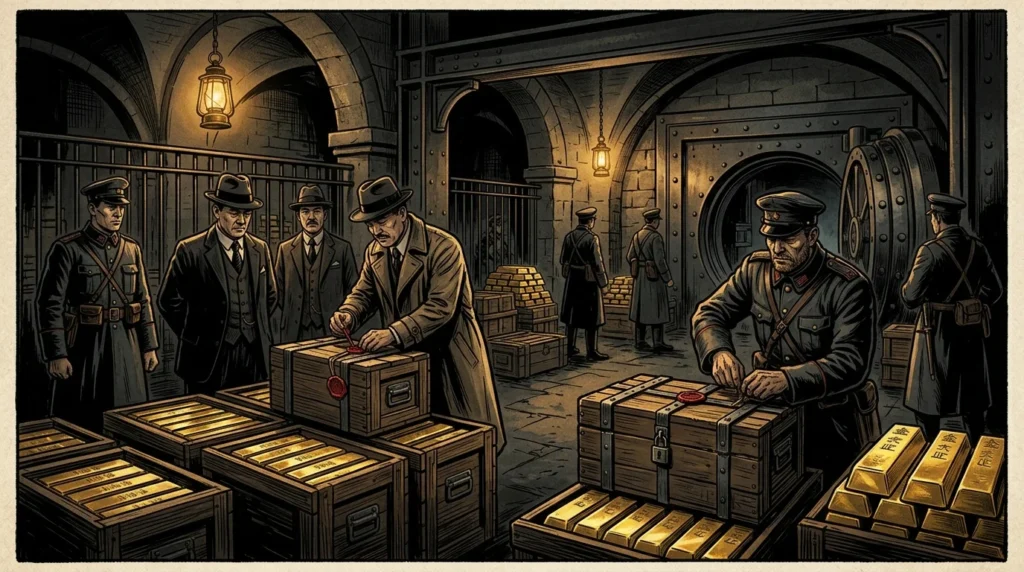
Few episodes in modern macroeconomic history offer a sharper natural experiment in monetary regime change than Imperial Japan between 1930 and 1936. On January 11, 1930—less than three months after the Wall Street Crash of October 1929—Finance Minister Junnosuke Inoue lifted Japan’s twelve-year gold embargo (kin kaikin) and forced the yen back onto the international gold standard at its overvalued pre-World War I parity of $49.85 per ¥100. The resulting collision of domestic currency appreciation and global depression triggered the catastrophic Shōwa Depression (1930–1931), collapsing Japanese wholesale prices by roughly 30 percent and draining over ¥700 million in gold reserves during the autumn 1931 “Dollar Buying” speculative attack. Yet on December 13, 1931, 77-year-old Finance Minister Korekiyo Takahashi took office and immediately reversed course: abandoning gold, allowing the yen to depreciate by 40 to 60 percent, slashing interest rates, and pioneering direct Bank of Japan underwriting of government bonds (nichigin hikiuke). Takahashi’s reflation pulled Japan out of the Great Depression years ahead of the Western powers—until his assassination on February 26, 1936 by radical army officers who refused to accept his efforts to rein in military deficit spending. [1]
The 1920s Debate: “Old Parity” Orthodoxy Versus “New Parity” Realism
Japan had originally adopted the gold standard in October 1897 using indemnity bullion won in the First Sino-Japanese War, fixing the statutory gold content of the yen at 0.75 grams of pure gold, or $49.85 per ¥100 ($0.49845 per yen). Following the United States’ entry into World War I, Japan suspended gold convertibility and imposed an embargo on gold exports on September 12, 1917. Although Japan accumulated massive gold and foreign-exchange balances (“specie held abroad”) during the wartime export boom, its domestic price level rose far higher than prices in the United States and Britain. When the postwar commodity bubble burst in 1920, Japanese banks and trading houses were left with mountains of non-performing loans, compounded sequentially by the devastating Great Kantō Earthquake of September 1, 1923 and the Shōwa Financial Crisis of spring 1927. [2]
Throughout the late 1920s, the unpegged yen fluctuated on foreign-exchange markets between $41 and $47 per ¥100—roughly 10 to 15 percent below its prewar parity. A fierce intellectual debate divided Japanese policymakers over how to return to the international gold standard. A group of prominent economic journalists known as the “Four Samurai of New Parity”—led by Tanzan Ishibashi and Kamekichi Takahashi of the Toyo Keizai Shimpo (Oriental Economist)—argued forcefully that Japan should follow France’s 1928 Poincaré stabilization by devaluing the yen and returning to gold at its prevailing market rate (“new parity,” or shin heika, around $40 to $45 per ¥100). By contrast, orthodox commercial bankers, Ministry of Finance bureaucrats, and the urban business wing of the Constitutional Democratic Party (Rikken Minseitō) insisted on restoring the prewar 1897 rate of $49.85 (“old parity,” or kyū heika), contending that deliberate deflation was necessary to purge inefficient zombie firms, lower domestic production costs, and preserve Japan’s sovereign credit standing in London and New York. [3]
| Documented Figure / Metric | Historical Significance & Archival Context |
|---|---|
| 12 percent | As global trade imploded in 1930, Japan absorbed a double deflationary shock: world commodity prices were crashing in dollar terms at the exact moment Inoue forced a roughly 12 percent appreciation of the yen against the dollar. |
| 20 percent | Three days later, on September 21, 1931, the United Kingdom suspended gold convertibility and allowed the pound sterling to float downward by more than 20 percent. |
| ¥510 million | Selling yen and buying US dollars forward through the Yokohama Specie Bank to hedge overseas exposures and profit from an inevitable devaluation, market participants purchased roughly ¥510 million to ¥760 million worth of dollar contracts within weeks. |
| ¥700 million | Domestic credit froze, call-market interest rates spiked, and Japan's gold reserves hemorrhaged: between January 1930 and December 1931, over ¥700 million in gold flowed out of Japan, reducing the Bank of Japan's specie reserves by more than half from ¥1,072 million at the end of 1929 to just ¥469 million by late 1931. |
January 11, 1930: Junnosuke Inoue’s Deflationary Gamble (Kin Kaikin)
In July 1929, the Minseitō cabinet of Prime Minister Osachi Hamaguchi took power and appointed former Bank of Japan Governor Junnosuke Inoue as Minister of Finance. A doctrinaire champion of gold-standard orthodoxy who likened returning at old parity to climbing a mountain that must be scaled before the economy could advance, Inoue immediately launched a nationwide retrenchment campaign. He cut the central government budget, halted new government bond issues, organized moral-suasion drives urging citizens to curb consumption, and accumulated foreign-exchange reserves to drive the yen upward from $43.75 in June 1929 toward $49.85. [4]
When the New York Stock Exchange crashed in late October 1929, Inoue fatally misread the downturn in American interest rates as a favorable window to secure credit lines from J.P. Morgan in New York and the Westminster Bank syndicate in London. On November 21, 1929, Inoue promulgated Ministry of Finance Ordinance No. 27, announcing that Japan would lift the gold embargo on January 11, 1930 at the old prewar parity of $49.85 per ¥100. [5]
The macroeconomic consequences were immediate and devastating. As global trade imploded in 1930, Japan absorbed a double deflationary shock: world commodity prices were crashing in dollar terms at the exact moment Inoue forced a roughly 12 percent appreciation of the yen against the dollar. Between 1929 and 1931, Japan’s wholesale price index plunged by roughly 30 percent, while nominal gross national product contracted by nearly 20 percent (with the GNP deflator falling by more than 10 percent annually in 1930–1931). Because raw silk sold to the American market accounted for over a third of Japan’s merchandise exports, the 50 percent collapse in silk prices combined with yen overvaluation to devastate the Japanese countryside: real farm household incomes fell by more than half between 1929 and 1931, triggering severe malnutrition, debt defaults, and social radicalization across rural Tōhoku that fed directly into ultranationalist military agitation. [6]
Autumn 1931: Britain Leaves Gold and the “Dollar Buying” Speculative Attack
By September 1931, Inoue’s gold standard was caught in a vise. On September 18, 1931, Imperial Japanese Army officers staged the Mukden Incident and invaded Manchuria in defiance of the civilian cabinet in Tokyo. Three days later, on September 21, 1931, the United Kingdom suspended gold convertibility and allowed the pound sterling to float downward by more than 20 percent. With sterling devalued and Japanese military expenditures escalating in Manchuria, domestic and international investors concluded that Japan could no longer defend the $49.85 parity. [7]
Currency traders, foreign banks, and Japan’s largest zaibatsu financial houses—led by Mitsui Bank, Sumitomo Bank, and Mitsubishi Bank—launched a massive speculative attack known in Japan as the “Dollar Buying” (doru-gai) incident. Selling yen and buying US dollars forward through the Yokohama Specie Bank to hedge overseas exposures and profit from an inevitable devaluation, market participants purchased roughly ¥510 million to ¥760 million worth of dollar contracts within weeks.
Determined to crush the speculators and force them to unwind their forward dollar contracts at a loss when the contracts matured at year-end, Inoue waged a desperate monetary war of attrition. He ordered the Yokohama Specie Bank to ship tens of millions of yen in physical gold coin and bullion across the Pacific to San Francisco to honor its dollar commitments, while forcing the Bank of Japan to hike its official discount rate twice in the midst of a deep depression—raising the daily rate from 1.4 sen (5.11 percent per annum) to 1.6 sen (5.84 percent) in October 1931 and again to 1.8 sen (6.57 percent) in November 1931. Domestic credit froze, call-market interest rates spiked, and Japan’s gold reserves hemorrhaged: between January 1930 and December 1931, over ¥700 million in gold flowed out of Japan, reducing the Bank of Japan’s specie reserves by more than half from ¥1,072 million at the end of 1929 to just ¥469 million by late 1931.
December 13, 1931: Korekiyo Takahashi’s Reflation Revolution
Inoue’s defense of gold collapsed politically on December 11, 1931, when internal cabinet divisions over a proposed national-unity coalition forced Prime Minister Reijirō Wakatsuki (who had succeeded Hamaguchi after the latter was shot by an ultranationalist in November 1930) to resign. On December 13, 1931, Rikken Seiyūkai President Tsuyoshi Inukai formed a new cabinet and appointed 77-year-old former Prime Minister and Bank of Japan Governor Korekiyo Takahashi as Minister of Finance for the fifth time.
Acting within hours of his swearing-in on December 13, 1931, Takahashi issued an emergency Ministry of Finance ordinance re-imposing the embargo on gold exports, followed on December 17 by an Imperial Urgency Ordinance suspending the gold convertibility of Bank of Japan banknotes. Over the next four years, Takahashi—whom economic historians such as Barry Eichengreen and Ben Bernanke have hailed as an intuitive Keynesian before Keynes published the General Theory—deployed a coordinated three-pillar macroeconomic regime shift known as “Takahashi Fiscal Policy” (Takahashi Zaisei):
- Pillar 1 — Exchange-Rate Depreciation: Rather than defending an artificial peg, Takahashi adopted a “leave-it-to-the-market” (forin ekusuchenji hōnin) exchange policy. Freed from gold, the yen depreciated swiftly from $49.85 per ¥100 in December 1931 to around $28 in mid-1932 and roughly $20 per ¥100 by late 1932—a 40 percent to 60 percent nominal depreciation against the US dollar and roughly 40 percent against the pound sterling. The cheaper yen immediately halted domestic price deflation and sparked a dramatic surge in Japanese cotton textile, rayon, and light industrial exports across Asia and global markets.
- Pillar 2 — Aggressive Monetary Easing: Reversing Inoue’s punitive rate hikes, Takahashi and the Bank of Japan slashed the official discount rate in four steps during 1932 and 1933, cutting the commercial bill discount rate from 6.57 percent in March 1932 down to 3.65 percent (1.0 sen per day) by July 1933, while expanding the Bank of Japan’s unbacked fiduciary banknote ceiling more than eightfold from ¥120 million to ¥1,000 million in June 1932.
- Pillar 3 — Deficit Stimulus and Bank of Japan Bond Underwriting (Nichigin Hikiuke): To stimulate domestic demand without crowding out private investment by selling bonds into an illiquid commercial market, Takahashi inaugurated direct central bank underwriting of government deficit bonds (nichigin hikiuke) on November 25, 1932. Under this mechanism, the Bank of Japan purchased newly issued 4 percent and 4.5 percent government bonds directly from the Treasury, injecting new high-powered base money as the government spent the proceeds on the three-year ¥800 million Emergency Rural Relief Public Works Program (Jikyoku Kyūkyū Jigyō) and military appropriations. Once the freshly created money flowed into commercial bank deposits, the Bank of Japan sold the underwritten bonds from its portfolio to commercial banks through open-market operations to prevent excessive monetary overhang.
Recovery, Overheating, and the February 26, 1936 Assassination
Takahashi’s policy triad produced the fastest economic recovery among all major industrialized nations during the Great Depression. Real gross national product grew by an average of more than 6 percent to 7 percent per year between 1932 and 1936, industrial production surpassed its 1929 pre-crisis peak by 1933, and moderate wholesale price inflation of 2 to 5 percent restored corporate balance sheets without triggering runaway consumer inflation.
Yet the political violence unleashed by the Shōwa Depression proved irreversible. On February 9, 1932, a young fanatic from the ultranationalist League of Blood (Ketsumeidan) gunned down former Finance Minister Junnosuke Inoue as he arrived at an election rally in Tokyo; three months later, naval officers assassinated Prime Minister Inukai in the May 15 Incident. By 1935, Takahashi himself recognized that the Japanese economy had reached full industrial capacity and that continued Bank of Japan underwriting of expanding army and navy budgets would no longer stimulate real output, but instead ignite destructive fiscal inflation. Throughout the autumn of 1935, the 81-year-old Finance Minister publicly resisted the Imperial Japanese Army’s demands for higher military appropriations in the 1936 budget and began tapering new deficit bond issues.
Before dawn on February 26, 1936, during the attempted coup d’état known as the February 26 Incident (Ni-Ni-Roku Jiken), rebel junior army officers stormed Takahashi’s residence in Akasaka, Tokyo, and shot and bayoneted the Finance Minister to death in his bed. With Takahashi’s murder, civilian fiscal discipline vanished: his successors bowed to military budget demands and turned Bank of Japan bond underwriting—originally conceived by Takahashi as a temporary countercyclical bridge—into an irreversible wartime money-printing machine that financed the Second Sino-Japanese War and Pacific War, culminating in Japan’s catastrophic post-1945 hyperinflation.
Theoretical & Balance-Sheet Transmission Mechanism
In the Kindleberger–Minsky taxonomy of financial instability (Kindleberger, 1978; Minsky, 1986) and Irving Fisher’s (1933) debt-deflation framework, speculative asset booms become systemic crises when credit expansion shifts balance sheets from hedge finance (cash flows covering principal and interest) to speculative and Ponzi finance (relying on rising asset prices and short-term margin roll-overs).
Once monetary tightening or an exogenous shock halts price appreciation, forced margin liquidations trigger Fisherian debt-deflation: fire-sale asset discounts erode bank collateral values, contracting credit supply across the real economy.
Sources and Further Reading
- Masayoshi Amamiya, “ Showa Depression and Takahashi Fiscal Policy,” Bank of Japan Review 2009-E-2, 2009. Central Bank / Monetary Authority
- Hiroshi Nakaso, “ Korekiyo Takahashi and the Bank of Japan: Yesterday and Today,” Bank of Japan Speech at the Korekiyo Takahashi Memorial Symposium, 2013-10-28. Central Bank / Monetary Authority
- Takafusa Nakamura, “ The Japanese Economy and Economic Policy in the 1930s,” in Recovery from the Depression: Australia and the World Economy in the 1930s, Cambridge University Press, 1988. Peer-Reviewed / Academic Research
- Masahiko Takeda, “ Macroeconomic Policy and the Great Depression in Japan,” Institute of Economic Research, Hitotsubashi University Discussion Paper Series A No. 395, 2000. Historical & Financial Reference
- Institute of Developing Economies (IDE-JETRO), “ Japan’s Interwar Gold Standard, Fiscal Policy, and Industrial Transformation,” The Developing Economies, IDE-JETRO, 1967. Historical & Financial Reference
- Irving Fisher — "The Debt-Deflation Theory of Great Depressions," Econometrica 1, no. 4 (FRASER Federal Reserve Archive, 1933): 337–357 Central Bank / Monetary Authority
- Charles P. Kindleberger & Robert Z. Aliber — Manias, Panics, and Crashes: A History of Financial Crises (Palgrave Macmillan) Peer-Reviewed / Academic Research
Cite This Historical Dossier (APA / Chicago)
APA (7th ed.): Ç., S. (Ed.). (2026). Japan’s Gold Standard Mistake and Takahashi’s Recovery. In Forgotten Fortunes Historical Monograph Series (Forgotten Fortunes Editorial Desk). https://forgottenfortunes.net/japan-1930-gold-standard-takahashi/
MLA (9th ed.): Ç., Soner, ed. "Japan’s Gold Standard Mistake and Takahashi’s Recovery." Forgotten Fortunes: Financial & Monetary History Archive, 2026, https://forgottenfortunes.net/japan-1930-gold-standard-takahashi/.
Chicago (17th ed.): Ç., Soner, ed. "Japan’s Gold Standard Mistake and Takahashi’s Recovery." Forgotten Fortunes Historical Monograph Series (Forgotten Fortunes Editorial Desk), September 18, 2026. https://forgottenfortunes.net/japan-1930-gold-standard-takahashi/.
Have an idea for another financial history documentary or article? Request a story →