In This Article
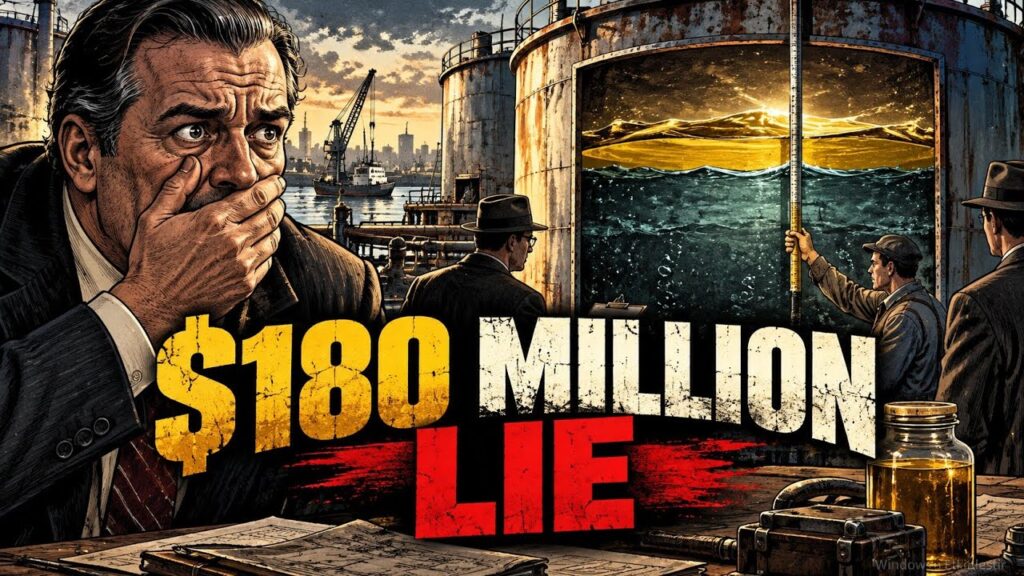
In early December 1938, the board of directors of McKesson & Robbins, Incorporated—one of the oldest and largest wholesale drug enterprises in the United States—learned that its most consistently profitable division did not exist [1][6]. For over a decade, company president Frank Donald Coster had reported millions of dollars in international crude drug trading through the firm’s Bridgeport, Connecticut, headquarters [1]. On paper, McKesson & Robbins closed 1937 with consolidated assets exceeding $87 million, certified without qualification by Price, Waterhouse & Co. [1][5]. Following an internal inquiry by company treasurer Julian F. Thompson, investigators discovered that approximately $19 million of the 1937 balance sheet—and roughly $21 million by December 5, 1938—consisted of phantom inventories, fabricated accounts receivable, and nonexistent bank balances [1][6].

Within days, fingerprint comparisons revealed that “Dr. F. Donald Coster,” listed in Who’s Who in America as a Heidelberg-educated physician and Wall Street executive, was actually Philip M. Musica, a twice-convicted New York swindler and former bootlegger [1][6]. Assisting him inside the company and through dummy offices were his three brothers—George, Robert, and Arthur Musica—each using an assumed identity [1][5]. Before federal marshals could rearrest him on December 16, 1938, Musica fatally shot himself at his home in Fairfield, Connecticut [5][6].
While the criminal masquerade captivated the public, the failure of the company’s external audits transformed modern financial oversight. Because prevailing 1930s auditing standards allowed accountants to verify inventory and receivables strictly against internal management records without inspecting physical warehouses or contacting outside debtors, Price Waterhouse had spent 14 years auditing a mirage [1][4]. The resulting investigation by the U.S. Securities and Exchange Commission (SEC) and reforms by the American Institute of Accountants (AIA) directly established mandatory physical inventory observation, direct confirmation of accounts receivable, and the modern framework for independent corporate audit committees [1][3][4].
Nineteenth-Century Origins and the Rise of “F. Donald Coster”
The enterprise that Philip Musica infiltrated traced its roots to 1833, when Charles M. Olcott and John McKesson founded Olcott & McKesson in Manhattan to import and wholesale botanical and therapeutic drugs [7]. Daniel Robbins, who joined as an assistant in 1833, became a partner, and after Olcott’s death in 1853 the firm was renamed McKesson & Robbins [7]. Over the next seven decades, the business expanded into pharmaceutical and chemical manufacturing, earning an international reputation before ownership passed outside the founding families [5][7].
Its eventual acquirer had spent two decades perfecting commercial fraud. Born in 1884 and raised in New York, Philip Musica first entered his father Antonio’s imported cheese business [6][7]. In 1909, Philip was convicted of bribing customs weighers to falsify invoice weights, paying a $5,000 fine and serving time at the Elmira Reformatory [6][7]. After his release, the family launched the United States Hair Company, using forged bills of lading and fake European branch invoices to borrow between $500,000 and nearly $1 million from New York banks against collateral vaults filled with worthless hair scraps [6][7]. Arrested aboard a ship in New Orleans in 1913, Philip Musica pleaded guilty to grand larceny and spent three years in the Tombs prison before earning release in 1916 as an informant for the Manhattan district attorney’s office under the alias William Johnson [6][7].
Indicted in 1920 for subornation of perjury, Musica vanished and reinvented himself during Prohibition [6][7]. Operating first as Frank D. Costa at Brooklyn’s Adelphi Pharmaceutical Manufacturing Company and then as Frank D. Coster at Girard & Co., Inc. (incorporated January 31, 1923, in Mount Vernon, New York), he manufactured high-alcohol hair tonics that masked bootlegging operations [1][6][7].
To give Girard & Co. the appearance of a thriving manufacturer, Coster hired Price, Waterhouse & Co. as auditors and inflated sales using forged accounts [1][6]. In 1925, he met Julian F. Thompson of the investment house Bond & Goodwin, Inc. [6]. Impressed by Girard’s audited statements, Thompson helped Coster borrow $1 million from Connecticut bankers to acquire and merge with McKesson & Robbins in November 1926 [1][6]. In August 1928, a $10 million stock underwriting funded a national roll-up of regional drug wholesalers into McKesson & Robbins, Incorporated (Maryland), listed on the New York Stock Exchange with Coster as president and Thompson as treasurer [1][6][7].
| Documented Figure / Metric | Historical Significance & Archival Context |
|---|---|
| $24,777,851.90 | Leidesdorf & Co. for the reorganization trustee showed that out of $24,777,851.90 in actual cash outflows from McKesson for the fictitious dealings, $21,908,368.95 cycled back as simulated collections. |
| $10 million | For the 1937 audit, Price Waterhouse checked perpetual inventory ledgers against supplier invoices, compared prices with trade journals, obtained inventory certificates signed by corporate officers, and received mailed confirmations directly from the five Canadian suppliers certifying $10 million in stored crude drugs. |
| $9 million | Similarly, Price Waterhouse never contacted the more than 700 listed debtors to confirm the $9 million in crude drug accounts receivable. |
| $35 million | On December 5, 1938, McKesson & Robbins entered protective equity receivership in federal court in Connecticut, and the New York Stock Exchange suspended its shares as investor holdings lost roughly $35 million in market value. |
Mechanics of the Phantom Crude Drug Empire
While presiding over a genuinely profitable network of domestic drug subsidiaries, Coster maintained an entirely fabricated “foreign crude drug department” at the operational headquarters in Bridgeport, Connecticut [1][5]. He placed two brothers on the Bridgeport payroll under the surname Dietrich: George Musica (“George E. Dietrich”) served as assistant treasurer overseeing crude drug purchases, while Robert Musica (“Robert J. Dietrich”) headed the Bridgeport shipping, receiving, and warehousing department [1][5]. Outside the company, a fourth brother, Arthur Musica (“George Vernard”), operated from New York and Brooklyn offices to manage the mail drops, bank accounts, and printing plates of the dummy counterparties [1][5][6].
Before mid-1935, the conspirators pretended that crude drugs were physically received and reshipped at Bridgeport using forged receiving tickets signed by Robert Dietrich [1]. From mid-1935 onward, to insulate the expanding figures from local inspection, they routed the paper transactions through a Canadian circuit [1]:
- Five Fictitious Canadian Suppliers: McKesson & Robbins recorded large crude drug purchases from five purported Canadian vendors, who supposedly held the merchandise in their own warehouses for McKesson’s account until resale [1].
- The Sales Agency (W. W. Smith & Company, Inc.): Purported sales to real foreign pharmaceutical firms (which actually had no such dealings with McKesson) were booked through an exclusive agent, W. W. Smith & Company, Inc., backed by a forged parent-company guarantee from Liverpool and a fabricated Dun & Bradstreet report [1].
- The Private Depository (Manning & Company): After 1931, Coster used board minutes authorizing a supposed Montreal private bank, Manning & Company, to act as depository [1]. Manning issued monthly statements and advices showing customer collections, supplier payments, and sales commissions paid to W. W. Smith & Company [1].
In reality, the five Canadian vendors, W. W. Smith & Company, and Manning & Company were shells run by Arthur Musica, who used seven distinct typewriters and custom-printed forms to simulate international invoices and bank statements [1][5]. Because bogus profits were continually “plowed back” into book inventories and receivables on Manning’s ledgers, the balance sheet distortion far exceeded the cash stolen [1][6]. Forensic accounting by S. D. Leidesdorf & Co. for the reorganization trustee showed that out of $24,777,851.90 in actual cash outflows from McKesson for the fictitious dealings, $21,908,368.95 cycled back as simulated collections [1]. Coster and his brothers netted $2,869,482.95 in stolen cash—yet concealing that theft required recording $18,247,020.60 in fake sales and $1,801,390.60 in bogus gross profit in 1937 alone, pushing fictitious assets to $21 million by December 1938 [1].
Why the External Audits Failed to Detect the Mirage
Between 1924 and 1937, Price, Waterhouse & Co. audited Coster’s enterprises, spending 21,000 chargeable hours on the 1937 examination alone without discovering that the crude drug division was a fiction [1]. That failure stemmed from pre-1939 auditing conventions, under which accountants verified inventories and receivables strictly from book records [1][4].
For the 1937 audit, Price Waterhouse checked perpetual inventory ledgers against supplier invoices, compared prices with trade journals, obtained inventory certificates signed by corporate officers, and received mailed confirmations directly from the five Canadian suppliers certifying $10 million in stored crude drugs [1]. Because those confirmations were mailed to and returned from post office boxes controlled by Arthur Musica, the paperwork matched perfectly, and the auditors never physically visited a warehouse [1][5].
Similarly, Price Waterhouse never contacted the more than 700 listed debtors to confirm the $9 million in crude drug accounts receivable [1][4]. When the auditors raised the question of “circularizing” (confirming) accounts receivable, Coster requested that circularization be omitted, claiming foreign buyers were unaccustomed to such letters and citing W. W. Smith & Company’s guarantee [1]. Because direct confirmation was considered optional prior to 1939, Price Waterhouse agreed [1][4].
Julian Thompson’s Investigation and the Unmasking of Musica
The scheme unraveled in late 1938 when Treasurer Julian F. Thompson grew suspicious that the crude drug division continually absorbed cash and reinvested all reported profits into Canadian inventories even while the company sought to pare debt [6][7]. Checking the Dun & Bradstreet credit reports on W. W. Smith & Company directly with the rating agency, Thompson learned they were forgeries [1][6]. Visiting Montreal and New York, he discovered that Manning & Company and the Canadian warehouses were mere mail drops forwarding letters to George Vernard [1][6]. When confronted, Coster claimed the entities were secret shells used to bypass foreign trade restrictions [6].
Unconvinced, Thompson alerted the board and regulators. On December 5, 1938, McKesson & Robbins entered protective equity receivership in federal court in Connecticut, and the New York Stock Exchange suspended its shares as investor holdings lost roughly $35 million in market value [1][6]. Arrested and fingerprinted on December 14, Coster was unmasked within two days when New York investigators matched his prints to Philip Musica’s criminal file and arrested Arthur Musica (“George Vernard”) in Brooklyn [6]. On the morning of December 16, 1938, as federal marshals arrived at his Fairfield estate to rearrest him, Philip Musica locked himself in a bathroom and shot himself [1][5][6]. His three brothers later pleaded guilty to federal fraud charges and served prison terms [5].
The SEC Inquiry and the Birth of Modern Auditing Standards
Because McKesson & Robbins’s core domestic wholesale drug business remained profitable, the company survived reorganization and emerged intact in 1941 [1]. For regulators and the accounting profession, however, the scandal triggered foundational reforms [1][5].
On December 29, 1938, the SEC ordered public hearings under Section 21(a) of the Securities Exchange Act of 1934 to examine Price Waterhouse’s audit and the adequacy of prevailing auditing standards [1][2]. Between January 5 and April 25, 1939, the Commission heard 46 witnesses—including partners from eleven major accounting firms—compiling 4,587 pages of testimony [1][5]. While the hearings were underway, the AIA moved rapidly to strengthen self-regulation, proposing Extensions of Auditing Procedure on May 9, 1939, and formally adopting it in October 1939 as Statement on Auditing Procedure (SAP) No. 1 [3][4]. SAP No. 1 established two landmark requirements:
- Physical Observation of Inventories: Where inventories are material, independent auditors must corroborate book records through physical contact—by making test counts, observing inventory-taking, or both [1][3].
- Direct Confirmation of Accounts Receivable: Where practicable and reasonable, auditors must confirm material notes and accounts receivable by direct communication with debtors, and explicitly disclose any omission on the audit report [1][4].
In its final report, summarized in Accounting Series Release (ASR) No. 19 on December 5, 1940, the SEC concluded that although Price Waterhouse had followed prevailing book-examination norms, the firm failed “to employ that degree of vigilance, inquisitiveness, and analysis of the evidence available that is necessary in a professional undertaking” [1][2]. To strengthen auditor independence from management, ASR No. 19 also recommended that public companies establish audit committees composed of non-officer directors to nominate auditors and oversee engagements, and that stockholders elect the independent auditors annually [1]. Reorganized and restored to financial health, McKesson later merged with Foremost Dairies in 1967 before divesting the dairy business in 1983 as McKesson Corporation [7]—leaving the 1939–1940 audit controls as the enduring institutional legacy of the Coster-Musica affair [4].
Theoretical & Balance-Sheet Transmission Mechanism
In the Kindleberger–Minsky taxonomy of financial instability (Kindleberger, 1978; Minsky, 1986) and Irving Fisher’s (1933) debt-deflation framework, speculative asset booms become systemic crises when credit expansion shifts balance sheets from hedge finance (cash flows covering principal and interest) to speculative and Ponzi finance (relying on rising asset prices and short-term margin roll-overs).
Once monetary tightening or an exogenous shock halts price appreciation, forced margin liquidations trigger Fisherian debt-deflation: fire-sale asset discounts erode bank collateral values, contracting credit supply across the real economy.
Sources and Further Reading
- United States Securities and Exchange Commission, “ In the Matter of McKesson & Robbins, Inc. (Accounting Series Release No. 19; Securities Exchange Act of 1934 Release No. 2707),” U.S. Securities and Exchange Commission (via SEC Historical Society), 1940-12-05. Official / State Archive
- United States Securities and Exchange Commission, “ In the Matter of McKesson & Robbins, Inc., File No. 1-1435: Securities Exchange Act of 1934, Section 21(a); Summary of Findings and Conclusions,” eGrove, University of Mississippi Archival Digital Accounting Collection (Federal Publications No. 107), 1940-12-05. Official / State Archive
- American Institute of Accountants, Committee on Auditing Procedure, “ Codification of Statements on Auditing Procedure, Based on Statements 1 to 24 (1939 to 1949),” eGrove, University of Mississippi Archival Digital Accounting Collection (American Institute of Accountants No. 248), 1951. Peer-Reviewed / Academic Research
- Public Company Accounting Oversight Board, “ The Auditor’s Use of Confirmation, and Other Proposed Amendments to PCAOB Standards (PCAOB Release No. 2023-008),” Public Company Accounting Oversight Board, 2023-09-28. Historical & Financial Reference
- Daniel M. Hawke, “ A Brief History of the SEC’s Enforcement Program, 1934–1981,” SEC Historical Society Roundtable on Enforcement, 2002-09-25. Official / State Archive
- “ Trade: ‘My God, Daddy!’,” Time, 1938-12-26. Historical & Financial Reference
- “ McKesson Corp.,” International Directory of Company Histories (via Encyclopedia.com), 1988. Historical & Financial Reference
- Irving Fisher — "The Debt-Deflation Theory of Great Depressions," Econometrica 1, no. 4 (FRASER Federal Reserve Archive, 1933): 337–357 Central Bank / Monetary Authority
- Charles P. Kindleberger & Robert Z. Aliber — Manias, Panics, and Crashes: A History of Financial Crises (Palgrave Macmillan) Peer-Reviewed / Academic Research
Cite This Historical Dossier (APA / Chicago)
APA (7th ed.): Ç., S. (Ed.). (2026). How the McKesson & Robbins Scandal Invented Modern Audit Controls. In Forgotten Fortunes Historical Monograph Series (Forgotten Fortunes Editorial Desk). https://forgottenfortunes.net/mckesson-robbins-modern-audit-controls/
MLA (9th ed.): Ç., Soner, ed. "How the McKesson & Robbins Scandal Invented Modern Audit Controls." Forgotten Fortunes: Financial & Monetary History Archive, 2026, https://forgottenfortunes.net/mckesson-robbins-modern-audit-controls/.
Chicago (17th ed.): Ç., Soner, ed. "How the McKesson & Robbins Scandal Invented Modern Audit Controls." Forgotten Fortunes Historical Monograph Series (Forgotten Fortunes Editorial Desk), August 26, 2026. https://forgottenfortunes.net/mckesson-robbins-modern-audit-controls/.
Have an idea for another financial history documentary or article? Request a story →