In This Article
Between the early 1970s and the mid-1980s, Singapore’s capital markets underwent a profound institutional transformation from a loosely supervised colonial-era share-trading floor into one of the world’s premier regulated financial and derivatives hubs. Three watershed episodes defined that evolution: Malaysian Finance Minister Tan Siew Sin’s abrupt decision on May 8, 1973, to terminate currency interchangeability and split the joint Stock Exchange of Malaysia and Singapore (SEMS) at the peak of a roaring speculative equity bubble; the 1975–1978 corporate spying and asset-stripping scandal surrounding British financier Jim Slater’s Slater Walker Securities and Tiger Balm conglomerate Haw Par Brothers International; and the Monetary Authority of Singapore’s September 1984 launch of the Singapore International Monetary Exchange (SIMEX), which pioneered the world’s first cross-time-zone Mutual Offset System with Leo Melamed’s Chicago Mercantile Exchange (CME). [1]
The 1972–1973 Bull Mania and the May 8, 1973 Split of SEMS
Even after Singapore’s political separation from the Federation of Malaysia in August 1965, the two countries retained deeply intertwined monetary and financial institutions. Under the 1967 Currency Interchangeability Agreement, the Singapore dollar, Malaysian dollar (later ringgit), and Brunei dollar circulated at par and were freely interchangeable at commercial banks across all three territories. Similarly, equity trading remained unified on a single bourse—renamed the Stock Exchange of Malaysia and Singapore (SEMS)—operating linked trading rooms in Singapore and Kuala Lumpur. [2]
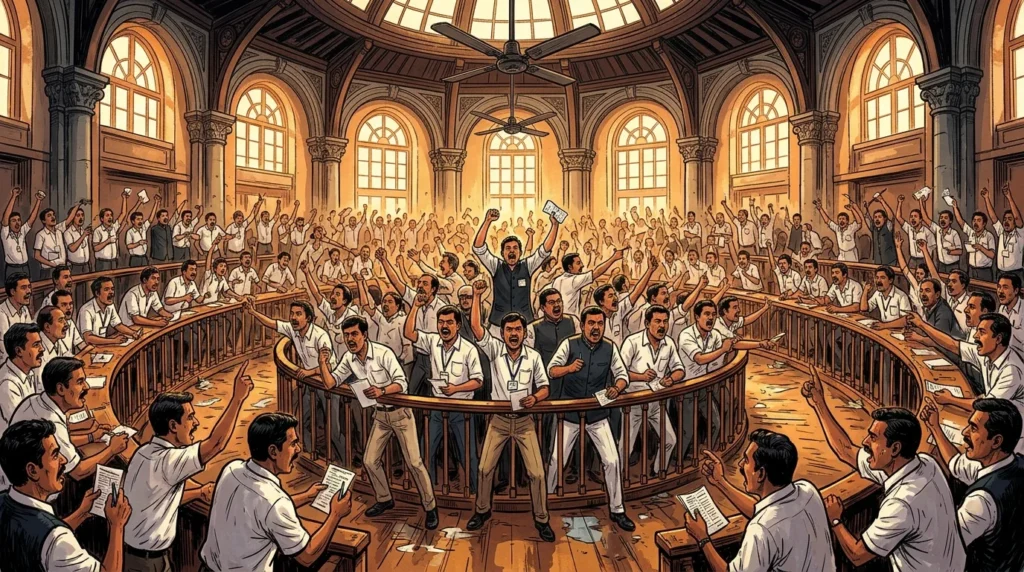
During 1972 and early 1973, flooded with international liquidity following the breakdown of the Bretton Woods gold convertibility system and buoyed by soaring property valuations and commodity prices, SEMS experienced an extraordinary speculative mania. Retail investors—from civil servants and shopkeepers to taxi drivers—queued outside brokerage houses to subscribe to oversubscribed initial public offerings, driving the Fraser’s Industrial Index and the Straits Times Industrial Index up nearly threefold in eighteen months. At the fever pitch of the bubble in February 1973, shares traded at price-to-earnings multiples exceeding 50 to 80 times earnings. [3]
Behind the scenes, however, economic policymakers in Kuala Lumpur and Singapore pursued diverging visions. Malaysia sought to build an autonomous national capital market in Kuala Lumpur to support commodity exporters and restructure corporate equity ownership under its New Economic Policy (NEP), whereas Singapore was rapidly expanding its offshore Asian Dollar Market under the newly created Monetary Authority of Singapore (MAS, established in 1971). On May 8, 1973, Malaysian Finance Minister Tun Tan Siew Sin stunned market participants by announcing to the Malaysian Parliament the immediate termination of the Singapore-Malaysia currency interchangeability arrangement, the imposition of separate Malaysian foreign-exchange regulations, and the dissolution of the joint Stock Exchange of Malaysia and Singapore. [4]
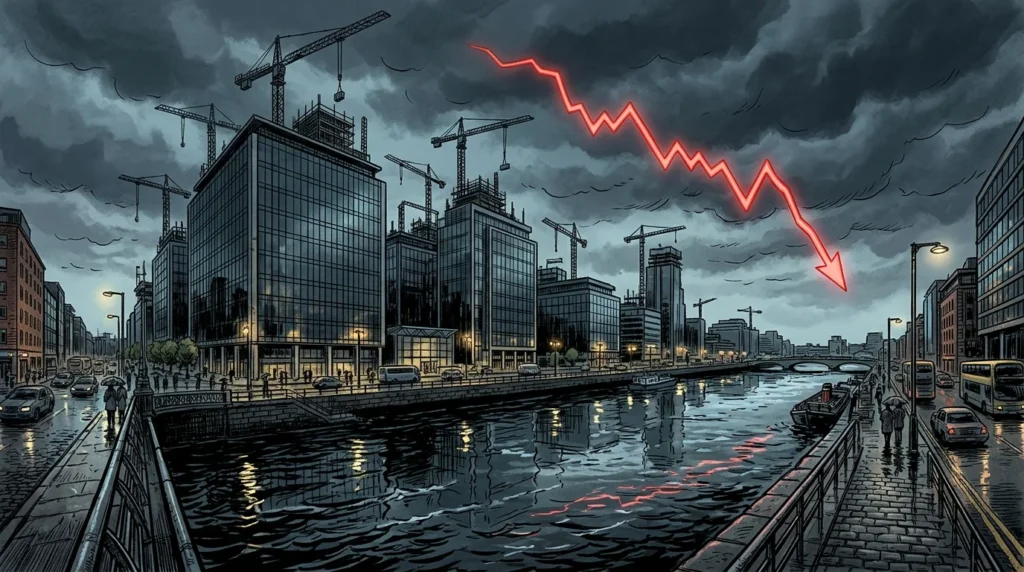
Sixteen days later, on May 24, 1973, Singapore formally incorporated the Stock Exchange of Singapore Limited (SES), which commenced independent trading on June 4, 1973, under the framework of Singapore’s new Securities Industry Act 1973, while Malaysia established the Kuala Lumpur Stock Exchange (KLSE). Coming just as global interest rates rose and the October 1973 OPEC oil embargo struck, the May 1973 market split coincided with a devastating crash: between February 1973 and late 1974, Singapore and Malaysian equity indices plunged by more than 75 percent, wiping out billions of dollars in paper wealth and exposing the fragile accounting of bull-market conglomerates. [5]
Slater Walker Securities and the Stripping of Haw Par Brothers International
No corporate saga better illustrated the excesses of the 1971–1973 bull market—or the regulatory awakening that followed—than the takeover of Haw Par Brothers International Limited by London merchant bank Slater Walker Securities. Founded by the Aw brothers (Aw Boon Haw and Aw Boon Par), the creators of Tiger Balm medicinal ointment, Haw Par Brothers International had listed on the joint exchange in November 1969 holding a fortress balance sheet rich in cash, commercial property, newspaper holdings, and a controlling 31.3 percent equity stake in Chung Khiaw Bank. [6]
In June 1971, the Aw family sold a controlling interest in Haw Par at a steep discount to book value to Slater Walker Securities, led by London’s most celebrated corporate raider and asset-stripper, Jim Slater, alongside his lieutenant Richard Tarling and managing director Donald Ogilvy Watson. Within weeks of seizing control, the Slater Walker directors began dismembering Haw Par’s conservatively valued assets: they abruptly sold Haw Par’s prized stake in Chung Khiaw Bank to Wee Cho Yaw’s United Overseas Bank (UOB) for S$22 million without making a general takeover offer to minority bank shareholders, prompting an outcry that led directly to the drafting of the Singapore Code on Takeovers and Mergers. [7]
Using Haw Par’s cash hoard and freshly issued paper, Slater and Tarling transformed the Tiger Balm company into an aggressive cross-holding vehicle, acquiring stakes in Hong Kong real estate, London investment trusts, and regional mining companies. At its 1973 peak, Haw Par’s market capitalization soared past S$600 million, making it the fifth-largest listed corporation on the Singapore exchange. [8]
The Spydar Hong Kong Affair and Finance Minister Hon Sui Sen’s Crackdown
As the 1973–1974 stock market crash punctured Slater Walker’s empire in Britain and Asia, Slater Walker quietly unloaded its direct shareholding in Haw Par in mid-1974. When Haw Par subsequently attempted an abortive share-swap merger with the Malaysian state enterprise Pernas in May 1975, Singapore regulators and Stock Exchange of Singapore inspectors launched a forensic inquiry into Haw Par’s accounts. On July 29, 1975, Finance Minister Hon Sui Sen rose in the Singapore Parliament to deliver a bombshell ministerial statement exposing systematic breach of trust and corporate self-dealing by Haw Par’s British directors.
Inspectors headed by High Court registrar P. G. Grundy uncovered a secret Hong Kong-registered unit trust and share-dealing company named Spydar Securities Limited—an acronym derived from the initials of six Slater Walker and Haw Par executives, including Jim Slater, Richard Tarling, Donald Ogilvy Watson, and Patrick Goodbody. In 1972, the directors had formed Spydar in Hong Kong specifically for their personal financial benefit. Haw Par’s Hong Kong subsidiary transferred blocks of undervalued shares in a company called Kwan Loong into Spydar at depressed prices; Spydar’s insiders then sold those shares into the roaring Hong Kong bull market, pocketing more than HK$10.7 million (over S$4 million) in secret personal trading profits that were never disclosed to Haw Par’s public shareholders or auditors.
Determined to prove that international financiers could not treat Singapore as a regulatory backwater, Finance Minister Hon Sui Sen and Prime Minister Lee Kuan Yew pursued criminal charges and sought the extradition of Jim Slater and Richard Tarling from the United Kingdom. Although London magistrates declined to extradite Slater, the British House of Lords approved the extradition of former Haw Par chairman Richard Tarling to Singapore in 1979. Convicted in the Singapore High Court of failing to disclose Spydar’s profits in Haw Par’s statutory accounts under the Companies Act, Tarling served six months in Changi Prison—sending an unmistakable signal that transformed corporate disclosure and insider-trading enforcement across the republic.
Dr. Goh Keng Swee and the September 1984 Founding of SIMEX
Having cleaned up equity governance on the Stock Exchange of Singapore after the Haw Par scandal, First Deputy Prime Minister and MAS Chairman Dr. Goh Keng Swee turned in the early 1980s toward creating a high-velocity international derivatives marketplace to complement Singapore’s Asian Dollar Market. Since 1978, Singapore had operated the Gold Exchange of Singapore (GES), a modest five-member gold futures market plagued by thin liquidity and governance lapses among unregulated gold brokers.
In 1982, MAS intervened to overhaul the Gold Exchange and invited executives from the Chicago Mercantile Exchange (CME)—led by Leo Melamed, the visionary architect of the CME’s International Monetary Market (IMM)—to advise on restructuring the exchange into a full-fledged financial futures market. Reorganized as the Singapore International Monetary Exchange (SIMEX), Asia’s first financial futures exchange opened for gold futures trading in July 1984 and officially launched financial futures trading on September 7, 1984.
The World’s First Cross-Time-Zone Mutual Offset System with Chicago
The defining institutional breakthrough of the September 7, 1984 launch was the inauguration of the CME-SIMEX Mutual Offset System (MOS)—the first cross-border, cross-time-zone clearing link in the history of global financial exchanges. Thirteen hours ahead of Chicago Central Time, Singapore occupied the waking business hours corresponding to Chicago’s overnight close. Before electronic trading existed, global banks holding massive Eurodollar interest-rate or currency exposure in London, Tokyo, or New York could not hedge or unwind CME futures positions while North America slept.
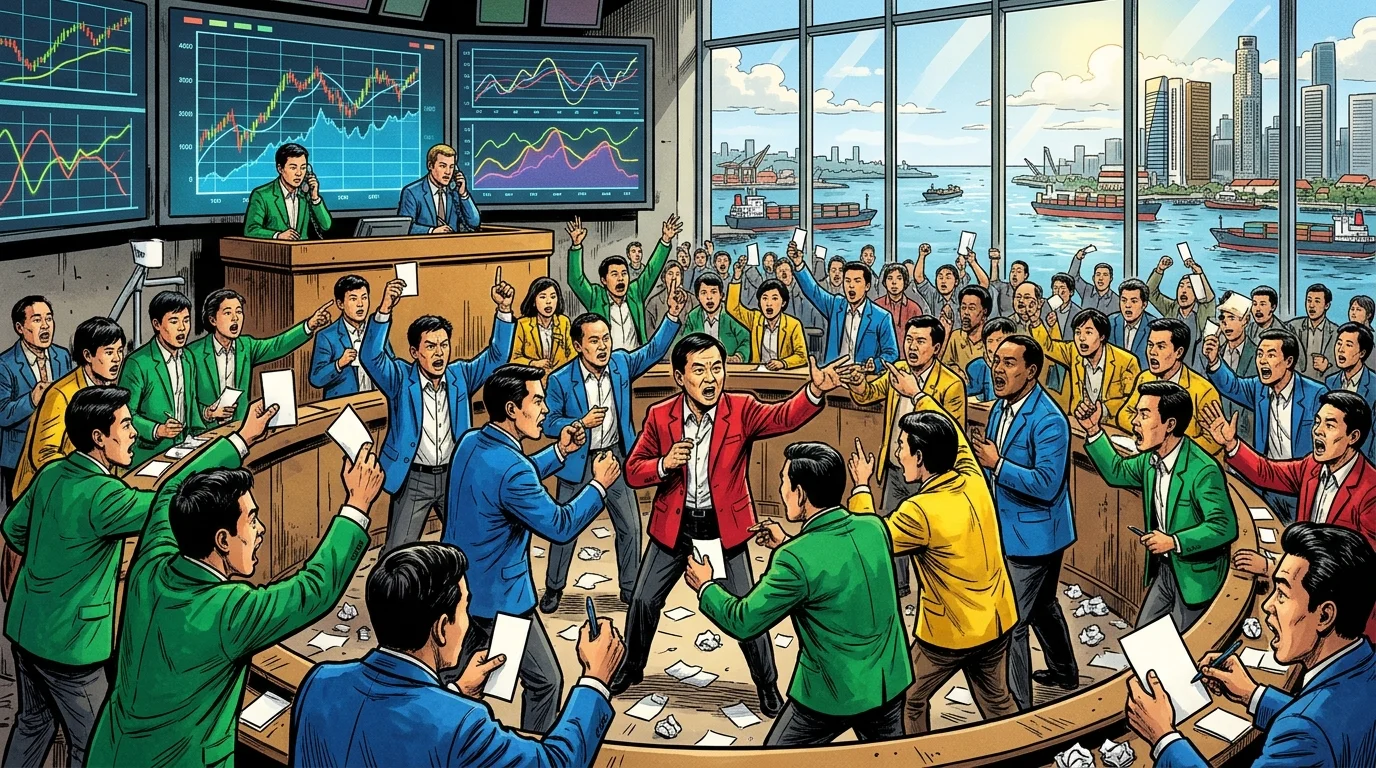
Under the Mutual Offset System designed by Melamed and MAS officials (including Ng Kok Song, SIMEX’s founding chairman), SIMEX adopted the CME’s exact open-outcry pit rules, daily mark-to-market margining, and clearinghouse “common bond” guarantee system, under which all clearing members stood jointly liable to preserve clearinghouse solvency. A trader could open a three-month Eurodollar time-deposit futures contract or a Deutsche Mark / Japanese Yen currency contract in the SIMEX pit in Singapore during the Asian day and seamlessly transfer that exact contract to the CME clearinghouse in Chicago—allowing the position to be closed out in Chicago during US trading hours with a single margin deposit and without double brokerage fees.
In September 1986, SIMEX achieved a second historic coup by launching the world’s first stock-index futures contract on Japan’s benchmark Nikkei 225 Index two years before Japanese regulators permitted index futures trading in Osaka. That Nikkei 225 contract—later famous globally when rogue Barings trader Nick Leeson accumulated unauthorized losses on SIMEX in 1995, a crisis during which SIMEX’s CME-modeled margining and clearinghouse protections kept the exchange completely solvent without losing a cent of clearinghouse capital—cemented Singapore’s preeminence in Asian risk management. On December 1, 1999, the Stock Exchange of Singapore (SES) and SIMEX merged to create the integrated Singapore Exchange (SGX), uniting the two institutional pillars forged in 1973 and 1984.
Theoretical & Balance-Sheet Transmission Mechanism
In the Kindleberger–Minsky taxonomy of financial instability (Kindleberger, 1978; Minsky, 1986) and Irving Fisher’s (1933) debt-deflation framework, speculative asset booms become systemic crises when credit expansion shifts balance sheets from hedge finance (cash flows covering principal and interest) to speculative and Ponzi finance (relying on rising asset prices and short-term margin roll-overs).
Once monetary tightening or an exogenous shock halts price appreciation, forced margin liquidations trigger Fisherian debt-deflation: fire-sale asset discounts erode bank collateral values, contracting credit supply across the real economy.
Sources and Further Reading
- National University of Singapore (Malaya Law Review), “ The Securities Industry Act 1973 and the Separation of the Stock Exchange of Malaysia and Singapore,” Malaya Law Review (National University of Singapore), 1973. Peer-Reviewed / Academic Research
- Singapore Management University School of Law, “ Securities Regulation and Corporate Governance in Singapore: From the 1973 SES Split to the Haw Par Affair,” SMU Yong Pung How School of Law Research Repository, 2020. Peer-Reviewed / Academic Research
- Haw Par Corporation Limited, “ Our Heritage: Haw Par Brothers International,” Haw Par Corporation Limited, 2024. Historical & Financial Reference
- National Archives of Singapore, “ Speech by Finance Minister Dr. Richard Hu on Financial Futures and the Evolution of SIMEX,” National Archives of Singapore, 1996-10-29. Official / State Archive
- Monetary Authority of Singapore, “ Remarks at the SIMEX Hall of Fame Dinner (30th Anniversary of SIMEX),” Monetary Authority of Singapore, 2014-09-05. Official / State Archive
- University of Chicago Becker Friedman Institute, “ Leo Melamed: Architect of Financial Futures and the 1984 CME-SIMEX Mutual Offset Link,” University of Chicago, 2023. Peer-Reviewed / Academic Research
- Irving Fisher — "The Debt-Deflation Theory of Great Depressions," Econometrica 1, no. 4 (FRASER Federal Reserve Archive, 1933): 337–357 Central Bank / Monetary Authority
- Charles P. Kindleberger & Robert Z. Aliber — Manias, Panics, and Crashes: A History of Financial Crises (Palgrave Macmillan) Peer-Reviewed / Academic Research
Cite This Historical Dossier (APA / Chicago)
APA (7th ed.): Ç., S. (Ed.). (2026). Singapore's Market Evolution: The 1973 SEMS Split, Haw Par Scandal, and 1984 SIMEX Launch. In Forgotten Fortunes Historical Monograph Series (Forgotten Fortunes Editorial Desk). https://forgottenfortunes.net/singapore-capital-markets-haw-par-simex/
MLA (9th ed.): Ç., Soner, ed. "Singapore's Market Evolution: The 1973 SEMS Split, Haw Par Scandal, and 1984 SIMEX Launch." Forgotten Fortunes: Financial & Monetary History Archive, 2026, https://forgottenfortunes.net/singapore-capital-markets-haw-par-simex/.
Chicago (17th ed.): Ç., Soner, ed. "Singapore's Market Evolution: The 1973 SEMS Split, Haw Par Scandal, and 1984 SIMEX Launch." Forgotten Fortunes Historical Monograph Series (Forgotten Fortunes Editorial Desk), September 15, 2026. https://forgottenfortunes.net/singapore-capital-markets-haw-par-simex/.
Have an idea for another financial history documentary or article? Request a story →