In This Article
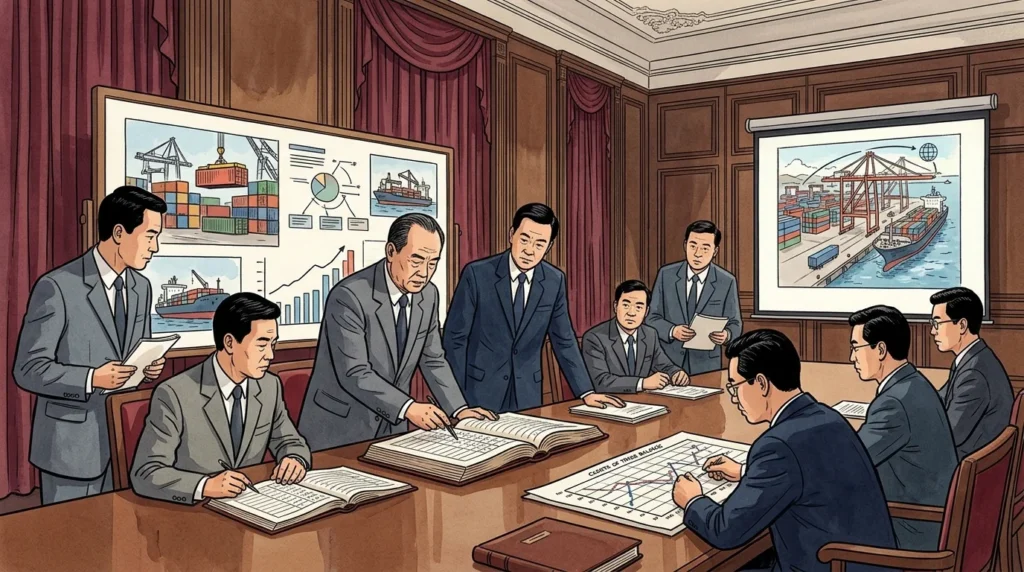
In the final weeks of 1997, the monetary architecture that had underpinned South Korea’s post-war industrial miracle disintegrated inside a matter of days. Crushed by a wave of conglomerate bankruptcies and a sudden refusal by international banks to roll over short-term dollar loans, the Bank of Korea burned through almost its entire stockpile of liquid foreign exchange defending a managed currency band. By mid-December 1997, South Korea’s usable foreign reserves had dwindled to just $3.9 billion—barely enough to cover two weeks of imports—while the Korean won plummeted from roughly 844 per US dollar at the start of the year toward an all-time low of 1,965 per dollar on December 23, 1997. [1]
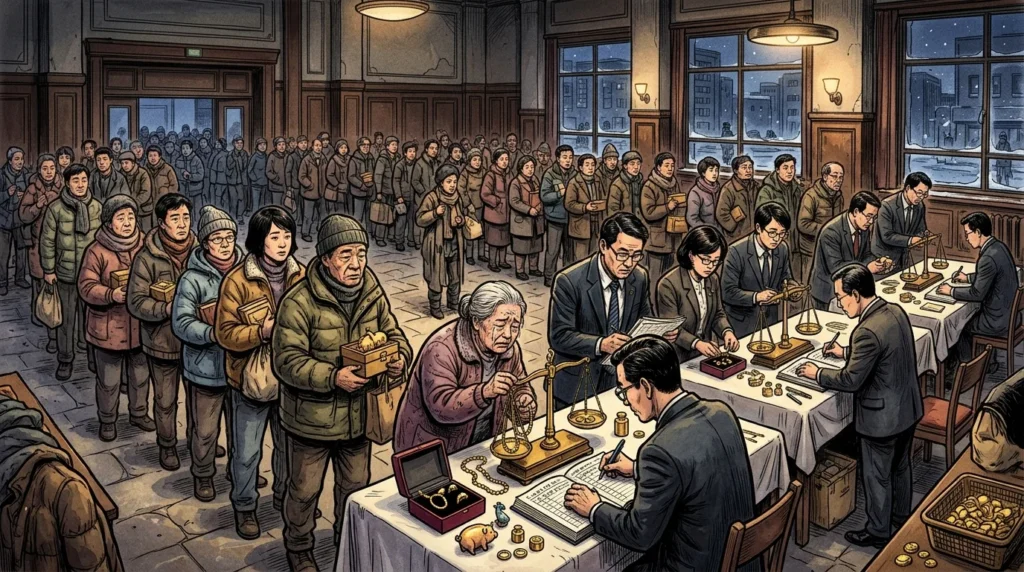
Out of that near-default emerged a sweeping reconstruction of South Korean monetary governance and one of the most remarkable episodes of civic financial mobilization in modern history. On December 16, 1997, Seoul abolished its daily exchange-rate fluctuation band and floated the won freely. Weeks later, in January 1998, some 3.51 million South Korean citizens voluntarily queued in freezing weather to contribute 227 metric tons of wedding rings, family heirlooms, and gold bars worth $2.17 billion—helping the country repay its $58.4 billion International Monetary Fund (IMF) rescue package three years ahead of schedule in August 2001. Simultaneously, the wholly amended Bank of Korea Act of April 1998 established central bank independence and formal Consumer Price Index (CPI) inflation targeting, setting the stage for the 2004–2006 national debate over whether to strip three zeros from the Korean won. [2]
From the Market Average System to the December 16, 1997 Free-Float
For decades after the 1962 currency conversion, South Korea had tightly regulated the value of the won, shifting from a dollar peg to a multiple-currency basket peg in February 1980. In March 1990, as trade surpluses and capital flows expanded, the government introduced the Market Average Exchange Rate System (MARS). Under MARS, the daily basic exchange rate of the won against the US dollar was calculated as the volume-weighted average of interbank spot transactions from the previous business day, and intraday trading was restricted within a narrow daily fluctuation band—initially set at ±0.4 percent and gradually widened to ±2.25 percent by the mid-1990s. [3]
This quasi-pegged regime created a fatal moral hazard when South Korea partially liberalized capital-account borrowing to join the OECD in 1996. Convinced that the Bank of Korea would prevent sharp currency depreciation, South Korean commercial banks and thirty weakly supervised merchant banking corporations (jonggeumsa) borrowed tens of billions of dollars in short-term offshore interbank markets and lent the proceeds long-term to heavily indebted domestic conglomerates (chaebol) and Asian emerging-market borrowers. [4]
Beginning in January 1997, a cascade of giant corporate insolvencies—starting with Hanbo Steel under 5 trillion won in debts, followed by Sammi Steel, Jinro Group, Dainong, and Kia Motors—saddled domestic banks with massive non-performing loans. After Thailand floated the baht in July 1997 and Hong Kong’s equity market convulsed in October, foreign creditor banks panicked over South Korea’s $100 billion in short-term external liabilities and refused to roll over maturing credit lines. [5]
Rather than letting the won depreciate immediately, the Bank of Korea committed its official reserves to forward-market interventions and emergency foreign-currency deposits at overseas branches of Korean commercial banks. On November 19, 1997, authorities widened the daily MARS exchange-rate band from ±2.25 percent to ±10 percent, yet the won instantly hit the lower 10 percent limit day after day, halting interbank trading. On December 3, 1997, with sovereign default imminent, Seoul signed a record $58.4 billion international rescue package led by the IMF ($21 billion standby credit, later Drawn to $19.5 billion), the World Bank ($10 billion), the Asian Development Bank ($4 billion), and G7 bilateral “second line of defense” commitments. [6]
Even after the December 3 IMF signing, leaked figures revealing that South Korea’s usable foreign reserves—excluding illiquid deposits trapped in insolvent overseas commercial bank branches—had fallen to just $3.9 billion triggered a secondary run on the currency. On December 16, 1997, the Ministry of Finance and Economy and the Bank of Korea permanently abolished the daily fluctuation band, moving the Korean won to a free-floating exchange rate regime. Deprived of artificial floors, the won plunged to an intraday low of 1,965 per US dollar on December 23, 1997, before an emergency Christmas Eve agreement with Wall Street and European banks to roll over and convert $22 billion in short-term interbank debt stabilized the currency near 1,300 to 1,400 won per dollar in early 1998. [7]
| Documented Figure / Metric | Historical Significance & Archival Context |
|---|---|
| 23 percent | Between January and April 1998, approximately 3.51 million South Koreans—representing roughly 23 percent of the nation's 15 million households, with 2.27 million citizens participating in the initial January–February banking wave alone—contributed 227 metric tons of gold. |
| $2.17 billion | While $2.17 billion represented a modest fraction of South Korea's total external debt, its psychological impact on global bond markets was transformative. |
| 2006, Bank | Upon taking office in April 2002 for a four-year term ending in March 2006, Bank of Korea Governor Park Seung launched an ambitious campaign for currency redenomination (ri-de-no-mi-ne-i-syeon). |
The 1998 Citizens’ Gold-Collecting Campaign ($2.17 Billion)
Because gold functioned as internationally accepted bullion that could be refined and sold directly for US dollars on the London Bullion Market, South Korean households held an untapped reserve of foreign exchange inside their dressers and safe-deposit boxes. Traditional Korean customs prized 24-karat pure gold—especially dol-banji (one-don, or 3.75-gram, gold rings gifted to infants on their first birthday), wedding bands, longevity rings, and commemorative keys. [8]
On January 5, 1998, weeks after opposition leader Kim Dae-jung won the December 18, 1997 presidential election, the Korean Broadcasting System (KBS), major newspapers, civic groups, and commercial banks—led by the Housing & Commercial Bank and the National Agricultural Cooperative Federation (NongHyup)—launched the nationwide Gold-Collecting Campaign (Geum Moeugi Undong). Live television broadcasts tracked daily tonnage tallies across the country as housewives, factory workers, schoolchildren, religious leaders, and corporate executives stood in long winter queues to surrender their personal gold. [9]
Participants were not all required to make outright gifts, though tens of thousands donated rings and medals unconditionally; most citizens either sold their gold for Korean won at prevailing market rates or consigned it in exchange for gold-backed bank passbooks and bonds, willingly sacrificing the hard-currency hedge of physical bullion at the height of a currency crash. President-elect Kim Dae-jung donated miniature gold lucky keys from his office, while athletes surrendered Olympic and Asian Games gold medals.
Between January and April 1998, approximately 3.51 million South Koreans—representing roughly 23 percent of the nation’s 15 million households, with 2.27 million citizens participating in the initial January–February banking wave alone—contributed 227 metric tons of gold. That single civic drive gathered nearly half of the estimated 500 metric tons of private gold held in South Korean homes. Melted down into standardized 99.99 percent pure gold ingots by Korea Zinc and LG Metals and exported by the trading arms of Samsung, Daewoo, and LG, the 227 tons generated $2.17 billion (often recorded between $2.13 billion and $2.17 billion depending on spot gold settlements) in immediate foreign exchange.
While $2.17 billion represented a modest fraction of South Korea’s total external debt, its psychological impact on global bond markets was transformative. Foreign creditors saw a population willing to mobilize private household wealth to honor national obligations. Combined with a dramatic current-account turnaround—which produced a $40 billion trade surplus in 1998—and aggressive corporate and banking restructuring, South Korea rebuilt its foreign exchange reserves past $96 billion by 2001. On August 23, 2001, South Korea paid off the final installment of its $19.5 billion IMF standby loan, exiting IMF tutelage nearly three years ahead of the original May 2004 deadline.
The April 1998 Bank of Korea Act and CPI Inflation Targeting
Alongside the free-floating won, the IMF rescue agreement required a foundational overhaul of South Korea’s central bank. Since the military coup of 1961 and the 1962 amendment of the Bank of Korea Act, the central bank had been legally subordinated to the Ministry of Finance: the Minister of Finance chaired the Monetary Policy Committee, directed subsidized policy loans to favored industries, and targeted broad monetary aggregates (such as M2) rather than price stability.
On December 31, 1997, the National Assembly passed the wholly amended Bank of Korea Act (Act No. 5491), which entered into force on April 1, 1998. The revised charter abolished the dual mandate of “maintaining the stability of the value of money and furthering the soundness of the banking and credit system” and replaced it in Article 1 with a single overriding objective: pursuing price stability. Second, the law stripped the Minister of Finance and Economy of the chairmanship of the Monetary Policy Committee and transferred that chair directly to the Governor of the Bank of Korea, establishing institutional independence for monetary policy. Simultaneously, banking supervision was carved out of the central bank and consolidated with securities and insurance oversight into the unified Financial Supervisory Commission (FSC) and Financial Supervisory Service (FSS).
Under Article 6 of the 1998 Act, the Bank of Korea formally abandoned M2 monetary-aggregate targeting and introduced explicit Consumer Price Index (CPI) inflation targeting. Beginning in 1998, the central bank set an annual inflation target in consultation with the government (initially 9.0 ± 1.0 percent amid the 1998 import-price shock, lowered to 3.0 ± 1.0 percent by 1999) and shifted its operational instrument to the overnight interbank call rate (later formalized as the BOK Base Rate in 2008). Despite the won’s nearly 50 percent depreciation in late 1997, tight monetary discipline and the new inflation-targeting regime contained consumer price inflation to 7.5 percent in 1998 and brought it down to 0.8 percent in 1999—the lowest post-devaluation inflation pass-through of any major emerging-market currency crisis of the 1990s.
The 2004–2006 Won Redenomination Debate and the 50,000-Won Note
Once inflation targeting and a floating exchange rate anchored South Korea’s macroeconomy in the early 2000s, attention turned to a peculiar legacy of the country’s twentieth-century inflations: the unwieldy nominal unit of the Korean won. Untouched since the June 1962 currency conversion (when 10 hwan became 1 won), cumulative price growth over four decades meant that the won traded near 1,000 to 1,200 per US dollar, the highest banknote denomination was a 10,000-won bill worth roughly $8.50 to $10, and annual financial clearing transactions across Korean institutions reached 3 quadrillion won (3,000,000,000,000,000 won).
Upon taking office in April 2002 for a four-year term ending in March 2006, Bank of Korea Governor Park Seung launched an ambitious campaign for currency redenomination (ri-de-no-mi-ne-i-syeon). In 2004, the BOK’s Currency Issue Department completed comprehensive blueprints proposing a 1,000-to-1 redenomination: stripping three zeros so that 1,000 old won would become 1 new unit (potentially reviving the historical name hwan or issuing “new won” notes of 1, 5, 10, 50, and 100 alongside fractional coins). Proponents led by Governor Park argued that South Korea—then the world’s tenth-largest economy and the only OECD member beside Japan with a four-digit dollar exchange rate—needed to eliminate quadrillion-won accounting figures, stop the costly practice of commercial banks printing millions of 100,000-won cashier’s checks (jagiap supyo) every day for cash transactions, and elevate the international standing of the currency by 2008.
Between 2004 and 2006, however, the redenomination blueprint collided with fierce resistance from the Ministry of Finance and Economy under President Roh Moo-hyun as well as lawmakers and retail associations. Critics raised three decisive objections: first, the “menu rounding effect,” whereby merchants converting a 1,800-won item to 1.8 new won would round prices up to 2.0, stoking perceived consumer inflation; second, the risk that wealthy holders of untaxed underground cash would rush to dump paper money into real estate, gold, and US dollars to avoid tax scrutiny during mandatory note exchanges; and third, the hundreds of billions of won required to recalibrate ATMs, vending machines, and corporate accounting software.
When Governor Park Seung completed his term in March 2006 without securing presidential or legislative approval, the Bank of Korea shelved the 1,000-to-1 redenomination project. Instead, in 2007 the government and the central bank compromised on a non-disruptive alternative: leaving the par value of the won unchanged while introducing a high-value 50,000-won banknote featuring sixteenth-century artist Shin Saimdang in June 2009—preserving the post-1998 monetary stability framework without risking a redenomination shock.
Theoretical & Balance-Sheet Transmission Mechanism
In the Kindleberger–Minsky taxonomy of financial instability (Kindleberger, 1978; Minsky, 1986) and Irving Fisher’s (1933) debt-deflation framework, speculative asset booms become systemic crises when credit expansion shifts balance sheets from hedge finance (cash flows covering principal and interest) to speculative and Ponzi finance (relying on rising asset prices and short-term margin roll-overs).
Once monetary tightening or an exogenous shock halts price appreciation, forced margin liquidations trigger Fisherian debt-deflation: fire-sale asset discounts erode bank collateral values, contracting credit supply across the real economy.
Sources and Further Reading
- Bank of Korea, “Exchange Rate System and Foreign Exchange Market,” Bank of Korea Official Website. Historical & Financial Reference
- Asian Development Bank, “Republic of Korea: Macroeconomic Management and the 1997 Exchange Rate Regime Shift,” Asian Development Bank / Asia Regional Integration Center. Historical & Financial Reference
- Presidential Committee for National Cohesion, Republic of Korea, “Moments of Great Cohesion: Gold Collection Campaign during the 1997 IMF Financial Crisis,” Presidential Archives of Korea. International Financial Institution
- Academy of Korean Studies, “The IMF Economic Crisis and Gold Collection Movement,” Korea100 Digital Archive, Academy of Korean Studies. International Financial Institution
- Korea Legislation Research Institute, “Bank of Korea Act (Wholly Amended by Act No. 5491, Dec. 31, 1997; Effective April 1, 1998),” Statutes of the Republic of Korea. Historical & Financial Reference
- Bank of Korea, “General Principles of Monetary Policy Operation and Inflation Targeting,” Bank of Korea Official Website. Historical & Financial Reference
- Kim Yon-se, “[News Focus] Korean currency’s par value remains untouched for 57 years,” The Korea Herald, March 26, 2019. Historical & Financial Reference
- Irving Fisher — "The Debt-Deflation Theory of Great Depressions," Econometrica 1, no. 4 (FRASER Federal Reserve Archive, 1933): 337–357 Central Bank / Monetary Authority
- Charles P. Kindleberger & Robert Z. Aliber — Manias, Panics, and Crashes: A History of Financial Crises (Palgrave Macmillan) Peer-Reviewed / Academic Research
Cite This Historical Dossier (APA / Chicago)
APA (7th ed.): Ç., S. (Ed.). (2026). The 1997 Won Free-Float, Citizens' Gold Drive, and Korea's Monetary Overhaul. In Forgotten Fortunes Historical Monograph Series (Forgotten Fortunes Editorial Desk). https://forgottenfortunes.net/south-korea-1997-currency-crisis/
MLA (9th ed.): Ç., Soner, ed. "The 1997 Won Free-Float, Citizens' Gold Drive, and Korea's Monetary Overhaul." Forgotten Fortunes: Financial & Monetary History Archive, 2026, https://forgottenfortunes.net/south-korea-1997-currency-crisis/.
Chicago (17th ed.): Ç., Soner, ed. "The 1997 Won Free-Float, Citizens' Gold Drive, and Korea's Monetary Overhaul." Forgotten Fortunes Historical Monograph Series (Forgotten Fortunes Editorial Desk), September 14, 2026. https://forgottenfortunes.net/south-korea-1997-currency-crisis/.
Have an idea for another financial history documentary or article? Request a story →