In This Article
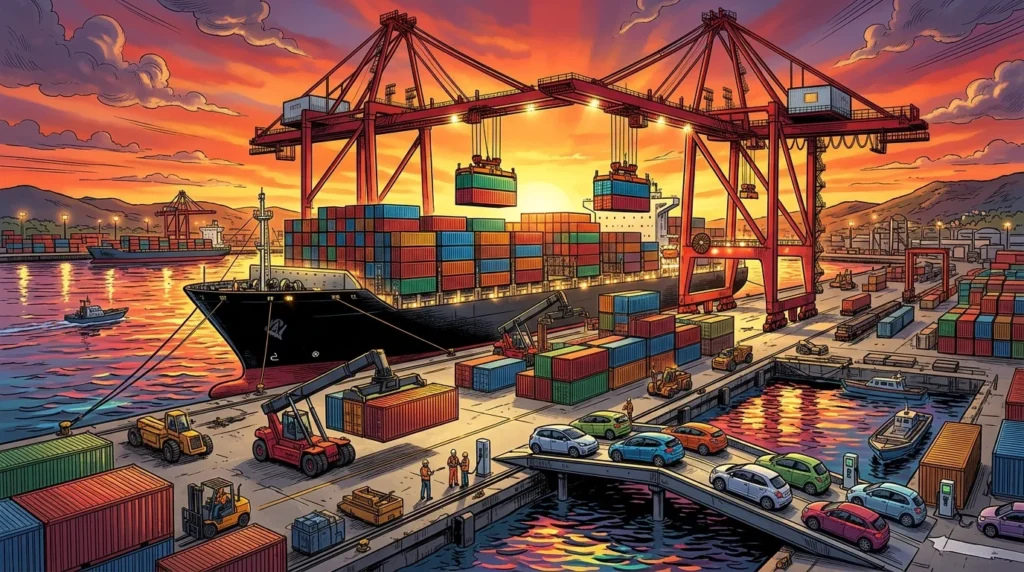
On May 16, 1995, United States Trade Representative Mickey Kantor stepped before television cameras in Washington and announced the largest unilateral trade retaliation threat of the post-Cold War era: a 100 percent punitive tariff on 13 models of Japanese luxury automobiles, valued at $5.9 billion per year. Targeting the flagship sedans of Toyota’s Lexus, Nissan’s Infiniti, Honda’s Acura, Mitsubishi, and Mazda divisions, the sanction under Section 301 of the US Trade Act of 1974 was designed to double showroom prices overnight and force Tokyo to accept numerical targets for American vehicles and replacement auto parts. Instead of capitulating as it had during the “voluntary export restraints” of the 1980s, Japan’s Ministry of International Trade and Industry (MITI), led by Minister Ryutaro Hashimoto, refused to guarantee government-managed market shares and immediately filed a formal legal challenge against the United States before the five-month-old World Trade Organization (WTO). [1]
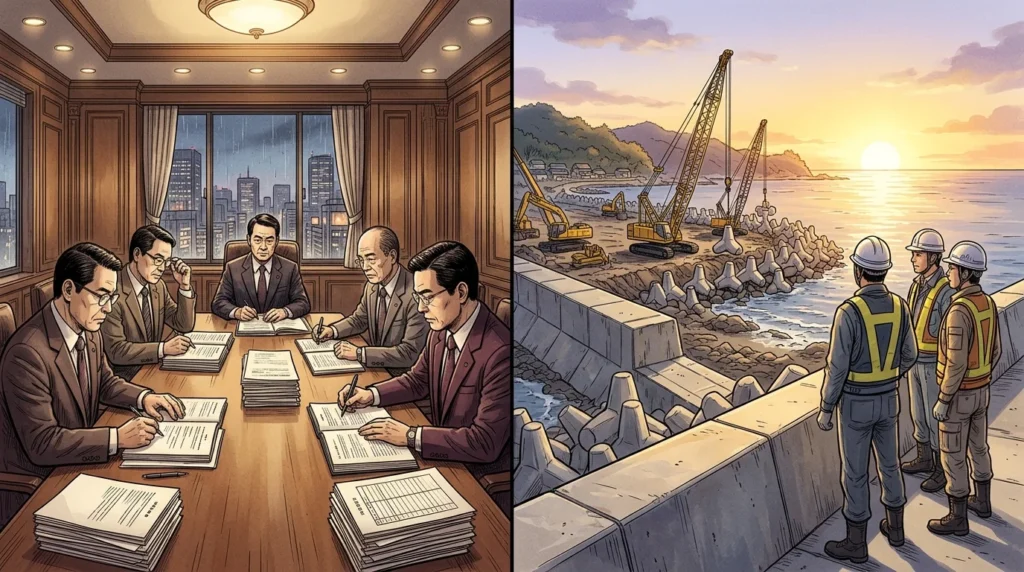
The eleventh-hour compromise reached by Hashimoto and Kantor in Geneva on June 28, 1995 marked the historic high-water mark—and effective end—of decades of bilateral US–Japan managed-trade brinkmanship. Yet the 1995 auto confrontation also accelerated a deeper structural transformation in Japanese capitalism. By shifting assembly plants across North America and East Asia to bypass tariff walls and currency surges, Japanese manufacturers hollowed out domestic export production. When the March 2011 Fukushima nuclear disaster and a post-crisis yen surge to 75.5 yen per dollar collided with this offshored supply chain, Japan recorded its first annual merchandise trade deficit in 31 years—completing its evolution from an export-surplus workshop into a mature creditor economy sustained by primary investment income from abroad. [2]
From Voluntary Export Restraints to the 1993 Framework Talks
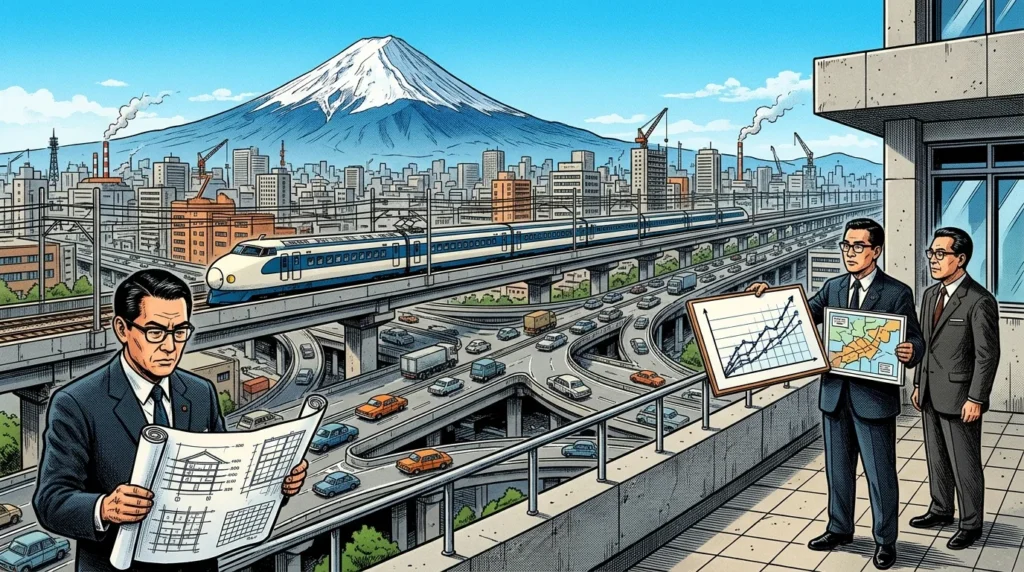
For a quarter-century prior to 1995, bilateral trade friction between Washington and Tokyo revolved around Japan’s expanding merchandise trade surplus, which reached $65.7 billion with the United States in 1994—roughly 60 percent of which consisted of automobiles and automotive components. Throughout the 1970s and 1980s, successive US administrations had addressed import competition through bilateral “orderly marketing agreements” and the 1981 automotive Voluntary Export Restraint (VER), which initially capped Japanese passenger car shipments to the United States at 1.68 million units annually, alongside the 1986 US–Japan Semiconductor Agreement that established a 20 percent foreign market-share benchmark in Japan. [3]
When President Bill Clinton took office in January 1993 amid a soaring yen and intense lobbying from Detroit’s Big Three automakers (General Motors, Ford, and Chrysler), Washington sought a “results-oriented” trade policy. In July 1993, President Clinton and Prime Minister Kiichi Miyazawa signed the US–Japan Framework for a New Economic Partnership, designating automotive trade as the centerpiece of bilateral negotiations. American negotiators argued that Japan’s system of exclusive dealer networks (keiretsu distribution ties) and stringent safety inspection regulations (shaken) locked competitive American cars and aftermarket parts out of Japan, where imported vehicles held barely 4 to 5 percent of the domestic market. [4]
Inside MITI, however, a new generation of trade bureaucrats accompanied by Minister Ryutaro Hashimoto concluded that the 1986 semiconductor benchmark had been a strategic blunder: Washington had treated an indicative 20 percent expectation as a legally binding promise backed by retaliatory tariffs. Tokyo vowed never again to accept government-enforced “numerical targets” (sūchi mokuhyō) that required state bureaucrats to coerce private corporations into purchasing foreign components. [5]
| Documented Figure / Metric | Historical Significance & Archival Context |
|---|---|
| 20 percent | Inside MITI, however, a new generation of trade bureaucrats accompanied by Minister Ryutaro Hashimoto concluded that the 1986 semiconductor benchmark had been a strategic blunder: Washington had treated an indicative 20 percent expectation as a legally binding promise backed by retaliatory tariffs. |
| 100 percent | On May 16, 1995, USTR Mickey Kantor unveiled a retaliatory sanction list imposing a 100 percent ad valorem duty on 13 specific Japanese luxury passenger car models imported with a customs value exceeding $23,000. |
| 79.75 yen | Meanwhile, in mid-April 1995, currency chaos underscored the financial stakes as the Japanese yen briefly surged to a postwar record of 79.75 yen per US dollar. |
| $6.75 billion | Paragraph 1 recorded that the US government independently projected that American automakers would secure 200 new Japanese sales outlets by the end of 1996 and 1,000 outlets by 2000, while USTR separately estimated that Japanese purchases of US auto parts would rise by $6.75 billion. |
The May 1995 Section 301 Sanction List: $5.9 Billion in Luxury Cars
After twenty months of deadlocked Framework negotiations collapsed at Whistler, British Columbia in early May 1995, the Clinton administration invoked Section 301 of the Trade Act of 1974. On May 16, 1995, USTR Mickey Kantor unveiled a retaliatory sanction list imposing a 100 percent ad valorem duty on 13 specific Japanese luxury passenger car models imported with a customs value exceeding $23,000. The targeted models were five Lexus vehicles (LS 400, SC 400, GS 300, SC 300, and ES 300), three Infiniti vehicles (Q45, J30, and G20), two Acura models (Legend and 3.2TL), two Mazda models (929 and Millenia), and the Mitsubishi Diamante. [6]
Unlike mass-market compacts such as the Honda Civic or Toyota Camry—which by 1995 were heavily manufactured inside the United States at plants in Ohio and Kentucky—Japanese luxury sedans were still assembled almost exclusively in domestic Japanese factories and shipped across the Pacific, generating roughly $5.9 billion in annual import value and the lion’s share of Japanese automakers’ profit margins. Under Kantor’s order, the US Customs Service began requiring importers to post bonds or withhold customs liquidation effective May 20, 1995, with final collection of the 100 percent tariff scheduled to take effect at midnight on June 28, 1995 unless Tokyo yielded. [7]
Japan’s Multilateral Counter-Offensive at the WTO
Washington calculated that the prospect of losing the lucrative US luxury car market would compel Toyota, Nissan, and Honda to pressure MITI into accepting quantitative targets. Instead, Tokyo turned the newly established multilateral trading rules against American unilateralism. The World Trade Organization had officially replaced the General Agreement on Tariffs and Trade (GATT) on January 1, 1995, introducing a binding Dispute Settlement Understanding (DSU) that prohibited member states from imposing unilateral tariff increases above bound GATT rates without prior WTO authorization. [8]
On May 17, 1995—within twenty-four hours of Kantor’s announcement—Japan formally requested urgent dispute-settlement consultations with the United States at the WTO in Geneva, charging that the threatened 100 percent tariffs blatantly violated Articles I and II of the GATT and Article 23 of the WTO Dispute Settlement Understanding. European Union trade commissioner Sir Leon Brittan and Asian exporting nations publicly criticized Washington’s unilateral use of Section 301, warning that bypassing the WTO in its first major test could destroy the new global trade body in its infancy. Meanwhile, in mid-April 1995, currency chaos underscored the financial stakes as the Japanese yen briefly surged to a postwar record of 79.75 yen per US dollar. [9]
The June 28, 1995 Geneva Compromise
With the June 28 sanction deadline hours away, Kantor and Hashimoto met in Geneva for marathon ministerial negotiations. Hashimoto—whose combative posture and refusal to blink earned him domestic acclaim that propelled him to the presidency of the Liberal Democratic Party later that year and the prime ministership in January 1996—maintained an unyielding line: the Japanese government would not sign or guarantee any numerical purchase quotas.
Hours before the midnight deadline on June 28, 1995, the two ministers announced a face-saving compromise that averted the tariff war and led both sides to withdraw their WTO complaints. Rather than binding government commitments, Japan’s five largest automakers (Toyota, Nissan, Honda, Mazda, and Mitsubishi) voluntarily published autonomous “global business plans” outlining their intentions to expand North American vehicle production from 2.1 million to 2.65 million units by 1998 and to increase purchases of foreign parts. Simultaneously, MITI agreed to deregulate portions of Japan’s shaken vehicle inspection system to make aftermarket repairs less restrictive and confirmed that Japanese automobile dealers were free to sign multi-brand franchise agreements with American carmakers.
The legal heart of the Geneva settlement was captured in the official Joint Announcement on Dealerships signed on June 28, 1995. Paragraph 1 recorded that the US government independently projected that American automakers would secure 200 new Japanese sales outlets by the end of 1996 and 1,000 outlets by 2000, while USTR separately estimated that Japanese purchases of US auto parts would rise by $6.75 billion. Directly beneath, Paragraph 2 stated explicitly that “Minister Hashimoto said that the Government of Japan has had no involvement in this forecast because it is beyond the scope and responsibility of government. Minister Hashimoto said that these forecasts are solely those of the Government of the U.S.” Unilateral numerical managed trade was dead; future trade disputes shifted decisively into the legal panels of the WTO.
Asian Supply Chains and the 2011–2015 Trade Deficit Reversal
Ironically, the corporate strategy that Japanese automakers and electronics giants accelerated after the 1995 tariff crisis and yen shock permanently altered Japan’s external balance of payments. Over the following fifteen years, Japanese multinationals systematically relocated final assembly and mid-tier component manufacturing to the United States, China, Thailand, and across the ASEAN region. Instead of exporting finished consumer goods from domestic ports, factories in Japan specialized in exporting high-value intermediate capital goods, precision machinery, and semiconductor materials to Asian subsidiaries for final assembly.
This structural shift remained partially masked by strong global capital-goods demand until two massive shocks struck between 2008 and 2011. First, following the 2008 global financial crisis, safe-haven capital inflows drove the Japanese yen from over 110 yen per dollar in 2007 to an all-time nominal peak of 75.54 yen per dollar in October 2011, severely squeezing the price competitiveness of domestic exporters. Second, on March 11, 2011, the Great East Japan Earthquake and the Fukushima Daiichi nuclear meltdown shattered domestic supply chains and led to the gradual shutdown of all 54 of Japan’s commercial nuclear power reactors. To replace lost nuclear baseload electricity, Japanese utilities imported massive volumes of liquefied natural gas (LNG), crude oil, and thermal coal at elevated global prices.
In January 2012, the Ministry of Finance reported that Japan had recorded a merchandise trade deficit of 2.49 trillion yen ($32 billion) for calendar year 2011—its first annual trade deficit in 31 years, since the 1980 second oil shock. Even more remarkably, after Prime Minister Shinzo Abe and Bank of Japan Governor Haruhiko Kuroda launched aggressive monetary easing (“Abenomics”) in late 2012—driving the yen down from around 80 per dollar to over 120 per dollar by 2015—Japan’s merchandise trade deficit did not immediately vanish, swelling instead to a record 12.8 trillion yen in 2014 before narrowing in 2015.
As empirical studies by the Research Institute of Economy, Trade and Industry (RIETI) demonstrated, currency depreciation failed to trigger a classic J-curve export volume boom because Japanese automakers and electronics firms had permanently offshored production capacity and practiced “pricing-to-market,” preferring to boost yen profit margins rather than slash foreign-currency prices. Yet Japan’s overall current account remained consistently in surplus throughout 2011–2015. The reason lay in the primary income balance: decades of outward foreign direct investment (FDI) and overseas portfolio accumulation generated over 14 to 20 trillion yen per year in repatriated dividends and interest, completing Japan’s historic transition from an export-led mercantile state into an international investment-income creditor.
Theoretical & Balance-Sheet Transmission Mechanism
In the Kindleberger–Minsky taxonomy of financial instability (Kindleberger, 1978; Minsky, 1986) and Irving Fisher’s (1933) debt-deflation framework, speculative asset booms become systemic crises when credit expansion shifts balance sheets from hedge finance (cash flows covering principal and interest) to speculative and Ponzi finance (relying on rising asset prices and short-term margin roll-overs).
Once monetary tightening or an exogenous shock halts price appreciation, forced margin liquidations trigger Fisherian debt-deflation: fire-sale asset discounts erode bank collateral values, contracting credit supply across the real economy.
Sources and Further Reading
- Ryutaro Hashimoto and Michael Kantor, “ The Statement of U.S.-Japanese Conflict on Automobile and Auto Parts Trade, Joint Announcement on Dealerships,” The World and Japan Database, National Graduate Institute for Policy Studies (GRIPS) and University of Tokyo, 1995-06-28. Historical & Financial Reference
- James Gerstenzang, “ U.S. Sets 100% Tax on Japan Luxury Cars in Trade Dispute,” Los Angeles Times, 1995-05-17. Historical & Financial Reference
- Robert P. O’Quinn, “ Wait Until Next Time: Why the U.S.-Japan Automotive Accord Changed Little,” The Heritage Foundation, 1995-07-06. Historical & Financial Reference
- Radio Free Europe / Radio Liberty, “ Japan Posts First Annual Trade Deficit In 31 Years,” RFE/RL, 2012-01-25. Historical & Financial Reference
- Junko Shimizu and Kiyotaka Sato, “ Abenomics, Yen Depreciation, Trade Deficit, and Export Competitiveness,” Research Institute of Economy, Trade and Industry (RIETI) Discussion Paper Series 15-E-020, 2015-02. Historical & Financial Reference
- Yuri Sasaki and Yushi Yoshida, “ Factor Decomposition of Japan’s Trade Balance,” Research Institute of Economy, Trade and Industry (RIETI) Discussion Paper Series 17-E-042, 2017-03. Historical & Financial Reference
- Japan Policy Forum, “ Japan Acquires a Structural Trade Deficit and Looks Set to Have a Current Account Deficit in 2015,” Discuss Japan — Japan Foreign Policy Forum, 2012-05-22. Historical & Financial Reference
- Irving Fisher — "The Debt-Deflation Theory of Great Depressions," Econometrica 1, no. 4 (FRASER Federal Reserve Archive, 1933): 337–357 Central Bank / Monetary Authority
- Charles P. Kindleberger & Robert Z. Aliber — Manias, Panics, and Crashes: A History of Financial Crises (Palgrave Macmillan) Peer-Reviewed / Academic Research
Cite This Historical Dossier (APA / Chicago)
APA (7th ed.): Ç., S. (Ed.). (2026). The 1995 US–Japan Luxury-Car Tariff Standoff. In Forgotten Fortunes Historical Monograph Series (Forgotten Fortunes Editorial Desk). https://forgottenfortunes.net/us-japan-1995-auto-tariff-dispute/
MLA (9th ed.): Ç., Soner, ed. "The 1995 US–Japan Luxury-Car Tariff Standoff." Forgotten Fortunes: Financial & Monetary History Archive, 2026, https://forgottenfortunes.net/us-japan-1995-auto-tariff-dispute/.
Chicago (17th ed.): Ç., Soner, ed. "The 1995 US–Japan Luxury-Car Tariff Standoff." Forgotten Fortunes Historical Monograph Series (Forgotten Fortunes Editorial Desk), September 18, 2026. https://forgottenfortunes.net/us-japan-1995-auto-tariff-dispute/.
Have an idea for another financial history documentary or article? Request a story →