In This Article
Between the outbreak of the First World War in July 1914 and the eve of the Second World War, the Amsterdam Stock Exchange (Vereeniging voor den Effectenhandel) navigated three dramatic financial regimes that reshaped Dutch capitalism. At the start of the twentieth century, Amsterdam functioned as one of Europe’s most internationalized capital markets, underpinned by a distinctive money-market mechanism known as the prolongatie—a one-month collateralized margin loan that channeled household and corporate cash into listed securities. When the July Crisis of 1914 triggered a continental liquidity freeze, the threat of mass forced liquidations of prolongatie collateral compelled the exchange board to shut the Amsterdam bourse on July 29, 1914 and prompted the Dutch Parliament to enact the emergency Stock Exchange Act of 1914 (Beurswet 1914), keeping the exchange closed until February 9, 1915 and introducing state oversight over securities trading for the first time since 1876. [1]

Emerging from the war as a neutral financial sanctuary with a sound currency, Amsterdam experienced an extraordinary boom during the 1920s. Speculative and institutional capital surged into Dutch East Indies plantation companies producing rubber, sugar, tobacco, and tea, alongside international industrial titans led by Royal Dutch Shell (Koninklijke Nederlandsche Petroleum Maatschappij) and post-1924 German industrial credits. Yet this interwar prosperity gave way to a protracted six-year depression after 1929. Determined to preserve the prewar gold parity of the Dutch guilder at 1,653.44 guilders per kilogram of fine gold, Prime Minister Hendrikus Colijn and De Nederlandsche Bank President Leonardus Trip kept the Netherlands inside the deflationary Gold Bloc long after Britain (1931), the United States (1933), and Belgium (1935) had devalued. Only on the night of Saturday, September 26 to Sunday, September 27, 1936—following France’s devaluation and Switzerland’s exit—did the Netherlands become the very last country in the world to abandon the interwar gold standard, igniting an immediate 20 percent currency depreciation and a more than 50 percent equity rally on the Amsterdam bourse. [2]
The July 1914 Prolongatie Crisis and the Beurswet 1914
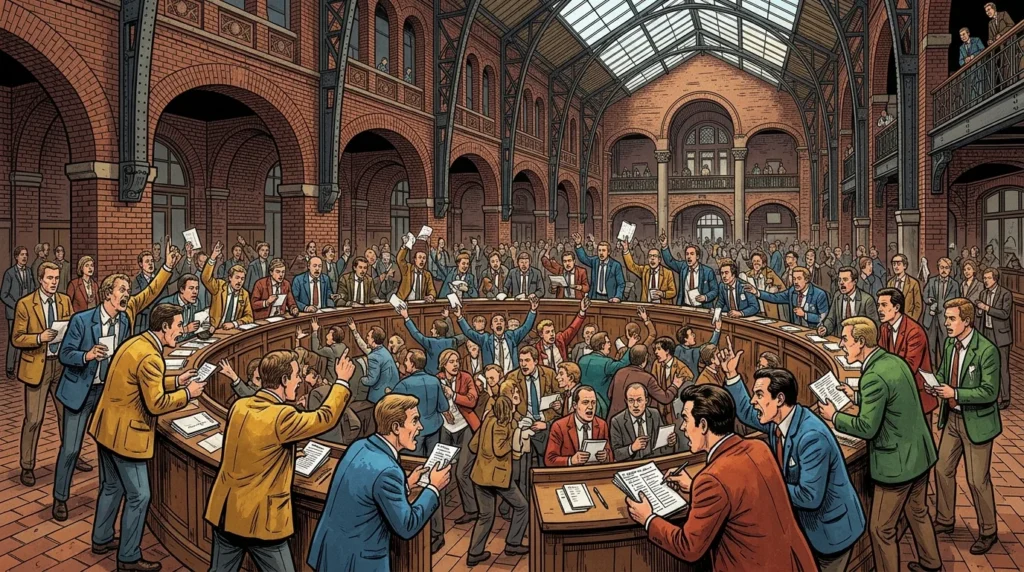
Since its founding in 1876 as a private self-governing association housed from 1903 in Hendrick Petrus Berlage’s brick exchange on the Damrak, and from 1913 in its own classical building on Beursplein 5, the Vereeniging voor den Effectenhandel had operated virtually free of government intervention. Unlike London or Paris, where banks relied heavily on commercial bill discounting, the Amsterdam money market revolved around the prolongatie system. Under standard exchange rules, any provincial bank, merchant house, municipality, or wealthy individual with temporary cash surpluses could lend money for one month at the official prolongatie interest rate to stockbrokers and investors, secured by listed shares or bonds with a mandatory 10 percent to 20 percent collateral haircut (surplus). If the market value of the pledged securities fell, the borrower was required to post additional margin immediately or face forced auction of the collateral on the bourse floor. [3]
By July 1914, an estimated 325 million to 400 million guilders in prolongatie loans were outstanding on the Amsterdam exchange—a vast sum relative to the capital of Dutch commercial banks. Following the Austro-Hungarian ultimatum to Serbia on July 23, 1914 and the declaration of war on July 28, European stock exchanges from Vienna and Berlin to Brussels and Paris shut down or froze as foreign creditors scrambled to repatriate gold and cash. On Monday, July 27 and Tuesday, July 28, 1914, security prices on Beursplein 5 plunged while lenders issued mass calls refusing to roll over maturing prolongatie contracts. Had the exchange opened on Wednesday, July 29, brokers would have been legally compelled to dump tens of millions of guilders of pledged securities into an illiquid market, bankrupting brokerage houses and provincial banks across the Netherlands. [4]
Before trading could begin on the morning of July 29, 1914, the board of the Vereeniging voor den Effectenhandel ordered the immediate closure of the Amsterdam Stock Exchange (de Beurssluiting). To prevent a wider banking collapse, a syndicate of major Dutch banks joined with De Nederlandsche Bank (DNB) to form a 200-million-guilder emergency credit facility, while the government enacted the Stock Exchange Act of September 4, 1914 (Beurswet 1914). Placed under the authority of the Minister of Agriculture, Industry and Commerce (and later the Minister of Finance), the Beurswet 1914 brought the reopening of the bourse, the quotation of official prices, and the rules governing frozen prolongatie loans under statutory supervision, barring lenders from executing forced collateral sales while the exchange was closed or below minimum ministerial floor prices. When the Amsterdam bourse finally reopened after more than six months on February 9, 1915, the acute crisis had passed—and though the Beurswet 1914 was conceived as a temporary wartime measure, it remained the legal foundation of Dutch securities regulation until 1985. [5]
| Documented Figure / Metric | Historical Significance & Archival Context |
|---|---|
| 28 percent | Italy had effectively left via exchange controls in 1934, Belgium had devalued the belga by 28 percent in March 1935, and Poland had imposed capital controls in April 1936. |
| 35 million guilders | Left completely isolated as the sole remaining gold-standard currency on earth, Amsterdam experienced a massive run on De Nederlandsche Bank's gold reserves during Saturday morning trading, with more than 35 million guilders in gold flowing out in a matter of hours. |
| 20 percent | When Beursplein 5 reopened to euphoric crowds on Tuesday, September 29, 1936, the guilder had depreciated by roughly 20 percent against the U.S. dollar and sterling, and Dutch equities—led by Royal Dutch Shell, Philips, Unilever, and East Indies rubber and shipping shares—skyrocketed. |
Neutral Sanctuary and the 1920s Colonial Rubber, Sugar, and Oil Boom
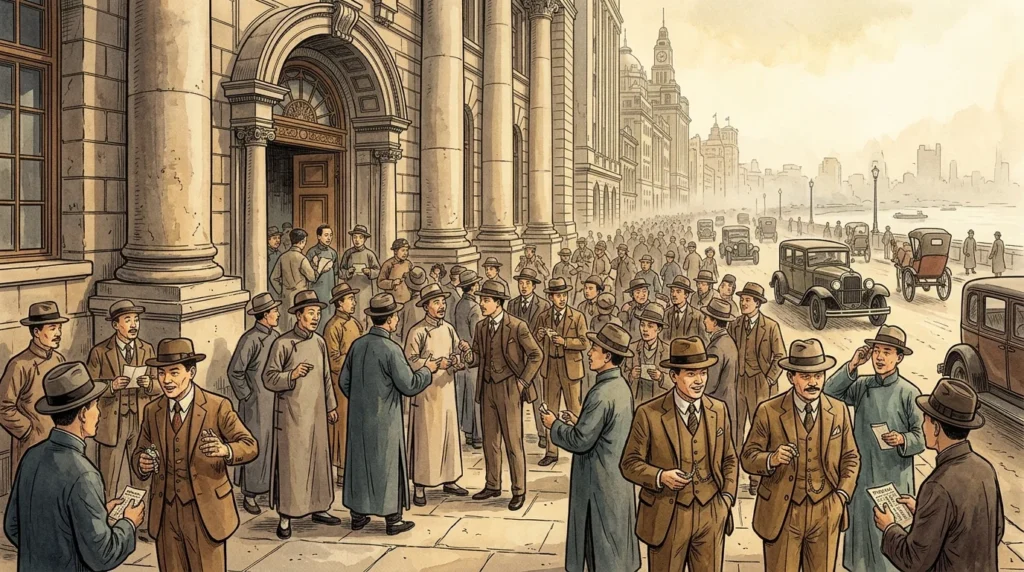
Although the 1914 crisis permanently reduced the dominance of the prolongatie system in favor of modern corporate banking and the 1917 Russian Revolution wiped out hundreds of millions of guilders in Tsarist railway and sovereign bonds held by Dutch rentiers, wartime neutrality transformed Amsterdam into a booming international financial center during the 1920s.Following the stabilization of the German Reichsmark under the Dawes Plan in 1924, major German banks established subsidiaries in Amsterdam, turning the city into Continental Europe’s foremost acceptance and foreign-bond market alongside London. [6]
On the equity floor of Beursplein 5, where trading was increasingly organized around specialized jobbers known as hoekmannen, the roaring twenties were propelled by the vast commodity wealth of the Dutch East Indies (present-day Indonesia). Between 1922 and 1929, surging North American and European demand for automobile tires, refined petroleum, and tropical foodstuffs drove a spectacular colonial equity boom: [7]
- Royal Dutch Shell (Koninklijke Olie): Founded in 1890 to drill oil in Sumatra and merged in 1907 on a 60–40 basis with Britain’s Shell Transport and Trading under Sir Henri Deterding, Royal Dutch became the undisputed bellwether of the Amsterdam Stock Exchange, expanding production across the Dutch East Indies, Venezuela, and the United States and paying lavish dividends that made it one of the world’s largest multinational corporations.
- Colonial Plantation and Mining Equities (Cultuur- en Mijnbouwfondsen): Shares in East Indies plantation estates and colonial agricultural banks—led by the Handelsvereeniging “Amsterdam” (HVA), the Deli Maatschappij (tobacco and rubber), the Rubber Cultuur Maatschappij “Amsterdam” (RCMA), Java sugar mills, and Billiton tin mining—soared to multiples of par value during the mid-1920s rubber and sugar booms.
- Domestic Multinationals: Alongside colonial stocks, the 1920s witnessed the rapid stock-market expansion of Dutch industrial pioneers, including lamp and radio manufacturer Philips, artificial silk producer Enka (later AKU/Akzo), and the 1929 Anglo-Dutch merger that created Margarine Unie / Unilever.
Colijn’s Defense of the Gold Guilder and the Great Depression (1931–1936)
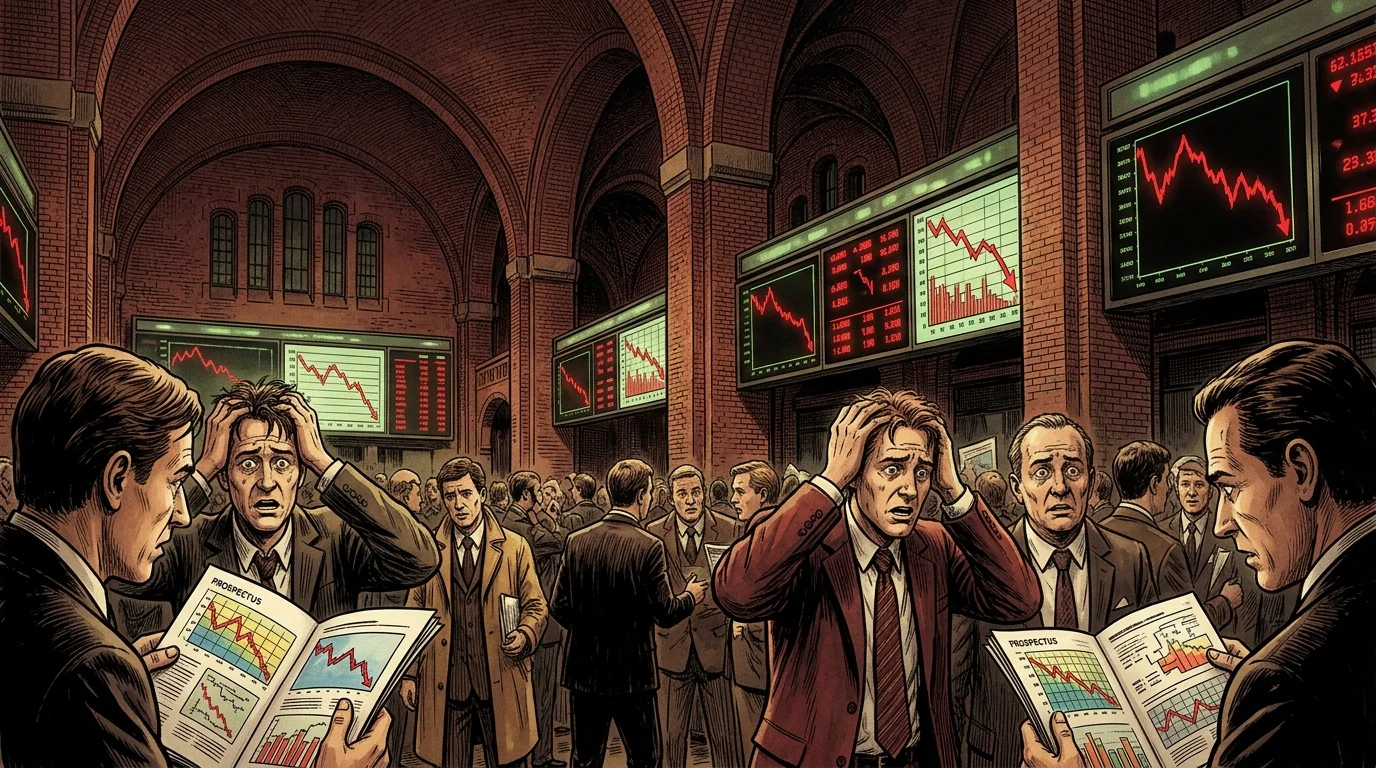
The collapse of Wall Street in October 1929 and the subsequent implosion of global commodity prices struck the open, colonial-export-dependent Dutch economy with devastating force. Between 1929 and 1932, world prices for Indonesian rubber, sugar, tobacco, and tin fell by 60 percent to 80 percent, devastating colonial corporate earnings and pulling the Amsterdam Stock Exchange general share index down by nearly 70 percent from its 1929 peak. [8]
The downturn deepened dramatically after the United Kingdom abandoned the gold standard on September 21, 1931, devaluing sterling by roughly 30 percent, followed by the United States devaluing the dollar in April 1933. Because Britain was both a primary export market for Dutch agriculture and the co-producer (via British Malaya) of colonial rubber and tin, sterling’s depreciation rendered goods priced in gold guilders prohibitively expensive. Nevertheless, Prime Minister Hendrikus Colijn—a former colonial officer and top executive of Royal Dutch Shell who led consecutive crisis cabinets from May 1933—and De Nederlandsche Bank President Leonardus Trip adamantly refused to devalue the guilder, viewing currency depreciation as an immoral breach of contract comparable to coin clipping. Joining France, Belgium, Switzerland, Italy, and Poland in the “Gold Bloc” at the 1933 London Economic Conference, Colijn pursued a harsh policy of internal deflation (aanpassingspolitiek): slashing civil-service and teacher pay, cutting unemployment relief (which sparked the deadly July 1934 Jordaan Riot in Amsterdam), and imposing agricultural production levies while Dutch unemployment climbed above 25 percent of the workforce in 1935–1936. [9]
The Night of September 26–27, 1936: Last Off the Gold Standard
By 1936, the Gold Bloc was disintegrating. Italy had effectively left via exchange controls in 1934, Belgium had devalued the belga by 28 percent in March 1935, and Poland had imposed capital controls in April 1936. Every time a Gold Bloc partner faltered, speculators attacked the guilder, forcing De Nederlandsche Bank to hike its discount rate and ship gold bullion abroad before temporary calm returned.
The final endgame arrived on Friday, September 25, 1936, when Léon Blum’s Popular Front government in Paris announced that France was devaluing the franc under the Tripartite Agreement with the United States and the United Kingdom. On Saturday morning, September 26, 1936, the Swiss Federal Council met in Bern and resolved to devalue the Swiss franc as well. Left completely isolated as the sole remaining gold-standard currency on earth, Amsterdam experienced a massive run on De Nederlandsche Bank’s gold reserves during Saturday morning trading, with more than 35 million guilders in gold flowing out in a matter of hours. Although Prime Minister Colijn had publicly declared to the press that very morning that the Netherlands would still not devalue, DNB President Trip informed the cabinet on Saturday evening that further defense of the gold parity was impossible.
Late on the night of Saturday, September 26 to Sunday, September 27, 1936, the Dutch government issued an emergency royal decree prohibiting the export of gold coin and bullion without a central bank license and establishing a 300-million-guilder Exchange Equalization Fund (Egalisatiefonds) to manage a floating guilder, while ordering the Amsterdam Stock Exchange closed on Monday, September 28. When Beursplein 5 reopened to euphoric crowds on Tuesday, September 29, 1936, the guilder had depreciated by roughly 20 percent against the U.S. dollar and sterling, and Dutch equities—led by Royal Dutch Shell, Philips, Unilever, and East Indies rubber and shipping shares—skyrocketed. Over the following ten months, the Amsterdam Stock Exchange index surged by more than 50 percent, industrial production and colonial exports rebounded sharply, and the Netherlands finally emerged from the long deflationary shadow of the interwar gold standard.
Theoretical & Balance-Sheet Transmission Mechanism
In the Kindleberger–Minsky taxonomy of financial instability (Kindleberger, 1978; Minsky, 1986) and Irving Fisher’s (1933) debt-deflation framework, speculative asset booms become systemic crises when credit expansion shifts balance sheets from hedge finance (cash flows covering principal and interest) to speculative and Ponzi finance (relying on rising asset prices and short-term margin roll-overs).
Once monetary tightening or an exogenous shock halts price appreciation, forced margin liquidations trigger Fisherian debt-deflation: fire-sale asset discounts erode bank collateral values, contracting credit supply across the real economy.
Sources and Further Reading
- Jan Luiten van Zanden, “ Going Dutch: Monetary Policy in the Netherlands During the Interwar Gold Standard (1925–1936),” Financial History Review / Cambridge University Press, 1996. Peer-Reviewed / Academic Research
- Lodewijk Petram, “ A Second Golden Age: The Amsterdam Stock Exchange, Prolongatie, and Colonial Equities (1876–1940),” Stichting Vereniging voor de Effectenhandel / Beursgeschiedenis.nl, 2020. Historical & Financial Reference
- Geljon, P. A., “ De algemene banken en het effectenbedrijf 1860–1914 (The Prolongatie Market and the Crisis of July 1914),” NIBE-SVV / EconStor, 2005. Historical & Financial Reference
- Frederike Boon, “ De Beurswet 1914: Beurssluiting en overheidsingrijpen op de Amsterdamse effectenbeurs,” Boom Juridisch, 2019. Historical & Financial Reference
- Abe de Jong, Herman de Jong, and Gerarda Westerhuis, “ From Free-for-All to Self-Governing Monopoly: Market Organization and Price Information at the Amsterdam Stock Exchange, 1796–1940,” Financial History Review / Cambridge University Press, 2022. Peer-Reviewed / Academic Research
- Pierre van der Eng, “ Securities Trading in an Emerging Market: Indonesia, 1890s–1940s,” Financial History Review / Cambridge University Press, 2022. Peer-Reviewed / Academic Research
- Parlement & Politiek (PDC Universiteit Leiden), “ Kabinet-Colijn III (1935–1937) en het loslaten van de gouden standaard in september 1936,” Parlement.com, 2023. Historical & Financial Reference
- Irving Fisher — "The Debt-Deflation Theory of Great Depressions," Econometrica 1, no. 4 (FRASER Federal Reserve Archive, 1933): 337–357 Central Bank / Monetary Authority
- Charles P. Kindleberger & Robert Z. Aliber — Manias, Panics, and Crashes: A History of Financial Crises (Palgrave Macmillan) Peer-Reviewed / Academic Research
Cite This Historical Dossier (APA / Chicago)
APA (7th ed.): Ç., S. (Ed.). (2026). Amsterdam’s Stock Exchange: War, Speculation and the Gold Exit. In Forgotten Fortunes Historical Monograph Series (Forgotten Fortunes Editorial Desk). https://forgottenfortunes.net/amsterdam-stock-exchange-1914-1936/
MLA (9th ed.): Ç., Soner, ed. "Amsterdam’s Stock Exchange: War, Speculation and the Gold Exit." Forgotten Fortunes: Financial & Monetary History Archive, 2026, https://forgottenfortunes.net/amsterdam-stock-exchange-1914-1936/.
Chicago (17th ed.): Ç., Soner, ed. "Amsterdam’s Stock Exchange: War, Speculation and the Gold Exit." Forgotten Fortunes Historical Monograph Series (Forgotten Fortunes Editorial Desk), September 17, 2026. https://forgottenfortunes.net/amsterdam-stock-exchange-1914-1936/.
Have an idea for another financial history documentary or article? Request a story →