In This Article
On May 24, 2019, the People’s Bank of China (PBOC) and the China Banking and Insurance Regulatory Commission (CBIRC) jointly announced that they had placed Baoshang Bank—a city commercial lender headquartered in Baotou, Inner Mongolia, with more than RMB 550 billion in assets—under state conservatorship due to ”severe credit risks”. It was the first state seizure of a commercial bank in mainland China since the closure of Hainan Development Bank in 1998. Forensic audits subsequently revealed that between 2005 and 2019, Baoshang’s covert controlling shareholder, financier Xiao Jianhua’s Tomorrow Holding conglomerate, had hollowed out the bank by siphoning more than RMB 156 billion (over US$22 billion) through hundreds of shell companies. By imposing haircuts on interbank and corporate creditors holding claims above RMB 50 million and later wiping out RMB 6.5 billion in Tier-2 capital bonds, Chinese authorities used the Baoshang resolution to shatter the decades-old ”implicit guarantee” in China’s wholesale banking market—triggering an acute interbank liquidity shock and subsequent state rescues of Bank of Jinzhou and Hengfeng Bank. [1]
Shadow Banking, Interbank NCDs, and ”Tunneling” by Tomorrow Holding
Founded in December 1998 as Baotou City Commercial Bank and renamed Baoshang Bank in 2007, the Inner Mongolian lender grew rapidly during the decade following China’s 2008 economic stimulus. Like dozens of other Chinese city and rural commercial banks, Baoshang circumvented geographic branching restrictions and loan-to-deposit caps by tapping China’s booming shadow-banking and wholesale money markets. On the liability side, after the PBOC introduced interbank Negotiable Certificates of Deposit (NCDs) in December 2013, smaller regional banks issued trillions of renminbi in short-term NCDs to larger commercial banks and mutual funds; by 2017, interbank liabilities and NCDs accounted for roughly 44 percent of Baoshang Bank’s total funding. [2]
Behind this rapid asset expansion lay systematic corporate ”tunneling”—the illicit extraction of bank funds by a dominant insider shareholder. Although Chinese banking regulations capped any single non-state shareholder’s voting stake in a city commercial bank at 20 percent, billionaire financier Xiao Jianhua’s sprawling private conglomerate, Tomorrow Holding (Mingtian Xi, or Tomorrow Group), quietly accumulated an 89.27 percent controlling interest in Baoshang Bank by disguising its ownership across roughly thirty-five proxy companies and nominee shareholders. [3]
With boardroom oversight and internal risk controls neutralized, Tomorrow Group treated Baoshang Bank as a captive financing arm. Between 2005 and 2019, Baoshang extended 347 fraudulent loans totaling RMB 156 billion to 209 shell companies controlled by Tomorrow Holding without genuine collateral or commercial purpose. Whenever earlier loans approached maturity, Baoshang issued fresh credit or disguised the exposures inside off-balance-sheet trust beneficiary rights and asset-management plans to conceal the defaults from supervisory ratios. [4]
The 2017 Clampdown and Baoshang’s Balance-Sheet Implosion
The scheme began to unravel in January 2017, when Chinese authorities detained Xiao Jianhua from Hong Kong’s Four Seasons Hotel and launched a sweeping regulatory campaign to dismantle opaque financial-industrial conglomerates and curb shadow-banking leverage. Deprived of new refinancing channels as regulators cracked down on interbank shadow assets, Tomorrow Holding’s shell entities ceased servicing their debts to Baoshang Bank altogether, turning the entire RMB 156 billion insider loan portfolio into unrecoverable non-performing assets. [5]
By early 2018, Baoshang Bank was deeply insolvent on an economic basis. Unable to secure clean audit opinions or conceal the capital hole, the bank announced in June 2018—and again in early 2019—that it was postponing the publication of its 2017 and 2018 annual financial statements while seeking ”strategic investors”. Despite these glaring distress signals, domestic money-market participants continued to roll over tens of billions of renminbi in Baoshang NCDs and interbank deposits. For more than two decades, Chinese financial markets had operated under the pervasive assumption of an ”implicit government guarantee” (gangxing duifu): the belief that Beijing would never allow a licensed commercial bank to default on its wholesale obligations for fear of sparking systemic contagion. [6]
May 24, 2019: Seizure and the Partial Bail-In of Interbank Creditors
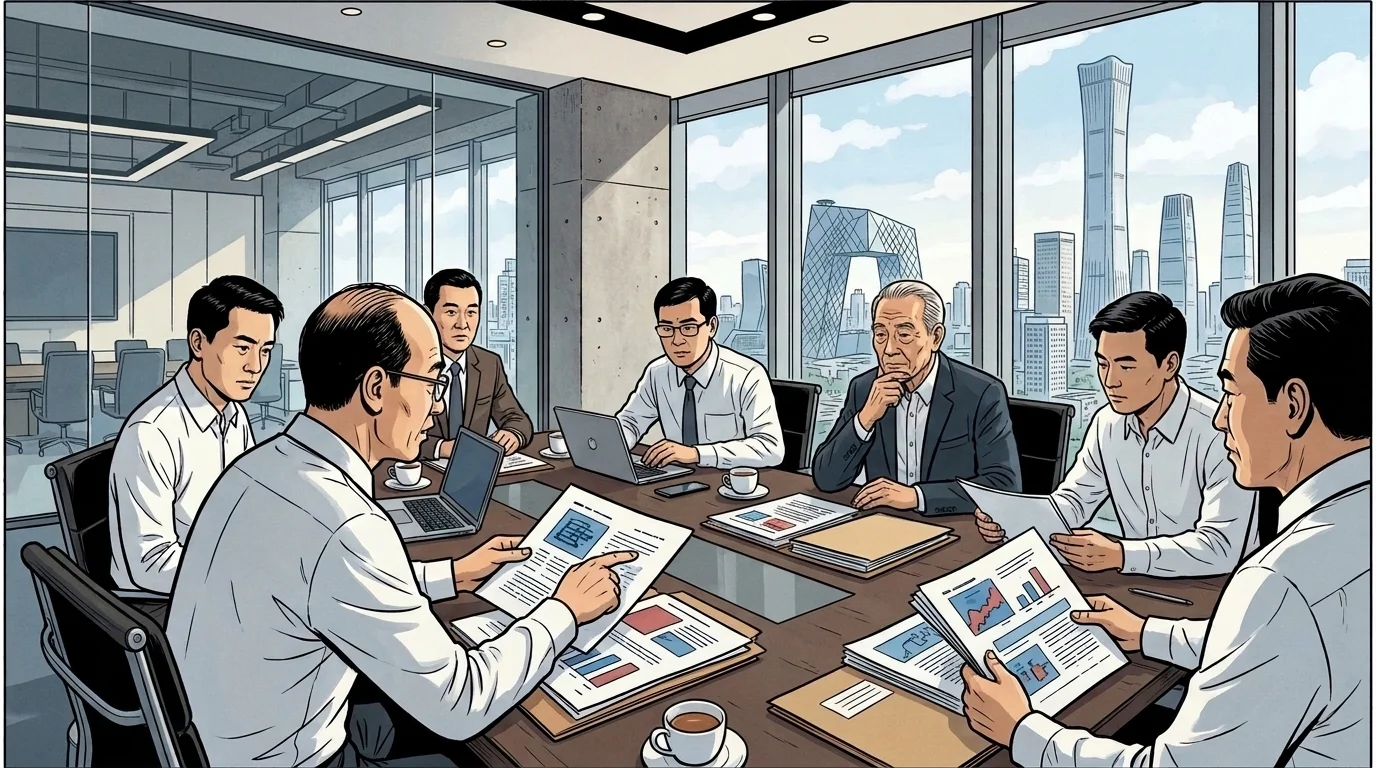
On Friday, May 24, 2019, the PBOC and CBIRC shattered that assumption. Invoking Article 64 of China’s Commercial Bank Law, regulators assumed full statutory control of Baoshang Bank for a one-year conservatorship period (later extended by six months) and appointed China Construction Bank (CCB), one of the country’s ”Big Four” state-owned commercial banks, to manage Baoshang’s daily operations under trusteeship. [7]
To prevent retail bank runs while punishing reckless institutional lenders, the PBOC, CBIRC, and China’s newly operational Deposit Insurance Fund engineered a calibrated, two-tier resolution structure:
- All principal and interest belonging to individual retail depositors—roughly 4.73 million personal accounts—were 100 percent guaranteed by the state.
- Corporate deposits and interbank creditor claims with balances of RMB 50 million (approximately US$7.2 million) or less were also guaranteed in full, protecting roughly 99 percent of institutional creditors by number.
- For corporate and interbank claims exceeding RMB 50 million, however, regulators suspended automatic full repayment and required creditors to negotiate tiered principal payouts backed by partial Deposit Insurance Fund support alongside future liquidation recoveries—resulting in immediate principal haircuts averaging roughly 10 percent (with larger claims above RMB 1 billion absorbing steeper losses).
Interbank Stratification and the Jinzhou and Hengfeng Rescues
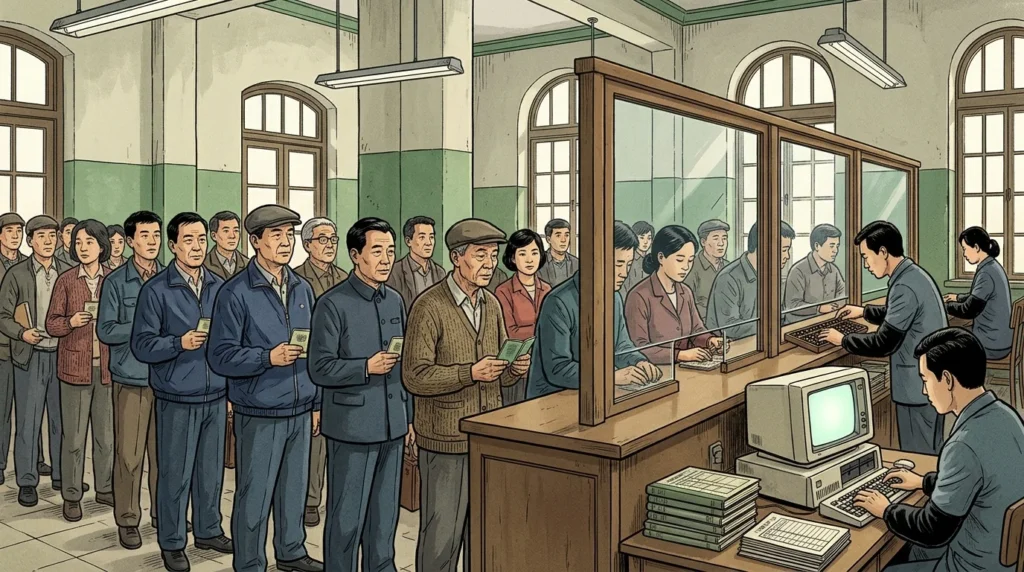
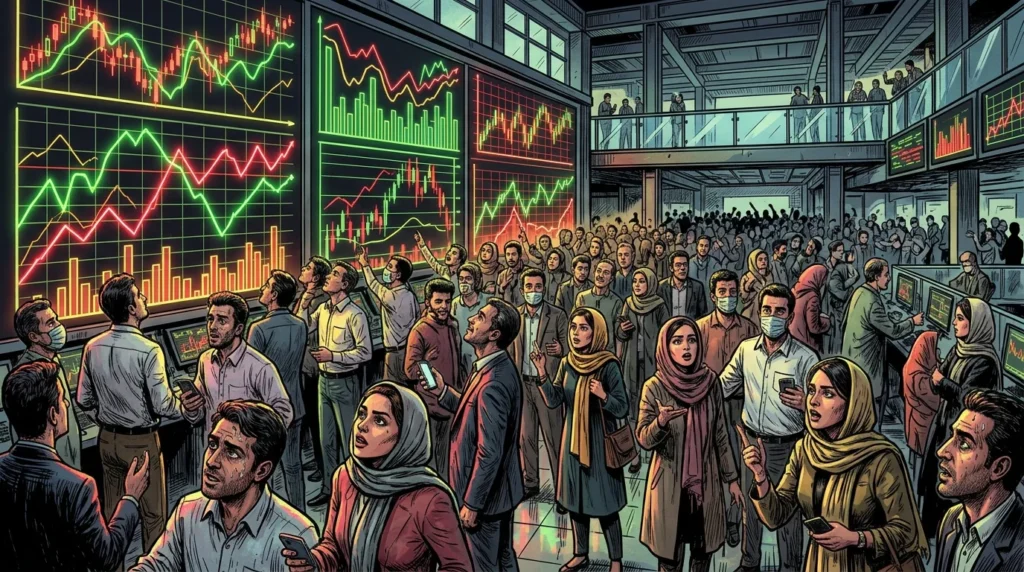
The imposition of credit losses on interbank claims above RMB 50 million sent an immediate shockwave through China’s RMB 100 trillion wholesale money market. Overnight, the risk-free status of regional bank liabilities evaporated, triggering what Chinese bond traders called ”credit stratification”. Large state-owned banks—the primary suppliers of cash in the interbank market—suddenly tightened counterparty credit limits, refused to accept lower-rated NCDs or corporate bonds as collateral in repurchase (repo) transactions, and cut off funding to smaller city commercial banks, rural credit cooperatives, and non-bank financial institutions (brokerages and money-market funds). [8]
Empirical studies of the May–July 2019 interbank market documented a sharp divergence between borrowing costs for state banks and regional lenders, while NCD issuance by lower-rated city commercial banks collapsed. To prevent this counterparty freeze from mutating into a full-blown systemic credit crunch, the PBOC injected hundreds of billions of renminbi through open-market reverse repos, targeted Medium-Term Lending Facilities (MLF), and central-bank credit enhancements on newly issued NCDs, while instructing large state banks to maintain liquidity lines to solvent non-bank institutions.
Even with central-bank liquidity backstops, the repricing of counterparty risk exposed two other sizable regional lenders burdened by hidden non-performing loans and governance failures. Within days of the Baoshang seizure, Ernst & Young resigned as auditor of Hong Kong-listed Bank of Jinzhou—a Liaoning-based lender with RMB 846 billion in assets and historic ties to Tomorrow Group borrowers—after flagging undocumented corporate loans. In July 2019, regulators orchestrated a market-oriented rescue in which three state-owned financial institutions—ICBC Financial Asset Investment, China Cinda Asset Management, and China Great Wall Asset Management—acquired strategic stakes to stabilize Bank of Jinzhou. Months later, in December 2019, authorities intervened at Shandong-based Hengfeng Bank (with RMB 1.0 trillion in assets, whose two former chairmen had been prosecuted for embezzlement), injecting RMB 100 billion in fresh capital led by sovereign wealth arm Central Huijin Investment and the Shandong provincial government.
The RMB 6.5 Billion Tier-2 Write-Down and Bankruptcy
While stabilizing Jinzhou and Hengfeng, regulators carried the resolution of Baoshang Bank through to complete legal liquidation. In April 2020, Baoshang’s performing loans, retail branches inside Inner Mongolia, and guaranteed deposits were transferred into a newly chartered regional bank, Mengshang Bank, capitalized by the Deposit Insurance Fund, Inner Mongolia autonomous region state entities, and CCB, while Huishang Bank assumed Baoshang’s four branches outside Inner Mongolia.
The final chapter of the resolution tested China’s bank-capital loss-absorption rules. On November 13, 2020, following formal notices from the PBOC and CBIRC that Baoshang Bank had reached a ”point of non-viability” (PONV), the bank announced the 100 percent write-down of its RMB 6.5 billion Tier-2 subordinated capital bond issued in December 2015, canceling both the full principal and RMB 585.6 million in accrued interest. It was the first time in Chinese financial history that a commercial bank’s Tier-2 capital bond was completely wiped out rather than redeemed at par. Ten days later, in late November 2020, the CBIRC approved Baoshang Bank’s formal bankruptcy filing, and in February 2021 the Beijing First Intermediate People’s Court adjudicated the shell entity bankrupt, completing China’s landmark transition from unconditional bank bailouts to structured creditor bail-ins.
Theoretical & Balance-Sheet Transmission Mechanism
In the Kindleberger–Minsky taxonomy of financial instability (Kindleberger, 1978; Minsky, 1986) and Irving Fisher’s (1933) debt-deflation framework, speculative asset booms become systemic crises when credit expansion shifts balance sheets from hedge finance (cash flows covering principal and interest) to speculative and Ponzi finance (relying on rising asset prices and short-term margin roll-overs).
Once monetary tightening or an exogenous shock halts price appreciation, forced margin liquidations trigger Fisherian debt-deflation: fire-sale asset discounts erode bank collateral values, contracting credit supply across the real economy.
Sources and Further Reading
- Yuyun Xu, Zhengyuan Liu, and Longyao Zhang, “ The Spillover Effect of Bank Distress: Evidence from the Takeover of Baoshang Bank in China,” Finance Research Letters, 2024. Peer-Reviewed / Academic Research
- Lina Song and Amirul Shah Md Shahbudin, “ To Anticipate the Bankruptcy of Baoshang Bank Based on CAMELS Rating System,” Bank i Kredyt, 2023. Peer-Reviewed / Academic Research
- Zhu Ning, “ Tapering Implicit Guarantees in the Bond Market,” The Future of China’s Bond Market, International Monetary Fund, 2019. International Financial Institution
- Nargiza Salidjanova, “ China’s Banking Sector Risks and Implications for the United States,” U.S.-China Economic and Security Review Commission Issue Brief, 2020. Official / State Archive
- Logan Wright and Allen Feng, “ Beijing’s Credibility and the Baoshang Bank Dilemma,” Rhodium Group, 2019-07-17. Historical & Financial Reference
- China Daily, “ China Scores Victory in Containing Financial Risks in 2019,” China Daily, 2020-01-02. Historical & Financial Reference
- Irving Fisher — "The Debt-Deflation Theory of Great Depressions," Econometrica 1, no. 4 (FRASER Federal Reserve Archive, 1933): 337–357 Central Bank / Monetary Authority
- Charles P. Kindleberger & Robert Z. Aliber — Manias, Panics, and Crashes: A History of Financial Crises (Palgrave Macmillan) Peer-Reviewed / Academic Research
Cite This Historical Dossier (APA / Chicago)
APA (7th ed.): Ç., S. (Ed.). (2026). The 2019 Baoshang Bank Seizure and China's Shadow-Banking Cleanup. In Forgotten Fortunes Historical Monograph Series (Forgotten Fortunes Editorial Desk). https://forgottenfortunes.net/china-2019-baoshang-bank-seizure/
MLA (9th ed.): Ç., Soner, ed. "The 2019 Baoshang Bank Seizure and China's Shadow-Banking Cleanup." Forgotten Fortunes: Financial & Monetary History Archive, 2026, https://forgottenfortunes.net/china-2019-baoshang-bank-seizure/.
Chicago (17th ed.): Ç., Soner, ed. "The 2019 Baoshang Bank Seizure and China's Shadow-Banking Cleanup." Forgotten Fortunes Historical Monograph Series (Forgotten Fortunes Editorial Desk), September 11, 2026. https://forgottenfortunes.net/china-2019-baoshang-bank-seizure/.
Have an idea for another financial history documentary or article? Request a story →