In This Article
On June 29, 1874, an American bank established to help formerly enslaved people build financial independence closed its doors.

Thousands of depositors had trusted the Freedman’s Savings and Trust Company with money earned through military service, farming, domestic work, and small businesses. Many believed that because Congress had chartered the institution, their savings were protected by the federal government.
They were wrong. The bank had invested depositors’ money in increasingly risky ventures, suffered from mismanagement, and failed during the economic turmoil that followed the Panic of 1873. Its collapse left tens of thousands of Americans struggling to recover their savings and damaged trust in financial institutions for years afterward.
The story of the Freedman’s Bank reveals how an institution created with a promising mission could fail when weak supervision, conflicts of interest, and dangerous lending practices overwhelmed the interests of its depositors.
A Bank Created During America’s Emancipation
In January 1865, the American Civil War was still underway. As Union forces advanced and slavery was dismantled across much of the South, formerly enslaved African Americans faced the difficult task of establishing independent economic lives. African American soldiers also needed places to deposit their military wages and enlistment bonuses. Many had limited access to established financial institutions. On January 27, 1865, abolitionist and Congregational minister John W. Alvord met with more than twenty philanthropists and business leaders in New York City.
They discussed creating a savings institution primarily intended to serve African American soldiers and, more broadly, formerly enslaved people and their families. [1] Their proposal quickly reached Washington. With support from Senator Charles Sumner of Massachusetts, legislation incorporating the Freedman’s Savings and Trust Company was introduced in Congress.
On March 3, 1865, President Abraham Lincoln signed the act establishing the institution.
The bank received its charter before the Civil War had formally ended and months before the Thirteenth Amendment was ratified in December 1865. Its purpose was to provide a secure place for savings and encourage financial independence during the transition from slavery to freedom. But there was an important distinction between the institution’s public mission and its legal status.
The Freedman’s Bank was a private corporation chartered by Congress, not a government-owned bank whose deposits were federally guaranteed. [1]
That distinction would eventually become central to its collapse.
How the Freedman’s Bank Worked
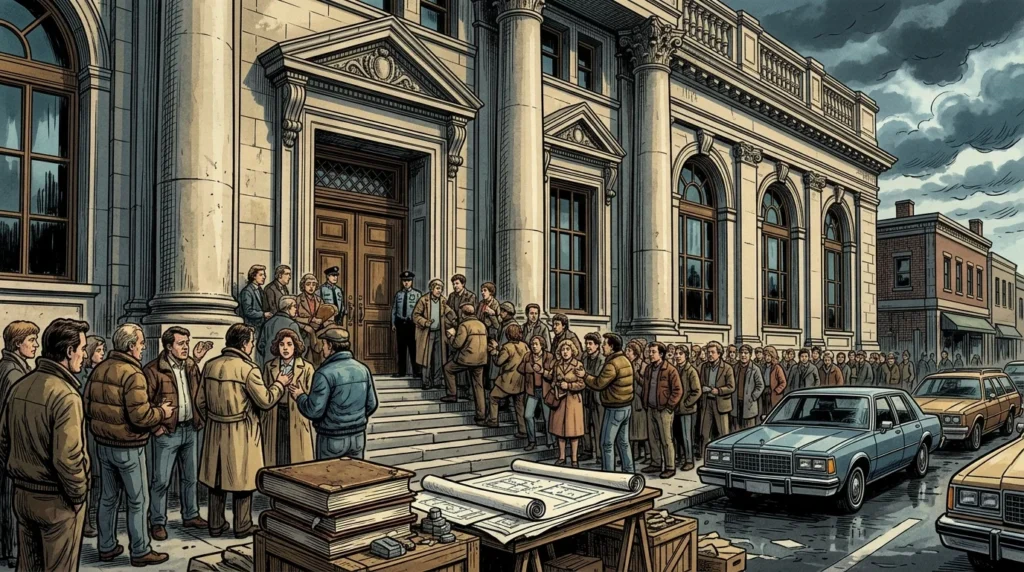
The bank opened in New York on April 4, 1865. At first, the institution appeared to be fulfilling its mission. Branches were established in communities with substantial African American populations, particularly across the South. Eventually, the bank operated approximately 37 branches across 17 states and the District of Columbia. Its headquarters moved from New York to Washington, D.C., in 1867. [1][2]
Customers did not need to be wealthy to open accounts. Deposits could begin with as little as five cents, and accounts holding at least one dollar could earn interest. For many customers, these accounts represented their first opportunity to save wages and accumulate financial assets independently. A laborer might save small amounts for land or a home. A family might deposit money for emergencies. A veteran might place military earnings in the bank rather than keeping them in cash.
Churches, schools, and community organizations also opened accounts. The bank employed African Americans throughout its branch network, creating opportunities for financial employment that were otherwise difficult to obtain. By 1874, nearly half of its employees were African American. [2] The institution grew rapidly.
Over its operating life, deposits totaling more than $57 million passed through the bank. This was a cumulative figure, not the amount still held when it collapsed. [1]
But rapid growth created financial responsibilities that the bank’s management was increasingly unable to handle.
A Dangerous Change in Investment Policy
The bank’s original charter imposed relatively strict investment rules.
Depositors’ money was generally supposed to be invested in securities issued or backed by the United States government, apart from funds reserved for operating expenses and emergencies.
The intention was straightforward. The bank would accept deposits, invest them conservatively, earn income, and pay interest while preserving customers’ savings. Government securities offered relatively modest returns but were considered safer than speculative commercial investments. Yet the bank faced a financial problem.
Operating dozens of branches was expensive. Staff salaries, administration, and property costs consumed money, while relatively conservative investments produced limited income.
Bank officials wanted more opportunities to earn higher returns.
In 1870, Congress amended the charter, relaxing important restrictions on lending and investment.
The bank could now extend loans secured by real estate, departing from its original conservative model. [1][4] This change created new opportunities, but also exposed depositors to additional risks. Instead of relying primarily on government securities, management increasingly committed funds to real estate ventures, railroad-related investments, and loans to private borrowers. Some loans were poorly secured.
Others involved individuals connected to the bank’s own trustees.
A number of trustees held positions at other financial institutions, creating conflicts between their outside business interests and their responsibilities to Freedman’s Bank depositors.
According to the US Treasury Department’s historical account, some trustees transferred troubled loans from other banking institutions onto the Freedman’s Bank’s balance sheet. [3]
Money deposited by ordinary customers was being exposed to risks that many of those customers neither understood nor had agreed to manage.
Why Oversight Failed
A bank can experience losses without necessarily collapsing. What made the Freedman’s Bank especially vulnerable was the combination of risky investments and inadequate supervision. The institution’s congressional charter created an appearance of official authority. Many customers believed their savings were protected because the bank had been established under federal legislation.
Its close association with the Freedmen’s Bureau reinforced that impression. Bank promotional materials also referenced prominent government figures, encouraging confidence in the institution. [1] However, Congress had not guaranteed the deposits.
The original charter permitted congressional inspection of the company’s records, but the bank did not operate under the same regular supervisory arrangements as national banks examined by the Office of the Comptroller of the Currency.
Congressional oversight proved inconsistent. The management team was therefore able to make questionable financial decisions without receiving the level of examination that might have exposed the dangers earlier. The Office of the Comptroller of the Currency later identified these weaknesses as important factors in the failure. [4] The central problem was not simply that the bank made unsuccessful investments.
It was that decisions involving other people’s savings were made without adequate controls, transparency, or accountability.
By the early 1870s, the bank’s public reputation was becoming increasingly disconnected from its actual financial condition.
The Panic of 1873 Exposes the Weakness
In 1873, the United States experienced a major financial panic. Railroad speculation, tightening credit conditions, and the collapse of important financial firms helped trigger a broader economic downturn. Railroad investments became especially vulnerable. Projects that had previously attracted large amounts of financing suddenly struggled to secure additional funds.
Property values and the market value of risky investments came under pressure. For the Freedman’s Bank, these developments were disastrous. The institution had accumulated exposure to real estate and railroad-related lending just as confidence in those sectors deteriorated. Many investments lost value, while borrowers found it increasingly difficult to repay their obligations. [3]
Depositors began demanding their money. This introduced another problem: liquidity. Banks do not ordinarily keep every deposited dollar in cash. They invest or lend substantial portions of their deposits while maintaining enough available funds to meet expected withdrawals. That arrangement becomes dangerous when too many customers demand repayment simultaneously.
Even a bank holding valuable long-term assets can experience a cash shortage if it cannot sell those assets quickly. The Freedman’s Bank faced an even more serious situation because many of its investments had already become impaired. As customers withdrew money, its cash reserves declined. Branch offices struggled to meet demands, and confidence deteriorated further.
The bank was caught between declining asset values and growing withdrawal requests.
The Panic of 1873 did not create every weakness in the institution, but it exposed problems that had accumulated over several years.
Frederick Douglass Takes Over a Failing Bank
By early 1874, the bank’s financial condition had become critical.
Its trustees turned to one of the most respected African American leaders in the United States: Frederick Douglass.
Douglass was internationally known as an abolitionist, writer, and advocate for civil rights. Bank officials hoped his leadership would restore confidence and prevent depositors from abandoning the institution. In March 1874, Douglass became the bank’s president. He had not created the investment problems that threatened the institution. Much of the damage had occurred before he assumed control.
According to the National Archives, Douglass was initially unaware of the full extent of the bank’s difficulties.
To demonstrate his confidence, he invested $10,000 of his own money in the institution. [1]
But his assessment soon revealed that the situation was worse than expected.
The bank’s assets were insufficiently reliable, its finances had been damaged by years of questionable decisions, and its capacity to meet depositor claims was deteriorating.
Douglass later described his position with a memorable phrase: he had become “married to a corpse.”
He concluded that the institution could no longer be saved.
The intervention of a respected public figure had come too late to reverse the consequences of earlier financial mismanagement.
June 29, 1874: The Bank Closes
Congress passed legislation on June 20, 1874, providing a mechanism for the bank’s trustees, with Treasury approval, to appoint commissioners to administer its assets and settle its affairs.
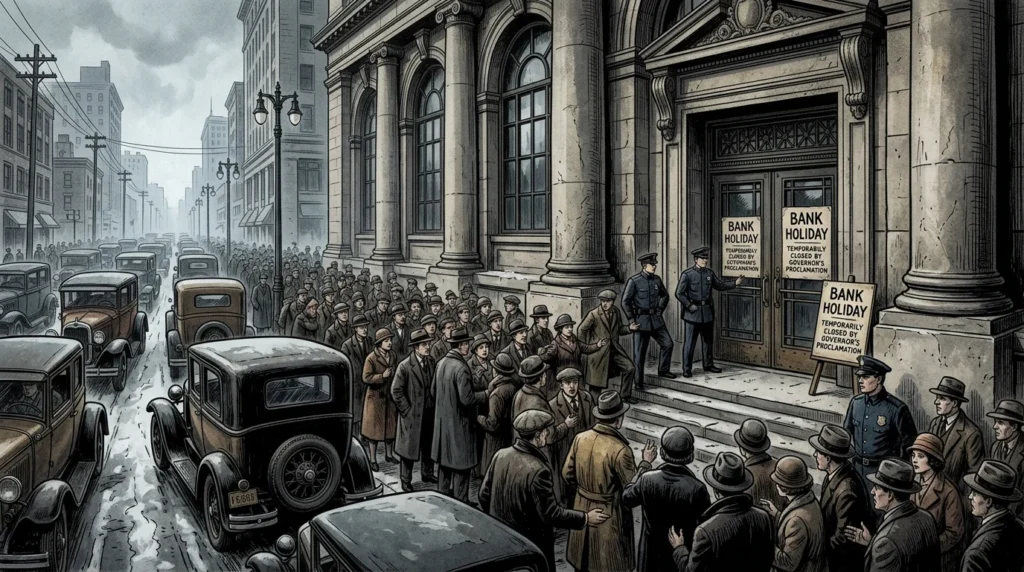
On June 29, 1874, the Freedman’s Savings and Trust Company closed. [1][4]
For depositors, the consequences were immediate. Money that families had set aside for homes, land, businesses, education, and emergencies became trapped in a failed financial institution. Some depositors had saved relatively small amounts. But those amounts could represent months or years of work.
The Office of the Comptroller of the Currency reports that the closure left approximately $3 million in depositor losses or outstanding claims, affecting more than 61,000 depositors. [4] The precise depositor counts vary slightly across historical records depending on the accounting context. The important conclusion is clear: tens of thousands of customers were left seeking repayment from an institution that could no longer meet its obligations. And despite the bank’s congressional charter, there was no federal guarantee making those depositors whole.
How Much Money Did Depositors Recover?
The bank’s liquidation became a prolonged process. Commissioners were appointed to recover assets, examine claims, and distribute available funds. The first dividend payments were announced in November 1875.
Between 1875 and 1883, officials declared five distributions totaling 62% of the amounts owed to eligible depositors. [1]
But this figure requires careful interpretation. It does not mean every customer recovered 62% of their lost savings. To claim payments, depositors generally needed to send their physical bank passbooks to Washington and provide a return address. That requirement created obstacles for people who had moved, died, lost their account documents, or could not easily complete the paperwork.
According to records discussed by the National Archives:
- 61,131 depositors were eligible for liquidation dividends.
- Only 29,996 submitted their passbooks to claim payments.
- Approximately 31,000 small depositors never requested their dividends.
Many of the people who completed the claims process held larger accounts. [1] The declared dividend rate therefore describes the formal liquidation distributions, not the amount successfully received by every eligible customer. The process could be especially difficult for surviving family members. Heirs sometimes had to establish their legal relationship to deceased depositors through sworn statements or other documentation.
Other customers were impossible for commissioners to locate. The result was deeply unequal. Some account holders recovered part of their savings. Others received nothing.
The financial consequences continued long after the bank itself had disappeared.
The Human Cost of the Collapse
Behind the bank’s financial records were thousands of individual lives.
One surviving account belonged to Ann Blue, who opened an account in Lexington, Kentucky, in August 1873.
Following the bank’s failure, she submitted her passbook and eventually received $37.94 in dividend payments. Her records are preserved by the National Archives. [1] Other customers had no such successful outcome. The financial damage affected individuals, families, churches, and community institutions that had trusted the bank with their resources.
The loss extended beyond the immediate monetary amounts. During Reconstruction, financial independence represented an important part of freedom for African Americans emerging from generations of enslavement. Owning savings, purchasing land, and building businesses were ways to establish greater economic security. The bank’s failure undermined that progress.
It also damaged confidence in institutions that had claimed to support newly freed Americans. The National Archives documents the bitterness and distrust that followed the collapse, as well as the efforts of depositors and their descendants to obtain reimbursement from Congress. Some claims and petitions continued for decades. [1]
An Unexpected Legacy: The Records That Survived
The Freedman’s Bank failed financially, but the surviving documents became an extraordinary historical resource. During its operations, bank employees collected detailed information about depositors and their families. The records could include names, ages, occupations, birthplaces, spouses, children, parents, siblings, and other identifying information. For formerly enslaved African Americans, such details could be especially important.
Slavery had frequently separated families, and the historical documentation of enslaved people’s lives was often incomplete. The bank’s records preserved information that might otherwise have disappeared. Today, these documents help historians and family researchers reconstruct lives and relationships during the years following emancipation. The US National Archives maintains extensive collections relating to the institution’s operations and liquidation. [1]
The bank is also remembered publicly.
In January 2016, the US Treasury Department renamed its Treasury Annex in Washington, D.C., the Freedman’s Bank Building, commemorating the institution’s original mission and its complicated history. [5]
What the Freedman’s Bank Collapse Teaches Us
The Freedman’s Savings and Trust Company began with an important promise. It sought to help African Americans protect their earnings and build wealth during one of the most transformative periods in American history. Its early growth demonstrated that newly freed people were willing and able to save, invest, and participate in financial institutions when given access. But the bank’s managers failed to protect the money entrusted to them.
The relaxation of investment restrictions increased financial risk. Conflicts of interest and poor lending decisions damaged the balance sheet. Weak oversight allowed problems to develop without adequate intervention. And the Panic of 1873 exposed the institution’s financial fragility.
Frederick Douglass inherited the crisis near its end, but even his leadership could not reverse the losses. When the bank closed in June 1874, its depositors discovered that an institution authorized by Congress was not necessarily protected by the federal government. The distinction between public confidence and actual financial security became painfully clear.
The enduring lesson is that a bank’s mission, reputation, or government charter cannot substitute for responsible management, independent supervision, and genuine protection of depositors’ money.
For the people who entrusted their savings to the Freedman’s Bank, that lesson came at an extraordinary cost.
Theoretical & Balance-Sheet Transmission Mechanism
In the Kindleberger–Minsky taxonomy of financial instability (Kindleberger, 1978; Minsky, 1986) and Irving Fisher’s (1933) debt-deflation framework, speculative asset booms become systemic crises when credit expansion shifts balance sheets from hedge finance (cash flows covering principal and interest) to speculative and Ponzi finance (relying on rising asset prices and short-term margin roll-overs).
Once monetary tightening or an exogenous shock halts price appreciation, forced margin liquidations trigger Fisherian debt-deflation: fire-sale asset discounts erode bank collateral values, contracting credit supply across the real economy.
Sources and Further Reading
- [1] Reginald Washington, The Freedman’s Savings and Trust Company and African American Genealogical Research. US National Archives and Records Administration, Prologue Magazine, Summer 1997. — https://www.archives.gov/publications/prologue/1997/summer/freedmans-savings-and-trust.html Official / State Archive
- [2] US Department of the Treasury, Life of Freedman’s Bank. — https://home.treasury.gov/about/history/freedmans-bank-building/life-of-freedmans-bank Official / State Archive
- [3] US Department of the Treasury, Freedman’s Bank Demise. — https://home.treasury.gov/about/history/freedmans-bank-building/freedmans-bank-demise Official / State Archive
- [4] Office of the Comptroller of the Currency, The Freedman’s Savings Bank: Good Intentions Were Not Enough; A Noble Experiment Goes Awry. — https://www.occ.treas.gov/about/who-we-are/history/history-of-the-occ/1863-1865/1863-1865-freedmans-savings-bank.html Official / State Archive
- [5] US Department of the Treasury, Lasting Impact of Freedman’s Bank. — https://home.treasury.gov/about/history/freedmans-bank-building/lasting-impact-of-freedmans-bank Official / State Archive
- Irving Fisher — "The Debt-Deflation Theory of Great Depressions," Econometrica 1, no. 4 (FRASER Federal Reserve Archive, 1933): 337–357 Central Bank / Monetary Authority
- Charles P. Kindleberger & Robert Z. Aliber — Manias, Panics, and Crashes: A History of Financial Crises (Palgrave Macmillan) Peer-Reviewed / Academic Research
Cite This Historical Dossier (APA / Chicago)
APA (7th ed.): Ç., S. (Ed.). (2026). The Freedman's Savings Bank: Congressional Charter and Collapse. In Forgotten Fortunes Historical Monograph Series (Forgotten Fortunes Editorial Desk). https://forgottenfortunes.net/freedmans-savings-bank-congressional-charter-collapse/
MLA (9th ed.): Ç., Soner, ed. "The Freedman's Savings Bank: Congressional Charter and Collapse." Forgotten Fortunes: Financial & Monetary History Archive, 2026, https://forgottenfortunes.net/freedmans-savings-bank-congressional-charter-collapse/.
Chicago (17th ed.): Ç., Soner, ed. "The Freedman's Savings Bank: Congressional Charter and Collapse." Forgotten Fortunes Historical Monograph Series (Forgotten Fortunes Editorial Desk), August 26, 2026. https://forgottenfortunes.net/freedmans-savings-bank-congressional-charter-collapse/.
Have an idea for another financial history documentary or article? Request a story →