In This Article
On New Year’s Day, January 1, 1990, the administration of Argentine President Carlos Saúl Menem and newly appointed Minister of Economy Antonio Erman González stunned domestic savers by issuing Emergency Decree 36/90, universally known as the Plan Bonex. After consumer price inflation reached an astonishing 3,079 percent in 1989—peaking at a monthly rate of 196.6 percent in July 1989—and flared anew in December 1989, the Argentine state faced an intractable monetary trap: the Central Bank of the Argentine Republic (BCRA) was locked in a self-reinforcing spiral of “quasi-fiscal” deficits, printing trillions of australes each month merely to pay triple-digit interest rates on commercial banks’ mandatory reserve deposits. Under the Plan Bonex, the government froze all commercial-bank short-term time deposits (plazos fijos) above 1 million australes and domestic treasury obligations, forcibly exchanging them for 10-year, U.S. dollar-denominated External Bonds of the Argentine Republic (Bonex 1989). Because the newly issued bonds immediately traded on secondary markets at roughly 28 to 30 cents on the dollar, the swap inflicted a 70 percent capital loss on middle-class depositors—yet by wiping out the central bank’s short-term interest-bearing domestic debt, this drastic internal default laid the monetary foundation for the March 1991 Convertibility currency board. [1]
The Austral Plan’s Collapse and the Quasi-Fiscal Debt Trap
To understand why Argentine authorities resorted to confiscating private bank deposits in January 1990, historians and economists—including Paul Beckerman, Roque Fernández, and Miguel Kiguel—point to the perverse mechanics of the BCRA’s balance sheet during the late 1980s. In June 1985, President Raúl Alfonsín and Economy Minister Juan Vital Sourrouille had launched the heterodox Plan Austral, replacing the discredited peso argentino with a new currency, the austral, at a ratio of 1,000 to 1 while imposing wage-and-price freezes. Although inflation fell briefly in 1985–1986, underlying fiscal deficits across the federal treasury, provincial governments, and state-owned enterprises persisted near 6 to 8 percent of GDP. [2]
Unable to borrow abroad after the 1982 Latin American debt crisis and reluctant to finance the entire deficit through direct money creation, the BCRA compelled domestic commercial banks to hold up to 70 to 80 percent of their customer deposits inside the central bank as mandatory reserves and forced investments (depósitos indisponibles). Because commercial banks had to offer high nominal interest rates on 7-to-30-day time deposits (plazos fijos) to stop Argentine savers from fleeing into U.S. dollars, the BCRA had to pay commercial banks an equally high interest rate on those immobilized reserves. [3]
This arrangement created an explosive “quasi-fiscal” central bank deficit. Whenever expectations of devaluation rose, commercial banks raised deposit rates—reaching 30, 50, or 100 percent per month—which automatically forced the BCRA to print vast sums of new australes to pay interest on bank reserves. Thus, high interest rates designed to tighten monetary policy and defend the austral paradoxically accelerated the growth of the broad money supply (M3), fueling the very hyperinflation they were meant to contain. [4]
| Documented Figure / Metric | Historical Significance & Archival Context |
|---|---|
| 600 percent | Under the "BB Plan," the government devalued the official austral to 650 per dollar, raised public utility tariffs by up to 600 percent, and negotiated price truce agreements with major industrialists. |
| 5.6 percent | For four months, monthly inflation receded to 5.6 percent in October 1989. |
| 70 percent | Flooded with forced sellers and deep skepticism over Argentine sovereign credit, Bonex 89 bonds initially traded at just 25 to 30 cents on the dollar—imposing an immediate 70 percent market haircut on confiscated savings. |
| 5 percent | Despite its severe social cost and the destruction of domestic credit—which shrank Argentina's M3-to-GDP ratio below 5 percent in 1990, the lowest monetization level in half a century—the Plan Bonex achieved a decisive balance-sheet transformation that made Argentina's subsequent monetary stabilization possible. |
The 1989 Hyperinflationary Explosion and the Failed Bunge & Born Plan
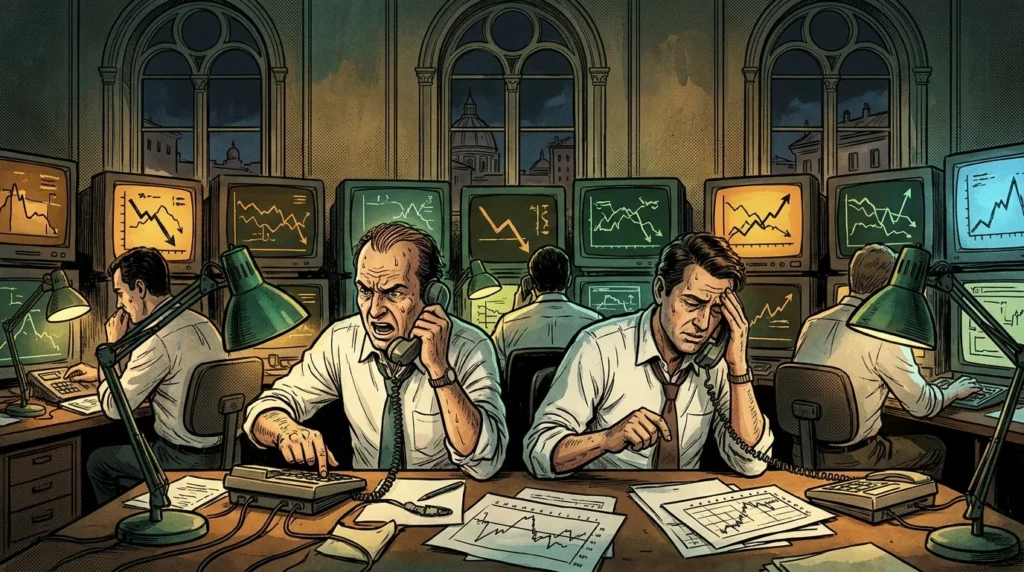
The quasi-fiscal time bomb detonated on February 6, 1989, when the BCRA—exhausted of liquid foreign exchange reserves after trying to prop up the austral under the August 1988 Plan Primavera—halted dollar sales in the free financial market. A violent run out of austral time deposits into physical U.S. dollars ensued. Between February and July 1989, the parallel exchange rate plunged from 17 australes per U.S. dollar to more than 650 australes per dollar. Monthly consumer price inflation surged from 9.6 percent in February 1989 to 33.4 percent in April, 78.5 percent in May, 114.5 percent in June, and an all-time monthly peak of 196.6 percent in July 1989, bringing cumulative 1989 inflation to 3,079 percent. [5]
With supermarkets looted in Rosario and Greater Buenos Aires and shops refusing to post prices in australes, outgoing President Raúl Alfonsín handed over the presidency five months early, on July 8, 1989, to Peronist victor Carlos Saúl Menem. Menem initially entrusted the Ministry of Economy to executives from the multinational grain conglomerate Bunge & Born (first Miguel Roig, who died six days after taking office, and then Néstor Rapanelli). Under the “BB Plan,” the government devalued the official austral to 650 per dollar, raised public utility tariffs by up to 600 percent, and negotiated price truce agreements with major industrialists. [6]
For four months, monthly inflation receded to 5.6 percent in October 1989. However, the BB Plan left the domestic interest-bearing debt overhang untouched. Commercial bank time deposits had shortened to an average maturity of just 7 days, rolling over every week at rising interest rates alongside a growing stock of short-term indexed Treasury bonds. By early December 1989, as the fiscal deficit widened again and the black-market dollar broke past 1,000 australes, Rapanelli devalued the currency by 54 percent and announced a two-year freeze on principal payments for domestic government bonds—a partial default that immediately triggered a panicked run by depositors pulling australes out of 7-day plazos fijos to buy dollars. Rapanelli resigned on December 15, 1989, replaced by Antonio Erman González as Argentina plunged into its second hyperinflationary wave within six months. [7]
January 1, 1990: Decree 36/90 and the Mechanics of Plan Bonex
Over the final weekend of December 1989, as interbank interest rates topped 300 to 400 percent per month and the exchange rate surged toward 2,000 australes per dollar, President Menem and Minister Erman González declared a bank holiday and drafted Emergency Decree 36/90 (dated December 28, 1989, and publicly announced on January 1, 1990, taking effect when banks reopened on January 3). Rather than attempting another voluntary rollover of short-term deposits, the government executed a compulsory conversion of private liquidity and domestic state debt: [8]
- Confiscation of Time Deposits Above 1 Million Australes: Every commercial bank time deposit (plazo fijo), special savings account, and repurchase agreement in domestic currency exceeding 1 million australes (then worth roughly USD $550 to $600 at the free exchange rate) was frozen. Depositors received up to 1 million australes in cash (with limited supplementary cash exceptions allowed only for documented corporate payrolls and urgent medical or severance payments); every austral above that threshold was mandatorily converted at par into 10-year U.S. dollar-denominated sovereign bonds: the External Bonds of the Argentine Republic, 1989 Series (Bonos Externos de la República Argentina Serie 1989, or Bonex 89).
- Conversion of Domestic Government Bonds and Bank Reserves: All domestic-currency and dollar-indexed Treasury debt instruments held by the public and by commercial banks were likewise forcibly swapped into 10-year Bonex 89 bonds. Simultaneously, the BCRA redeemed its remunerated mandatory reserve liabilities to commercial banks by handing them Bonex 89 bonds, which the banks in turn delivered to their depositors.
- Terms of the Bonex 89 Instrument: The Bonex 89 carried a 10-year maturity (expiring in 1999), a two-year grace period before eight equal annual principal amortizations, and a semi-annual coupon paying the 6-month London Interbank Offered Rate (LIBOR).
In total, Decree 36/90 forcibly converted roughly USD $3 billion to $3.5 billion worth of liquid austral bank deposits and domestic public debt into long-term dollar bonds, eliminating approximately 60 percent of Argentina’s broad money supply (M3) in a single stroke and prohibiting banks from accepting new short-term fixed-term deposits.
Market Haircuts, the Second Hyperinflation Spike, and the Peralta Ruling
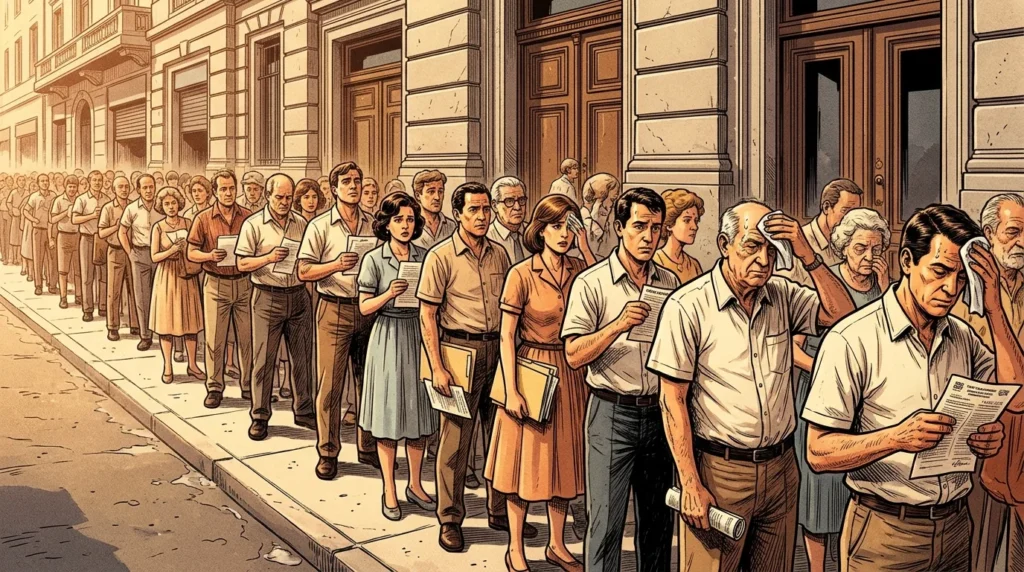
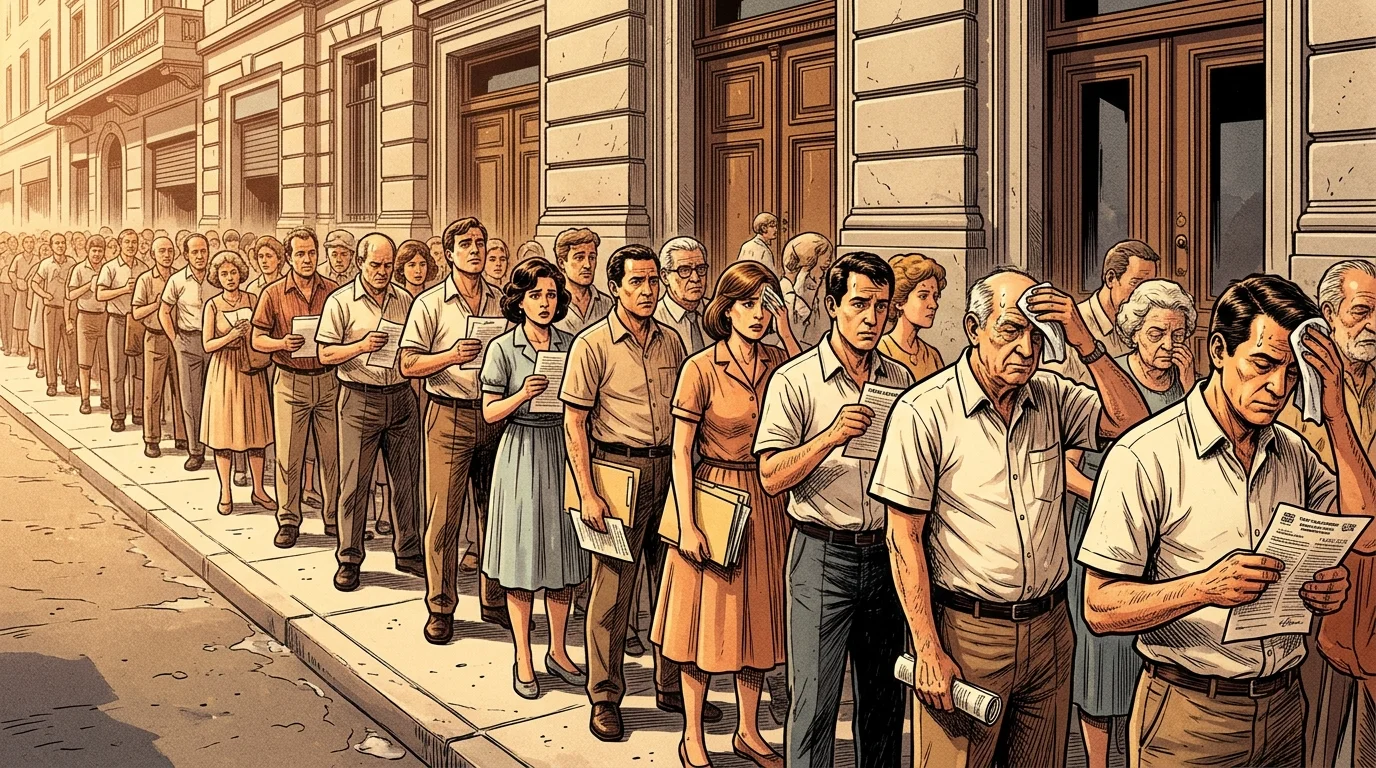
For ordinary middle-class savers and small businesses whose working capital was trapped in 7-to-30-day time deposits, the immediate consequence of the Plan Bonex was a devastating confiscation of wealth. Because the government had not yet even printed the physical Bonex 89 certificates in early January 1990, desperate depositors and firms needing cash to pay suppliers or expenses had to sell their provisional bond rights on secondary markets. Flooded with forced sellers and deep skepticism over Argentine sovereign credit, Bonex 89 bonds initially traded at just 25 to 30 cents on the dollar—imposing an immediate 70 percent market haircut on confiscated savings.
Nor did the Plan Bonex halt hyperinflation overnight. Because the treasury still ran an operational deficit and the BCRA continued printing cash in January and February 1990 to rescue illiquid provincial and state banks, inflation surged to 79.2 percent in January 1990, 61.6 percent in February, and 95.5 percent in March 1990, pushing annual consumer price inflation for 1990 to 2,314 percent. Only after Erman González issued Decree 435/90 in March 1990—imposing draconian cash-basis fiscal austerity (“caja única”), suspending central bank rediscounts, and halting monetary emission for the Treasury—did the severe scarcity of australes take hold, forcing firms and households to sell U.S. dollars to pay taxes and stabilizing the exchange rate through the second half of 1990.
Meanwhile, thousands of dispossessed savers challenged Decree 36/90 in federal courts via constitutional writs of protection (amparos), arguing that only the Argentine Congress had authority to legislate on currency and debt and that the forced swap violated Article 17 of the Constitution guaranteeing the inviolability of private property. On December 27, 1990, in the landmark case Peralta, Luis Arcenio y otro c/ Estado Nacional (Ministerio de Economía – BCRA) s/ amparo, the newly expanded Argentine Supreme Court upheld the constitutionality of Decree 36/90. The Court ruled that during a grave systemic economic emergency threatening the survival of the nation, the executive branch possessed constitutional authority to issue decrees of necessity and urgency (Decretos de Necesidad y Urgencia) that temporarily deferred and restructured property rights, establishing a legal precedent later invoked during the 2001–2002 Corralito deposit freeze.
Paving the Way for the 1991 Convertibility Currency Board
Despite its severe social cost and the destruction of domestic credit—which shrank Argentina’s M3-to-GDP ratio below 5 percent in 1990, the lowest monetization level in half a century—the Plan Bonex achieved a decisive balance-sheet transformation that made Argentina’s subsequent monetary stabilization possible. By wiping out the BCRA’s interest-bearing reserve obligations to commercial banks and replacing 7-day austral liabilities with 10-year dollar bonds serviced out of the Treasury budget, Decree 36/90 eradicated the central bank’s quasi-fiscal deficit. Simultaneously, as the BCRA bought dollars in the market throughout late 1990 against a drastically shrunken monetary base, its liquid international reserves recovered.
When a brief exchange-rate run in January–February 1991 prompted President Menem to appoint Domingo Cavallo as Minister of Economy, the BCRA’s clean balance sheet enabled Cavallo to enact Law 23,928—the Convertibility Law—on March 27, 1991 (effective April 1, 1991). Because the Plan Bonex had already purged the overhang of domestic time deposits and remunerated bank reserves, the BCRA possessed enough gold and foreign exchange reserves to back 100 percent of the remaining monetary base at a fixed parity of 10,000 australes per U.S. dollar (replaced on January 1, 1992, by the convertible peso at 1 peso to 1 U.S. dollar), ending four decades of chronic Argentine inflation for the remainder of the 1990s.
Theoretical & Balance-Sheet Transmission Mechanism
In the Kindleberger–Minsky taxonomy of financial instability (Kindleberger, 1978; Minsky, 1986) and Irving Fisher’s (1933) debt-deflation framework, speculative asset booms become systemic crises when credit expansion shifts balance sheets from hedge finance (cash flows covering principal and interest) to speculative and Ponzi finance (relying on rising asset prices and short-term margin roll-overs).
Once monetary tightening or an exogenous shock halts price appreciation, forced margin liquidations trigger Fisherian debt-deflation: fire-sale asset discounts erode bank collateral values, contracting credit supply across the real economy.
Sources and Further Reading
- Paul Beckerman, “ Central-Bank ‘Distress’ and Hyperinflation in Argentina, 1989–90,” Journal of Latin American Studies, Vol. 27, No. 3, 1995-10. Peer-Reviewed / Academic Research
- Paul Beckerman, “ Public Sector ‘Debt Distress’ in Argentina, 1988–89,” World Bank Policy Research Working Paper No. 902, 1992-05. International Financial Institution
- Roque B. Fernández, “ What Have Populists Learned from Hyperinflation?,” The Macroeconomics of Populism in Latin America, National Bureau of Economic Research, 1991. Peer-Reviewed / Academic Research
- Miguel A. Kiguel and Nissan Liviatan, “ Progress Report on Heterodox Stabilization Programs,” Finance & Development, International Monetary Fund, 1992-03. International Financial Institution
- Peter T. Knight, F. Desmond McCarthy, and Sweder van Wijnbergen, “ Escaping Hyperinflation: How Argentina, Brazil, and Israel Curbed the Threat of Hyperinflation,” Finance & Development, International Monetary Fund, 1986-12. International Financial Institution
- International Monetary Fund, “ IMF Staff Papers: Monetary Policy and Stabilization in Latin America,” International Monetary Fund, 1982. International Financial Institution
- Irving Fisher — "The Debt-Deflation Theory of Great Depressions," Econometrica 1, no. 4 (FRASER Federal Reserve Archive, 1933): 337–357 Central Bank / Monetary Authority
- Charles P. Kindleberger & Robert Z. Aliber — Manias, Panics, and Crashes: A History of Financial Crises (Palgrave Macmillan) Peer-Reviewed / Academic Research
Cite This Historical Dossier (APA / Chicago)
APA (7th ed.): Ç., S. (Ed.). (2026). Argentina's 1989–1990 Hyperinflation and the Plan Bonex Deposit Confiscation. In Forgotten Fortunes Historical Monograph Series (Forgotten Fortunes Editorial Desk). https://forgottenfortunes.net/argentina-1990-plan-bonex/
MLA (9th ed.): Ç., Soner, ed. "Argentina's 1989–1990 Hyperinflation and the Plan Bonex Deposit Confiscation." Forgotten Fortunes: Financial & Monetary History Archive, 2026, https://forgottenfortunes.net/argentina-1990-plan-bonex/.
Chicago (17th ed.): Ç., Soner, ed. "Argentina's 1989–1990 Hyperinflation and the Plan Bonex Deposit Confiscation." Forgotten Fortunes Historical Monograph Series (Forgotten Fortunes Editorial Desk), September 11, 2026. https://forgottenfortunes.net/argentina-1990-plan-bonex/.
Have an idea for another financial history documentary or article? Request a story →