
In This Article
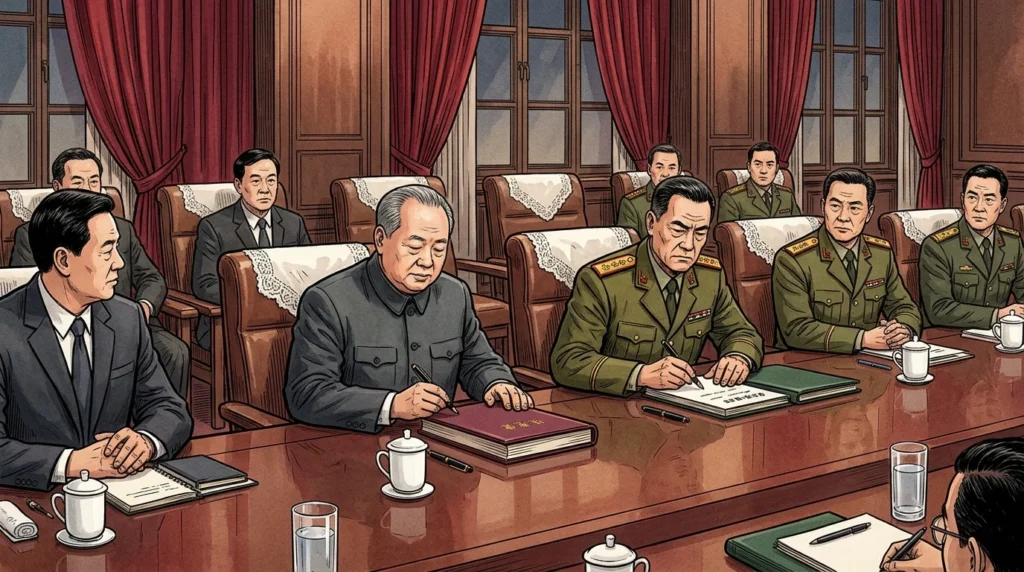
On July 22, 1998, at an enlarged session of China’s Central Military Commission (CMC) and an accompanying national anti-smuggling conference in Beijing, President and CMC Chairman Jiang Zemin issued an unprecedented directive to the world’s largest standing military: the People’s Liberation Army (PLA) and the People’s Armed Police (PAP) must unconditionally sever ties with all commercial enterprises and cease business operations for profit. Backed by newly appointed Premier Zhu Rongji, the decree targeted a sprawling military-business complex known to foreign analysts as “PLA, Inc.”—an archipelago of more than 15,000 registered factories, hotels, real estate developers, pharmaceutical giants, telecommunications ventures, and trading houses employing over 600,000 civilian workers. [1]
Born out of Deng Xiaoping’s post-1979 fiscal austerity, when state defense appropriations were squeezed to prioritize civilian economic modernization, the PLA’s commercial empire had grown from humble agricultural sidelines into multinational conglomerates such as China Poly Group, China Xinxing Corporation, and the 999 (Sanjiu) Enterprise Group. By the mid-1990s, however, military privileges—including duty-free import channels, tax exemptions, and immunity from civilian customs inspection—had fueled rampant smuggling of crude oil, automobiles, and electronics while corroding combat readiness and discipline. Under the 1998 divestiture pact, civilian authorities absorbed thousands of military firms by December 15, 1998, in exchange for shifting the PLA back onto the central treasury—”eating imperial grain” (chi huangliang)—through soldier pay raises and two decades of double-digit annual increases in China’s official defense budget. [2]
Deng Xiaoping’s Defense Cuts and the Birth of “PLA, Inc.”
Historically, the Chinese Red Army and its successor, the People’s Liberation Army, maintained small-scale farms, uniform workshops, and ordnance factories to feed and equip troops in the field. The transformation of those self-sufficiency sidelines into a profit-driven commercial empire began after December 1978, when paramount leader Deng Xiaoping placed military modernization fourth among China’s “Four Modernizations” behind agriculture, industry, and science and technology. As Beijing curtailed real defense spending throughout the 1980s and launched a 1985 troop reduction that demobilized one million soldiers (25 percent of the force), military units faced severe budget shortfalls for barracks maintenance, officer housing, food rations, and equipment procurement. [3]
In January 1982, Deng articulated a 16-character “Military-Civilian Combination Policy” (junmin jiehe, pingzhan jiehe, junpin youxian, yimin yangjun—”combine the military and civil, combine peace and war, give priority to military products, let the civil support the military”). Encouraged to “make up for fiscal deficiencies through production” (yishou buzhu), PLA headquarters departments, regional commands, air force and naval logistics bases, and local field units plunged into China’s booming market economy. [4]
What began with leasing military airfields, ports, and trucks to civilian businesses soon snowballed during the late 1980s and early 1990s into a nationwide commercial gold rush. At its numerical peak in the late 1980s, registered PLA enterprises exceeded 20,000 before consolidating after a 1993 rectification drive into roughly 15,000 commercial firms employing more than 600,000 civilians and generating estimated annual gross revenues of RMB 150 billion (approximately US$18 billion) and declared profits of RMB 3.5 billion to RMB 5 billion, with unofficial earnings believed to be substantially higher. [5]
Poly Group, Xinxing, and 999: The Headquarters Conglomerates
At the apex of “PLA, Inc.” stood giant multinational conglomerates directly controlled by the PLA’s three central headquarters in Beijing: the General Staff Department (GSD), the General Logistics Department (GLD), and the General Political Department (GPD), later joined in 1998 by the General Armament Department (GAD). [6]
- China Poly Group (Poly Technologies): Established in 1984 under the Equipment Department of the General Staff Department (originally as a wing of CITIC) and led by figures from China’s revolutionary elite—including president He Ping, Deng Xiaoping’s son-in-law, and chairman Wang Jun, son of former Vice President Wang Zhen—Poly Technologies began as China’s premier arms-export trading house. During the 1980s and early 1990s, Poly earned billions of dollars exporting missiles and military hardware to the Middle East and developing countries before diversifying into civilian real estate, infrastructure, coal and mineral trading, and cultural auctions from its Beijing headquarters at Poly Plaza. By 1998, civilian commercial ventures accounted for roughly 80 percent of Poly’s total profits on assets exceeding US$1 billion.
- China Xinxing Corporation (Group) and 999 Enterprise Group: Operated by the General Logistics Department, which oversaw the military’s vast supply network, Xinxing Group controlled dozens of factories, construction companies, iron and steel mills, chemical plants, and import-export subsidiaries across China. Even more profitable was the GLD-founded 999 (Sanjiu) Enterprise Group in Shenzhen, headed by military pharmacist and entrepreneur Zhao Xinxian, which grew from the Nanfang Pharmaceutical Factory into China’s largest pharmaceutical conglomerate alongside holdings in agriculture, packaging, real estate, and hotels.
- Hotels, Telecoms, and Service Ventures: Across China’s coastal cities, PLA units operated luxury five-star hotels—including the Palace Hotel in Beijing (jointly owned by the GSD) and the Huatian Hotel group in Changsha—alongside nightclubs, securities brokerages, cellular paging and mobile telecommunications networks utilizing military radio spectrum, and commercial airlines.
Tax-Free Privileges, Rampant Smuggling, and the 1998 Crisis
The profitability of PLA enterprises rested heavily on institutional arbitrage of military privileges. Military-plated vehicles bypassed highway tolls and police checkpoints; PLA-controlled ports, naval vessels, and military airfields operated outside the supervision of China’s General Administration of Customs; and PLA commercial firms enjoyed preferential access to state bank loans, subsidized rail freight, and exemptions from corporate taxes. Non-military entrepreneurs routinely paid fees to “hang on” (guakao) to a PLA unit, registering private companies as military enterprises (jundui qiye) and purchasing military license plates to evade taxes and customs duties.
When the 1997–1998 Asian Financial Crisis depressed regional currencies while China maintained the renminbi’s peg to the U.S. dollar, price spreads between international commodities and protected domestic Chinese markets widened dramatically. Military and Armed Police commercial affiliates became the primary conduits for industrial-scale smuggling of refined petroleum, automobiles, steel, chemical fibers, cigarettes, and telecommunications equipment, starving state oil monopolies Sinopec and CNPC of domestic sales and costing the central government tens of billions of yuan in lost tariff revenues. [7]
Senior civilian and military leaders grew alarmed that commercialism was hollowing out combat readiness while creating independent financial fiefdoms immune to Communist Party discipline. At a national anti-smuggling work conference in Beijing on July 17, 1998, and an enlarged Central Military Commission meeting on July 22, 1998, Jiang Zemin delivered a sweeping indictment of military profiteering, ordering the PLA, the People’s Armed Police, and the civilian judiciary and police organs to shut down or hand over every commercial enterprise by the end of the year. Within four days of Jiang’s speech, Chief of the General Staff General Fu Quanyou, GLD Director General Wang Ke, GPD Director General Yu Yongbo, GAD Director General Cao Gangchuan, and Politburo Standing Committee member Hu Jintao—who was appointed head of the central divestiture leading small group—publicly endorsed the ban. [8]
The December 1998 Handover and the State Economic and Trade Commission
Executing the divestiture required a massive bureaucratic reorganization overseen by Premier Zhu Rongji and vice president Hu Jintao. In October 1998, the State Council established a National Office for the Handover of Enterprises Operated by the Military, the People’s Armed Police, and Political-Legal Organs under the State Economic and Trade Commission (SETC), replicated by receiving offices at the provincial and municipal levels.
To prevent chaos in military logistics and national infrastructure, the leadership divided PLA enterprises into distinct categories. Non-commercial farms and repair depots directly serving troop subsistence and weapons maintenance remained inside the military, and special exemptions were granted for civil aviation, railway construction, and certain shared military-civilian telecommunications networks. Conversely, all profit-seeking commercial firms were either shut down—roughly one-third of smaller, insolvent entities were liquidated outright—or formally transferred to civilian central and local governments by the official deadline of December 15, 1998. Roughly 150 of the largest headquarters conglomerates, including civilian divisions of China Poly Group, Xinxing Group, and the 999 Enterprise Group, were transferred directly to central government supervision under the SETC in Beijing, while thousands of regional factories, hotels, and real estate companies—along with their heavy bank debts and social-welfare obligations—were devolved to provincial and municipal authorities.
The handover sparked intense behind-the-scenes friction over asset stripping, hidden debt, and corruption prosecutions. A 1999 central audit found that military units had initially shielded roughly 15 percent of their businesses through nominal transfers to officers’ relatives or subordinate institutes, requiring follow-up “mop-up” inspections by four central work groups through 1999 and 2000. Meanwhile, civilian anti-corruption investigators pursued high-profile military graft cases uncovered during the audit: the SETC Receiving Office compiled a list of 23 military company executives at the rank of major general or above who had fled abroad after 1998, while former GSD military intelligence chief Major General Ji Shengde was court-martialed and convicted of corruption linked to the massive Yuanhua smuggling ring in Xiamen.
“Eating Imperial Grain”: Budget Compensation and Fiscal Legacy
Crucial to securing the military brass’s conditional compliance with Jiang Zemin’s order was a fiscal bargain: in return for surrendering its off-budget commercial revenues, the PLA would “eat imperial grain” through enhanced state appropriations. During autumn 1998 negotiations, Hong Kong press reports suggested the military sought RMB 15 billion to RMB 30 billion annually—or a lump sum of RMB 50 billion—to offset lost enterprise income. However, because the General Logistics Department had previously reported total annual commercial profits of only RMB 3.5 billion (on RMB 150 billion in revenue) to minimize tax payments to Premier Zhu Rongji’s treasury, the Ministry of Finance initially held the PLA to its own conservative numbers.
In March 1999, Finance Minister Xiang Huaicheng announced that China’s official 1999 defense budget would rise 12.7 percent to RMB 104.65 billion (an increase of RMB 13.65 billion), which included an initial RMB 3 billion direct subsidy for divested enterprises alongside a 10 to 25 percent salary increase for active-duty officers and enlisted soldiers. After NATO aircraft bombed the Chinese Embassy in Belgrade in May 1999 during the drafting of China’s Ninth Five-Year Plan, Beijing substantially expanded long-term military appropriations. By trading chaotic commercial entrepreneurship for predictable, double-digit annual state budget growth and centralized procurement, the 1998 divestiture ended the era of “PLA, Inc.,” restored Communist Party fiscal control over the armed forces, and laid the financial foundation for China’s twenty-first-century military modernization.
Theoretical & Balance-Sheet Transmission Mechanism
In the Kindleberger–Minsky taxonomy of financial instability (Kindleberger, 1978; Minsky, 1986) and Irving Fisher’s (1933) debt-deflation framework, speculative asset booms become systemic crises when credit expansion shifts balance sheets from hedge finance (cash flows covering principal and interest) to speculative and Ponzi finance (relying on rising asset prices and short-term margin roll-overs).
Once monetary tightening or an exogenous shock halts price appreciation, forced margin liquidations trigger Fisherian debt-deflation: fire-sale asset discounts erode bank collateral values, contracting credit supply across the real economy.
Sources and Further Reading
- James Mulvenon, “ PLA Divestiture and Civil-Military Relations: Implications for the Sixteenth Party Congress Leadership,” China Leadership Monitor, No. 1, Part 2 (Hoover Institution), 2001-12. Historical & Financial Reference
- James Mulvenon, “ To Get Rich Is Unprofessional: Chinese Military Corruption in the Jiang Era,” China Leadership Monitor, No. 6 (Hoover Institution), 2003-06. Historical & Financial Reference
- Congressional Research Service, “ China’s Military-Owned Businesses,” The Library of Congress (CRS Report 98-197), 1999. Historical & Financial Reference
- Swaran Singh, “ Rise and Fall of the PLA’s Business Empire: Implications for China’s Civil-Military Relations,” Strategic Analysis (Columbia International Affairs Online), 1999-05. Peer-Reviewed / Academic Research
- Henry Chu, “ China Ordering Armed Forces to Halt All Business Ventures,” Los Angeles Times, 1998-07-23. Historical & Financial Reference
- David Zweig, “ China’s Stalled ‘Fourth Wave’: Zhu Rongji’s Reform Package of 1998–2000,” Asian Survey, Vol. 41, No. 2, 2001-03. Historical & Financial Reference
- Irving Fisher — "The Debt-Deflation Theory of Great Depressions," Econometrica 1, no. 4 (FRASER Federal Reserve Archive, 1933): 337–357 Central Bank / Monetary Authority
- Charles P. Kindleberger & Robert Z. Aliber — Manias, Panics, and Crashes: A History of Financial Crises (Palgrave Macmillan) Peer-Reviewed / Academic Research
Cite This Historical Dossier (APA / Chicago)
APA (7th ed.): Ç., S. (Ed.). (2026). The 1998 Chinese People's Liberation Army Commercial Divestiture ("PLA Inc."). In Forgotten Fortunes Historical Monograph Series (Forgotten Fortunes Editorial Desk). https://forgottenfortunes.net/china-1998-pla-commercial-exit/
MLA (9th ed.): Ç., Soner, ed. "The 1998 Chinese People's Liberation Army Commercial Divestiture ("PLA Inc.")." Forgotten Fortunes: Financial & Monetary History Archive, 2026, https://forgottenfortunes.net/china-1998-pla-commercial-exit/.
Chicago (17th ed.): Ç., Soner, ed. "The 1998 Chinese People's Liberation Army Commercial Divestiture ("PLA Inc.")." Forgotten Fortunes Historical Monograph Series (Forgotten Fortunes Editorial Desk), September 11, 2026. https://forgottenfortunes.net/china-1998-pla-commercial-exit/.
Have an idea for another financial history documentary or article? Request a story →