In This Article
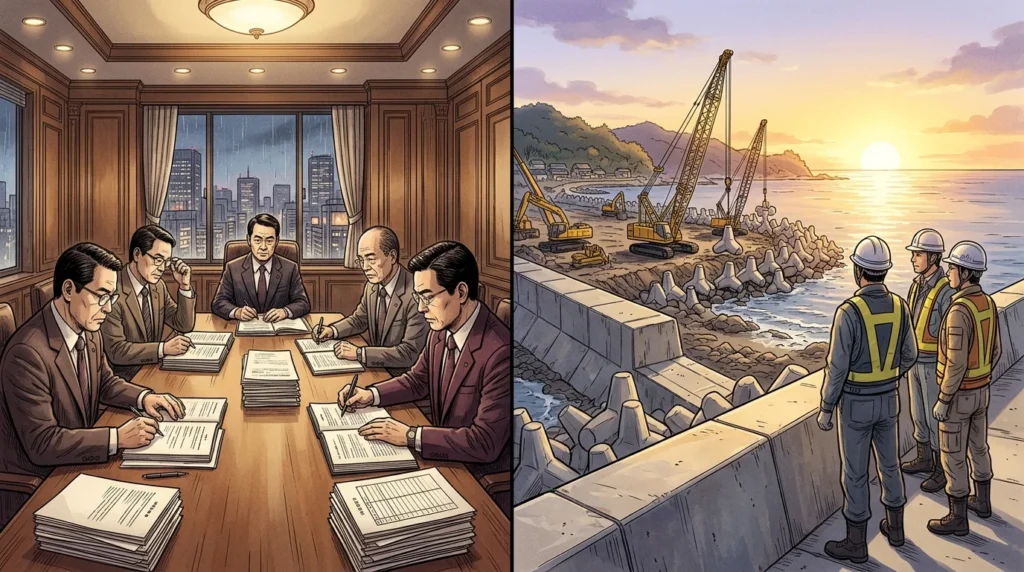
Across the three decades from the outbreak of World War I in 1914 to the surrender of August 1945, the Japanese financial system swung from an unprecedented export windfall to chronic balance-sheet rot and finally into total military regimentation. When European belligerents withdrew from Asian markets between 1914 and 1918, Japan flipped from a heavily indebted debtor nation into an international creditor, prompting Prime Minister Masatake Terauchi’s personal envoy Kamezo Nishihara to funnel ¥145 million in off-budget political loans to Chinese premier Duan Qirui’s Beijing regime in 1917–1918. Five years later, when the September 1, 1923 Great Kanto Earthquake destroyed ¥5.5 billion in physical wealth across Tokyo and Yokohama, an emergency imperial ordinance authorized the Bank of Japan to rediscount ¥430.8 million in “Earthquake Bills” (Shinsai Tegata)—preserving zombie WWI speculators until their hidden insolvency detonated the March 1927 Showa Banking Panic. Finally, from September 1937 to August 1945, Tokyo financed the Sino-Japanese and Pacific wars through the extra-budgetary Temporary Military Expenditure Special Account (Rinji Gunjihi Tokubetsu Kaikei), spending ¥221.9 billion backed by Bank of Japan debt monetization and military scrip (gunpyo) while forcibly merging Japan’s 466 ordinary commercial banks down to 61 under the “One Prefecture, One Bank” doctrine. [1]
World War I Surpluses and the 1917–1918 Nishihara Loans (¥145 Million)
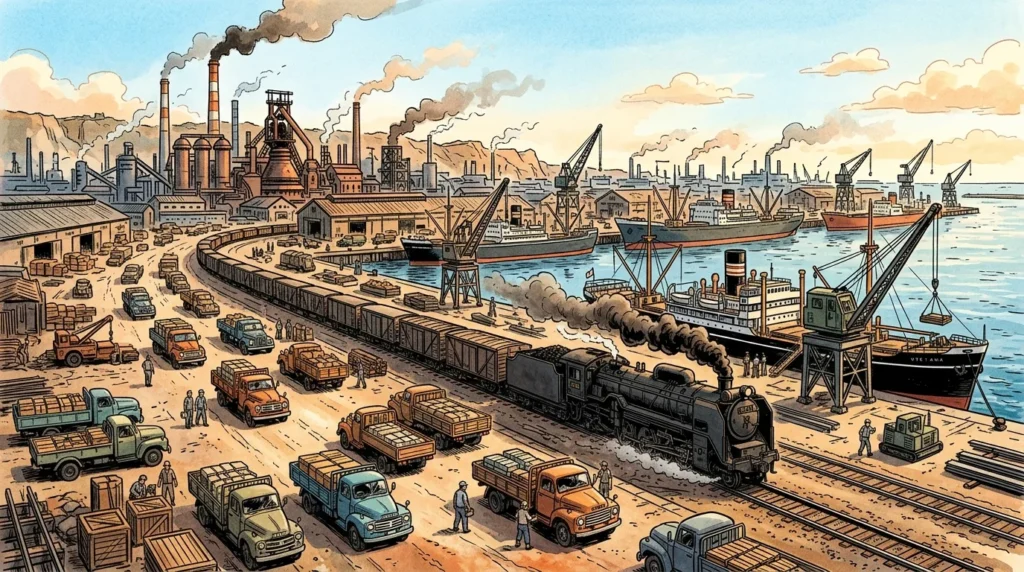
On the eve of World War I in 1914, Japan was struggling under ¥1.9 billion in foreign debt accumulated during the 1904–1905 Russo-Japanese War, with its gold reserves dangerously depleted. The outbreak of war in Europe immediately reversed Japan’s external accounts. As British, German, and French manufacturers diverted shipping and factories to the Western Front, global orders for Japanese steamships, cotton textiles, munitions, copper, and chemicals surged. Between 1914 and 1918, Japan’s real GNP expanded by more than 40 percent, cumulative current-account surpluses reached ¥2.8 billion, and combined specie holdings of the Japanese government and the Bank of Japan soared more than sixfold from ¥341 million in December 1914 to ¥2.18 billion by the end of 1920. [2]
Determined to deploy this sudden gold surplus to cement Japanese economic hegemony on the Asian mainland without provoking Western diplomatic protests, Prime Minister Masatake Terauchi and Finance Minister Kazue Shoda bypassed the Foreign Ministry and the Six-Power Banking Consortium. Instead, Terauchi dispatched his personal confidant Kamezo Nishihara to Beijing between January 1917 and September 1918 to negotiate directly with Northern warlord Premier Duan Qirui and his Anhui Clique administration. [3]
In eight separate secret agreements collectively known as the “Nishihara Loans” (Nishihara Shakkan), Japan extended ¥145 million in ostensibly commercial development loans for telegraphs, forestry and gold mining in Heilongjiang and Jilin, Shandong and Manchurian railway extensions, and currency reorganization. To keep the loans off the Japanese General Account budget and avoid Imperial Diet scrutiny, Finance Minister Shoda directed three quasi-governmental “special banks”—the Industrial Bank of Japan (Nippon Kangyo Ginko), the Bank of Chosen (Korea), and the Bank of Taiwan—to issue ¥100 million in government-guaranteed debentures and absorb Treasury Deposit Bureau funds, which were then lent to Duan’s regime and swiftly spent on civil war military campaigns. When Duan Qirui’s faction was overthrown in 1920 and the exposure of the secret Shandong concessions ignited China’s May Fourth Movement in 1919, the Beijing government defaulted on nearly the entire principal and interest. By 1926, the Japanese Diet was forced to enact a law transferring roughly ¥140 million in defaulted Nishihara obligations and unpaid interest onto the Japanese national debt to save the three special banks from insolvency. [4]
| Documented Figure / Metric | Historical Significance & Archival Context |
|---|---|
| ¥206.8 million | By January 1927, ¥206.8 million of the original ¥430.8 million in Earthquake Bills remained unpaid—with nearly half concentrated in the Bank of Taiwan on behalf of Suzuki Shoten. |
| ¥1 million | Thirty-seven banks failed during the 1927 Showa Financial Crisis, and the new Banking Act (Ginko Ho, enacted March 1927, effective January 1928) imposed a strict ¥1 million minimum capital threshold (¥2 million in Tokyo and Osaka), eliminating more than 600 weak rural banks over the next five years. |
| ¥155.4 billion | From September 1937 until the account was closed in February 1946, total cumulative disbursements from the Temporary Military Expenditure Special Account reached ¥155.4 billion (out of ¥221.9 billion in authorized war appropriations). |
The 1923 Great Kanto Earthquake and ¥430.8 Million in Shinsai Tegata
While the Nishihara Loans saddled Japan’s colonial banks with sovereign defaults abroad, the collapse of the wartime commodity bubble in March 1920 left domestic commercial banks nursing vast unacknowledged losses from speculative trading firms (narikin) such as Kobe’s giant conglomerate Suzuki Shoten. Before the banking system could write off those post-WWI bad loans, physical catastrophe struck. [5]
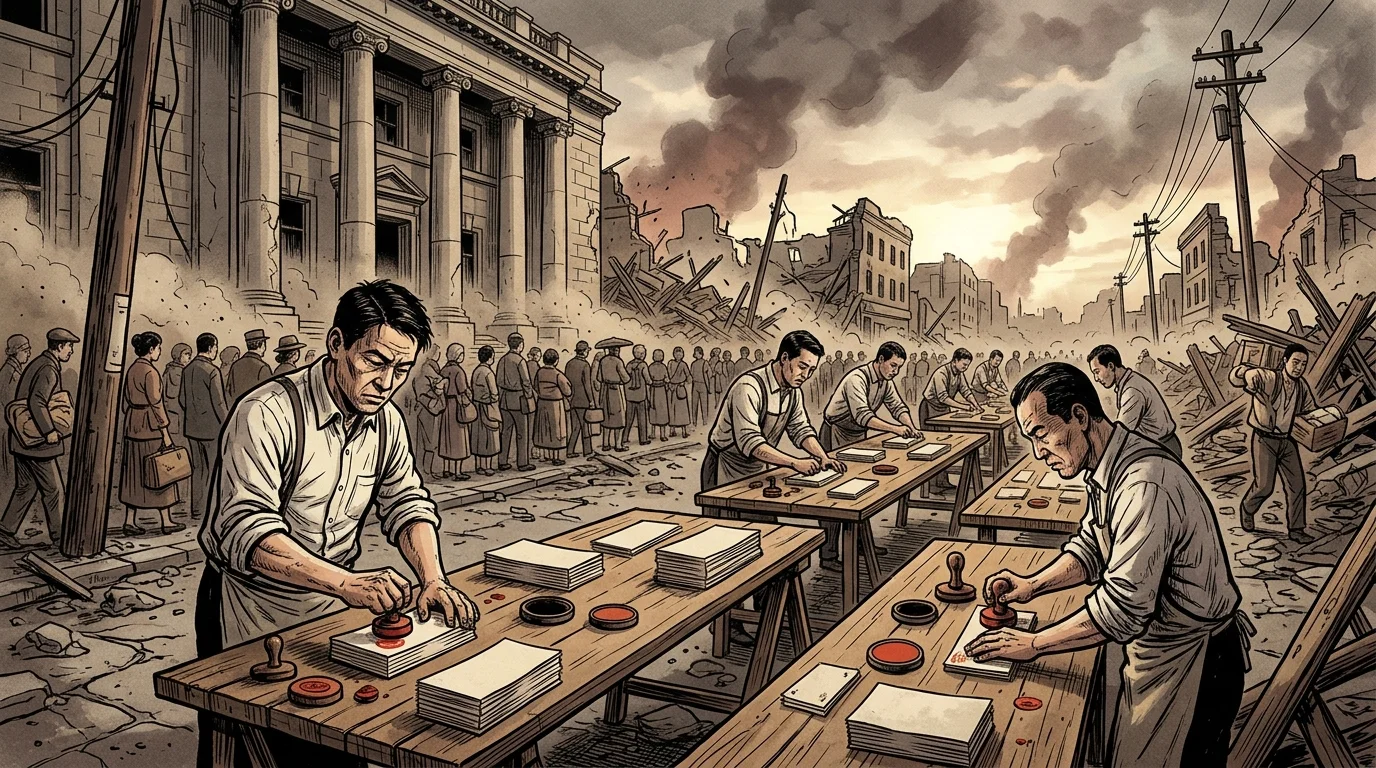
At 11:58 a.m. on September 1, 1923, the magnitude-7.9 Great Kanto Earthquake and subsequent three-day firestorms devastated Tokyo, Yokohama, and surrounding prefectures. Over 105,000 people were killed or missing, more than 690,000 buildings were destroyed, and estimated physical property losses reached ¥5.5 billion—roughly 35 percent of Japan’s 1922 gross national product. Across the capital, commercial warehouses burned to the ground, promissory notes lost their underlying merchandise collateral, and check clearing halted. [6]
On September 7, 1923, Prime Minister Gonnohyoe Yamamoto’s cabinet declared a 30-day debt moratorium, followed on September 27 by Imperial Ordinance No. 424: the Earthquake Bill Discounting Loss Compensation Ordinance (Shinsai Tegata Waribiki Songai Hosho Rei). Prepared by Finance Minister Junnosuke Inoue and Bank of Japan Governor Otohiko Ichiki, the ordinance instructed the Bank of Japan to rediscount commercial bills issued prior to September 1, 1923 that carried a debtor or collateral situated in the disaster zone, with the national government indemnifying the central bank for up to ¥100 million in eventual losses. [7]
Between October 1923 and the March 31, 1924 cut-off, the Bank of Japan stamped and discounted ¥430.8 million in “Earthquake Bills” (Shinsai Tegata) for 106 banks. Rather than strictly verifying whether a borrower’s insolvency had been caused by the earthquake, financially distressed banks used the emergency window to dump pre-existing 1920 bubble bad loans onto the central bank. Most glaringly, the semi-official Bank of Taiwan and allied banks rolled nearly ¥100 million of uncollectible advances to the overextended trading house Suzuki Shoten into Shinsai Tegata. Because calling the bills due would bankrupt the holding banks, the Diet twice extended their maturity through 1925 and 1926. [8]
The March 1927 Showa Financial Crisis and the Bank Law of 1927
By January 1927, ¥206.8 million of the original ¥430.8 million in Earthquake Bills remained unpaid—with nearly half concentrated in the Bank of Taiwan on behalf of Suzuki Shoten. Preparing to return Japan to the prewar gold standard, Finance Minister Naoharu Kataoka introduced two bills in the Imperial Diet to settle the remaining Shinsai Tegata using ten-year government bonds and debt-forgiveness contracts. During heated parliamentary questioning, opposition deputies demanded the names of the banks holding the rotten bills, sparking depositor anxiety across Tokyo.
On March 14, 1927, after receiving an erroneous note from a ministry official, Finance Minister Kataoka famously announced to the Diet Budget Committee that the medium-sized Tokyo Watanabe Bank had suspended payments around noon that day. In reality, the bank had managed to borrow enough afternoon cash to stay open—until Kataoka’s parliamentary slip triggered an immediate run that forced Tokyo Watanabe Bank and its affiliate Akaji Savings Bank to close the next morning. Runs rapidly engulfed six more Tokyo banks in March, then erupted into a second, far larger wave in April 1927 when the Bank of Taiwan cut off credit to Suzuki Shoten (which collapsed with over ¥450 million in debts) and the Privy Council vetoed an emergency imperial ordinance to authorize unsecured Bank of Japan advances to the Bank of Taiwan. On April 18, 1927, the Bank of Taiwan and the prominent Fifteenth Bank (Jūgo Ginko) shut their doors, forcing incoming Prime Minister Giichi Tanaka and veteran Finance Minister Korekiyo Takahashi to declare a nationwide three-week bank moratorium and pass a ¥500 million Bank of Japan Special Advance Law (plus ¥200 million for Taiwan). Thirty-seven banks failed during the 1927 Showa Financial Crisis, and the new Banking Act (Ginko Ho, enacted March 1927, effective January 1928) imposed a strict ¥1 million minimum capital threshold (¥2 million in Tokyo and Osaka), eliminating more than 600 weak rural banks over the next five years.
The 1937–1945 Temporary Military Expenditure Special Account (¥221.9 Billion)
Following the September 1931 Manchurian Incident and Finance Minister Takahashi’s departure from the gold standard—and especially after junior military officers assassinated Takahashi in the February 26, 1936 coup for attempting to cap army spending and Bank of Japan bond underwriting—Japan’s fiscal apparatus was subordinated to total war. When full-scale hostilities with China broke out at the Marco Polo Bridge in July 1937, the 72nd Imperial Diet enacted the Law Concerning the Temporary Military Expenditure Special Account (Rinji Gunjihi Tokubetsu Kaikei) in September 1937.
Patterned on special war accounts used in 1894 and 1904, the Temporary Military Expenditure Special Account possessed three extraordinary fiscal features that stripped away parliamentary oversight. First, the entire eight-year conflict from September 1937 through the surrender of August 1945 was treated as a single continuous “fiscal year” without annual closing or lapse of appropriations. Second, army and navy expenditures were presented to the Diet as single lump sums without line-item breakdowns, shielding weapons procurement and overseas operations as military secrets. Third, the account eclipsed Japan’s ordinary General Account budget, growing to more than triple ordinary civilian spending by 1943–1944.
From September 1937 until the account was closed in February 1946, total cumulative disbursements from the Temporary Military Expenditure Special Account reached ¥155.4 billion (out of ¥221.9 billion in authorized war appropriations). Only 11 percent of this colossal sum was covered by tax transfers from the General Account. Fully 68 percent (¥149.8 billion in authorized issues) was financed by “China Incident” and “Greater East Asia War” government bonds underwritten directly by the Bank of Japan and forced onto domestic banks and neighborhood associations (tonarigumi), while in the final years of the Pacific War over ¥42 billion was extracted via unbacked loans from puppet central banks in Manchukuo, occupied China, and Southeast Asia alongside military scrip (gunpyo) and Southern Development Bank notes.
Wartime Financial Control and “One Prefecture, One Bank” (466 Down to 61)
To ensure that every yen of household savings and corporate cash flow was funneled into war bonds and munitions producers under the 1937 Temporary Capital Adjustment Law and the 1940 Corporate Funds Operation Ordinance, the Ministry of Finance and the Bank of Japan launched an aggressive campaign of compulsory bank consolidation. Articulated in May 1936 by Finance Minister Eiichi Baba as the “One Economic Zone, One Bank” or “One Prefecture, One Bank” (Ikken Ichiginko) policy, regulators pressured surviving provincial commercial banks to merge into a single dominant regional bank per prefecture capable of absorbing huge allotments of low-yield government debt and participating in syndicated munitions loans.
Backed by the May 1942 Financial Business Reorganization Ordinance (Kinyu Jigyo Seibi Rei)—which gave the Finance Minister statutory authority to order compulsory bank mergers—and the new wartime Bank of Japan Act of February 1942, the consolidation reshaped Japanese banking permanently. Between the end of 1936 and the end of World War II in August 1945, the number of ordinary commercial banks in Japan plunged from 466 to just 61: eight major city banks (including the April 1943 merger of Mitsui Bank and Dai-Ichi Bank into Teikoku Bank) and 53 regional banks—leaving nearly every Japanese prefecture with a single regional monopoly bank whose institutional structure endured throughout the postwar era.
Theoretical & Balance-Sheet Transmission Mechanism
In the Kindleberger–Minsky taxonomy of financial instability (Kindleberger, 1978; Minsky, 1986) and Irving Fisher’s (1933) debt-deflation framework, speculative asset booms become systemic crises when credit expansion shifts balance sheets from hedge finance (cash flows covering principal and interest) to speculative and Ponzi finance (relying on rising asset prices and short-term margin roll-overs).
Once monetary tightening or an exogenous shock halts price appreciation, forced margin liquidations trigger Fisherian debt-deflation: fire-sale asset discounts erode bank collateral values, contracting credit supply across the real economy.
Sources and Further Reading
- Masanori Takashima, “ Economic Impact of the 1923 Great Kanto Earthquake and Emergency Financial Measures,” Japan Policy Forum, 2023. Historical & Financial Reference
- Masato Shizume, “ The Japanese Economy during the Interwar Period: Instability in the Financial System and the Impact of the World Depression,” Bank of Japan Review 2009-E-2, 2009. Central Bank / Monetary Authority
- Tetsuji Okazaki, “ Resolution of the 1927 Financial Crisis and Bank Consolidation in Interwar Japan,” Canon Institute for Global Studies, 2021. Historical & Financial Reference
- Tetsuji Okazaki and Michiru Sawada, “ Government Policy and Bank Mergers in Prewar and Wartime Japan,” The Developing Economies (IDE-JETRO), 2007. Historical & Financial Reference
- Japan Center for Asian Historical Records, “ Archival Records of the Nishihara Loans and the Temporary Military Expenditure Special Account,” National Archives of Japan (JACAR), 2013. Historical & Financial Reference
- Masato Shizume, “ Financial System and Monetary Policy in Imperial Japan During World War I and Wartime Controls,” Waseda University Institute for Research in Contemporary Political and Economic Affairs Working Paper 1611, 2016. Peer-Reviewed / Academic Research
- Irving Fisher — "The Debt-Deflation Theory of Great Depressions," Econometrica 1, no. 4 (FRASER Federal Reserve Archive, 1933): 337–357 Central Bank / Monetary Authority
- Charles P. Kindleberger & Robert Z. Aliber — Manias, Panics, and Crashes: A History of Financial Crises (Palgrave Macmillan) Peer-Reviewed / Academic Research
Cite This Historical Dossier (APA / Chicago)
APA (7th ed.): Ç., S. (Ed.). (2026). Nishihara Loans, 1923 Earthquake Bills, and Japan's ¥221 Billion Wartime Finance Machine. In Forgotten Fortunes Historical Monograph Series (Forgotten Fortunes Editorial Desk). https://forgottenfortunes.net/japan-earthquake-bills-war-finance/
MLA (9th ed.): Ç., Soner, ed. "Nishihara Loans, 1923 Earthquake Bills, and Japan's ¥221 Billion Wartime Finance Machine." Forgotten Fortunes: Financial & Monetary History Archive, 2026, https://forgottenfortunes.net/japan-earthquake-bills-war-finance/.
Chicago (17th ed.): Ç., Soner, ed. "Nishihara Loans, 1923 Earthquake Bills, and Japan's ¥221 Billion Wartime Finance Machine." Forgotten Fortunes Historical Monograph Series (Forgotten Fortunes Editorial Desk), September 15, 2026. https://forgottenfortunes.net/japan-earthquake-bills-war-finance/.
Have an idea for another financial history documentary or article? Request a story →